
News
Bakers explains why prices of bread is high


- /home/naijuinz/public_html/wp-content/plugins/mvp-social-buttons/mvp-social-buttons.php on line 27
https://naijablitznews.com/wp-content/uploads/2024/04/0AFAD458-48CA-4497-825E-831A4FD6AF52.jpeg&description=Bakers explains why prices of bread is high', 'pinterestShare', 'width=750,height=350'); return false;" title="Pin This Post">
- Share
- Tweet /home/naijuinz/public_html/wp-content/plugins/mvp-social-buttons/mvp-social-buttons.php on line 72
https://naijablitznews.com/wp-content/uploads/2024/04/0AFAD458-48CA-4497-825E-831A4FD6AF52.jpeg&description=Bakers explains why prices of bread is high', 'pinterestShare', 'width=750,height=350'); return false;" title="Pin This Post">


By Francesca Hangeior
The Premium Breadmakers Association of Nigeria, PBAN, has disclosed the causes of rising prices of loaves of bread as the common staple food in the country.
PBAN said the volatility in the exchange rate has affected the prices of bread in Nigeria, adding that most of the materials in producing it are imported.
PBAN President, Emmanuel Onuorah, made this known while appearing as a guest on Arise News’ Global Business Report on Tuesday.
He added that the ongoing war between Ukraine and Russia has impacted negatively on the production of bread, as both warring European neighbours are wheat suppliers to Nigeria.
“Bread is a staple. Bread is supposed to be a pick-and-grab food at any location. It’s on the table for the children,” Onuorah said.
“Bread is a spiritual product, outside of being physical because it does so much for humanity. As bakers, for us in Nigeria, it’s been tough for us.
“Some of the basic materials we use in producing our bread are imported into Nigeria, that is about almost 98 per cent and that’s the truth.”
“In a country, where you almost don’t have a strong productive base, and at that, everything is dependent on the dollar. When there is volatility in dollar-naira exchange, when (there is) FX issue where naira begins to go down against the dollar, we are in a problem,” he said.
Late last year, following the removal of fuel subsidy and other economic reforms by President Bola Tinubu, the country began to experience an increase in the prices of food and other commodities.
Consequently, in December 2023, Onuorah said prices would increase by 15 per cent to 20 per cent in January 2024 across Nigeria amid economic hardship, and checks by Vanguard showed that loaves of bread in Lagos from N400 have increased to N700, N700 before now sold at N1,100, while N1,100 rose to N1,1400.
“You know we’re are the highest consumers of white bread globally. When you go to other places, they take croissants, they take baguettes, and other forms of bread.
“But, our bread (in Nigeria) comes in certain shapes. It must be sweet, it must be soft, and succulent. If you don’t produce it that way, you’re out of business.”
“And this whole thing, 60 to 65 per cent of the whole thing comes from wheat, and most of our wheat comes from Ukraine, Russia, and other parts of the world,” he added.

Abuja Electricity Distribution Plc (AEDC) has promoted 547 employees and approved salary step increments for 579 others as part of a broad workforce development programme designed to reward outstanding performance, strengthen staff motivation and drive organisational excellence.
The exercise, which benefitted 1,126 employees, followed the successful completion of the company’s 2025 Performance Appraisal Exercise and underscores AEDC’s commitment to building a high-performing, customer-focused workforce.
Managing Director and Chief Executive Officer of AEDC, Chijioke Okwuokenye, said the initiative reflects the company’s resolve to place employees at the heart of its transformation agenda, stressing that investment in human capital remains critical to achieving sustainable growth.
He described the promotions and salary adjustments as a recognition of diligence, professionalism and commitment, noting that the company would continue to reward excellence while creating opportunities for career advancement.
According to him, AEDC is intentionally fostering a work environment where merit, innovation, continuous learning and teamwork determine career progression, adding that employee welfare remains a key pillar of the company’s long-term strategy.
“Our people remain our greatest asset and the foundation upon which AEDC’s future will be built. This is more than a reward for performance; it is a reaffirmation of our belief that excellence should always be recognised, talent should be nurtured and hard work should create opportunities for growth,” Okwuokenye said.
He explained that the organisation is committed to providing employees with fulfilling career opportunities that enable them to maximise their potential while contributing to AEDC’s ambition of becoming one of Africa’s leading electricity distribution companies.
The AEDC chief also urged employees who were not promoted in the current appraisal cycle to remain committed, assuring them that the company’s performance management system is structured to support continuous improvement, skills development and future career progression.
AEDC said the promotion and salary increment exercise forms part of its broader strategy to cultivate a performance-driven culture, encourage professionalism and recognise employees who contribute significantly to the company’s growth.
The company added that as it continues to modernise operations, improve electricity service delivery and enhance customer experience, it will sustain investments in staff development to strengthen productivity and reinforce its position as one of Nigeria’s preferred employers in the power sector.
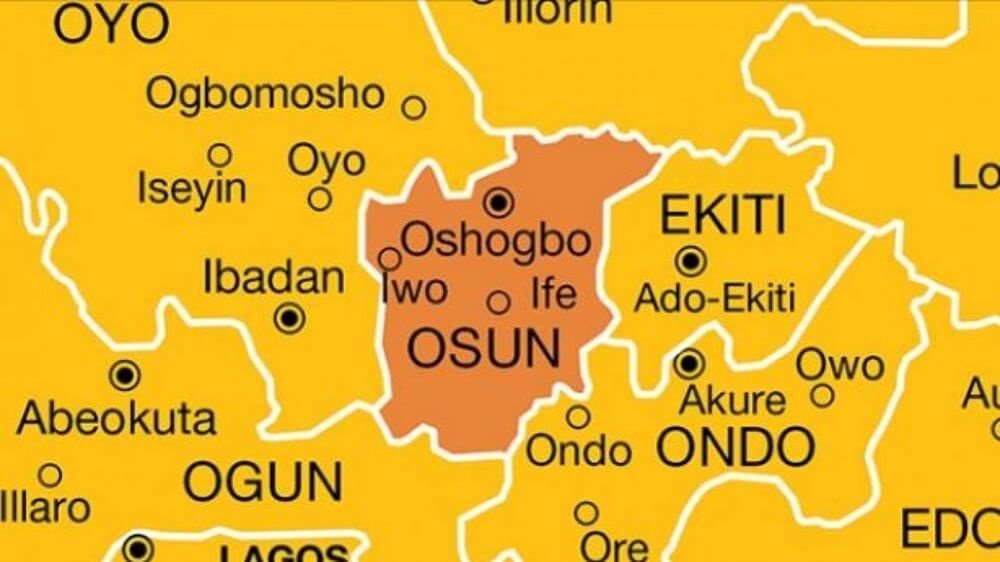
Some hoodlums suspected to be political thugs on Sunday stormed a permanent voter’s card (PVC) distribution centre in Okuku, the headquarters of the Odo-Otin Local Government Area of the state, and carted away two packs of PVCs.
The INEC officials were busy distributing the cards at the Oyinlola DC Primary School, Ward 2, when the thugs suddenly arrived and started shooting sporadically into the air, scaring residents and officials, and took two packs of cards and left the venue before police could arrive at the scene.
The spokesperson of the Osun State Command, Abiodun Ojelabi, said that about ten armed hoodlums invaded the centre, fired sporadically into the air and carted away three packs of PVCs before fleeing the scene.
Ojelabi disclosed that the State Commissioner of Police, Ibrahim Gotan, has condemned the attack and directed a comprehensive investigation to identify and prosecute those responsible.
Reacting to the development, the Resident Electoral Commissioner (REC) of INEC in the state, Oluwatoyin Babalola, condemned the attack. She said she was to get the detailed report on the attack, adding that she is yet to know the exact number of PVCs carted away by the hoodlums.
The REC, however, assured the people of the state that the governorship election would be free, fair, credible, inclusive and transparent.
The ruling All Progressives Congress (APC) has uploaded the details of 27 governorship candidates and their running mates to the Independent National Electoral Commission (INEC) Candidate Nomination Portal (ICNP) ahead of the August 8 deadline.
The party has also uploaded the particulars of more than 60 per cent of its candidates contesting seats in the various State Houses of Assembly.
Findings indicated that the APC’s ICT department has completed the upload for candidates in 27 of the 28 states conducting governorship elections, with disagreement over the deputy governorship slot in one North-West state delaying the final submission.
A source on the APC National Working Committee (NWC) Vetting Committee, chaired by Hon. Jibrin Bancir, disclosed that 15 of the 16 incumbent governors seeking re-election had been cleared and uploaded to the portal.
Also uploaded were the details of 12 first-time governorship candidates and their running mates, including Obafemi Hamzat (Lagos), Solomon Adeola (Ogun), Ogundu Kingsley Chinda (Rivers), Eric Opah (Abia), Mohammed Abubakar (Bauchi), Mustapha Gubio (Borno), Jamilu Gwamna (Gombe), Ahmed Aliyu Wadada (Nasarawa) and Baba Malam Wali (Yobe).
Speaking on condition of anonymity, a member of the vetting committee said the party had made substantial progress in meeting the electoral commission’s deadline.
“We have made giant strides in our efforts to upload the details of all our governorship candidates and their deputies. In fact, but for one state, we would have completed and closed the process for governorship candidates,” the source said.
The source attributed the delay to the unresolved choice of a deputy governorship candidate in a North-West state.
“The delay is caused by the deputy governorship candidate. We have been told that the issue will be resolved at a crucial stakeholders’ meeting scheduled for Monday here in Abuja,” the official added.
On the nomination of state assembly candidates, the source said the party had overcome initial technical challenges on INEC’s portal and had successfully uploaded the particulars of more than 60 per cent of its candidates.
“Despite the initial delay due to technical issues from the electoral umpire, our ICT personnel kept scanning and filling the details of our State Houses of Assembly candidates,” the source stated. “It was easy for us to upload immediately INEC opened the portal for sub-national lawmakers.
“Recall that our party completed the uploading of our Presidential and National Assembly candidates within record time. We are fully set to ensure that details of all 28 governorship candidates, their deputies, and the 990 state legislative nominees are uploaded well before the August 8 deadline.”
Under Section 29(1) of the Electoral Act 2026, political parties must strictly comply with statutory timelines to submit candidate lists along with affidavits and personal declarations (Forms EC9 and EC9A through EC9E).
The digital portal—which opened at 9:00 a.m. on July 18—will automatically lock at 6:00 p.m. on August 8, leaving no room for manual submissions or post-deadline extensions.

Cardoso, Okonjo-Iweala to lead Africa emerging markets forum

AEDC Promotes 547 Employees, Raises Pay For 579 Others

FULL LIST: BBNaija Season 11 Kicks Off As 24 Housemates Battle For Record N160m Prize




-

 News22 hours ago
Heavy haul: N10bn Cocaine, Loud, opioids intercepted at Lagos ports(PHOTOS)
-

 News15 hours ago
Tinubu Appoints Olanrewaju-Smart as Presidential Adviser on House of Representatives Affairs
-

 News14 hours ago
Abbas Hails President Tinubu’s Choice of Olanrewaju-Smart as House Liaison Adviser
-
 News14 hours ago
Atiku demands proper accounting of N7.98trn oil windfall, says Nigerians deserve to know
-

 News14 hours ago
Bandits kidnap Kebbi State High Court judge
-

 News21 hours ago
SAD! Absucted victims, 2 babies born in terrorists’ camp d*e
-

 News14 hours ago
ICPC investigates Permanent Secretary over delayed Tinubu’s approved agency funds
-

 Opinion16 hours ago
The Sundiata Post Model (4): Realm of the Long Term
Warning: Undefined variable $user_ID in /home/naijuinz/public_html/wp-content/themes/zox-news/comments.php on line 49
You must be logged in to post a comment Login