News
$10bn is required yearly for 10 years to fix power sector — FG
- /home/naijuinz/public_html/wp-content/plugins/mvp-social-buttons/mvp-social-buttons.php on line 27
https://naijablitznews.com/wp-content/uploads/2024/02/Adebayo-Adelabu.jpg&description=$10bn is required yearly for 10 years to fix power sector — FG', 'pinterestShare', 'width=750,height=350'); return false;" title="Pin This Post">
- Share
- Tweet /home/naijuinz/public_html/wp-content/plugins/mvp-social-buttons/mvp-social-buttons.php on line 72
https://naijablitznews.com/wp-content/uploads/2024/02/Adebayo-Adelabu.jpg&description=$10bn is required yearly for 10 years to fix power sector — FG', 'pinterestShare', 'width=750,height=350'); return false;" title="Pin This Post">
The Federal government has emphasised that for the power sector to operate at peak performance, an annual investment of $10 billion is imperative, just as it also disclosed that the country would allocate N2.9 trillion to achieve full sector subsidy.

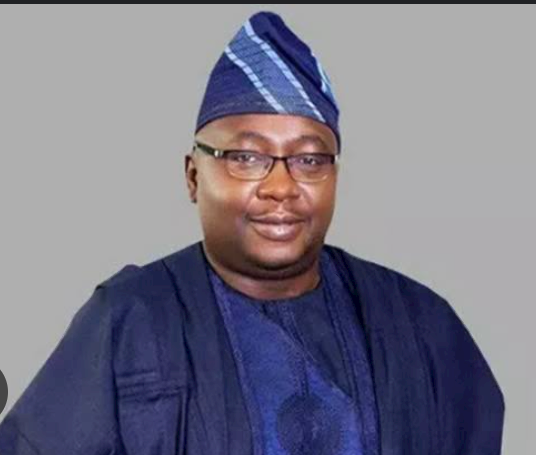
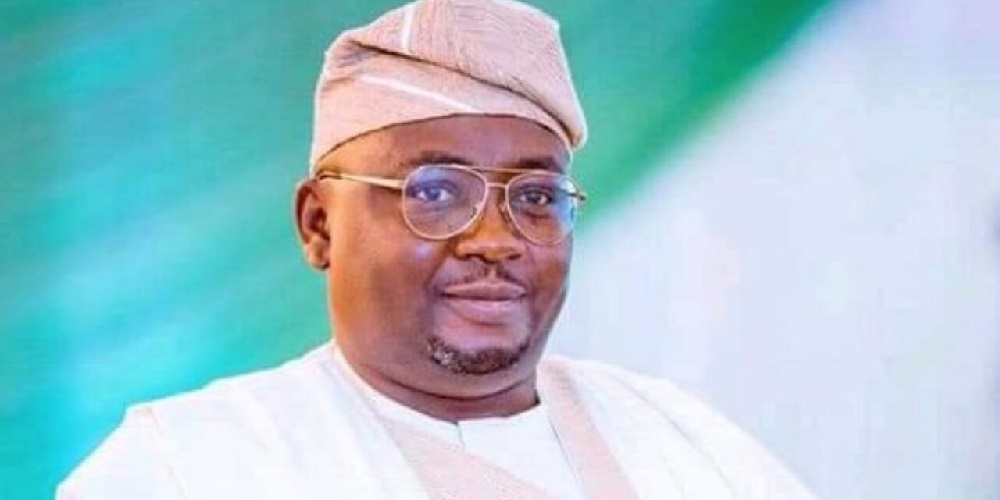
Speaking yesterday in Abuja at a one-day investigative hearing on halting the new electricity tariff increase by the Nigerian Electricity Regulatory Commission (NERC) for onward implementation by the Distribution Companies (DisCos), the Minister of Power, Adebayo Adelabu said that the 10 billion dollars was needed annually in the next ten years to revive the nation’s power sector and end the liquidity challenge.
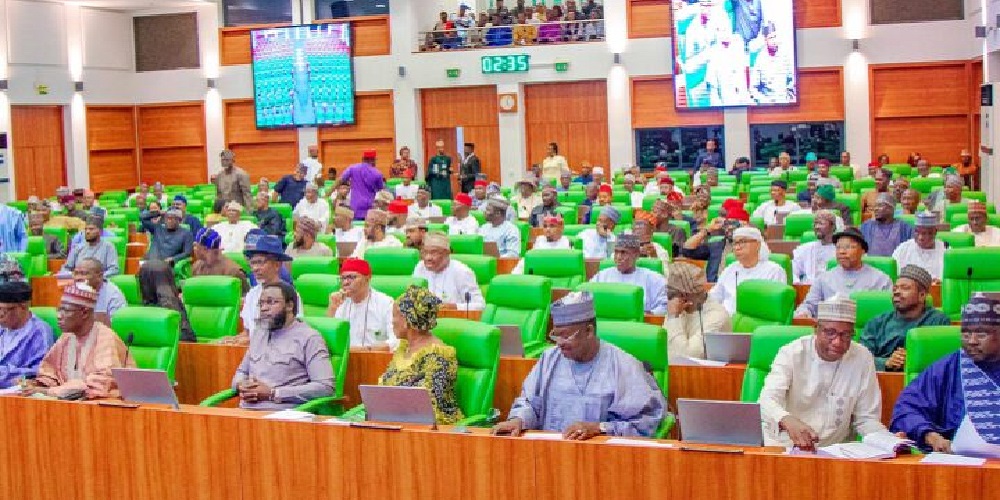
This is as Senators have called on the Minister of Power, Adebayo Adelabu and the Nigerian Electricity Regulatory Commission, NERC, to as a matter of urgency, reverse the recent decision to increase electricity tariff for band A customers in the country.

The investigative hearing by Senator Enyinnaya Abaribe, APGA, Abia South led Senate Committee on Power is also about the N2.9tn required for electricity subsidy payment, other debts owed in the sector, and the state of metering in the country as well as the $1.3 billion owed gas companies even as it asked why Nigerians were suddenly classified under various bands.
The Minister told the Senate Committee that the major challenge in the sector was absence of liquidity, saying that the sector has been operating on a subsidised tariff regime, given the absence of a cost-reflective tariff, just as he stressed the subsidy had not been funded over the years as huge liabilities was been owned the Generating Companies ( GenCos) and the Gas Companies.
Adelabu who noted that the inability of the government to pay the outstanding N2.9 trillion subsidy was due to limited resources, hence the need to evolve measures to sustain the sector, however, pleaded with the Senators to support the process of paying the debt owed operators across the value chain of generation transmission and distribution.
According to him, the increase was based on supply and that any customer that do not receive 20 hours power supply will not be made to pay the new tarrif, adding that the government was committed to ensuring sustainable reform in the sector, even as he told the Senate that eight million meters would be acquired in the next four years.
The Minister who noted that there was the urgent need to clear the outstanding debt owed GenCos and Gas companies, said, “For this sector to be revived, government need to spend nothing less than 10 billion dollars annually in the next 10 years. This is because of the Infrastructure requirement for the stability of the sector, but government can not afford that.
According to him, poor metering remains a big issue too in the industry when he told the lawmakers about how a company, Ziklag Networks Limited allegedly collected N32 billion for a contract to supply meters but has refused to do so in 20 years.
“And so we must make this sector attractive to investors and to lenders. So for us to attract investors and investment, we must make the sector attractive, and the only way it can be made attractive is that there must be commercial pricing.
“If the value is still at N66 and the government is not paying subsidy,the investors will not come. But now that we have increased tarrif for a Band, there are interest been shown by investors.”
According to Adelabu, to improve power supply, the government was investing in hydroelectric power, even as he said that construction of 700 megawatt power in Zungeru had commenced, while Kashimbila Hydroelectric power plant of 40 mega watt was awaiting evacuation to improve generation.
The Minister also disclosed that there was also an ongoing investment in 26 small hydropower dams to boost electricity production across the country.
Officials of the Central Bank of Nigeria were also on the ground to provide details on how to close the metering gap of 8 million meters.
In his submission, CBN Director of Development Financing, Sahaad Ahmad said the CBN provided an N55 billion loan which was assessed by all the 11 DISCOS, pointing out that only N6b has been paid back and that CBN’s intervention has done little to stop estimated billing as many customers remain unmetered.
The only group that seems comfortable with NERC and its action appears to be the Association of distribution companies.
Every other speaker -including the Manufacturers Association of Nigeria and a former NERC Chairman, Sam Amadi believes sufficient consultation was not done and that the increase was discriminatory and in violation of the law.
Chairman, National Electricity Regulatory Commission, NERC, Sanusi Garba solidly backed the position of the Minister, said that it was a “miracle” that the DISCOS remained afloat to supply electricity as at the 1st Quarter of 2024.
When it was time for the Senators to respond to the presentation of the Minister, they however decried the experiences of Nigerians on electricity supply over the years, despite the unbundling of the sector.
The toughest opposition came from the Senators themselves -who believe the DISCOS have done little to improve their capacity and are all out to rip off their customers to cover for their inefficiency.
On his part, the Vice Chairman of the Committee, Senator Lola Ashiru, APC, Kwara South who noted that Nigerians were paying for the inefficiency of power sector operators, said that there was a lot of inefficiency across the value chain of generation, transmission, and distribution, adding that poor Nigerians must be protected and that there was the need to consider a reversal of the tariff increase.
Also speaking, Senator Simon Lalong, APC, Plateau South who told the Minister that there was no consultation before the increase, said that issues of palliative should have been discussed and provided before the tarrif increase.
On his part, Chairman of the Committee, Senator Abaribe who noted that what Nigerians wanted was a solution to the issues and ways to ensure liquidity in the sector, also decried the non of appearance of a company “ZIGLAKS” over the failed agreement to provide prepaid meters for Nigerians, just as he alleged that the company had received N32 billion in 20 years to meter Nigerian electricity consumers.
Also speaking, Senator Adamu Aliero, PDP, Kebbi Central who also said that there was no due consultation before the tariff was increased, said that the public was not at peace with the increase, saying that the increase was over 200 per cent, hence the need for a reversal of the tarrif increase.
Presentations were made by the Nigerian Electricity Regulatory Commission (NERC), Manufacturers Association of Nigeria (NAN), Association of Power Generation (Gencos), Electricity Distribution Companies (DisCos) among others.
News
Why we froze Osun govt accounts — EFCC
The Economic and Financial Crimes Commission has explained why it froze the bank accounts of the Osun State Government, saying the action was taken to prevent the alleged diversion of public funds despite the state’s August 15 governorship election.
The anti-graft agency disclosed this in a statement posted on its official X account on Wednesday, saying it had been investigating the Osun State Government since March 2026 over the alleged fraudulent handling of about N11bn in Ecology Funds, Intervention Funds and allocations from the Federation Account Allocation Committee.
According to the commission, some officials of the state government, including the Accountant General, had already been questioned as part of the ongoing investigation.
The EFCC said the investigation alone would not have warranted freezing the accounts, but claimed it detected suspicious movement of funds from the government’s accounts beginning August 2.
“These ongoing investigations of the state government would not have warranted any placement of Post No Debit order on its account but for the precipitate and unwarranted movement of funds from the accounts to different suspicious accounts since August 2, 2026.
“The Commission noticed huge transfers of funds into different corporate entities and had to swiftly halt the trend by freezing the accounts from which such heavy funds are being moved,” the statement read.
Defending its decision, the commission said it had a legal responsibility to protect public funds and could not ignore suspicious financial transactions because of the forthcoming governorship poll.
“The Commission’s preventive mandate is a public-inclined framework of safeguarding public funds, assets and resources.
“The Commission cannot watch idly while a state government’s account is being pillaged. While the Commission is fully aware of the impending governorship election in Osun State, it has a responsibility to act in defence of the sanctity of the funds of the state.
“It will be uncharitable for the Commission to allow an excuse of an upcoming election to fold its arms to perform its legally-assigned functions,” it stated.
The EFCC further disclosed that Osun was not the only state under investigation, saying it was monitoring the finances of several state governments.
“It is equally needful to state that the Commission is keeping watch over the finances of other states like Osun State. Many of these states are on the investigative radar of the Commission to ensure accountability and probity.
“The Commission has always pointed out that it is non-partisan and non-sectarian but always working in the overall interests of Nigerians. The Osun State government account was frozen to save public funds from being looted,” the statement added.
The commission urged Nigerians to ignore what it described as false narratives surrounding the action.
“The public is enjoined to ignore false narratives and deliberate demonization of the works of the EFCC. The interests of all Nigerians are greater and will always be protected by the Commission,” it said.
The explanation came hours after Osun State Governor, Ademola Adeleke, challenged EFCC Chairman Ola Olukoyede to publicly justify the freezing of the state’s accounts.
Speaking with journalists at the Government House in Osogbo on Wednesday, Adeleke described the action as illegal, insisting that it was carried out without a court order.
“All I ask is for the EFCC chairman to explain to the good people of Osun State and to Nigerians in general why he froze Osun State Government Account, and show proof to support whatever reason he presents,” the governor said.
He also directed the state Attorney General and Commissioner for Justice, Oluwole Jimi-Bada (SAN), to challenge the action at the Federal High Court in Osogbo.
Jimi-Bada argued that while the EFCC had the power to investigate government accounts, it lacked the authority to freeze them without first obtaining a court order. He said the state government would seek judicial redress.
News
Army puts N60m price on wanted ISWAP gov, deputy
The Nigerian Army has placed a combined N60m bounty on two top leaders of the Islamic State West Africa Province, including the group’s governor, Abu Musa Al-Mangawi Baa Shuwa, and his deputy, Muhammad Jidda, after declaring them wanted over their alleged involvement in terrorist activities in the Lake Chad Basin.
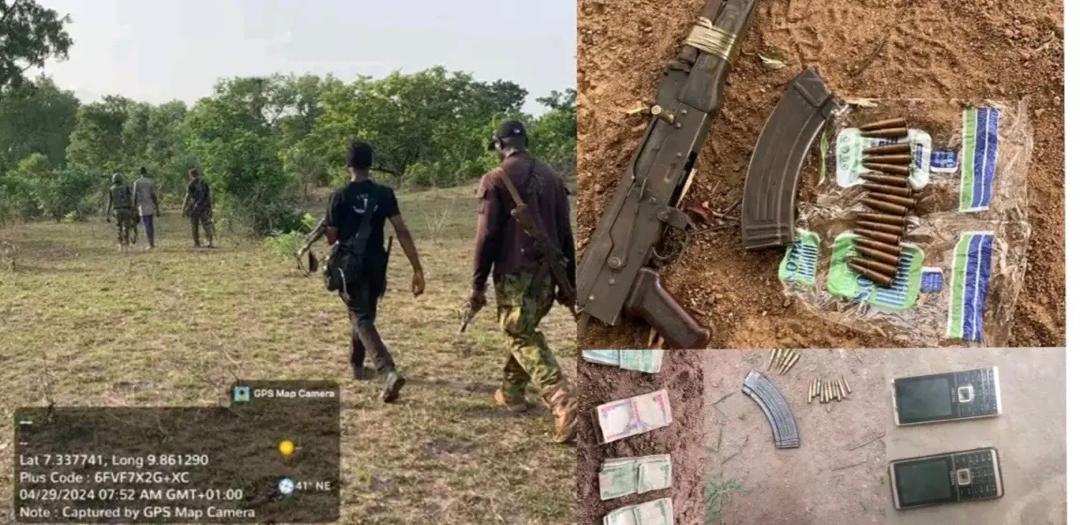
Their identities were uncovered through forensic analysis of technical devices recovered during a recent military offensive against the terrorist group in the Lake Chad region.
The Acting Military Information Officer, Northeast Joint Taskforce Operation Hadin Kai, Capt Muhammed Goni, disclosed this in a statement on Wednesday.
While a N50m bounty was placed on the ISWAP governor, the military offered N10m for credible information leading to the arrest of his deputy, according to fliers attached to the statement.
According to Goni, their identities were obtained after a forensic exploitation of the recovered devices, including high-value intelligence materials and a camcorder.
The statement read, “Operation Hadin Kai (OPHK) has recorded another significant breakthrough following recent successful offensive operations against ISWAP/ISIS terrorists in the Lake Chad region of Northern Borno State.”
He said during the operations, troops recovered several technical devices and other high-value intelligence materials, including a camcorder used by ISWAP terrorists to record propaganda videos and document operational activities.
“Subsequent forensic exploitation of the recovered devices generated actionable intelligence, leading to the identification of locations associated with terrorist activities as well as identities of several senior ISWAP leaders operating within the Mangari–Metele–Dogon Chukun axis along the fringes of the Lake Chad Basin in Abadam and Kukawa local government areas of Borno State.
“The identified terrorist leaders and key operatives include Abu Musa Al-Mangawi Baa Shuwa – Wali (Governor of ISIS West Africa Province), his Deputy/Amirul Jaish Muhammad Jidda (“The One-Handed Man”) and Hamad Abu Hanifa, the Amirul-Fiya of ISWAP, among others,” he said.
He further noted that Operation Hadin Kai wished to specifically draw the attention of the public to Abu Musa Al-Mangawi Baa Shuwa, the ISWAP Wali, who remains the most wanted terrorist leader operating within the Lake Chad Basin.
“The military will offer a substantial financial reward to any individual whose credible and actionable information directly leads to his arrest,” he said.
Goni, however, assured that all information received would be treated with the utmost confidentiality, adding that informants would be fully protected in accordance with established security procedures.
“Operation Hadin Kai urges members of the public to support ongoing counter-terrorism efforts by providing credible and timely information that could assist security agencies in locating and apprehending these suspected terrorist operatives,” he stated.
The spokesman called on members of the public to report any relevant information through established security reporting channels or via 07084988859.
“Citizens are strongly advised not to confront or attempt to apprehend the suspected terrorists under any circumstances,” he said.
News
Lagos professors earn less than secondary school principals – ASUU
The Academic Staff Union of Universities (ASUU) has alleged that senior professors in Lagos State-owned universities now earn less in monthly remuneration than secondary school principals in the state’s public service.
The union described the situation as a reflection of the declining welfare of academics, while accusing the Lagos State Government of failing to implement the 2025 Federal Government-ASUU Agreement, subjecting lecturers to what it called “starvation wages,” increased tax deductions and alleged victimisation of union leaders.
The allegations were made on Wednesday during an emergency joint press conference by ASUU branches in Lagos State University (LASU), Lagos State University of Science and Technology (LASUSTECH), and Lagos State University of Education (LASUED), held at the ASUU Secretariat, LASU, Ojo.
Speaking on behalf of the coalition, ASUU Zonal Coordinator, Comrade Oluwaseun Babalola, appealed to Governor Babajide Sanwo-Olu to urgently implement the 2025 agreement in the state-owned universities.
He said the government’s failure to implement the agreement, eight months after its agreed commencement date of January 1, 2026, had worsened the condition of academic staff.
“We have invited you today to draw the attention of the Lagos State Government, the people of Lagos State, and indeed all Nigerians to the continued failure of the State Government to implement the provisions of the 2025 Federal Government/ASUU Agreement in its three public universities, despite the mutually agreed commencement date of January 1, 2026,” Babalola said.
To support the union’s claim on salary disparity, Babalola displayed what he described as a payslip of a secondary school principal showing a monthly earning of N799,000, insisting that no professor in LASU currently earns such an amount.
He also criticised increased tax deductions on lecturers despite the non-implementation of the new salary structure.
“Somebody that is already complaining of what he is earning is not enough. You are increasing your deduction,” he said.
Babalola added that associate professors and professors were paying over N120,000 monthly in tax deductions from salaries he described as inadequate.
The union also demanded the unconditional reinstatement of five ASUU-LASU executives dismissed between seven and nine years ago, alleging that they were punished for their union activities.
The affected officials include former Chairman, Dr. Isaac Oyewunmi; Vice Chairman, Dr. Suenu; Secretary, Dr. Tony Dansu; Assistant Secretary, Dr. Oyekan; and Treasurer, Dr. (Mrs.) Sonibare.
Babalola alleged that the affected officials were subjected to disciplinary actions over issues connected to their union activities.
Also speaking, ASUU-LASUED Chairman, Dr. Victor Akinola, said internal mechanisms for addressing grievances within the universities had become ineffective.
He alleged that complaints from unions to governing councils and relevant authorities often received no attention, leaving lecturers without effective channels for redress.
Akinola also alleged that threats from management had created an atmosphere of fear on campuses, discouraging some lecturers from participating in union activities.
Similarly, ASUU-LASUSTECH Chairman, Comrade Murisiku Onigemo, blamed irregular promotion exercises for low morale among academic staff.
He said promotion processes had not consistently followed established guidelines, affecting staff motivation and institutional growth.
The union called on the Lagos State Government to immediately implement the 2025 Federal Government-ASUU Agreement in all state-owned universities from January 1, 2026, address outstanding welfare issues, reinstate the dismissed ASUU-LASU leaders and stop what it described as victimisation of union officials.
-
News16 hours agoFG Reopens Portal For Nigerians To Obtain N50,000 Grant(See how to apply)
-
News14 hours agoHow I was scammed, businessman who paid N400m to embattled PFIPC DG Adeyemi tells HoR C’ttee
-
News17 hours agoJust in: Nigerian Army Nabs Two Soldiers Who Acted As Bouncers At Peller’s Wedding In Lagos
-
News10 hours agoConfusion as three kids found in female witch doctor’s apartment
-
Economy17 hours agoSee Black Market Dollar To Naira Exchange Rate Today 5th August 2026
-
News16 hours agoJust in: Ten days to guber election, EFCC freezes Osun govt First Bank account
-
News15 hours agoJust in: WAEC releases 2026 WASSCE results as girls top boys in Maths, English
-
News19 hours agoNCC hands over digital facilities to Enugu govt

Warning: Undefined variable $user_ID in /home/naijuinz/public_html/wp-content/themes/zox-news/comments.php on line 49
You must be logged in to post a comment Login