Connect with us

News

Security requires stakeholders’ collaboration – Speaker Abbas

Published

on

ADVERTISEMENT
Zoom Ad
ADVERTISEMENT
Zoom Ad

Security requires stakeholders’ collaboration – Speaker Abbas

By Gloria Ikibah

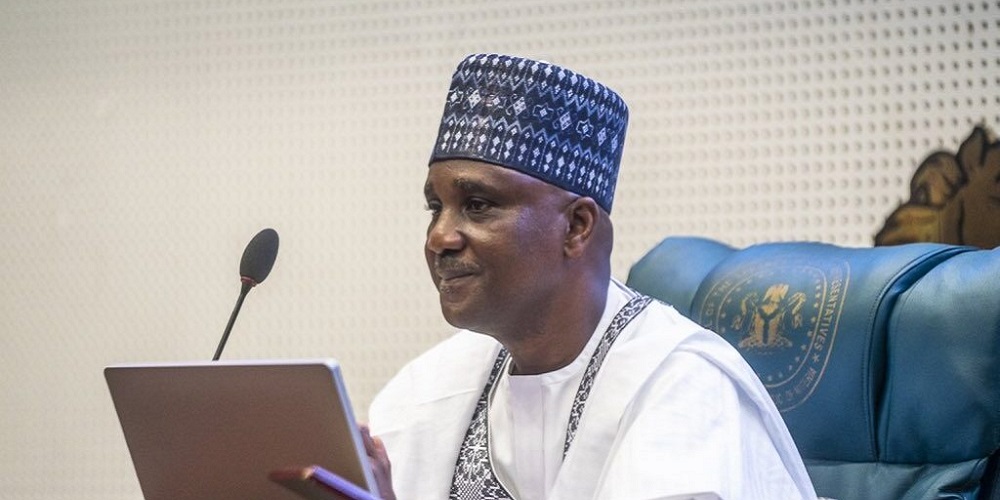
The Speaker of the House of Representatives Hon. Abbas Tajudeen, Ph.D, on Tuesday, stressed the need for all stakeholders to collaborate towards security of life and property in Nigeria.

While stating that the 10th House is committed to providing all the legislative support needed to enhance security in the country, Speaker Abbas called for better collaborations between the legislative and the executive arms of the government as well as the Civil Society Organisations (CSOs) and the media.

Advertisement

The Speaker made the call in a keynote address at the 2024 Nigeria Defence Governance Forum Organised By the Africa Centre For Strategic Studies in Abuja on Tuesday.

Speaker Abbas noted that the forum added a significant voice to the ongoing national conversation on fostering dialogue and collaboration between key stakeholders in national security governance. He noted that the importance of the forum was even more obvious, considering Nigeria’s strategic importance.

“Security challenges have significant implications not only within our borders but also across West Africa and the broader African continent. The persistence and complexity of these issues underscore the critical need for regional and continental collaboration. Collaborative efforts are essential to address the transnational nature of terrorism, facilitate intelligence sharing, and harmonise economic and social development strategies, which can mitigate the root causes of insecurity,” he added.

The Speaker also stated that since the return of democracy in 1999, legislative control of the security sector in Nigeria has progressively improved.

Advertisement

He said, “Our standing committees have become more assertive in holding security sector agencies and actors to account,” adding that the scope of the activities of these committees has included monitoring the funds the government has budgeted for the sector, ensuring accountability in the use of allocated funds and personnel, and overseeing other issues such as hardware, human rights, among others.

He stressed the need for collaboration between the National Assembly, security and defence sector officials, and the public through the media and the Civil Society Organisations (CSOs) as “not only desirable but also constitutionally mandated and expected.”

He added: “Security sector agencies should commit to open communication, regularly providing accurate and detailed reports to the National Assembly. This includes adhering to legal and ethical standards and facilitating external audits and evaluations.”

On their part, Speaker Abbas said CSOs and the public could bolster these efforts by maintaining active engagement with legislative processes, offering independent assessments, and voicing concerns or recommendations.

Advertisement

The Speaker further said the legislature also required the assistance of security agencies, alongside stakeholders such as the public, CSOs, development partners, and the media, to integrate constituent and citizen perspectives into defence and security strategy and policymaking.

By facilitating inclusive dialogues and public forums, he stated that the diverse viewpoints and community needed are communicated to lawmakers.

“We expect CSOs and development partners to provide expert analyses, data-driven insights, empirical evidence, and international best practices to enrich our debates and decision-making. It is also important for the media to amplify such discussions, ensuring widespread public engagement and transparency. This collaborative approach will inform legislators with a broad spectrum of opinions and experiences and help us tailor security policies and laws to reflect the actual needs and aspirations of the citizenry.”

Speaker Abbas also called on the media to focus on rigorous reporting and coverage of security sector activities, highlighting compliance and discrepancies in the officials’ engagements with the legislature.

Advertisement

“Through this multifaceted approach, we can ensure continuous oversight and enhance the security sector’s governance, which aligns with best practices for democratic oversight.”
Continue Reading
Advertisement
Click to comment

Warning: Undefined variable $user_ID in /home/naijuinz/public_html/wp-content/themes/zox-news/comments.php on line 49

You must be logged in to post a comment Login

Leave a Reply

News

Just in: Ex-HoR spokesperson Zakari Mohammed emerges Kwara ADC primary consensus guber candidate

Published

on

ADVERTISEMENT
Zoom Ad
ADVERTISEMENT
Zoom Ad

..promises party chieftains, supporters an unwavering loyalty

A former House of Representatives spokesperson, Hon Zakari Mohammed has emerged the gubernatorial candidate of African Democratic Congress ADC for Kwara state in the 2027 general elections.

Mohammed a frontline politician emerged as a consensus candidate of the party, in Kwara, he was a former Commissioner for Information and Energy is a strong grassroots politician who has at different times actively participated in both state and federal politics.

In a message gratitude to party chieftains and party loyalists, Mohammed thanked them all for the massive support he enjoyed during the primary.

Advertisement

He said:”The overwhelming confidence reposed in me by our national leadership, state leaders, stakeholders, and the teeming members of the African Democratic Congress across Kwara State, in adopting me as the consensus Governorship candidate of our great party, is deeply humbling and profoundly appreciated.

“I sincerely thank every leader and member of the party for this rare demonstration of trust, unity, and commitment to the collective aspiration of building a better Kwara State anchored on justice, competence, accountability, and people-oriented governance.
I particularly commend my colleagues within the Kwara leadership structure of the party for their patriotism, maturity, dedication, and genuine love for Kwara State in arriving at this historic consensus.

“Their sacrifices and determination to place the interest of the people above personal ambition have once again shown that ADC remains a party driven by democratic ideals, inclusiveness, and service to humanity.

“I accept this enormous responsibility with utmost humility and a deep sense of duty. I wish to assure all party members and the good people of Kwara State that I shall not betray the confidence bestowed upon me. By the grace of God, and with the collective support of our people, victory is certain.

Advertisement

“I call on all Kwarans and Nigerians who desire genuine change to massively support and vote for all ADC candidates from top to bottom in the forthcoming elections. The current economic hardship, suffering, and hopelessness imposed on Nigerians under the administration of the All Progressives Congress can only be reversed through purposeful leadership and people-centered governance.

“Our party stands firmly against godfatherism, political intimidation, and imposed leadership. In ADC, the people remain the center of our democratic process.

“Our members, supporters, and voters are our greatest strength and the premium focus of our attention, as clearly enshrined in democratic principles.

“Together, we shall rescue Kwara State and contribute meaningfully to the rebuilding of Nigeria.
Thank you all and may God bless Kwara State and the Federal Republic of Nigeria.

Advertisement
Continue Reading

News

Troops Repel Terrorists’ Attack on Military Post in North-east, Eliminate 12 ISWAP/Boko Haram Fighters

Published

on

By

ADVERTISEMENT
Zoom Ad
ADVERTISEMENT
Zoom Ad

Troops of the Joint Task Force (North East), Operation Hadin Kai (OPHK), have eliminated 12 ISWAP and Boko Haram fighters during a failed attack on a military position in the Kirawa axis of Sector 1 OPHK Area of Responsibility in the early hours of May 22, 2026.

The operation was carried out under Operation Desert Sanity and Siege Operations after suspected terrorists attempted to infiltrate positions occupied by troops of the 153 Task Force Battalion and other allied forces along the Nigeria-Cameroon border axis.

According to the Media Information Officer of Joint Task Force (North East) Operation Hadin Kai, Lieutenant Colonel Sani Uba, the attack was promptly detected and effectively repelled by troops and members of the Civilian Joint Task Force (CJTF), who responded with superior firepower and maintained control of their positions throughout the encounter.

The terrorists were subsequently forced to abandon the mission and retreat towards the Cameroon axis after suffering heavy casualties during the gun battle.

Advertisement

“Intelligence, Surveillance, and Reconnaissance assets, as well as platforms of the Air Component of OPHK and partner forces, provided coordinated support during the operation.

“Following the engagement, troops confirmed the neutralisation of 12 terrorists, while several others reportedly escaped with gunshot wounds, as evidenced by blood trails along their withdrawal routes.

“Recovered items included AK-47 rifles, rocket-propelled grenade systems, ammunition, and a PKT machine gun, further weakening the operational capability of the insurgents in the area,” the statement said.

Troops of OPHK, working alongside the Civilian Joint Task Force, have continued exploitation operations to track fleeing terrorists and recover additional weapons and equipment, while maintaining heightened vigilance across the area.

Advertisement

The Joint Task Force reaffirmed its commitment to sustaining pressure on terrorist groups until they are completely neutralised across the theatre of operations.

The military high command also commended the troops for their gallantry, professionalism, and swift response, which it described as the third successful operation recorded within the week, urging them to sustain the operational momentum in the interest of national security.

Continue Reading

News

Africa needs $2.8 trillion by 2030 to meet climate goals — Report

Published

on

By

ADVERTISEMENT
Zoom Ad
ADVERTISEMENT
Zoom Ad

Africa will require an estimated $2.8 trillion between 2020 and 2030 to effectively tackle climate change and meet its commitments under the Paris Agreement.

A new report policy analysis by Harrison Rehoboth Consulting, states that the continent needs about $277 billion annually to fund climate adaptation and mitigation projects.

The investment is aimed at reducing the impact of floods, droughts, desertification, and other environmental challenges threatening livelihoods across the region.

Femi Sekoni, spokesperson for Harrison Rehoboth Consulting, said the funding is critical to strengthen infrastructure, protect vulnerable communities, improve food security, expand renewable energy, and support a transition to cleaner, more sustainable economies.

Advertisement

Despite the growing climate crisis, the report notes that Africa remains heavily dependent on foreign sources for climate financing. Domestic investors contribute only a small portion of available funds.

Local institutions including banks, pension funds, insurance firms, and private investors account for roughly 10% of climate finance flowing into the continent. International organisations and development partners provide the larger share.

Uneven distribution and structural barriers

Climate financing across Africa remains unevenly distributed. Countries with stronger financial systems and investment structures—South Africa, Egypt, Nigeria, Morocco, and Kenya—attract a significant percentage of available funding.

Advertisement

Many other African countries facing severe climate threats struggle to attract large-scale investment.

The report cites weak institutions, limited project preparation capacity, policy uncertainties, and concerns over investment risk as key barriers.

The analysis also raises concerns about the structure of climate financing available to African countries.

A large portion comes in the form of loans rather than grants or concessional financing, which could worsen debt burdens for nations already facing rising debt-servicing obligations and economic pressure.

Advertisement

Climate adaptation projects such as flood control systems, drought resilience programmes, and coastal protection infrastructure often provide social and environmental benefits but generate little direct revenue.

This makes loan repayment difficult for governments.

The report notes that rising debt levels have fueled global discussions around climate justice and the need for wealthier nations to provide more grant-based support to vulnerable countries facing the harsh effects of climate change.

The report acknowledges efforts by institutions such as the African Development Bank and some African countries, including Rwanda, Kenya, Senegal, Egypt, and South Africa, to expand climate investment initiatives and develop financing frameworks capable of attracting private investors.

Advertisement

However, Harrison Rehoboth Consulting stresses that Africa’s climate finance gap cannot be closed through international promises alone.

It calls for stronger domestic financial systems, improved governance, better project planning, and reforms in global financial institutions to make climate funding more accessible.

Key recommendations include: increasing concessional financing and grants for adaptation projects; improving collaboration between governments and private investors; strengthening policies that encourage long-term investment in climate and infrastructure projects; and building domestic financial capacity to reduce over-reliance on external funding.

The report concludes that closing Africa’s climate finance gap will require coordinated action at national, regional, and global levels to ensure funding reaches the countries and communities most exposed to climate risk.

Advertisement
Continue Reading

Trending

Copyright © 2024 Naija Blitz News