
News
ITU and the race to fund SDGs in 2030

- /home/naijuinz/public_html/wp-content/plugins/mvp-social-buttons/mvp-social-buttons.php on line 27
https://naijablitznews.com/wp-content/uploads/2024/06/images-84-466x600.jpeg&description=ITU and the race to fund SDGs in 2030', 'pinterestShare', 'width=750,height=350'); return false;" title="Pin This Post">
- Share
- Tweet /home/naijuinz/public_html/wp-content/plugins/mvp-social-buttons/mvp-social-buttons.php on line 72
https://naijablitznews.com/wp-content/uploads/2024/06/images-84-466x600.jpeg&description=ITU and the race to fund SDGs in 2030', 'pinterestShare', 'width=750,height=350'); return false;" title="Pin This Post">


By Sonny Aragba-Akpore.
The International Telecommunications Union,s ( ITU) Plenipotentiary Conference (PP) due for Doha,Qatar in 2026 holds very significant milestones for the global digital telecommunications body.
For one thing,it’s going to be the first of such conferences to be hosted by the Doreen Bogdan-Martins led Executive Council of the ITU.
2026 is also the year the ITU earmarked for the collation of the funds to connect the rest of the unconnected world under the Sustainable Development Goals (SDGs) by 2030.
Only last month,at the World Summit on Information Society (WSIS),Geneva,Switzerland,donor countries raised funds that have increased the available moneys for the SDGs to over $50billion accounting for more than 50% of the anticipated $100billion for the projects.
ITU , the UN Agency for Digital Technologies, announced on May 27,2024 a donation of a $4.8 billion in investment commitments toward global connectivity.
The announcement brings the total pledges aimed at closing the digital divide through ITU’s Partner2Connect Digital Coalition (P2C) to $50.96 billion, over half the $100 billion goal set for 2026.
The pledges to Partner2Connect, ITU’s platform to advance universal meaningful connectivity, were announced during the opening day of the World Summit on the Information Society (WSIS)+20 Forum High-Level Event in Geneva, Switzerland.
The new commitments announced at the WSIS Forum event were pledges that leverage artificial intelligence (AI) to enhance digital access, adoption and inclusion.
A visibly excited,ITU Secretary General,Bogdan-Martins told the gathering in Geneva that
“Closing the digital divide requires a team effort, and today we scored a huge win for global connectivity,” she said adding “I am thrilled to see these amazing new commitments and that we have united P2C and WSIS to break through the halfway point in our goal to help bring the benefits of digital connectivity to everyone, everywhere.”
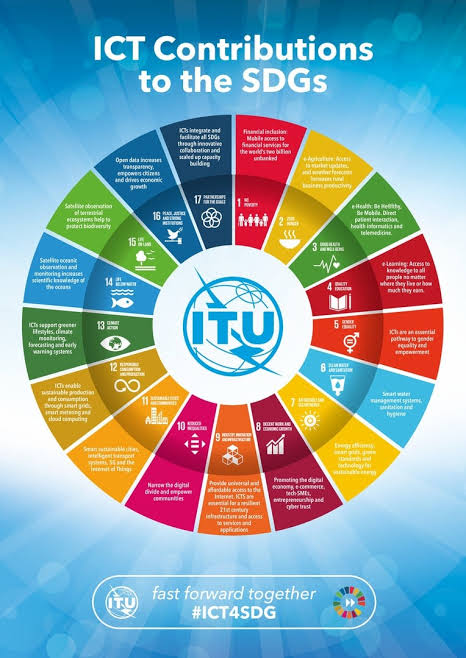
UN documents say “the Sustainable Development Goals (SDGs) aim to transform our world. These are calls to action to end poverty and inequality, protect the planet, and ensure that all people enjoy health, justice and prosperity.”
SDGs were born at the United Nations Conference on Sustainable Development in Rio de Janeiro,Brazil in 2012. The objective was to produce a set of universal goals that meet the urgent environmental, political and economic challenges facing our world.As part of the declarations,SDG agenda took root in 2015 and will run till 2030.
SDG Digital highlights that the funding gap of over $3.7 trillion for the SDGs should focus international efforts on enablers—such as infrastructure and connectivity—as well as the pooling of resources through collaboration including the private sector and the utilization of diverse financing methods.
There are hopes on the horizon as SDG Digital received new commitments to accelerate progress on the Sustainable Development Goals.
As part of the strategy to sustain the drive for funds to bridge the digital divide,ITU,s PP 26 in Doha is expected to bring the fund raising push upto date.
In 2023, the number of people not connected to the Internet decreased to an estimated 2.6 billion or 33 per cent from the estimated 2.7 billion people offline in 2022. Only 67 per cent of the world’s population, or 5.4 billion people, were online in 2023, the ITU said.
“This improvement in connectivity is another step in the right direction, and one more step towards leaving no one behind in support of the UN Sustainable Development Goals,” said Bogdan-Martin, in a statement.
“We won’t rest until we live in a world where meaningful connectivity is a lived reality for everyone, everywhere,” Bogdan-Martin added.
According to early estimates, growth in Internet connectivity remains the strongest in low-income countries where data indicate that Internet users increased by about 17 per cent over the past year. However, less than one-third of individuals are connected to the Internet in these countries.
UN assessments on the progress so far explained that half of the 169 SDG targets is either weak or insufficient at the 2030 Agenda’s halfway point. 30 % of the SDG targets have either stalled or gone in reverse.
“With digital transformation demanding joint efforts between the private sector, financial institutions, civil society, the UN, governments and young people, SDG Digital brings together experts, policy-makers and business leaders to explore the achievements, gaps and solutions on how digital technologies can support the 2030 Agenda.”
Last week ,Qatar , the host country of the next International Telecommunication Union (ITU) Plenipotentiary Conference (PP-26), announced the nomination of Mr.Ahmad Abdulla AlMuslemani,an engineer and President of the Communications Regulatory Authority (CRA), as Chairman-designate for the local organizing committee (LOC).
The ITU Plenipotentiary Conference (PP) is the highest decision-making body of ITU, the PP-26 will take place in Doha, Qatar, from November 9 to 27,2026.
“ITU’s next Plenipotentiary Conference in Qatar will set the stage for a digital future where human-centered technology drives progress and inclusion for everyone,”Bogdan-Martin. said adding “Under Eng. Ahmad Abdulla AlMuslemani’s leadership, I’m confident that PP-26 will make great strides in advancing ITU’s mission to connect the world meaningfully and sustainably.”
Delegates representing ITU’s 193 Member States meet every four years at the Plenipotentiary Conference to set out the organization’s strategic and financial plans. They also elect ITU’s senior management team, the Member States of the ITU Council, and the members of the Radio Regulations Board.
The decision to host PP-26 in Doha was adopted by consensus by ITU Member States in October 2022 at ITU’s Plenipotentiary Conference 2022, in Bucharest, Romania.
In its bid to host PP-26, the country noted its strong infrastructure for information and communication technologies as well as its status as a world leader in organizing and hosting major events, including high-level global and regional conferences across a variety of sectors.
As CRA President, AlMuslemani leverages over 18 years of rich experience in the information and communication technologies sector to strategically shape regulatory policies and digital infrastructure development.
His leadership plays a crucial role in aligning Qatar’s digital transformation initiatives with the National Development Strategy and Digital Agenda 2030.
AlMuslemani holds a Master’s degree in Communication Systems from the Swiss Institute of Technology and a Master’s in Management from HEC Paris in Qatar.
He also obtained a Bachelor’s degree in Electrical and Computer Engineering from Ohio State University, USA. His combined technical and managerial expertise spans Big Data, the Internet of Things, Cloud Computing, and notably, the deployment of 5G networks, which are pivotal in enhancing connectivity and technological access throughout Qatar. This expertise will undoubtedly add significant value to the PP-26 discussions.
Mr. Mohammed bin Ali Al Mannai, Qatar’s Minister of Communications and Information Technology, said: “This appointment underscores Qatar’s commitment to shaping the future of global communications and ensuring equitable access to information and communication technologies for all. We are confident that AlMuslemani’s extensive experience will be instrumental in guiding the conference towards impactful resolutions and fostering a collaborative environment for the ITU member states.”
As Chair-designate, AlMuslemani will work with ITU and its Member States to prepare for PP-26, which will guide the organization’s work through 2030 in overseeing global radio spectrum allocation, creating global technical standards, and advancing sustainable development through connectivity to digital technologies.
“Qatar has a proven track record of successfully organizing and hosting major international events.
We are confident that Qatar will be an exemplary host for the ITU Plenipotentiary Conference. It will be our honor to welcome the global ICT community to Doha, where we will share our rich culture, heritage, and hospitality. This conference presents an invaluable opportunity for us to collectively advance the global ICT agenda, fostering innovation and cooperation that will shape the future of digital technologies worldwide,” said AlMuslemani.













By Gloria Ikibah
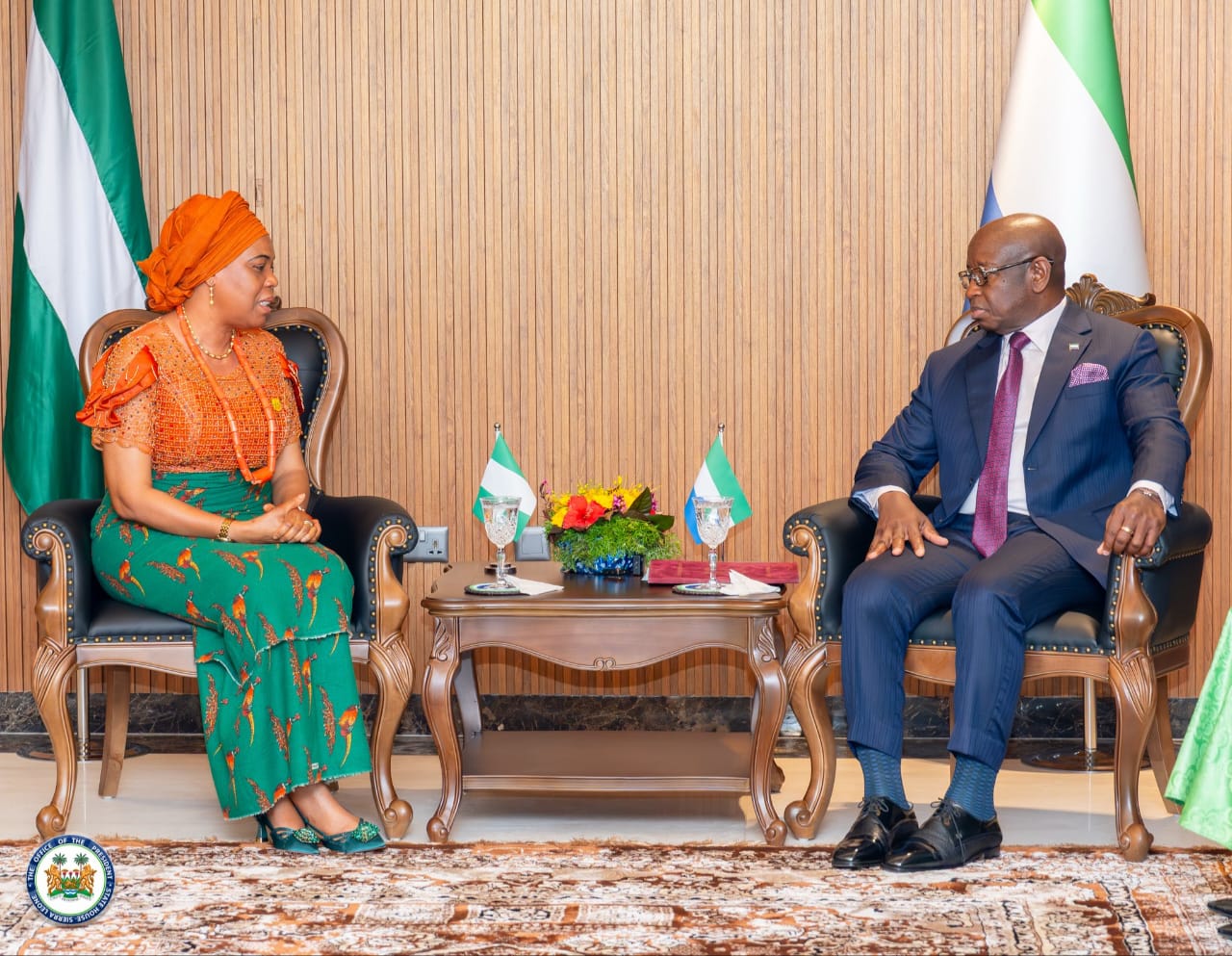
Nigeria and Sierra Leone have reaffirmed their commitment to strengthening bilateral relations and advancing regional integration following the formal presentation of Letters of Credence by Nigeria’s High Commissioner to Sierra Leone, Ambassador Ayo Luther Ogbomode, to President Julius Maada Bio in Freetown.
The presentation took place at the State House, where the Nigerian envoy conveyed the goodwill message of President Bola Ahmed Tinubu and reiterated Nigeria’s resolve to deepen the longstanding friendship and cooperation between both countries.
During the audience with President Bio, Ambassador Ogbomode extended President Tinubu’s warm greetings and best wishes to the Sierra Leonean leader.
She said, “Nigeria remains unwavering in its commitment to further strengthening the longstanding bonds of friendship, cooperation and brotherhood that have historically united our two countries.”
The High Commissioner also congratulated President Bio on assuming the Chairmanship of the ECOWAS Authority of Heads of State and Government, expressing confidence in his ability to steer the regional bloc towards greater unity and progress.
“Nigeria has every confidence in your leadership and believes that under your stewardship, ECOWAS will continue to advance regional integration, democratic governance, economic prosperity, peace and collective security across West Africa”, she stated.
Responding, President Bio thanked President Tinubu and the Nigerian government for their goodwill and continued support, while reaffirming Sierra Leone’s commitment to strengthening ties with Nigeria.
“Sierra Leone remains strongly committed to deepening bilateral relations with Nigeria, particularly in the areas of trade, investment, education, security cooperation, capacity building and regional integration”, he said.
President Bio described the relationship between the two countries as one built on a rich shared history, common values and mutual respect.
“Nigeria and Sierra Leone enjoy an excellent and enduring relationship founded on a shared history, common values and mutual respect”, he added.
Speaking in his capacity as Chairman of the ECOWAS Authority, President Bio pledged to work closely with Nigeria in promoting regional peace, economic development and integration.
According to him, “As Chairman of the ECOWAS Authority, I remain committed to working closely with Nigeria in advancing regional stability, economic development and the collective aspirations of the peoples of West Africa.”
The Sierra Leonean leader also paid tribute to Nigeria for its role during his country’s civil war, acknowledging the sacrifices made in restoring peace and stability.
“The people and Government of Sierra Leone continue to hold Nigeria in the highest regard and remain deeply appreciative of the solidarity, leadership and assistance rendered during a critical period in our national history”, he said.
The meeting underscored the shared commitment of both countries to expanding cooperation, promoting regional peace and reinforcing the longstanding partnership that has defined relations between Nigeria and Sierra Leone over the years.
By Gloria Ikibah
Nigeria and the United States have reaffirmed their commitment to strengthening their long-standing strategic partnership, with both countries pledging closer cooperation in security, trade, investment and regional stability.
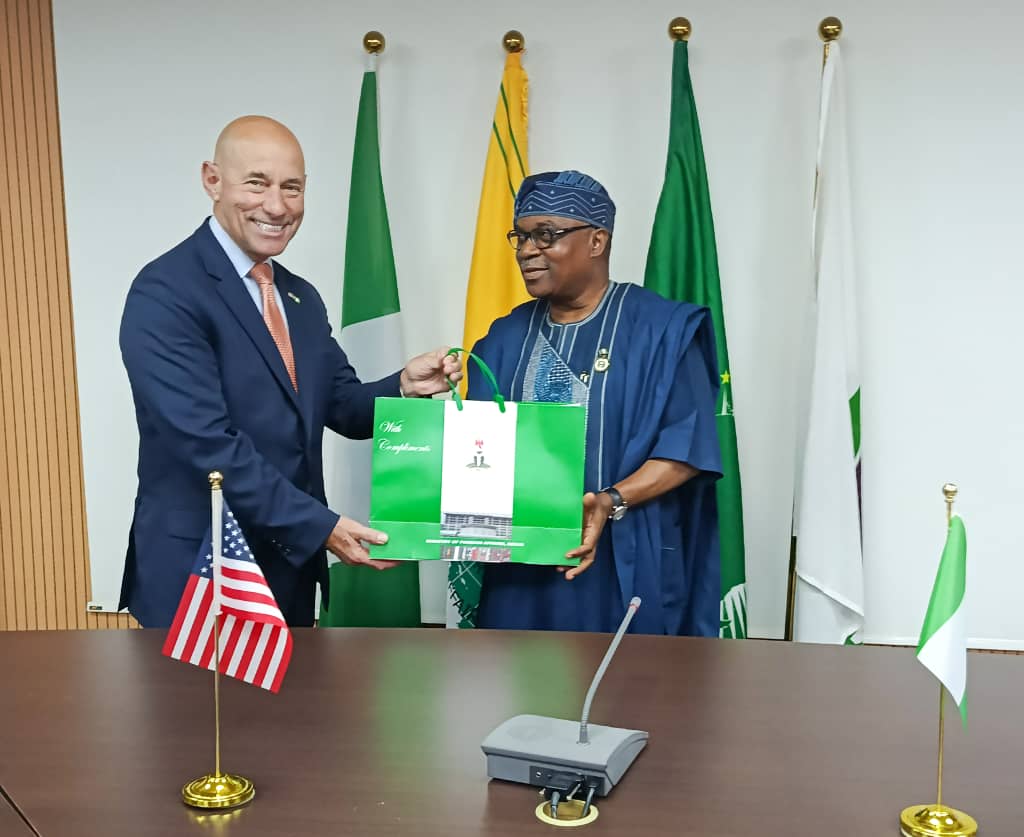
The commitment was made on Monday when the Minister of State for Foreign Affairs, Ambassador Sola Enikanolaiye, received the United States Assistant Secretary of State for African Affairs, Frank Garcia, at the Ministry of Foreign Affairs in Abuja.
Welcoming the American delegation, Ambassador Enikanolaiye described the relationship between both countries as one of great importance to Nigeria, expressing optimism that the visit would further deepen bilateral cooperation across critical sectors.
He said, “Nigeria attaches great importance to its bilateral relations with the United States, and I am confident that this visit will deepen cooperation across key sectors and provide further impetus to the growing partnership between our two countries”.
The minister reaffirmed Nigeria’s commitment to expanding collaboration in trade and investment, maritime security, counter-terrorism, intelligence sharing, and regional peace and security.
He also highlighted the progress achieved through the Nigeria–United States Joint Working Group and disclosed that preparations were underway for the next round of bilateral engagements scheduled to take place in Washington, D.C., in August 2026.
Speaking on Nigeria’s security efforts, Enikanolaiye said the government remained committed to tackling insecurity through stronger law enforcement, effective prosecution of terrorism-related offences, better protection for vulnerable communities, and sustained efforts to secure both the Gulf of Guinea and the Lake Chad Basin.
Addressing concerns over religious freedom, the minister stressed that Nigeria remained committed to protecting all citizens regardless of their faith or ethnic background.
He also reaffirmed Nigeria’s readiness to maintain constructive dialogue with the United States on migration and consular matters.
“While security challenges exist, they should not be misconstrued as a policy of religious persecution or genocide. The Government remains firmly committed to protecting all citizens irrespective of religion or ethnicity and to strengthening the rule of law.”
In his remarks, Assistant Secretary Frank Garcia described Nigeria as one of the United States’ most important strategic partners on the African continent, noting that cooperation between both nations had continued to grow across several sectors.
“Nigeria remains one of America’s most important strategic partners in Africa. We are encouraged by the growing momentum in our cooperation, particularly in trade, investment, health, technology, maritime security and counter-terrorism, in line with the United States’ commitment to expanding commercial partnerships across the continent”, he said.
Garcia also praised Nigeria’s leadership in strengthening maritime security in the Gulf of Guinea and acknowledged its contribution to regional peace through the Multinational Joint Task Force.
He further expressed appreciation for Nigeria’s continued collaboration on migration and security issues.
According to him, “The United States remains steadfast in supporting Nigeria’s efforts to strengthen its security institutions, promote regional stability and expand economic opportunities for its people.”
At the end of the meeting, both countries agreed to sustain regular high-level consultations, strengthen cooperation in areas of mutual interest, and deepen people-to-people exchanges.
They also reaffirmed their commitment to resolving outstanding issues through dialogue while further consolidating the enduring partnership between Nigeria and the United States.
By Gloria Ikibah
Members of the ECOWAS Parliament have identified the key drivers of irregular migration across The Gambia and the wider West African region, while proposing a broad range of measures aimed at addressing the growing challenge.
The findings were presented by the forth Deputy Speaker, Hon. Billay Tunkara at the end of a Parliamentary Citizens’ Engagement on the Dangers of Irregular Migration and Modern Slavery, held in Banjul, The Gambia, from 6 to 10 July 2026.
Speaking on behalf of the parliamentary mission, Tunkara said the engagement reflected the regional parliament’s commitment to ensuring that citizens’ concerns shape policy decisions across the ECOWAS region.
He said: “Such solutions requires listening to communities, empowering young people, supporting survivors and returnees, strengthening families and creating opportunities that enable young people to choose hope, dignity and prosperity at home, rather than the risk of irregular migration.”
According to the report, participants consistently pointed to unemployment, underemployment, poverty, limited access to education and vocational training, as well as inadequate economic opportunities, as the main factors pushing young people towards dangerous migration routes.
The findings stated: “Many young people expressed the view that the opportunities currently available within the country (The Gambia) do not provide a realistic pathway to secure a prosperous future, thereby reinforcing the perception that migration offers a few viable means to improve their livelihood.”
The parliamentarians also found that family expectations, peer influence and misleading portrayals on social media continue to fuel irregular migration.
“Images and stories portraying migrants as successful abroad, together with the financial support sometimes provided by family members to facilitate irregular journeys, continue to encourage young people to migrate despite the known dangers”, the report noted.
The mission further revealed that testimonies from survivors and returnees painted a grim picture of the realities behind irregular migration.
“The testimonies of returnees and survivors confirmed that irregular migration and trafficking in persons are not abstract concerns but lived experience marked by deception, exploitation, forced labour, abuse, detention, family separation, and severe psychosocial trauma”, the report further noted.
Despite these experiences, the lawmakers observed that returnees could become powerful advocates against irregular migration.
“Participants nevertheless recognized that survivors and returnees can become powerful advocates for prevention. Their testimonies constitute one of the most credible means of sensitising young people in communities” it added.
The delegation stressed that awareness campaigns alone would not solve the problem unless they were backed by meaningful economic opportunities.
“Participants emphasized that awareness raising alone is insufficient to curb irregular migration, since the system must be accompanied by meaningful employment, entrepreneurial support, vocational skill development, agricultural modernisation, access to financing, and sustained investment in youth employment”, report stated.
The report also underscored the need to strengthen support systems for returnees.
“Social reintegration requires not only financial assistance, but also psychosocial care, skills development, livelihood support, job placements, community acceptance, and protection from stigma.
“Participants stressed the need for stronger legislation, more effective enforcement and penalties capable of deterring offenders and dismantling organised criminal networks.”
The engagement further highlighted the importance of direct interaction between lawmakers and citizens in shaping effective policies.
“The engagement also reaffirmed the value of direct interaction between parliamentarians and citizens. The combination of community-based dialogue, local language communication, survivors’ testimonies and support-based outreach helped strengthen trust, promote greater public awareness and encourage meaningful participation of young people and other community members”, it stated.
At the conclusion of the exercise, the ECOWAS Parliament recommended that member states prioritise job creation through greater investment in technology, technical education and vocational training centres.
The lawmakers also called for stronger legislation and closer cross-border collaboration to combat migrant smuggling and human trafficking, alongside improved intelligence sharing among security agencies.
Other recommendations included the establishment of comprehensive reintegration centres offering psychosocial support, vocational training, entrepreneurship assistance, business development services and employment opportunities for returnees and survivors.
The parliament also urged governments to expand access to affordable financing for young entrepreneurs, strengthen investment in education and agricultural training, modernise technical institutions, and incorporate lessons on irregular migration and human trafficking into school curricula.
The report further recommended increased investment in border surveillance technology, faster passage and implementation of The Gambia’s Immigration Bill, and a review of existing anti-trafficking laws to reflect emerging trends.
It also encouraged greater involvement of traditional rulers, religious leaders, civil society organisations, families and the media in sustained public awareness campaigns aimed at countering misinformation surrounding irregular migration.
The lawmakers further urged communities to discourage families from financing irregular migration and to report suspected cases of human trafficking and migrant smuggling to the relevant authorities.
They also advocated greater use of sports, arts and community dialogue as practical tools for educating young people about the dangers of irregular migration.
The delegation proposed institutionalising Parliamentary-Student Engagements across ECOWAS member states to strengthen oversight, public participation and evidence-based policymaking on migration and regional integration.
“The Parliamentary Citizen’s Engagement reaffirmed that irregular migration and trafficking in persons are complex regional challenges that require coordinated and sustained action by governments, parliaments, communities, civil society organisations, development partners and families”, it stated.
The parliamentarians commended the Government of The Gambia, the ECOWAS Resident Representative, development partners, traditional and religious leaders, youth and women groups, fishing associations, returnees, survivors and community members for their contributions throughout the engagement.
“The experience in Bakau, Brikama and Barra demonstrated that lasting solutions cannot be achieved through enforcement measures alone”, the report added.

Nigeria-Sierra Leone Renew Commitment to Stronger Bilateral and Regional Ties

Nigeria-US Renew Security, Trade, Investment Partnership

ECOWAS Parliament Maps Out Strategy to Tackle Irregular Migration Across West Africa




-
 News12 hours ago
Police to Arraign ‘Presidential Council’ DG Adeniyi Adeyemi Over Alleged Forgery, Impersonation
-
 Metro12 hours ago
Troops Kill ISWAP Cameraman In Borno, Recover Footage Of Terrorist Activities
-

 Sports12 hours ago
Super Eagles Goalkeeper, Stanley Nwabali Returns To Chippa United
-
 News3 hours ago
After 56 Days in Captivity, Oriire Parents Scared of Sending Rescued Kids Back to School
-
 Metro12 hours ago
Och’Otukpo Orders Herders To Leave Otukpo Kingdom Immediately After Deadly Attack
-

 News3 hours ago
‘He was our bread winner’: Dad laments 28-Year-Old Lieutenant Killed in Oyo School Rescue Mission
-
 News5 hours ago
NSITF promises Gambia of technical support, stronger partnership …As study tour ends in Abuja
-

 News4 hours ago
One dies, seven injured as Gombe Assembly Complex under construction collapses
Warning: Undefined variable $user_ID in /home/naijuinz/public_html/wp-content/themes/zox-news/comments.php on line 49
You must be logged in to post a comment Login