By Omole Oluwasegun
Culture is viewed and known as the way of life of a particular set of people, the ideas, customs, and social behaviour of a particular people or society. It is the code of manners, language, religion, rituals, values, symbols and arts passed down from generation to generations.
A people can thus be identified or identify themselves through their culture, learned and shared through one generation to the other. 
Akin to culture is the cultural tradition of a particular set of people, which refers to the inherited, established, or customary pattern of thought, action, or behavior.
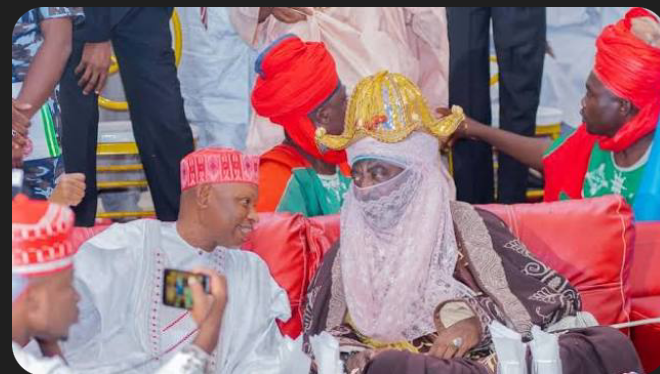
This brings me to the important issue of the recently concluded “OJUDE OBA” of Ijebu Ode, and with respect to the Great IWUDE IJESA FESTIVAL which is celebrated annually by the people called, IJESAS. A lot of people carried away by the hyped dress-mode and costumes by the participants at ‘OJUDE OBA’ have been suggesting and calling on the organizers of IWUDE IJESA to begin to copy or duplicate the activities of OJUDE OBA.
The OJUDE OBA is not a traditional festival like, OLOJO, ILE IFE;
KIRIJI FESTIVAL, IMESI;
OSUN OSOGBO, OSOGBO;
IWUDE IJESA, ILESA and so on.
OJUDE OBA is celebrated in honor of Oba Awujale Ademuyewo Afidipotemole who gave a slave called Alli-Tubogun the permission to practice Islam in public space and without obstruction, molestation or fear of persecution. OJUDE OBA is therefore, most unlike the aforementioned Traditional Festivals which are celebrated in honour of certain Deities and gods to show their values and how their worshippers rate them. There’s no cogent cultural or traditional significance associated with OJUDE OBA besides the extravagant and intensive publicity and promotion of Yoruba Dress Code otherwise known as Aso-Ebi.
In the case of IWUDE IJESA, OWA Obokun Adimula, the paramount King and Ruler of IJESALAND is the Chief Celebrant and the Chief Host. Unlike, OJUDE OBA where Awujale is invited to witness social activities and Sallah Entertainments by different age groups and families in exotic Yoruba costumes as well as pageantry music and dances, IWUDE IJESA FESTIVAL is led by OWA OBOKUN ADIMULA himself and almost every traditional ruler in IJESALAND has a role or more to perform in the historic 30 days age long traditional and cultural activities.
In IWUDE IJESA FESTIVAL, it’s the people, Ijesa sons and daughters together with their friends that gather to witness the exotic, unique and amazing Yearly Royal Parade by Owa Obokun of IJESALAND, not just dancing, but performing Traditional and Cultural functions within specific towns, and homes in IJESALAND and ILESA. He will offer “IWURE”, that’s core traditional prayers, pay routine homages to the Courtyards of Yeye rise, Obaala, SAWE, Lejoka and Salatun in evidence of our unique heritage and our touch of sophistication. Each courtyard has a significant role in IWUDE IJESA FESTIVAL. Yeyerise is the Head of the Women and her courtyard is Owa’s first place to visit. At Obaala Courtyard, OWA has a role to play in honor of OWA OBOKUN, OWARI. At SAWE ILESA Courtyard in Ijamo, OWA is received by Eminent Ijesa sons and Daughters, and to a befitting reception and entertainment. Lejoka is the Chief of Defence Staff in IJESA military tradition, and there in his Courtyard, Owa Obokun will observe another pact by Ijesa warlords with OWARI to show and reaffirm the absolute submission and loyalty of the Ijesa military force to the authority of OWA OBOKUN ADIMULA. A mock battle is usually held between Lejoka and Loro, the Head of OWA OBOKUN Defence Corps as part of the rituals.
At Salotun Courtyard, Owa Obokun is transformed into “ORISA”, he changes into the Traditional Dress of his Fathers, wears the Original Crown from the cradle and mounts podium to Pray and Bless the people, IJESALAND, Osun State and Nigeria.
It’s important to state that a month, each year is dedicated to celebrate IWUDE OGUN which transformed to IWUDE IJESA FESTIVAL. Ogun is a Pathfinder and God of iron. It’s a deity that is very crucial to IWUDE CELEBRATIONS, as the history of IJESAS is linked to Ajibogun Onida Arara, the most accomplished son of Oduduwa, the progenitor of Yoruba Race. Ijesas are undisputed warriors that never suffered any defeat or enslaved in any circumstance.
The sword 🗡️ in the hand of each Chief symbolizes victory of OWA OBOKUN and the entire Ijesas over their enemies. It is a symbol of total submission and loyalty to Owa Obokun by all his subjects. As renowned warriors, the Ijesas are aptly eulogized as, “a r’ogun yo”, a people that are always happily ready to confront any kind of war. No one dares to touch the child of Obokun, never in history.
Apparently, people of IJESALAND are all involved in IWUDE IJESA FESTIVAL. From Ipole to Obokun; from Igbadae to Lemodu; from Ipetu to Ijebu Jesa; from Esa Oke to Imesi; from Erin Ijesa to Iloko, all over IJESALAND the significance of IWUDE IJESA FESTIVAL cannot be overrated.
The Grand Finale is merely the gathering of Ijesa sons and daughters as well as special guests at the ADIMULA Square to celebrate IWUDE IJESA with OWA Obokun and all the Obas as well as Chiefs in IJESALAND. At this gathering, different societies, cults and clubs are given special recognitions and spaces for Entertainments. They come in different Aso Ebi too. The unique difference between the gathering of Ijesas at Adimula square and the gathering of Ijebus at OJUDE OBA is the age groups arrangement and their extravagant display of dresses as their identities. In the IWUDE affairs, the protocol is exceptional, unique and superb. From First Class Traditional Rulers, Loojas, High Chiefs, Chiefs, Representatives from towns and villages, clubs, societies and organisations, each come to pay homage to Kabiyesi, Owa Obokun Adimula in sequences.
Chief Afolabi Igbaroola and his team at the IWUDE IJESA Planning Committee have been making careful efforts at involving or introducing the age groups idea, but in such a way that the essence of IWUDE IJESA FESTIVAL will not be bastardized or adultrated.
It might therefore be practically unwise to replicate OJUDE OBA in IWUDE IJESA without giving due considerations to the cultural or traditional differences between the Ijesas and the Ijebus, and without giving due diligence to the backgrounds of the IWUDE IJESA against the backgrounds of OJUDE OBA. So far as it is, the two events are not related in anyway, the participants are not the same in so many ways traditionally, so also the audience.
We as Ijesas have our own pride, our prejudices and our touch of honor, we are like the Oyos, who will not copy others lifestyles….”a ji se bi oyo laari, oyo o ki n se bi enikookan”. We are Omo OWA and therefore, should maintain our basic cultural heritage, practice it in the ways and manners it was handed over to us from ages past. If we have to bring in modern ideas, it must be carefully assessed and selected as not to destroy the intrinsic and extrinsic values, visions and missions of our own customs and traditions.
To this end, every age group wishing to participate in IWUDE IJESA should be made to contact the IWUDE Secretariat with valid constitution which spells out the activities of such group, its contributions to the development of IJESALAND, and the expected values the group may wish to add to our culture and tradition as well as the promotion of Tourism in IJESALAND.
The IWUDE Secretariat must do a thorough job at scrutinizing such age groups and ensure they meet certain criteria for registration.
Omole Oluwasegun, Omo-Osodi
Write from Ilesa, Osun State
[email protected]