Connect with us

News

Death toll rises as cholera rages in Lagos, Oyo, Kano

Published

on

ADVERTISEMENT
Zoom Ad
ADVERTISEMENT
Zoom Ad

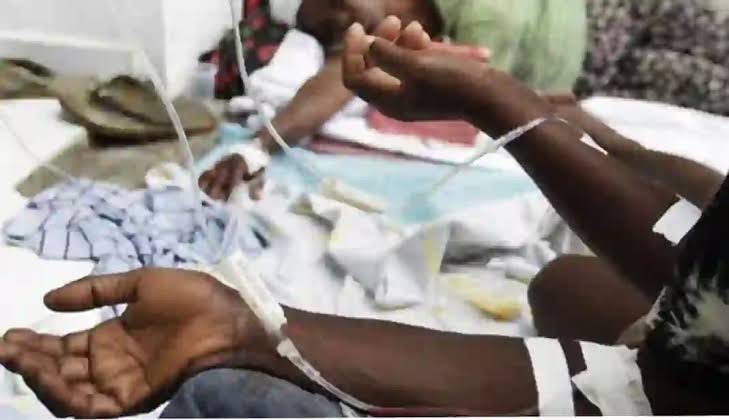
Lagos is shivering under the outbreak of cholera. A vicious intestinal illness has gripped the state, adding a layer of fear to the already bustling streets. With 24 deaths, 35 confirmed cases and 417 suspected cases across the state as of Friday, July 21, 2024, experts say the outbreak isn’t just a national concern but a local fight for survival, particularly in areas where access to clean water and proper sanitation remains a luxury.


Apart from poor water and sanitation challenges, the plight of citizens leaves much to be desired.

17-year-old Bayo was rushed-in with his frail body racked with chills. His worried mother, Dolapo, wiped his face, a deep fear etched on her face. “Please admit him, don’t reject us. Today is a public holiday, please help, it started yesterday,” Dolapo murmured. “Just stomach cramps at first, but now…” Bayo unfortunately lost his life in one of the private hospitals in the Ago area of Lagos. His case is among the rising number of cholera infections plaguing Lagos.

With limited resources and a densely populated city to contend with, Lagos grapples with controlling the outbreak.

Advertisement

Sadly, water and sanitation remain a challenge in the state. From the end of Makoko to the highbrow areas of Victoria Island in Lagos, potable water remains a challenge despite having water all around the city.

A situation report issued by the state Commissioner for Health, Prof Akin Abayomi, last Friday (EPI Week 25), as of 19th of June, 2024, revealed that the outbreak has swept across the 20 LGAs.

While the highest outbreak occurred in Ajeromi, Kosofe, Epe, Ikorodu, Alimosho and Eti-Osa LGAs, as of 10th of June, 2024, the Commissioner said there was the need to adhere strictly to personal and environmental hygiene to stay safe from infection risk.

However, in what seems like an attack on cholera in countries, the World Health Organisation (WHO) announced a resurgence of cholera worldwide.

Advertisement

WHO said in May 2024, a total of 46,364 new cholera cases were reported from 19 countries, showing 58 per cent increase from the previous month.

It said from January 1, 2024 to May 26, 2024, a total of 194,897 cholera cases and 1,932 deaths were reported from 24 countries across five regions.

WHO said the Eastern Mediterranean region recorded the highest numbers (98,003 cases; seven countries), followed by the African region (92,789 cases; 14 countries), the Americas (2,672 cases; one country), the South-East Asia region (1,328 cases; two countries), and the European region (105 cases; one country).

WHO added that during this period, the African region reported 1,698 deaths; the Eastern Mediterranean region, 256 deaths; the region of the Americas, 13 deaths; the Southeast Asia region, four deaths; and the European region, one death.

Advertisement

The global body’s report comes as Lagos, Nigeria’s most populous city and commercial capital, battles a cholera outbreak.

Blame

However, while the disease continues to sweep across countries and states in Nigeria, experts have continued to blame the Nigerian government for paying lip service to water and sanitation.

Today, most communities across Nigeria cannot boast of adequate safe drinking water. The affordability of bottled water, often used as a safer alternative, is also a challenge for many families.

Advertisement

For instance, in Lagos, sachet water, the presumed alternative to borehole water, is sold, in many areas, for N50 and, in others areas, it goes for N30. Five bags of water are sold for N1,500 and in some areas N2,000.

Bottle water goes for N200 per bottle. Sadly, many Nigerians who have resorted to borehole water can no longer boil before drinking due to the hike in electricity tariff.

Public health experts have warned that without improved water, sanitation and hygiene, cholera will remain endemic in Lagos and Nigeria in particular.

According to the United Nations Children’s Fund (UNICEF) Chief, Lagos Field Office, Celine Lafoucrier, safer water could save 1.4 million child deaths from diarrhoea, 500,000 deaths from malaria, 860,000 child deaths from malnutrition, as well as protect 10 million people from serious illnesses like lymphatic filariasis and trachoma.

Advertisement

She said the current outbreak demonstrates the need for an urgent government focus on ensuring water provided to the population is clean and risk-free.

According to her, good water and sanitation infrastructure play a crucial role in reducing disease outbreaks such as cholera, which causes an estimated 100,000 deaths annually.

Lip service

In an interview with Sunday Vanguard, a public health disease expert, Dr Casmir Ifeanyi, said the country has continued to pay lip service to water, sanitation and hygiene.

Advertisement

“I challenge you to go and dig it up. Of the 30 states already reported to have the outbreak, how many of them have a public potable water supply in place? I can categorically tell you, none. So, we do know that cholera is a disease that thrives where water, sanitation and hygiene are at its low rate,” Ifeanyi stated.

He emphasised the need for improved water, sanitation and hygiene (WASH) practices, including addressing open defecation and ensuring access to clean water which are essential for preventing future outbreaks.

The public health expert warned that the outbreak, particularly severe in developed areas of Lagos, highlights deficiencies in sanitation and water quality.

According to him, schools with proper hygiene facilities and access to clean water could reopen, after mid-term holiday, with heightened public health education on hygiene practices.

Advertisement

However, expressing concerns about densely populated areas with limited access to clean water, Ifeanyi said: “It must be said that the situation that will sustain this outbreak is quite high. I give you an example. I do not know how much a bag of sachet water is sold in Lagos, but, in most of Nigeria, it is now between N400 and N600 and, if you buy that it should be either 20 sachets. I do not know how long it would sustain families and, besides, the source of this sachet water and also bottled water is also questionable because their conformity to water processing is still very unsure.”

Increased Public Health Measures

Ifeanyi, who is also the National President of the Association of Medical Laboratory Scientists of Nigeria (AMLSN), urged Lagos State government to prioritize improved detection and surveillance of cholera and cholera-like illnesses. “This includes contact tracing, increased access to cholera testing kits, and a thermal risk factor analysis specific to Lagos,” he said.

Noting that food safety is another critical area, he stressed that the state government should implement stricter food safety protocols, including lab testing of imported and commercially sold water.

Advertisement

“Public health authorities must beef up to detect cholera and cholera-like illnesses and also to put in place a surveillance system that promotes disease tracking. That is to say, if you have an individual whose case is confirmed, then there’s a need to do contact tracing and to evaluate the contact,” the expert said.

Expressing disappointment in the description of the Lagos cholera as aggressive without the proper name of the type, he pointed out that the government has failed to provide infrastructure and facilities for diagnostic testing and typing whenever there is an outbreak.

According to him, there was a need to identify the biotype of the cholera responsible for the outbreak and not use ominous words like aggressive.

Glimmer of Hope

Advertisement

Ifeanyi said the state government should immediately deploy cholera vaccine particularly for school children, adding that individual vigilance remains paramount.

He advised Lagosians to boil or treat drinking water, avoid raw fruits and vegetables, and practice frequent and thorough handwashing.

Corroborating his views, a public physician, Dr Femi Oyekan, who spoke to Sunday Vanguard, stressed that cholera outbreaks originate and spread within communities, making community-led and participatory approaches essential for sustainable prevention.

According to him, citizens also have a lot of things to do to help combat cholera outbreak by ensuring proper hygiene, keeping their environment clean, avoiding open defecation, and ensuring proper waste and sewage disposal.

Advertisement

“Ultimately, access to clean water and sanitation is critical in preventing outbreaks. Communities must take collective action to ensure clean water access and maintain good hygiene. Identifying and empowering positive role models within the community can encourage the widespread adoption of healthy.
Continue Reading
Advertisement
Click to comment

Warning: Undefined variable $user_ID in /home/naijuinz/public_html/wp-content/themes/zox-news/comments.php on line 49

You must be logged in to post a comment Login

Leave a Reply

News

Reps Demand Swift Action Over Abduction of 42 Pupils in Borno

Published

on

ADVERTISEMENT
Zoom Ad
ADVERTISEMENT
Zoom Ad

…seek tougher protection measures for schools in high-risk communities

By Gloria Ikibah

The House of Representatives has called for the immediate rescue of 42 schoolchildren abducted from Mussa Ward in Askira-Uba Local Government Area of Borno State, as lawmakers renewed demands for stronger security around schools across Nigeria.

The resolution was sequel to the adoption of a Motion of Urgent Public Importance sponsored by Rep. Midala Balami during Tuesday’s plenary session.

Advertisement

Debating the motion, Rep. Balami described the abduction as a disturbing reminder of the persistent insecurity confronting communities in Borno State and other parts of the country. He emphasised that safeguarding students, teachers and educational institutions remains a core responsibility of government and warned that repeated attacks on schools continue to threaten access to education and undermine public confidence in security efforts.

The lawmaker recalled a series of high-profile abductions in the state, including the Chibok schoolgirls kidnapping, in which many of the victims are yet to be reunited with their families. He also referenced the mass abduction of more than 400 adults and children from Ngoshe, as well as several kidnappings reported along the Biu-Buratai Road and surrounding communities.

According to Balami, the recurring attacks have left families traumatised, disrupted livelihoods and contributed to declining school enrolment and attendance in vulnerable areas, as many parents fear for the safety of their children.

He argued that urgent and coordinated action is needed to secure the release of those still in captivity, restore public confidence and reassure communities that their safety remains a priority.

Advertisement

The lawmaker also noted growing frustration among residents who increasingly expect concrete results in the fight against insecurity rather than repeated promises.

Following deliberations, the House urged the Federal Government and security agencies to intensify efforts to rescue the 42 abducted pupils and all other victims currently being held by kidnappers or insurgents, with a view to reuniting them with their families as quickly as possible.

Lawmakers further called for enhanced protection of schools in Borno State and other vulnerable regions through increased deployment of security personnel, improved intelligence gathering and more effective rapid-response mechanisms.

The House maintained that ensuring the safety of children and protecting access to education must remain a national priority, particularly in communities that continue to face threats from criminal and insurgent groups.

Advertisement

In addition, the House encouraged the expansion of school protection initiatives, including early warning systems, community-based security arrangements, security awareness programmes and improved surveillance infrastructure around educational institutions.

The House further mandated its Committees on National Security, Defence, Basic Education and Legislative Compliance to engage with relevant security agencies and report back on measures being taken to secure the release of abductees and improve security around schools nationwide.

Lawmakers also urged the Federal Government to develop and implement a comprehensive Safe Schools Security Framework aimed at protecting students, teachers and educational institutions from future attacks.

Advertisement
Continue Reading

News

Lawmakers Raise Alarm Over Ebola Risk, Demand Emergency Funds Support for NCDC

Published

on

ADVERTISEMENT
Zoom Ad
ADVERTISEMENT
Zoom Ad

By Gloria Ikibah

The House of Representatives has urged the Federal Government to immediately release funds to the Nigerian Centre for Disease Control and Prevention, warning that Nigeria’s ability to respond to a potential Ebola outbreak could be undermined by persistent funding shortfalls.

This was sequel to the adoption of a motion moved by Rep. Amobi Ogah, who drew lawmakers’ attention to the recent outbreak of a rare strain of the Ebola virus in the Democratic Republic of the Congo, on Tuesday at plenary.

Debating the motion Rep. Ogah referenced reports by the Africa Centres for Disease Control and Prevention indicating that the outbreak was detected in Turi Province of the DRC on May 15, 2026.

Advertisement

He warned that Nigeria remains particularly vulnerable due to extensive cross-border movements and the country’s porous borders, factors that could increase the risk of disease importation.

Oga who is the Chairman House Committee on Malaria, HIV and Tuberculosis noted that on May 25, 2026, the Nigeria Centre for Disease Control and Prevention classified Nigeria as being at high risk of Ebola importation and activated emergency preparedness protocols, including placing the National Emergency Operations Centre on alert.

Despite these precautionary measures, Ogah expressed concern over what he described as a severe funding crisis affecting the agency.

According to him, the NCDC received no operational funding throughout 2025, while no capital releases had been made against its approved 2026 budget. He also stated that overhead releases to the agency had been irregular and inadequate.

Advertisement

The lawmaker argued that the funding constraints had significantly weakened the NCDC’s capacity to carry out essential public health functions, including disease surveillance, laboratory operations, outbreak response, logistics management and emergency preparedness activities.

“The preparedness of the Centre cannot be guaranteed under the current circumstances,” he said.

Ogah told lawmakers that the agency is currently grappling with multiple operational challenges, including unpaid contractors and vendors responsible for critical supplies and services.

He also highlighted delays in the construction of zonal laboratories, treatment centres and isolation facilities, as well as shortages of laboratory reagents and consumables needed for testing and diagnosis.

Advertisement

Other challenges identified include inadequate biosecurity infrastructure, limited intensive care and oxygen support systems, and insufficient resources for the training and deployment of rapid response teams across the country.

The lawmaker warned that failure to provide urgent financial support could leave Nigeria exposed to the renewed Ebola threat and other infectious disease outbreaks.

He stressed that strengthening the country’s disease surveillance and response capabilities was critical to safeguarding public health and preventing a repeat of previous epidemic emergencies.

Contributing to the debate, Rep. Billy Osawaru commended the sponsor of the motion and reminded Nigerians of the country’s successful containment of the 2014 Ebola outbreak after the virus was introduced by an infected traveller from Liberia.

Advertisement

He noted that Nigeria limited the outbreak to 20 cases and eight deaths through coordinated efforts by healthcare workers, emergency response agencies, the Federal Ministry of Health, the NCDC, and international partners.

Osawaru praised the courage and professionalism displayed by frontline health workers during the crisis, particularly the late Dr. Stella Adadevoh and other medical personnel whose actions helped prevent a wider outbreak.

The lawmaker, however, warned that Nigeria remains vulnerable due to its extensive land borders, heavy international travel and trade activities, and increasing regional mobility.

He expressed particular concern that the current outbreak is linked to the Bombali virus, a rare strain of Ebola for which there are currently no approved vaccines or specific treatments.

Advertisement

“The risk of importation remains real if proactive preventive measures are not strengthened and sustained,” he said while seconding the motion.

The House unanimously adopt the motion directed the Executive Arm of Government to immediately release funds appropriated for the NCDC to enable the agency settle outstanding liabilities and carry out its statutory responsibilities effectively.

The lawmakers also mandated the House Committee on Infectious Diseases to monitor the utilisation of the released funds and report back to the House for further legislative action.

In addition, the House called on relevant border and port authorities to intensify surveillance and screening activities at entry points across the country to prevent the importation of the disease, while the Committee on Legislative Compliance was tasked with ensuring full implementation of the resolutions.

Advertisement

The resolution comes amid growing concerns across Africa over the spread of infectious diseases and renewed calls for stronger investment in public health infrastructure and emergency preparedness systems.

Continue Reading

News

Reps Demand Swift Rescue of Abducted Oyo Pupils, Renew Push for State Police

Published

on

ADVERTISEMENT
Zoom Ad
ADVERTISEMENT
Zoom Ad

By Gloria Ikibah

The House of Representatives has intensified calls for urgent action to rescue schoolchildren and teachers abducted in Oyo State, while pressing for sweeping security reforms, including the establishment of state police and a dedicated protection framework for schools across the country.

Thus resolution was sequel to the adoption of a motion of urgent public importance sponsored by Olamijuwonlo Alao-Akala, who drew the attention of lawmakers to the deteriorating security situation in Ogbomoso and Orire communities and the abduction of more than 30 pupils and teachers from Baptist Nursery and Primary School, Yawota; Community Grammar School, Esiele; and L.A. Primary School on May 16, 2025.

Alao-Akala also mourned the death of mathematics teacher, Michael Oyedokun, who was reportedly killed while being held captive. He described the incident as a tragic reminder of the growing threat posed by kidnappers and armed criminal groups.

Advertisement

Presenting the motion, the lawmaker said residents of the affected communities had been living in fear as attacks linked to criminal elements operating around the Old Oyo National Park continued to escalate.

While acknowledging steps already taken by security agencies and the Federal Government, including the approval of 1,000 forest guards for the area, he argued that stronger and more sustainable interventions were needed to restore safety and prevent future attacks.

According to him, the vast forests surrounding the national park have increasingly become hideouts for criminal gangs and key transit routes for kidnappers and bandits moving across state boundaries.

Following deliberations, the House called for the immediate rescue of all remaining abductees and urged the Federal Government to establish a permanent military forward operating base in Orire Local Government Area. Lawmakers also endorsed a decentralised security structure incorporating state police, local government policing units, decentralised courts and integrated intelligence networks.

Advertisement

Contributing to the debate, Bamidele Salam commended Alao-Akala for bringing the issue before the House and expressed concern over the increasing frequency of school abductions nationwide.

He recalled that mass school kidnappings gained national attention during the Chibok schoolgirls kidnapping and warned that educational institutions were once again becoming vulnerable targets for criminal groups.

Salam emphasised that education remains one of the most effective pathways out of poverty and social deprivation, making attacks on schools particularly damaging to national development.

“The children of the poor attend our public schools, and we cannot afford to ignore the dangers they face,” he said.

Advertisement

The lawmaker urged the Federal Government to establish a specialised security architecture dedicated to safeguarding schools across the country. He noted that previous school protection initiatives had been weakened by inadequate funding and poor implementation.

He further argued that if government could provide security for thousands of public office holders, it should be able to guarantee the safety of schoolchildren and teachers.

Salam also called for support and reassurance for affected families while security agencies intensify efforts to secure the release of those still being held captive.

Also speaking, Benedict Etanabene described Nigeria’s security challenges as deeply troubling, saying many citizens now live under constant fear.

Advertisement

He maintained that the time had come for the country to move beyond debate and embrace state policing as a practical response to rising insecurity.

“We cannot keep procrastinating and believing the situation will improve on its own,” he said.

Etanabene argued that state governors will be better positioned to deploy local intelligence, technology and community-based resources to tackle security threats within their jurisdictions. He also urged President Bola Ahmed Tinubu to support reforms that would give states greater responsibility in maintaining security.

The lawmaker cautioned against turning insecurity into a partisan issue, warning that political divisions could weaken collective efforts to combat criminality. He also expressed sympathy for families whose loved ones remain in captivity, noting the emotional anguish endured by parents unable to secure the freedom of their children.

Advertisement

The House unanimously adopted the motion and referred it to the Committees on Defence, Interior, Police Affairs and National Security for further legislative action and oversight.

The committees were directed to monitor implementation of the resolutions and report back to the House within 30 days.
In a solemn conclusion to the debate, lawmakers observed a minute’s silence in honour of Michael Oyedokun, other victims of kidnapping and banditry across the country, and security personnel who lost their lives while serving the nation.

Continue Reading

Trending

Copyright © 2024 Naija Blitz News