News
REVEALED! One In Three Nigerian Children Out Of School, Says UNICEF
- /home/naijuinz/public_html/wp-content/plugins/mvp-social-buttons/mvp-social-buttons.php on line 27
https://naijablitznews.com/wp-content/uploads/2024/06/Screenshot_20240628-001928.png&description=REVEALED! One In Three Nigerian Children Out Of School, Says UNICEF', 'pinterestShare', 'width=750,height=350'); return false;" title="Pin This Post">
- Share
- Tweet /home/naijuinz/public_html/wp-content/plugins/mvp-social-buttons/mvp-social-buttons.php on line 72
https://naijablitznews.com/wp-content/uploads/2024/06/Screenshot_20240628-001928.png&description=REVEALED! One In Three Nigerian Children Out Of School, Says UNICEF', 'pinterestShare', 'width=750,height=350'); return false;" title="Pin This Post">
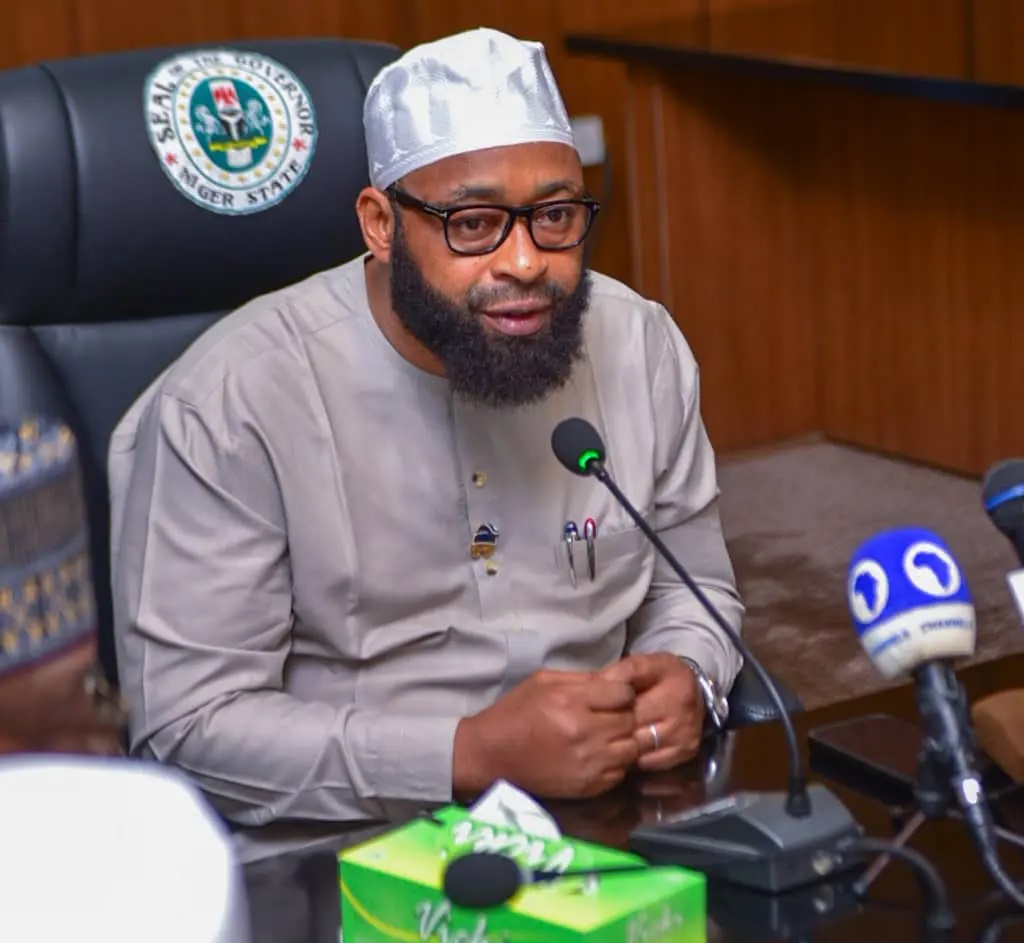
The United Nations International Children’s Emergency Fund (UNICEF) has distributed 2,760 solar-powered radio sets to the Katsina State Universal Basic Education Board (SUBEB) but rued the growing out-of-school children population in Nigeria.

UNICEF handed over the radio sets to Katsina SUBEB for students in the security frontline communities to learn lessons.
In his address during a Media Dialogue on Retention, Transition, and Completion (RTC) and Re-entry Guidelines for Adolescent Girls in the State, the Chief of Field, UNICEF Field Office Kano, Rahama Farah, revealed that Nigeria’s education system is faced with the twin crises of a large and growing out-of-school population and severe learning poverty.

According to him, one in three children is out of school in Nigeria, representing 10.2 million at the primary school level and 8.1 million children at the junior secondary level.
“Nigeria’s education system is faced with the twin crises of a large and growing out-of-school population and severe learning poverty,” he said.
“One in three children are out of school (OOS) (10.2 million at primary school level and 8.1 million children at junior secondary level), and according to the Multiple Indicator Cluster Survey (MICS) 2021, three in four children aged 7-14 years cannot read with understanding or solve a simple mathematics problem”.
Farah said that UNICEF, and partners such as the World Bank, the European Union, and the FCDO have collaborated with AGILE and BESDA projects to support Katsina State and governments in the North-West to reprioritise investments in education and to mitigate against the declining state of education in terms of access, participation and quality of learning outcomes.
“We are all here because our education system is in a crisis; a crisis characterised by a high number of out-of-school children, low attendance and participation rates, low transition rates, low completion rates, poor learning outcomes, and low skills acquisition for children at all levels.
These issues characterising the education system are at the backdrop of high insecurity in the North-West and, Katsina and Zamfara states; low financing to education; poorly resourced schools; low teacher competency levels and high pupil-teacher ratio, among others.
“Together, these factors lead to low overall education attainment, hamper social and economic opportunities for young people, and perpetuate intergenerational cycles of poverty and inequality.
“Stalled progress on Sustainable Development Goal (SDG) 4 will affect regional and global development as Nigeria accounts for the largest global (15 per cent) and regional (33 per cent) share of OOS children.
“Education indicators are the lowest for adolescent girls in the North-east and North-West Nigeria, especially children from poor families and those in rural and security-compromised areas.
In 2021 alone, a least 25 schools were attacked, directly impacting 1,446 learners and 24 personnel. Seventy-six percent of the attacks took place in the Northwest.
“Kaduna was the most frequently attacked (8 out of 25 attacks). Katsina (344 learners) followed by Zamfara states (327 learners) reported the highest number of abductees taken in a single abduction.
“As a precautionary measure, in the 2020/21 academic year, over 11,000 schools were closed for four months, significantly disrupting the education of 1.3 million children.
“The OOS phenomenon is fueled by the growing child population placing significant pressure on the delivery of social services. Yet education financing has not kept pace with a burgeoning demand for education and the high fertility rate.
“Nigeria spends 1.2 per cent of GDP on education, far lower than other African countries and notably lower than the international benchmark of four to six per cent.
“Insufficient domestic financing results in a shortfall of 378,000 classrooms and approximately 278,000 teachers.
“This leads to high student-teacher ratios (e.g., 55:1 at the primary level) and additional pressure on teachers whose capacity is already limited, as 50 per cent of basic education teachers lack the Nigerian Certificate in Education (NCE) or the minimum teaching qualification. What is more, in each workday, 20 per cent of primary school teachers are absent.
“Inadequate and unsafe school infrastructure, poor teaching quality, and low learning outcomes are exacerbated by insecurity and school attacks and compounded by staggering poverty and negative social norms on education, particularly for girls.”
He added, “With regards to Katsina state, the number of Out of School Children has been high (536,122 children) but is progressively reducing over the last eight years from 36.9% in 2016 to 35.5% in 2021 (MICS) and a projected 30% by 2024 if commitments to education and investments are sustained.
“Primary school completion rate in Katsina state averages 62.5% compared to the national average of 73.1% and 56.1% for the northwest respectively. Senior Secondary School Completion rates are low, with only 32 percent of children enrolled completing their education (MICS 2021).
“Although it is important to note that Katsina state has a positive gender parity index of 1 at the primary level, meaning there are nearly equal numbers of girls and boys in primary school, the transition rates can be more encouraging than they are no.
“Transition rate to secondary school in Katsina state stands at 69.5 % lower than the national average of 84% and the northwest average of 70% (MICS 2021) with fewer girls transitioning to secondary school than boys.
“Only 9.2% and 13.3 % of children in Grade 3 were able to demonstrate reading and numeracy skills respectively in Katsina state compared to the national average of 26.8 and 25.3 in reading and numeracy skills.
“I would also like to highlight a few initiatives that the Katsina state government in collaboration with UNICEF and other development partners have put in place to respond to the declining status of education in the state, with some notable positive outcomes.
“Increased financing to education: The Katsina state government has this year increased its state budgetary allocation from 28% to 34%. UNICEF urges that this allocation be matched by release and spending.
“Increase in the number of newly recruited teachers. The Katsina state government has recruited an additional 7,325 teachers in the 2023/24 financial year to mitigate the critical shortage of teachers in the state.
“Provided over 100,000 social cash transfers to keep children from the poorest families in school.
“Enrolled over 123,575 learners, boys, and girls, on the Nigeria Learning Passport platform in the last two years, providing access to alternative learning to many children. This represents 11 per cent of total NLP enrolment in Nigeria.
“Created 500 community learning hubs in 10 frontline LGAs, engaged radio stations to broadcast radio learning programmes, and provided solar radios and memory sticks in support of alternative learning solutions.
“Launched a strategy that provides equal opportunities to all children to enroll, participate, transition, and complete school.
“Created an enabling environment for a second chance education for girls through Re-Entry guidelines that provide opportunities for pregnant and married girls to re-enroll and complete their education.
“UNICEF would like to engage the media as equal partners in education development and ensure that every parent, community leader, traditional leader, and religious leader is aware of the government of Katsina and its partners’ priorities, plans, and urgency to ensure every child has an equal opportunity to enroll, participate, transition, and complete their education in a safe and conducive environment,” he noted.
On his part, the Chairman of the School-Based Management Committee, Chiroma Ingawa, expressed gratitude to UNICEF for their support and interventions over the last three years, stating that the organisation helped education in the state across both the primary and secondary schools.
He therefore assured readiness to support and implement any programme brought by UNICEF to Katsina State.
News
Plateau in panic mode as nine members of same family 2 month old baby killed in renewed attack
No fewer than nine members of the same family, including a two-month-old baby, were killed in a fresh attack by suspected gunmen on Kum and Wereng-Camp communities in Riyom Local Government Area of Plateau State late Saturday night.
The attack, according to residents, began at about 11:30 p.m. on Saturday and lasted for more than one hour, leaving the village head of the community critically injured after he was allegedly attacked by the assailants.
A resident, Precious Tok, told Vanguard that the victims were slaughtered in their home during the coordinated assault, describing the incident as one of the deadliest attacks witnessed in the area in recent times.
He said the gunmen invaded the communities in large numbers, shooting indiscriminately and forcing terrified residents to flee into nearby bushes for safety.
The National Publicity Secretary of the Berom Youth Moulders Association, Rwang Tengwong, who confirmed the attack, said the assailants struck under the cover of darkness and unleashed violence on helpless residents.
According to him, the attack wiped out nine members of one family, including a two-month-old infant, while the village head sustained life-threatening injuries and was rushed to hospital for treatment.
He added that security agencies had been alerted and expressed hope that the perpetrators would be apprehended and brought to justice.
The latest attack has thrown the affected communities into mourning, with residents urging the Federal and Plateau State governments to strengthen security across Riyom and other vulnerable communities to halt the recurring attacks.
As of the time of filing this report, security personnel had reportedly been deployed to the affected communities, while many residents remained displaced and fearful of further attacks.
Efforts to obtain official confirmation from the Plateau State Police Command were unsuccessful. (Sunday Vanguard)
News
Atiku Condemns Proposed N50,000 WAEC, NECO Examination Fees
Former Vice President Atiku Abubakar has criticised the Federal Government’s decision to approve a uniform N50,000 registration fee for the Senior Secondary School Certificate Examinations (SSCE) conducted by the West African Examinations Council (WAEC) and the National Examinations Council (NECO), warning that the policy could further limit access to education for millions of Nigerian students.
The Federal Government, through the Federal Ministry of Education, approved the adoption of a uniform N50,000 registration fee for WAEC and NECO SSCE internal examinations, effective from 2027.
Under the new arrangement, NECO’s registration fee will increase from N30,000 to N50,000 per candidate, while WAEC’s fee will rise from N27,000 to the same amount.
The approval was contained in a memo dated June 18, 2026, signed by the Director of Senior Secondary Education at the Federal Ministry of Education, Adeniji Ibrahim, on behalf of the Minister of Education. The memo, addressed to the Registrar of NECO, stated that the decision followed a meeting between the ministry and examination bodies held on March 31, 2026, where stakeholders agreed to adopt a harmonised fee structure.
Reacting in a statement issued by his Senior Special Assistant on Public Communication, Phrank Shaibu, Atiku described the planned increase as “cruel, economically insensitive and fundamentally incompatible” with the government’s obligation to make education accessible to every Nigerian child.
He argued that the policy comes at a time when many households are grappling with rising inflation, escalating food and transportation costs, higher electricity tariffs, unemployment and declining purchasing power.
“It is unconscionable that at a time when Nigerian families are battling record inflation, soaring food prices, rising transportation costs, crippling electricity tariffs, stagnant incomes and widespread unemployment, the Tinubu administration has chosen to make education even more expensive,” Atiku said.
The former vice president maintained that education remains one of the most important pathways to social mobility, warning that higher examination fees could force more children out of school and deny qualified students the opportunity to pursue higher education.
“Every additional financial burden imposed on parents translates into another child being denied the opportunity to learn, dream and contribute meaningfully to society,” he said.
He noted that Nigeria already has one of the world’s largest populations of out-of-school children and argued that government efforts should be focused on reducing educational barriers rather than introducing policies that could worsen the situation.
“Nigeria already bears the painful distinction of having one of the largest populations of out-of-school children in the world. Any government confronted with such a national emergency should be investing aggressively to bring these children back into school,” he added.
Atiku further warned that the increase in WAEC and NECO fees, alongside the recent hike in fees for Federal Unity Colleges, would disproportionately affect low- and middle-income families already struggling to meet basic needs.
According to him, many academically qualified students may be unable to sit for the qualifying examinations required for admission into tertiary institutions due to financial constraints.
“The recent increase in WAEC and NECO examination fees represents far more than another financial burden on parents. It is a systemic filter that will inevitably restrict access to tertiary education for thousands of indigent but academically qualified Nigerian students,” he stated.
He also criticised the Federal Government’s reliance on the Nigerian Education Loan Fund (NELFUND), arguing that student loans cannot solve the challenges facing children who are unable to complete secondary education or afford examination fees.
“A university loan offers little comfort to a child who has already been priced out of secondary education or cannot afford the qualifying examination required to secure admission,” he said.
Atiku called on the Federal Government to prioritise investment in educational infrastructure, recruit more qualified teachers, expand the capacity of public tertiary institutions and implement policies that ensure poverty does not determine a child’s access to education.
He urged President Bola Tinubu’s administration to immediately reverse the increase in Unity School fees and the proposed N50,000 WAEC and NECO examination fees, while convening stakeholders to develop sustainable funding mechanisms for public education.
News
SERAP sues INEC over alleged N800bn APC govs campaign fund
The Socio-Economic Rights and Accountability Project has sued the Independent National Electoral Commission over alleged failure to investigate claims that governors elected on the platform of the All Progressives Congress diverted N800bn for political and campaign activities.
SERAP, in the suit filed before the Federal High Court in Abuja, is asking the court to compel INEC to probe allegations that APC governors have been making monthly contributions from their Federation Account Allocation Committee allocations into a dedicated fund for President Bola Tinubu’s 2027 re-election campaign.
The suit, marked FHC/ABJ/CS/1426/2026, was filed by SERAP’s lawyers, Kolawole Oluwadare and Kehinde Oyewumi.
The organisation is seeking an order of mandamus directing INEC to demand full disclosure from the governors and the APC on the alleged campaign fund, including the identities of contributors and the sources of the funds.
SERAP is also asking the court to compel the electoral body to investigate whether political parties and candidates are complying with the provisions of Section 91 of the Electoral Act on campaign finance limits and transparency.
According to SERAP, the allegations raised concerns about political finance accountability, electoral fairness and the ability of Nigerians to freely participate in the democratic process.
“Opaque political financing remains a major entry point for corruption and a threat to democratic legitimacy.
“Nigerians deserve to know who funds the candidates or political parties of their choice and the sources of any such funding,” SERAP said.
The organisation argued that the alleged use of public resources for political advantage could undermine confidence in Nigeria’s electoral system.
“The abuse of state resources for electoral advantage undermines democratic integrity and public trust. Fairness, transparency, and accountability in political or campaign finance are essential safeguards against corruption, state capture, and undue influence in democratic processes,” it stated.
SERAP maintained that INEC has a constitutional responsibility to monitor political financing and ensure that parties and candidates comply with campaign finance regulations.
“The commission has constitutional and statutory obligations to ensure that no individual or political party exceeds legally prescribed contribution limits, whether directly or indirectly, and to ensure full transparency regarding the origin and quantum of political funding,” the suit read.
The group said allegations involving large financial resources and possible misuse of public funds required urgent intervention by INEC to protect the credibility of the 2027 general elections.
“The allegations of diversion or opaque use of public funds pose a grave risk to the integrity of the 2027 general elections,” SERAP stated.
It argued that any deployment of public funds for political purposes could distort competition among candidates and political parties.
“Where public resources are allegedly diverted or deployed for political and campaign purposes, the result is not merely financial impropriety; it is a direct distortion of electoral competition,” the suit added.
SERAP also relied on provisions of the 1999 Constitution, the Electoral Act, the African Charter on Human and Peoples’ Rights, the International Covenant on Civil and Political Rights and the United Nations Convention Against Corruption.
SERAP argued that Section 14(2)(c) of the Constitution, which guarantees citizens’ participation in government, places an obligation on institutions to protect the integrity of the democratic process.
“The provision also imposes a binding obligation on all institutions, including INEC, to safeguard the integrity of the democratic process.
“Section 15(5) of the Nigerian Constitution requires public institutions to abolish all corrupt practices and abuse of power. Section 13 imposes a clear responsibility on INEC to conform to, observe and apply the provisions of Chapter 2 of the Constitution.
“Article 13 of the African Charter on Human and Peoples’ Rights guarantees every citizen the right to participate freely in government. Similarly, Article 25 of the International Covenant on Civil and Political Rights requires that elections reflect the free expression of the will of the electorate. Nigeria has ratified both treaties.
“Nigeria has made legally binding commitments under the UN Convention against Corruption to ensure accountability in the management of public resources. Articles 5 and 9 of the UN Convention against Corruption also impose legal obligations on the Commission to ensure proper management of public affairs and public funds.
“These commitments ought to be fully upheld and respected. Article 7(3) of the Convention requires institutions, including INEC, to ensure political finance transparency. The provisions aim to prevent corruption in and through elections,” the suit read.
It further stated that the alleged deployment of public resources for political purposes would not only amount to financial impropriety but could distort electoral competition.
“Where public resources are allegedly diverted or deployed for political and campaign purposes, the result is not merely financial impropriety; it is a direct distortion of electoral competition,” it added.
The group said any use of public funds for political advantage would constitute “a grave violation of national and international standards and a threat to electoral credibility.”
The organisation said these legal frameworks impose obligations on public institutions to promote transparency, accountability and fairness in electoral processes.
No date has been fixed for the hearing of the suit.
-
Entertainment22 hours agoFinally, Peller, Jarvis pick date for white wedding
-
Sports21 hours agoFIFA Rubbishes Claims of Referee Bias in Argentina’s World Cup Victory Over Egypt
-
News22 hours agoNDLEA nabs South African lady with 3-year-old son as cover to traffic heroin(Photos)
-
News21 hours agoBreaking: Dozens feared killed as suspected herdsmen again launch deadly attack in Benue
-
News20 hours agoDANGEROUS DEVT: Bandits abduct corpse of FRSC Cmdr, mourners, demand almost half a billion Naira ransom
-
News17 hours agoMilitary identifies Army lieutenant who paid supreme sacrifice in rescue of abducted Oyo pupils, teachers
-
News17 hours agoIranian Newspaper lists Trump, European leaders as alleged revenge targets
-
News22 hours agoNDLEA arrests South African lady with 3-yr-old son as cover up to traffic heroin

Warning: Undefined variable $user_ID in /home/naijuinz/public_html/wp-content/themes/zox-news/comments.php on line 49
You must be logged in to post a comment Login