

Politics
Bill To Create Special Seats for Women in National, State Assemblies Passes Second Reading Amid Oppositions
By Gloria Ikibah.
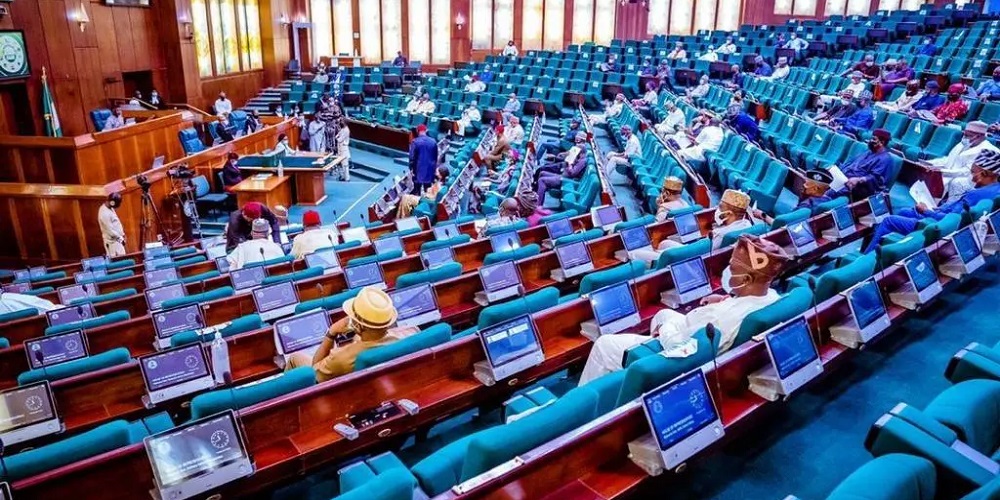
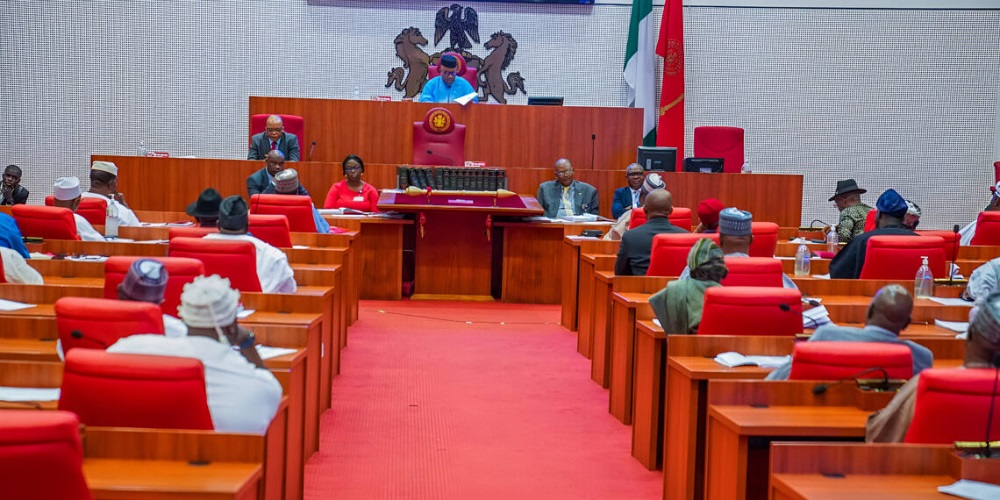
The House of Representatives has passed for second reading a bill to create special seats for women in the National and State Houses of Assemblies.

The bill, titled “A Bill for an Act to alter the Constitution of the Federal Republic of Nigeria 1999 to provide for seat reservation for women in the National Assembly and state Houses of Assembly and for related matters”, sponsored by Deputy Speaker Benjamin Kalu and 12 others, seeks to alter the 1999 Constitution of Nigeria (As Amended) and provide for seat reservations for women in the national assembly as well as the state houses of assembly.
The co-sponsors of the bill include Rep. Tolani Shagaya, Rep. M. D. Hassan, Rep. Oriyomi Onanuga, Rep. Blessing Onuh, Rep. Joshua Gana, Rep. Kama Nkemkanma and Rep. Chinwe Nnabuife.
Others are Rep. Amobi Ogah, Rep. Khadija Bukar Ibrahim, Rep. Jonathan Gbefwi, Rep. Jafaru Leko and Rep. Francis Waive.
Speaking on the general principles of the bill, Rep. Joshua Gana said when passed, the bill will enable the women to contribute their quota to national development.
He said: “Today, I stand before this esteemed House to lead the debate on a pivotal constitutional alteration bill that is aimed at addressing a profound imbalance in our Legislative Houses—the underrepresentation of women in legislative houses at the national and sub-national levels.
“This bill seeks to alter the Constitution of the Federal Republic of Nigeria, 1999, specifically to provide for seat reservations for women in both the National and State Houses of Assembly. It is anchored on the fundamental principle of equitable representation and aims to empower women by ensuring their voices are not only heard but that they actively contribute to shaping the legislative landscape and the overall development of our nation.
“The issue of gender equality and representation lies at the heart of our constitutional democracy. Despite the constitutional guarantee of equal rights, the representation of women in our Legislative Houses has been alarmingly low. In the 7th, 8th, and 9th Assemblies, women accounted for only 6.4%, 6.1%, and 2.7% of the Senate respectively; and 6.4%, 3.05%, and 4.7% of the House of Representatives respectively. These statistics underscore the urgent need for proactive measures to ensure equitable representation and amplify the voices of women in our legislative houses at the national and sub-national levels.”
Speaking on the reason for the reservation of legislative seats for women, Rep. Gana explained that Nigeria is ranking low in women representation in parliament.
“The rationale behind this amendment is grounded in the principles of fairness and inclusivity. Globally, Nigeria lags in women’s representation in parliament, ranking among the lowest. Countries that have implemented affirmative action, like Rwanda and Andorra, have seen significant strides towards gender equality in governance.
“This bill proposes a temporary measure of seat reservation for women to catalyse similar progress in Nigeria, ensuring that women’s perspectives and priorities are fully integrated into our national and sub-national decision-making processes”, he added.
The bill seeks to alter Sections 48 and 49 to provide for one special seat reserved exclusively for women in the Senate and House of Representatives for each State of the Federation and the Federal Capital Territory, effective after the term of the current National Assembly and subject to review every sixteen years.
It is also seeks to alter Section 91 to provide for three special seats reserved exclusively for women in Houses of Assembly of each State of the Federation which shall be spread across the three senatorial districts of each State.
The bill further proposed consequential amendments to sections 71, 77, and 117 of the Constitution to ultimately establish special constituencies reserved exclusively for women, ensuring their direct election into and participation in legislative houses and processes at both the federal and state levels.
The piece of legislation however received a robust debate by various lawmakers for and against, prompting the lead sponsor and deputy speaker to suggest stepping down until a day he will not be presiding.
According to him, this will help to dismiss issues of sentiment and biases as the presiding officer.
Lawmakers were however divided over the proposed legislation but the bill was subsequently passed as Deputy Speaker Benjamin Kalu, who presided over the plenary pleaded with his colleagues that whatever grievances they have against the bill should be reserved for public hearing.
Although, Kalu had earlier opined that the bill be stood down for more consultation but members insisted that he should put it to vote.
Subjected to a voice vote, the majority of the lawmakers gave their nod for the second reading of the bill, necessitating its passage.
The bill was eventually referred to the House Committee on Constitutional Review for further legislative input.
Politics
ADC crisis deepens as Binani-led bloc quits Adamawa chapter
Fresh cracks have emerged within the African Democratic Congress (ADC) in Adamawa State, as a powerful bloc aligned with Senator Aishatu Dahiru Ahmed Binani announced a mass resignation from the party, citing what it described as a “total collapse of internal democracy.”
The decision, contained in a communiqué issued after a stakeholders’ meeting held at the residence of Hon. Mijiyewa Umaru Kugama, signals a major political realignment ahead of the 2027 general elections.
The group, drawn from the three senatorial zones of the state, accused the party leadership at both state and national levels of undermining democratic principles and imposing illegitimate structures.
“The actions of the party leadership have destroyed internal democracy, undermined the rule of law, and rendered the party structure in Adamawa State illegitimate and unacceptable,” the communiqué stated.
At the heart of the crisis are the recently concluded party congresses, which stakeholders claim were marred by manipulation and imposition under the leadership of Ishaya Bauka (retd).
According to the group, court rulings and existing injunctions were ignored, creating what they described as a “dangerous precedent of lawlessness.”
“The congresses were fundamentally flawed, manipulated, and imposed against the will of the majority of party members,” the stakeholders alleged.
They further accused party officials of sidelining key actors through “systematic exclusion, intimidation, and imposition,” arguing that the ADC has consequently lost its credibility as a democratic platform in the state.
In a series of far-reaching resolutions, the faction declared a vote of no confidence in the ADC leadership and announced its “immediate and irreversible resignation en masse” from the party.
The group also rejected all outcomes of the disputed congresses, declaring them “null and void.”
“We refuse to be part of a system that thrives on injustice, impunity, and illegality,” the communiqué read.
The stakeholders confirmed plans to align with a new political platform, although no party was officially named.
However, they mandated Senator Binani to spearhead the transition and coordinate a unified strategy ahead of the next electoral cycle.
Political observers say the development could significantly reshape the political landscape in Adamawa, particularly with Binani expected to remain a central figure in the 2027 governorship race.
The communiqué outlined plans for a coordinated defection structure spanning polling units, wards, and local government areas, alongside aggressive grassroots mobilisation under a new platform.
“This decision marks the beginning of a new political direction anchored on credibility, inclusiveness, and true democratic ideals,” the stakeholders concluded.
The crisis adds to growing tensions within opposition parties nationwide, with analysts warning that unresolved internal disputes could weaken party cohesion ahead of future elections.
Politics
AFCON Fallout: Senegalese fans released after serving 3 months jail terms in Morocco
Morocco has released three Senegalese football fans who were imprisoned following the violent unrest that marred the Africa Cup of Nations Final 2025 in Rabat.
The trio regained their freedom on Saturday after completing three-month jail terms handed down for their roles in the clashes that erupted during the high-tension final.
The supporters were among a group of Senegalese fans arrested and prosecuted over incidents including hooliganism, vandalism, and attempted pitch invasion during the chaotic showdown.
Authorities confirmed the released fans had served the shortest sentences, while others convicted over the violence remain in custody serving longer jail terms.
The unrest during the final sparked diplomatic concern and drew criticism from officials in Senegal, further straining tensions in the aftermath of one of the most controversial finals in AFCON history.
Politics
2027: Why Tinubu should be afraid — ADC
The African Democratic Congress has warned President Bola Tinubu to be concerned about a possible electoral defeat in 2027, saying that widespread hardship and worsening living conditions have eroded public confidence in his administration’s policies.
In a statement issued on Friday by its National Publicity Secretary, Bolaji Abdullahi, the ADC said Tinubu appears increasingly detached from the realities of hardship, insecurity, and widespread frustration confronting millions of Nigerians.
Reacting to criticism from former Vice President Atiku Abubakar, former governors Peter Obi (Anambra) and Rotimi Amaechi (Rivers), among other African Democratic Congress leaders during their April 14 national convention, President Tinubu said he cannot be intimidated, while accusing the coalition figures of trying to privatise the ADC and describing their gathering as a “street convention.”
In response, the ADC described the President’s comments as unpresidential, alleging that he appears more focused on politics while many Nigerians continue to grapple with worsening poverty and increasing vulnerability to insurgency and kidnappings.
The party stated, “The African Democratic Congress has taken note of the comments made by Bola Ahmed Tinubu at the Presidential Villa concerning the ADC and the state of the opposition. What Nigerians saw was not the confidence of a leader in control. It was the anxiety of a President increasingly disconnected from the reality of hardship, insecurity, and frustration facing millions of citizens.
“At a time when families are battling a historic cost-of-living crisis, food inflation, rising debt burdens, and collapsing purchasing power, the President chose to mock the opposition instead of addressing the suffering of Nigerians. However, even as he spoke, reports of children being abducted from examination centres were circulating. This is the reality of today’s Nigeria, insecurity spreading deeper into everyday life while the government appears distracted.
“The President should not be ridiculing the opposition. He should be deeply concerned that the majority of Nigerians have rejected his government, whose ill-conceived policies have ruined lives and destroyed livelihoods. These are the reasons he should be scared, because the people are determined to vote him out.”
ADC also dismissed what they described as a misleading account of the party’s National Convention.
It added, “We did not hold our convention on the street. If that was the story supplied to the President by agents of disruption, then he has been misinformed.
“But even if any opposition party were forced to gather outside established venues, Nigerians would understand why. Under this administration, democratic space has shrunk significantly. No government before now had denied political parties fair access to public venues such as Eagle Square, a national civic ground that belongs to all Nigerians, not to any ruling party.
“The President also cannot preach separation of powers while simultaneously assuming the role of interpreter of the law, political referee, and commentator on judicial matters. President Bola Ahmed Tinubu cannot be a President and a judge at the same time.
“If this administration truly respected the separation of powers, Nigerians would not have witnessed the repeated weakening and humiliation of institutions meant to serve as checks and balances. The legislature, in particular, has too often appeared reduced to an extension of executive convenience.”
The party also accused the President of recently trying to win over supporters of the late Muhammadu Buhari, saying it was hypocritical to distance himself from Buhari’s record in the past only to reverse course ahead of the election.
It added, “The issue before the country today is simple: hardship is rising, insecurity is worsening, debt is mounting, and hope is fading. No amount of political theatre can hide that truth.
“The ADC remains focused on building a credible alternative anchored on competence, security, prosperity, and democratic freedom. Nigerians deserve better than excuses, propaganda, and power games.”
-
News23 hours agoEx SGF Babachir reveals what Buhari told him about Tinubu before his demise
-
News16 hours agoFG Reveals Identities Of Alleged Coup Plotters, Files Treason Charges
-
News24 hours agoNCC, CBN sign pact to strengthen consumer protection, curb fraud
-
News19 hours agoJust in: Kwara youths protest prolonged abduction of 176 women, kids by Boko Haram
-
News16 hours agoTinubu Makes Fresh Key Appointment In Government
-
News23 hours agoBREAKING! APC 2027: ‘Consensus Ticket Requires Consent of All Aspirants’ Says National Chair
-
News14 hours agoUS Lawmaker Accuses Tinubu’s Minister Of Bribery To Cover Up Genocide Report
-
News15 hours agoSaudi Arabia seeks partnership with FCT on green city, security, economy

You must be logged in to post a comment Login