Connect with us

Foreign

After 24 Years In Office; Kagame Sworn-In For Fourth Term As Rwandan President

Published

on

ADVERTISEMENT
Zoom Ad
ADVERTISEMENT
Zoom Ad

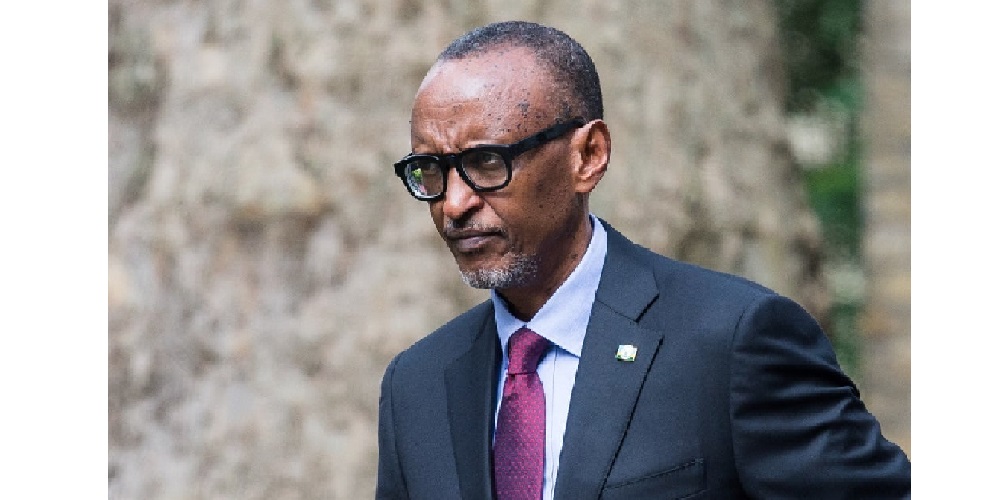
Rwandan President Paul Kagame was sworn in on Sunday for a fourth term after sweeping to victory in elections last month with more than 99 per cent of the vote.

Several dozen heads of state and other dignitaries from African nations joined the inauguration ceremony at a packed 45,000-seat stadium in Kigali, the nation’s capital, where crowds had started gathering in the early morning.

Kagame took the oath of office before Chief Justice Faustin Ntezilyayo, pledging to “preserve peace and national sovereignty, consolidate national unity.

”The outcome of the July 15 poll was never in doubt for the iron-fisted Kagame, who has ruled the small African nation since the 1994 genocide, as de facto leader.

Advertisement

He won 99.18 per cent of ballots cast to secure another five years in power, according to the National Electoral Commission.

Rights activists said the 66-year-old’s overwhelming victory was a stark reminder of the lack of democracy in Rwanda.

Only two candidates were authorised to run against him out of eight applicants, with several prominent Kagame critics barred.

Democratic Green Party leader Frank Habineza scraped into second place with 0.5 per cent of the vote against 0.32 per cent for independent Philippe Mpayimana.–

Advertisement

DRC ceasefire talks –

Kagame is credited with rebuilding a ruined nation after the genocide when Hutu extremists unleashed 100 days of vicious bloodletting targeting the Tutsi minority, killing around 800,000 people, mainly Tutsis but also Hutu moderates.

But rights activists and opponents said he rules in a climate of fear, crushing any dissent with intimidation, arbitrary detentions, killings and enforced disappearances.

Kagame is also accused of stoking instability in the east of its much larger neighbour the Democratic Republic of Congo.

Advertisement

Angola’s President Joao Lourenco, among those attending Sunday’s ceremony, was due to have private talks with Kagame on a DRC ceasefire deal, the Angolan presidency said.

Luanda brokered the agreement last month after a meeting between the foreign ministers of DRC and Rwanda, which is accused of backing the M23 rebel group fighting Kinshasa’s armed forces.

But on August 4, the day the deal was supposed to take effect, M23 rebels — who have seized territory in the east since launching a new offensive at the end of 2021 — captured a town on the border with Uganda.

With 65 per cent of the population aged under 30, Kagame is the only leader most Rwandans have ever known.

Advertisement

“I proudly cast my vote for President Kagame and made it a priority to be here today to witness this historic inauguration.“

His leadership has been transformative for our nation.

Under his leadership, Rwanda has risen from our tragic past and forged a path towards prosperity, unity and innovation,” said a 27-year-old trader, Tania Iriza, one of the tens of thousands who turned out for the ceremony.

Kagame has won every presidential election he has contested, each time with more than 93 per cent of the ballot.

Advertisement

In 2015, he oversaw controversial constitutional amendments that shortened presidential terms to five years from seven but reset the clock for the Rwandan leader, allowing him to potentially rule until 2034.

Source: AFP
Continue Reading
Advertisement
Click to comment

Warning: Undefined variable $user_ID in /home/naijuinz/public_html/wp-content/themes/zox-news/comments.php on line 49

You must be logged in to post a comment Login

Leave a Reply

Foreign

Iran Unable To Import Petrol Amid US Naval Blockade

Published

on

By

ADVERTISEMENT
Zoom Ad
ADVERTISEMENT
Zoom Ad

Iran is struggling to import enough petrol to offset weak domestic production, as a US naval blockade cuts off supply routes into the country, a senior Iranian official has said.

Vice President Mohammad Jafar Ghaempanah linked the shortage directly to the blockade, which has left Tehran unable to bridge the gap between local output and demand.

“Petrol production is insufficient, and because of the US naval blockade, we cannot import it,” the official IRNA news agency quoted Ghaempanah as saying on Wednesday.

The shortage has pushed Iranians into long queues outside petrol stations in recent days, deepening the economic strain building on the country as its war with the United States increasingly plays out through financial and supply pressure rather than direct confrontation.

Advertisement

The conflict began on February 28, after which Iran seized control of the strategic Strait of Hormuz, prompting Washington to respond with a naval counter-blockade of Iranian ports.

Amid the fuel crunch, President Mohsen Haji-Mirzaei’s chief of staff said on Monday that petrol quotas would be reviewed, though he gave no further details on what changes might follow.

Ghaempanah also took aim at how Iran distributes its heavily subsidised fuel, arguing that the existing system favours those who own several vehicles over those with none.

“The distribution of petrol in the country is inequitable. Owners of several vehicles benefit from subsidies, unlike those who do not own one,” he said.

Advertisement

Iran remains one of the world’s major oil producers and has long offered some of the cheapest fuel globally, a legacy of decades of heavy subsidies that makes any move to alter pricing a politically delicate issue for the government.

Continue Reading

Foreign

Royal Family Gathers As Norway’s King Harald’s Condition Worsens

Published

on

By

ADVERTISEMENT
Zoom Ad
ADVERTISEMENT
Zoom Ad

Norway’s King Harald V is in an “extremely serious” condition in hospital, according to the country’s royal household.

The 89-year-old monarch has been receiving treatment at Oslo University Hospital for more than a week after being diagnosed with haemolytic anaemia, a rare blood condition that reduces the number of red blood cells in the body and can cause fatigue and shortness of breath.

King Harald’s wife, Queen Sonja, and his son, Crown Prince Haakon, have cancelled their royal engagements and gathered at his bedside. Other members of the royal family, including Crown Princess Mette-Marit and Princess Astrid, have also reportedly visited the hospital.

Crown Prince Haakon, 53, is the heir to the Norwegian throne and has been serving as regent while his father is on leave.

Advertisement

Norway’s Prime Minister Jonas Gahr Støre also cancelled a planned trip to Germany, where he was due to meet Chancellor Friedrich Merz.

Advertisement

“The whole nation is with us as we send warm thoughts to the king and the rest of the royal family,” Støre said.

Members of the public have begun leaving flowers in Palace Square outside the Royal Palace in Oslo as concerns over the king’s health grow.

Advertisement

King Harald has experienced several health problems in recent years and has had to reduce his royal duties. In 2024, he was fitted with a pacemaker after becoming ill while on holiday in Malaysia.

He has been on the Norwegian throne since 1991 and is Europe’s oldest serving head of state.

The royal family has faced several health and personal challenges this year. Crown Princess Mette-Marit underwent a lung transplant in June after being diagnosed with a rare form of pulmonary fibrosis in 2018.

The transplant came shortly after her son, Marius Borg Høiby, was sentenced to four years in prison after being convicted of two counts of rape. Høiby, who is not a royal figure, has denied the most serious charges and is appealing the sentence.

Advertisement

Earlier this year, documents also revealed Mette-Marit’s frequent contact with the late convicted sex offender Jeffrey Epstein. She later apologised to the king and queen for her three-year friendship with Epstein and said she had shown “poor judgement”.

Continue Reading

Foreign

UK’s Newborn Babies To Be Tested For Rare Genetic Condition In National Trial

Published

on

By

ADVERTISEMENT
Zoom Ad
ADVERTISEMENT
Zoom Ad

Newborn babies in England will be tested for spinal muscular atrophy (SMA) as part of a new five-year national trial examining whether the rare genetic condition should be added to routine newborn screening.

The study, led by Professor Laurent Servais, a paediatric neuromuscular disease specialist at the University of Oxford, will examine whether screening for SMA is effective, practical and cost-effective for the NHS.

The programme will begin with a phased rollout in Birmingham, Manchester and London before expanding nationally. It is expected to screen about 400,000 babies initially, with a full national rollout eventually reaching around 600,000 newborns each year.

Researchers expect the screening programme to identify about 60 babies with SMA annually. Children diagnosed through the programme will be followed for five years to assess their development, including when they learn to sit and walk, their quality of life and the level of care they require.

Advertisement

SMA is a rare genetic condition affecting about one in 10,000 people. It damages the motor neurons responsible for controlling movement and can cause muscle weakness.

In its most severe form, babies may initially appear healthy but can develop weakness, difficulty supporting their heads, breathing problems and problems swallowing within their first months of life. Without treatment, some children can die within their first few years.

Professor Servais said early diagnosis is important because once symptoms appear, some of the damage cannot be reversed.

The new screening programme follows a pilot study in the Thames Valley, which identified Teddy, a child from Chesham, with SMA when he was eight weeks old in 2023.

Advertisement

Teddy was diagnosed before he developed symptoms and was able to begin treatment quickly. He now takes the medicine Risdiplam every day and, at two and a half years old, is developing normally.

His parents, Hattie and James, said they had known very little about SMA before Teddy’s diagnosis and described the news as devastating. However, they were relieved that the condition had been detected before symptoms appeared.

The Thames Valley pilot screened more than 30,000 babies and Teddy was the only child identified with SMA.

SMA screening will be carried out using the existing NHS newborn blood spot test, commonly known as the heel-prick test. The test currently checks babies for 10 rare but serious health conditions.

Advertisement

Former Little Mix singer Jesy Nelson has also campaigned for newborns to be tested for SMA after her twin daughters were diagnosed with the condition at six months old.

Nelson said the introduction of newborn screening was a victory for families affected by SMA and could give future children a brighter start.

Researchers hope the national study will provide strong evidence about the medical benefits and potential cost savings of detecting SMA before symptoms develop.

Advertisement
Continue Reading

Trending

Copyright © 2024 Naija Blitz News