
News
RITUALS, BLOOD AND DEATH, THE SPIRITUAL SIDE OF ASO VILLA


- /home/naijuinz/public_html/wp-content/plugins/mvp-social-buttons/mvp-social-buttons.php on line 27
https://naijablitznews.com/wp-content/uploads/2024/08/images-2024-08-14T231648.656.jpeg&description=RITUALS, BLOOD AND DEATH, THE SPIRITUAL SIDE OF ASO VILLA', 'pinterestShare', 'width=750,height=350'); return false;" title="Pin This Post">
- Share
- Tweet /home/naijuinz/public_html/wp-content/plugins/mvp-social-buttons/mvp-social-buttons.php on line 72
https://naijablitznews.com/wp-content/uploads/2024/08/images-2024-08-14T231648.656.jpeg&description=RITUALS, BLOOD AND DEATH, THE SPIRITUAL SIDE OF ASO VILLA', 'pinterestShare', 'width=750,height=350'); return false;" title="Pin This Post">


By Reuben Abati.
People tend to be alarmed when the Nigerian Presidency makes certain decisions. They don’t think the decision makes sense. Sometimes, they wonder if something has not gone wrong with the thinking process at the highest level of the country.
I have heard people insist that there is some form of witchcraft at work in the country’s seat of government. I am ordinarily not a superstitious person, but working in the Villa, I eventually became convinced that there must be something supernatural about power and closeness to it. I’ll start with a personal testimony.
I was given an apartment to live in inside the Villa. It was furnished and equipped. But when my son, Michael arrived, one of my brothers came with a pastor who was supposed to stay in the apartment. But the man refused claiming that the Villa was full of evil spirits and that there would soon be a fire accident in the apartment. He complained about too much human sacrifice around the Villa and advised that my family must never sleep overnight inside the Villa.
I thought the man was talking nonsense and he wanted the luxury of hotel accommodation. But he turned out to be right. The day I hosted family friends in that apartment and they slept overnight, there was indeed a fire accident. The guests escaped and they were so thankful. Not long after, the President’s physician living two compounds away had a fire accident in his home. He and his children could have died. He escaped with bruises. Around the Villa, while I was there, someone always died, or their relations died. I can confirm that every principal officer suffered one tragedy or the other; it was as if you needed to sacrifice something to remain on duty inside that environment.
Even some of the women became merchants of dildos because they had suffered a special kind of death in their homes (I am sorry to reveal this), and many of the men complained about something that had died below their waists too. The ones who did not have such misfortune had one ailment or the other that they had to nurse. From cancer to brain and prostate surgery and whatever, the Villa was a hospital full of agonizing patients.
I recall the example of one particular man, an asset to the Jonathan Presidency who practically ran away from the Villa. He said he needed to save his life. He was quite certain that if he continued to hang around, he would die. I can’t talk about colleagues who lost daughters and sons, brothers and uncles, mothers and fathers, and the many obituaries that we issued.
Even President Jonathan was multiply bereaved. His wife, Mama Peace was in and out of hospital at a point, undergoing many surgeries. You may have forgotten, but after her husband lost the election and he conceded victory, all her ailments vanished, all scheduled surgeries were found to be no longer necessary, and since then, she has been hale and hearty.
By the same token, all those our colleagues who used to come to work to complain about a certain death beneath their waists and who relied on videos and other instruments to entertain wives (take it, easy, boys, I don’t mean any harm, I am writing!), have all experienced a reawakening.
Everyone who went under the blade has received miraculous healing, and we are happy to be out of that place. But others were not so lucky. They died. There were days when convoys ran into ditches and lives were lost.
In Norway, our helicopter almost crashed into a mountain. That was the first time I saw the President panicking. The weather was all so hazy, and he just kept saying it would not be nice for the President of a country to die in a helicopter crash due to pilot miscalculations. The President went into prayer mode. We survived. In Kenya once, we had a bird strike. The plane had to be recalled and we were already airborne with the plane acting like it would crash.
During the 2015 election campaigns, our aircraft refused to start on more than one occasion. The aircraft just went dead. On some other occasions, we were stoned and directly targeted for evil. I don’t envy the people who work in Aso Villa, the seat of Nigeria’s Presidency.
For about six months, I couldn’t even breathe properly. For another two months, I was on crutches. But I considered myself far luckier than the others who were either nursing a terminal disease or who could not get it up.
When Presidents make mistakes, they are probably victims of a force higher than what we can imagine. Every student of Aso Villa politics would readily admit that when people get in there, they actually become something else. They act like they are under a spell. When you issue a well-crafted statement, the public accepts it wrongly.
When the President makes a speech and he truly means well, the speech is interpreted wrongly by the public. When a policy is introduced, somehow, something just goes wrong.
In our days, a lot of people used to complain that the APC people were fighting us spiritually and that there was a witchcraft dimension to the governance process in Nigeria.
But the APC folks now in power are dealing with the same demons. Since the Buhari government assumed office, it has been one mistake after another. Those mistakes don’t look normal, the same way they didn’t look normal under President Jonathan.
I am, therefore, convinced that there is an evil spell enveloping this country. We need to rescue Nigeria from the forces of darkness. Aso Villa should be converted into a spiritual museum and abandoned.
Should I become President of Nigeria tomorrow, I will build a new Presidential Villa: a Villa that will be dedicated to the all-conquering Almighty, and where powers and principalities cannot hold sway. But it is not about buildings and space, not so? It is about the people who go to the highest levels in Nigeria. I don’t quite believe in superstitions, but I am tempted to suggest that this is indeed a country in need of prayers.
We should pray before people pack their things into Aso Villa. We should ask God to guide us before we appoint ministers. We should, to put it in technocratic language, advise that the people should be very vigilant. We have all failed so far, that crucial test of vigilance. We should have a Presidential Villa where a President can afford to be human and free.
In the American White House, Presidents live like normal human beings. In Aso Villa, that is impossible. They’d have to surround themselves with cooks from their villages, bodyguards from their mother’s clans, and friends they could trust. It should be possible to be President of Nigeria without having to look behind one’s shoulders.
But we are not yet there. So, how do we run a Presidency where the man in the saddle can only drink water served by his kinsman? No. How can we possibly run a Presidency where every President proclaims faith in Nigeria, but they are better off in the company of relatives and kinsmen? No. We need as Presidents men and women who are willing to be Nigerians. No Nigerian President should be in spiritual bondage because he belongs to all of us and to nobody.
Now let me go back to the spiritual dimension.
A colleague once told me that I was the most naïve person in the place. I thought I was a bright, smart, professional doing my bit and enjoying the President’s confidence. I spelled it out. But what I got in response was that I was coming to the villa using Lux soap, but that most people around the place always bathed in the morning with blood. Goat blood. Ram blood. Whatever animal blood. I argued.
He said there were persons in the Villa walking upside down, head to the ground. I screamed. Everybody looked normal to me. But I soon began to suspect that I was in a strange environment indeed. Every position change was an opportunity for warfare.
Civil servants are very nice people; they obey orders, but they are not very nice when they fight over personal interests.
The President is most affected by the atmosphere around him. He can make wrong decisions based on the cloud of evil around him. Even when he means well and he has taken time to address all possible outcomes, he could get on the wrong side of the public.
A colleague called me one day and told me a story about how a decision had been taken in the spiritual realm about the Nigerian government. He talked about the spirit of error, and how every step taken by the administration would appear to the public like an error. He didn’t resign on that basis but his words proved prophetic. I see the same story being re-enacted. Aso Villa is in urgent need of redemption. I never slept in the apartment they gave me in that Villa for an hour.
==========
Reuben Abati was the Former Special Adviser on Media to Ex-President Goodluck Jonathan

News
Wike’s flashback on Amaechi: “I was his campaign DG in 2011, after that he has not won any election in Rivers”(Video)

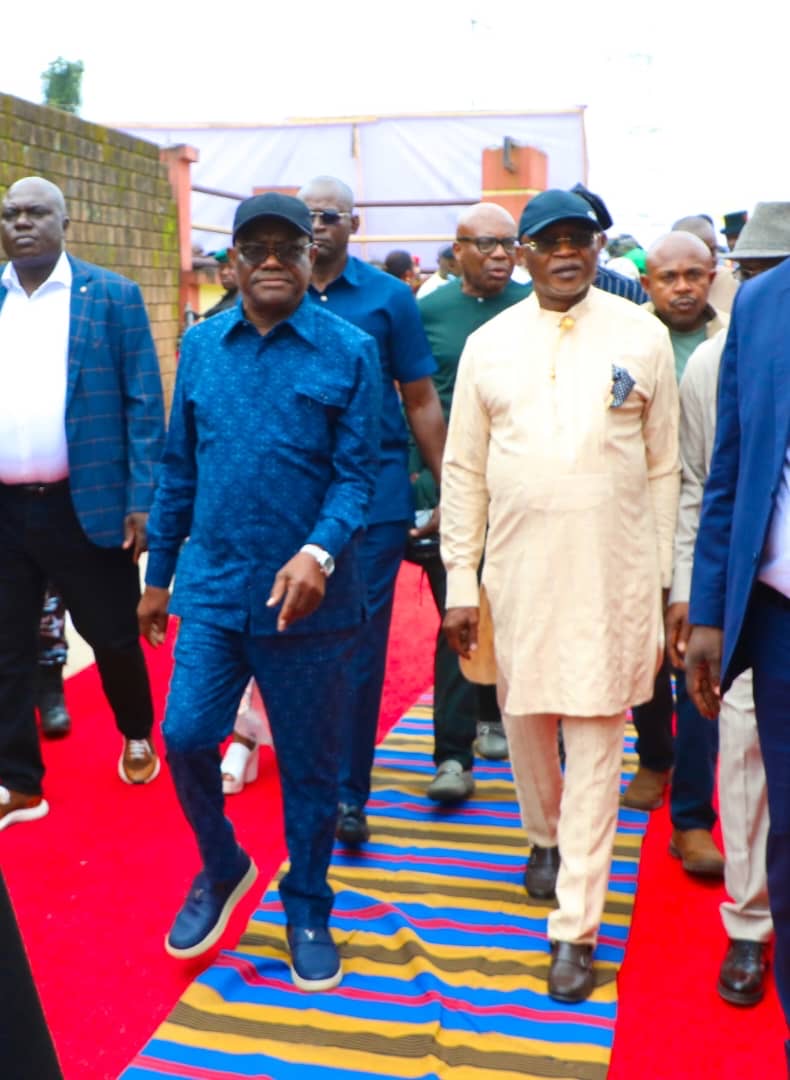
Federal Capital Territory FCT minister Nyesom Wike on a memory lane said his predecessor, Rotimi Amaechi has failed to win any election after he supervised his Guber election in Rivers in 2011.
WATCH:
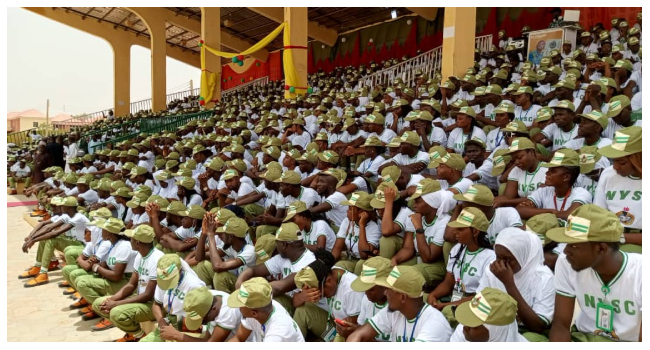
Families of prospective National Youth Service Corps (NYSC) members from Oyo State have been thrown into panic after kidnappers reportedly demanded a combined N50 million ransom for each of their victims abducted along the Owerri-Onitsha Road in Imo State.
Recall that the victims were travelling from Ibadan, Oyo State, to NYSC orientation camps in Abia and Akwa Ibom States when gunmen attacked two buses in the Umunoha area of Imo State on Thursday.
The Managing Director of Uko Akwa Ibom Motors Nigeria Limited, Isiah Akpan, whose company operates the buses, confirmed the development.
According to Akpan, the kidnappers contacted some of the victims’ families and demanded ₦50 million for each abducted passenger.
The development has heightened fears among relatives, who are anxiously awaiting the safe return of their loved ones as security agencies intensify efforts to locate the victims.
Akpan said the two buses departed Bodija/Samonda Park in Ibadan on Wednesday but were delayed by heavy traffic around Benin, Edo State.
He said the buses eventually arrived in Onitsha, Anambra State, late that day.
However, due to the condition of the road, the drivers and passengers decided to spend the night in Oba before continuing their journey the following morning.
According to him, the buses resumed the journey from Oba at about 5 a.m. on Thursday.
Akpan said the vehicles had barely entered Imo State when gunmen emerged from the bush, blocked the buses and forced 19 passengers into the bush.
“They blocked the two vehicles and took 19 passengers, all corps members, into the bush,” Akpan said.
He said the drivers escaped and alerted security personnel at a nearby checkpoint, prompting police and military personnel to commence a search for the abductors.
Akpan, however, said the operation was initially delayed after some villagers allegedly prevented security personnel from moving the abandoned buses from the scene.
The buses were eventually left at the location, with some of the passengers’ belongings scattered inside.
Less than 24 hours after the incident, the Imo State Police Command said that 10 victims had been rescued.
Families of the victims have been receiving ransom demands
The reported ransom demands have deepened the anxiety of relatives of the missing graduates.
Some of the parents who spoke to Channels Television appealed to both the state and federal government to come to their aid and secure the release of their children.
Some of the parents in an interview with Channels Television noted that they are helpless in the face of the demands being made by the kidnappers. They are also worried about the safety of their children.
Olawale Olaleke, while speaking with Channels Television, said his son was one of those posted to Abia State to serve but was unfortunately kidnapped before he got to his destination.
Another parent, Olawale Olalere, narrated his ordeal with tears in his eyes, calling on Governor Seyi Makinde and President Bola Tinubu to come to their rescue.
He said, ” The vehicle took off from Samonda and slept in Onitsha, from where they took off the following morning, and just as they got to Owerri in Imo State, we heard they had been kidnapped.
” We are here to appeal to the government to come to our rescue. This morning, when they confirmed that they have been kidnapped, they’re already demanding N50 million naira on each victim”.
Mrs Oladosu said her daughter, Greatness, was travelling to Uyo when she was abducted
According to Oladosu, the kidnappers briefly contacted the family through her daughter’s phone and allowed them to see Greatness and other victims during a video call.
She said the victims were seen sitting on the ground in the bush and crying.
“Where will petty traders get N50 million? They are just going to serve Nigeria; why this punishment?” she said.
Another victim’s mother, Alimotu Akanke, said her son, Akande Farouq, who was posted to Abia State, managed to send a brief message to his family before his phone went off.
Farouq reportedly sent the word “Kidnappers!” to the family’s WhatsApp group before communication was lost.
Meanwhile, Friends and relatives of the victims have begun to seek help online.
As families await news of the victims, friends and associates of some of the abducted graduates have launched social media campaigns calling for assistance and their safe release.
A manifest from the two buses reportedly listed 30 passengers, 15 in each bus, although the number of people actually abducted and the identities of those rescued remained subject to clarification as security agents are yet to release the manifest from the transport company.
Oyo Govt Condemns Crime
The Oyo govt has condemned the abduction of the corps members and assured the parents and relatives of the victims of their safe release.
The assurance was given at the Oyo State Government Secretariat when the families affected paid a visit in protest of the abduction.
Executive Assistant to Gov Seyi Makinde on Security, Sunday Odukoya who attended to the group, attempted to calm frayed nerves, assuring them that Gov Makinde is working with all relevant stakeholders to secure the release of the Corps members.
Police Launch Rescue Operation
The Police Public Relations Officer, DSP Henry Okoye, said security agencies were pursuing the abductors and had launched a coordinated operation to rescue the remaining victims.
However, it is unclear whether those 10 rescued persons were among the corps members reportedly abducted from the two buses.
… FCT Minister challenges ex-Rivers governor over stalled projects, 24-year public record
… Questions N10bn anti-malaria fumigation spending, electoral claims
… Says political leadership should empower, not pull others down
The Minister of the Federal Capital Territory (FCT), Nyesom Wike, has fired back at former Rivers State Governor Rotimi Amaechi, challenging him to account for major projects and expenditures incurred during his administration.
Wike made the statements on Saturday, during a visit to the Uzugbani Ekpeye National Executive Council at Ekpeye House in Ahoada, Ahoada East Local Government Area of Rivers State.
Wike, who spoke on Saturday during an interactive meeting with the Uzugbani Ekpeye National Executive Council as well as leaders and stakeholders of Ahoada East and West Local Governments, Rivers State at the Ekpeye House in Ahoada, was reacting to Amaechi’s appearance on Channels Television’s Politics Today on Friday evening.
Amaechi, a former governor and Minister of Transportation, had criticised the Federal Government over its record of project delivery and challenged the administration to name major projects it had completed.
But Wike turned the spotlight on his predecessor’s record in Rivers, questioning what became of several projects initiated under Amaechi.
He specifically raised questions over the $39 million reportedly paid for the Justice Adolphus Karibi-Whyte Specialist Hospital, the N68 billion monorail project and about N10 billion allegedly spent on an anti-malaria fumigation programme.
Wike asked what became of the money committed to the hospital project after the facility was not completed.
The controversy over the hospital dates back to the Amaechi administration.
A Rivers State judicial commission set up under Wike had investigated the payment of $39.2 million to a contractor for the project and its failure to materialise.
Wike also questioned the fate of the monorail project, which was among the major infrastructure schemes initiated by the Amaechi administration, as well as the expenditure on the fumigation programme.
He went further to criticize a $10 million malaria control project that was executed with Cuba to eradicate mosquitoes in the state, dismissing the initiative as a scam.
“Ask him about the fumigation of Rivers State with people from Cuba in which $10 million was spent. Ask him whether mosquitoes have stopped biting us in Rivers State,” he said.
The FCT Minister said such issues should be considered when assessing the records of political leaders seeking higher office.
Wike also challenged Amaechi’s record after spending eight years each as Speaker of the Rivers State House of Assembly, governor and Minister of Transportation.
“Someone was Speaker of the House of Assembly for eight years, Governor for eight years, and Minister for eight years, that is 24 years in top leadership positions. What can anybody point to that he attracted to Ekpeye Land in all those 24 years? Nothing! Not one single thing!” he said.
The minister urged the people of Ahoada East and West Local Governments to demand evidence of projects and political empowerment allegedly attracted to the area during Amaechi’s years in public office.
Wike said leadership should not be measured only by the offices occupied but by the people empowered, projects delivered and structures left behind.
He contrasted this with what he described as his own efforts to empower people and develop political successors, saying leaders should not deliberately prevent others from rising.
Wike also criticised what he described as the use of personal and family tragedies for political purposes.
He said political disagreements should not descend into the exploitation of private grief, particularly matters surrounding the death of family members.
The minister warned against a political culture in which personal tragedies are deployed to gain sympathy or attack opponents.
Wike further challenged claims about Amaechi’s political influence in Rivers State, asking supporters to examine his electoral record.
“Since I left him in 2011, after 2011, mention one election that he has ever won in Rivers State,” he said.
The minister also recalled their political relationship and past disagreements, including controversies surrounding appointments and business interests involving federal maritime agencies.
He contrasted what he described as Amaechi’s approach with the Tinubu administration’s establishment of regional development structures and appointments involving people from the South-South.
His latest comments deepen the long-running political feud between the two former Rivers leaders, who once worked together before becoming major political rivals.

Wike’s flashback on Amaechi: “I was his campaign DG in 2011, after that he has not won any election in Rivers”(Video)

Confusion As Abductors Of Oyo Corps Members Demand ₦50m Ransom For Each Victim
Wike tackles Amaechi: Account for $39m Hospital, N68bn Monorail, N10bn anti-malaria fumigation


-

 News10 hours ago
Court Denies KC Luxury Bail, Remands Influencer Over ₦39bn Cocaine Trafficking Allegation
-

 Metro11 hours ago
Edo APC Chairman Tenebe Sparks Outrage Over ‘AK-47 Fire’ Threat Against Tinubu Vote Opponents
-
 Metro11 hours ago
Fear grips RCCG Church members as pastor collapses, dies while preaching about sudden death
-

 News10 hours ago
Amaechi: I’ll Dump Atiku, Back Tinubu If Petrol Drops to ₦600 Per Litre
-
 News5 hours ago
Grand reception for FCT minister Wike at Ekpeye Kingdom on a visit to Uzugbani NEC, in Ahoada LGA today (VIDEO)
-
 News10 hours ago
Lagos University Workers Threaten Indefinite Strike Over Nine-Month Salary Arrears
You must be logged in to post a comment Login