
News
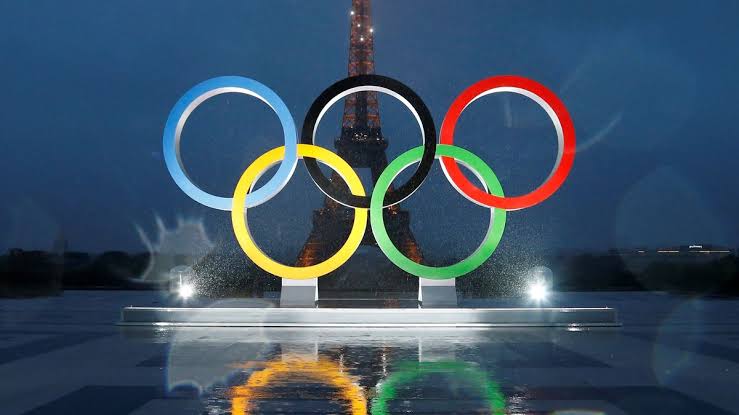
*LA Olympics 2028: Global South’s Leading Countries Need to Get Their Act Together*

- /home/naijuinz/public_html/wp-content/plugins/mvp-social-buttons/mvp-social-buttons.php on line 27
https://naijablitznews.com/wp-content/uploads/2024/08/images-2024-08-14T231220.934.jpeg&description=*LA Olympics 2028: Global South’s Leading Countries Need to Get Their Act Together*', 'pinterestShare', 'width=750,height=350'); return false;" title="Pin This Post">
- Share
- Tweet /home/naijuinz/public_html/wp-content/plugins/mvp-social-buttons/mvp-social-buttons.php on line 72
https://naijablitznews.com/wp-content/uploads/2024/08/images-2024-08-14T231220.934.jpeg&description=*LA Olympics 2028: Global South’s Leading Countries Need to Get Their Act Together*', 'pinterestShare', 'width=750,height=350'); return false;" title="Pin This Post">


*By Joseph Dimegbechie*
Judged by their own high standards, the leading economies of the Global South had a lacklustre performance at the recent Paris Olympics. Some, like China, must be feeling inconsolable. Boasting some of the most sophisticated sporting infrastructures and pedigrees, they had aspired to surpass Team USA but fell just short of the mark. China, which matched the USA in gold medals, ultimately conceded to their rivals in the total medal count, missing an opportunity to claim some prestige for the fastest-growing and largest developing economies outside the Western hemisphere. With burgeoning populations and an expanding role in international politics, nations like Nigeria, Mexico, Turkey, Brazil, Pakistan, and India must prioritize sports development as much as they do infrastructure and human resources.
Outside China, the Paris Olympics ended in disappointment for these emerging global powers. It seems they overlooked a critical element. Brazil secured only three gold medals and a modest total of 20 medals. The defeat of the Brazilian women’s football team in the finals against the USA was particularly poignant, given the country’s passion for the sport. “Better luck next time,” one might say to the Samba Girls. Mexico and Turkey each won three gold medals, while Pakistan added just one gold to a sparse tally for this collective of nations, home to the world’s largest human population and the custodians of our future. For India, which won no gold and only six medals, and Nigeria, whose team returned empty-handed, the 2028 Los Angeles Olympics present another chance to succeed and claim some bragging rights to fit their rising reputation in world politics.
Many knowledgeable commentators have argued that unless nations from the Global South elevate their performance and start to dominate the medal tally, the Olympics risk devolving to the ignominious level of the Winter Olympics, which is often mocked in much of the developing world as the “White Olympics.” However, no concessions will be made, and if these emerging nations desire a shift in power, they must earn it through developing a successful strategy and investing substantially in the cultivation and nurturing of talent. The Olympic Games are a grand display of humanity’s natural athletic ability and resilience to excel, and they are a chance for every country to show off their citizens’ physical prowess proudly. This year Nigeria has had many struggles in this prestigious global competition, but the Nigerian spirit is nothing if not unyielding and tenacious.
An avoidable issue that has encumbered Nigeria’s ability to shine at the Olympics is the ill-preparation of the country’s Ministry of Sports Development formerly headed by Sunday Dare who failed to adequately equip the Ministry for this year’s Games. With the nation’s performance in 2020’s Summer Olympics and 2022’s Winter Olympics, it should have been a wake-up call for better preparation. In Paris, this year, Favour Ofili, a promising sprinter from the national team, unfortunately found herself unable to register to compete in the competition. Similarly, Ese Ukpeseraye, a dedicated cyclist, faced challenges as well and had to borrow a bicycle from the German national team. These project an unflattering image of Nigeria especially with the number of accompanying officials going to the competition who outnumbered the athletes.
Yet another disheartening issue is the significant number of athletes with Nigerian heritage who opted to compete for other countries, such as the United States, the United Kingdom, and even less prominent nations like Bahrain. This raises questions about the sports and athletics environment in Nigeria when our own athletes prefer to represent other nations at the Olympics. Indeed, there are both positive and negative aspects to Nigerian athletes representing and winning medals for other countries. On one hand, it demonstrates the abundance of sporting talent in the country; on the other, it highlights the deficiencies in the administrative and motivational structures necessary to translate raw talent into medal counts. Despite these shortcomings, some accomplishments should be applauded.
In an official brief, John Owan Enoh, the current Minister of Sports and Development has surprisingly taken responsibility for the hindrances faced by the national team. This is unusual for Nigerian officials who love to play the blame game, ever out to save their reputation and pin it all on someone or something unrelated. Enoh has further developed a comprehensive plan to ensure Nigeria’s advancements and optimizations in future competitions, not just the Olympic Games. This is a breath of fresh air as it proves steps in the right direction are being made under the Tinubu Administration. Another important aspect of Enoh’s brief is his ministry’s resolution to renovate Nigeria’s sports facilities and refocus sports federations to bolster Nigeria’s performance on the international stage. This comes on the heels of the necessity of the country’s U-23 football team to construct a training camp in Germany before the Olympics.
But it is not all gloomy for the “Giant of Africa.” The inspiring story of Rena Wakama, a woman of Nigerian descent born in the United States of America who chose to coach Nigeria’s women’s basketball team (D’Tigress) over that of the US, shows Nigerians that even when abroad, we are proudly Nigerian, exceptionally patriotic. Ms. Wakama’s efforts were officially recognized by President Bola Tinubu as well as other individuals who have contributed to Nigeria’s place in the Paris 2024 Olympic Games. Her efforts have been fruitful with D’Tigress becoming the first African basketball team to cross the quarter-finals in the Olympics. Doping of any sort has recently become more common for athletes in the Olympic Games and Nigeria has been a repeat offender in this regard. However, this year, no competing Nigerian athlete was guilty of any form of unfair performance enhancement in Paris. This is commendable as it shows Nigeria’s national team’s dedication to good sportsmanship.
The Nigerian team returned home medal-less, yet they offered a preview of the potential for success in Los Angeles over the next four years with early preparation. Los Angeles is poised to evoke memories of the Atlanta Olympics in 1996, which was perhaps the most remarkable performance by Black Africa. The Nigerian Dream Team not only triumphed in men’s football, outplaying Brazil and Argentina the renowned powerhouses of the sport, but Chioma Ajunwa clinched Africa’s first female gold medal in a field event. The question remains: Can Nigeria replicate the Atlanta ’96 exploits in Los Angeles 2028? Given the indomitable Nigerian spirit this is certainly achievable. However, the groundwork must start now. The humility of the Nigerian Sports Minister is an indication that the Bola Ahmed Tinubu Government can build the foundations to power the dreams of all Nigerians and hope for the Global South for a Los Angeles medals table flourish!
This is not the time to propose the removal of Senator John Owan Enoh, an unusually truthful public servant, a position being canvassed in certain quarters. Rather, it is the time to accord him every necessary backing to enable him focus and prepare for Nigeria’s forthcoming sporting appearances.
*Dimegbechie a public analyst lives in Enugu*
News
Wike’s flashback on Amaechi: “I was his campaign DG in 2011, after that he has not won any election in Rivers”(Video)

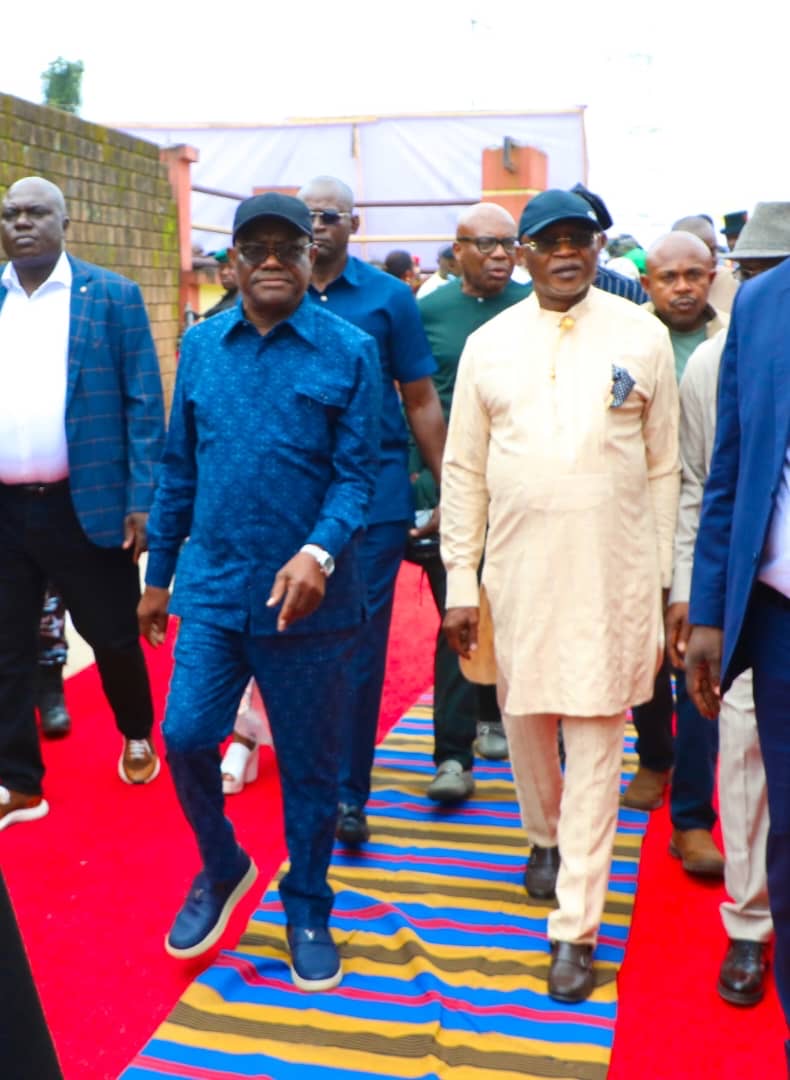
Federal Capital Territory FCT minister Nyesom Wike on a memory lane said his predecessor, Rotimi Amaechi has failed to win any election after he supervised his Guber election in Rivers in 2011.
WATCH:
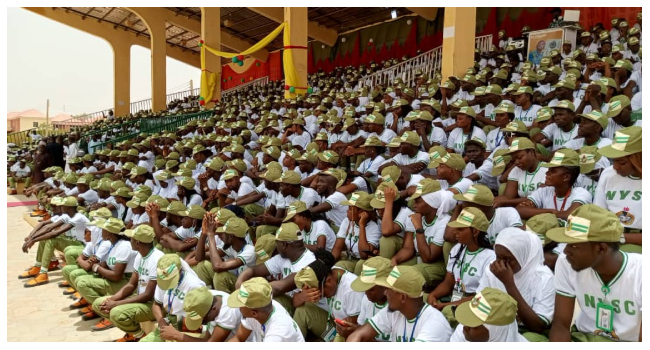
Families of prospective National Youth Service Corps (NYSC) members from Oyo State have been thrown into panic after kidnappers reportedly demanded a combined N50 million ransom for each of their victims abducted along the Owerri-Onitsha Road in Imo State.
Recall that the victims were travelling from Ibadan, Oyo State, to NYSC orientation camps in Abia and Akwa Ibom States when gunmen attacked two buses in the Umunoha area of Imo State on Thursday.
The Managing Director of Uko Akwa Ibom Motors Nigeria Limited, Isiah Akpan, whose company operates the buses, confirmed the development.
According to Akpan, the kidnappers contacted some of the victims’ families and demanded ₦50 million for each abducted passenger.
The development has heightened fears among relatives, who are anxiously awaiting the safe return of their loved ones as security agencies intensify efforts to locate the victims.
Akpan said the two buses departed Bodija/Samonda Park in Ibadan on Wednesday but were delayed by heavy traffic around Benin, Edo State.
He said the buses eventually arrived in Onitsha, Anambra State, late that day.
However, due to the condition of the road, the drivers and passengers decided to spend the night in Oba before continuing their journey the following morning.
According to him, the buses resumed the journey from Oba at about 5 a.m. on Thursday.
Akpan said the vehicles had barely entered Imo State when gunmen emerged from the bush, blocked the buses and forced 19 passengers into the bush.
“They blocked the two vehicles and took 19 passengers, all corps members, into the bush,” Akpan said.
He said the drivers escaped and alerted security personnel at a nearby checkpoint, prompting police and military personnel to commence a search for the abductors.
Akpan, however, said the operation was initially delayed after some villagers allegedly prevented security personnel from moving the abandoned buses from the scene.
The buses were eventually left at the location, with some of the passengers’ belongings scattered inside.
Less than 24 hours after the incident, the Imo State Police Command said that 10 victims had been rescued.
Families of the victims have been receiving ransom demands
The reported ransom demands have deepened the anxiety of relatives of the missing graduates.
Some of the parents who spoke to Channels Television appealed to both the state and federal government to come to their aid and secure the release of their children.
Some of the parents in an interview with Channels Television noted that they are helpless in the face of the demands being made by the kidnappers. They are also worried about the safety of their children.
Olawale Olaleke, while speaking with Channels Television, said his son was one of those posted to Abia State to serve but was unfortunately kidnapped before he got to his destination.
Another parent, Olawale Olalere, narrated his ordeal with tears in his eyes, calling on Governor Seyi Makinde and President Bola Tinubu to come to their rescue.
He said, ” The vehicle took off from Samonda and slept in Onitsha, from where they took off the following morning, and just as they got to Owerri in Imo State, we heard they had been kidnapped.
” We are here to appeal to the government to come to our rescue. This morning, when they confirmed that they have been kidnapped, they’re already demanding N50 million naira on each victim”.
Mrs Oladosu said her daughter, Greatness, was travelling to Uyo when she was abducted
According to Oladosu, the kidnappers briefly contacted the family through her daughter’s phone and allowed them to see Greatness and other victims during a video call.
She said the victims were seen sitting on the ground in the bush and crying.
“Where will petty traders get N50 million? They are just going to serve Nigeria; why this punishment?” she said.
Another victim’s mother, Alimotu Akanke, said her son, Akande Farouq, who was posted to Abia State, managed to send a brief message to his family before his phone went off.
Farouq reportedly sent the word “Kidnappers!” to the family’s WhatsApp group before communication was lost.
Meanwhile, Friends and relatives of the victims have begun to seek help online.
As families await news of the victims, friends and associates of some of the abducted graduates have launched social media campaigns calling for assistance and their safe release.
A manifest from the two buses reportedly listed 30 passengers, 15 in each bus, although the number of people actually abducted and the identities of those rescued remained subject to clarification as security agents are yet to release the manifest from the transport company.
Oyo Govt Condemns Crime
The Oyo govt has condemned the abduction of the corps members and assured the parents and relatives of the victims of their safe release.
The assurance was given at the Oyo State Government Secretariat when the families affected paid a visit in protest of the abduction.
Executive Assistant to Gov Seyi Makinde on Security, Sunday Odukoya who attended to the group, attempted to calm frayed nerves, assuring them that Gov Makinde is working with all relevant stakeholders to secure the release of the Corps members.
Police Launch Rescue Operation
The Police Public Relations Officer, DSP Henry Okoye, said security agencies were pursuing the abductors and had launched a coordinated operation to rescue the remaining victims.
However, it is unclear whether those 10 rescued persons were among the corps members reportedly abducted from the two buses.
… FCT Minister challenges ex-Rivers governor over stalled projects, 24-year public record
… Questions N10bn anti-malaria fumigation spending, electoral claims
… Says political leadership should empower, not pull others down
The Minister of the Federal Capital Territory (FCT), Nyesom Wike, has fired back at former Rivers State Governor Rotimi Amaechi, challenging him to account for major projects and expenditures incurred during his administration.
Wike made the statements on Saturday, during a visit to the Uzugbani Ekpeye National Executive Council at Ekpeye House in Ahoada, Ahoada East Local Government Area of Rivers State.
Wike, who spoke on Saturday during an interactive meeting with the Uzugbani Ekpeye National Executive Council as well as leaders and stakeholders of Ahoada East and West Local Governments, Rivers State at the Ekpeye House in Ahoada, was reacting to Amaechi’s appearance on Channels Television’s Politics Today on Friday evening.
Amaechi, a former governor and Minister of Transportation, had criticised the Federal Government over its record of project delivery and challenged the administration to name major projects it had completed.
But Wike turned the spotlight on his predecessor’s record in Rivers, questioning what became of several projects initiated under Amaechi.
He specifically raised questions over the $39 million reportedly paid for the Justice Adolphus Karibi-Whyte Specialist Hospital, the N68 billion monorail project and about N10 billion allegedly spent on an anti-malaria fumigation programme.
Wike asked what became of the money committed to the hospital project after the facility was not completed.
The controversy over the hospital dates back to the Amaechi administration.
A Rivers State judicial commission set up under Wike had investigated the payment of $39.2 million to a contractor for the project and its failure to materialise.
Wike also questioned the fate of the monorail project, which was among the major infrastructure schemes initiated by the Amaechi administration, as well as the expenditure on the fumigation programme.
He went further to criticize a $10 million malaria control project that was executed with Cuba to eradicate mosquitoes in the state, dismissing the initiative as a scam.
“Ask him about the fumigation of Rivers State with people from Cuba in which $10 million was spent. Ask him whether mosquitoes have stopped biting us in Rivers State,” he said.
The FCT Minister said such issues should be considered when assessing the records of political leaders seeking higher office.
Wike also challenged Amaechi’s record after spending eight years each as Speaker of the Rivers State House of Assembly, governor and Minister of Transportation.
“Someone was Speaker of the House of Assembly for eight years, Governor for eight years, and Minister for eight years, that is 24 years in top leadership positions. What can anybody point to that he attracted to Ekpeye Land in all those 24 years? Nothing! Not one single thing!” he said.
The minister urged the people of Ahoada East and West Local Governments to demand evidence of projects and political empowerment allegedly attracted to the area during Amaechi’s years in public office.
Wike said leadership should not be measured only by the offices occupied but by the people empowered, projects delivered and structures left behind.
He contrasted this with what he described as his own efforts to empower people and develop political successors, saying leaders should not deliberately prevent others from rising.
Wike also criticised what he described as the use of personal and family tragedies for political purposes.
He said political disagreements should not descend into the exploitation of private grief, particularly matters surrounding the death of family members.
The minister warned against a political culture in which personal tragedies are deployed to gain sympathy or attack opponents.
Wike further challenged claims about Amaechi’s political influence in Rivers State, asking supporters to examine his electoral record.
“Since I left him in 2011, after 2011, mention one election that he has ever won in Rivers State,” he said.
The minister also recalled their political relationship and past disagreements, including controversies surrounding appointments and business interests involving federal maritime agencies.
He contrasted what he described as Amaechi’s approach with the Tinubu administration’s establishment of regional development structures and appointments involving people from the South-South.
His latest comments deepen the long-running political feud between the two former Rivers leaders, who once worked together before becoming major political rivals.

Wike’s flashback on Amaechi: “I was his campaign DG in 2011, after that he has not won any election in Rivers”(Video)

Confusion As Abductors Of Oyo Corps Members Demand ₦50m Ransom For Each Victim
Wike tackles Amaechi: Account for $39m Hospital, N68bn Monorail, N10bn anti-malaria fumigation


-

 News10 hours ago
Court Denies KC Luxury Bail, Remands Influencer Over ₦39bn Cocaine Trafficking Allegation
-

 Metro11 hours ago
Edo APC Chairman Tenebe Sparks Outrage Over ‘AK-47 Fire’ Threat Against Tinubu Vote Opponents
-
 Metro11 hours ago
Fear grips RCCG Church members as pastor collapses, dies while preaching about sudden death
-

 News10 hours ago
Amaechi: I’ll Dump Atiku, Back Tinubu If Petrol Drops to ₦600 Per Litre
-
 News8 hours ago
‘I Can Barely Walk Now’ — Pete Edochie Opens Up About Health Struggles, Body Swelling
-
 News8 hours ago
Nigeria at 66: TeeJay Yusuf Calls for Urgent Action to Tackle Hardship, Insecurity, Restore Hope
You must be logged in to post a comment Login