News
Fuel tankers stranded as NNPCL, Dangote haggle over pricing
- /home/naijuinz/public_html/wp-content/plugins/mvp-social-buttons/mvp-social-buttons.php on line 27
https://naijablitznews.com/wp-content/uploads/2024/09/Tankers.jpg&description=Fuel tankers stranded as NNPCL, Dangote haggle over pricing', 'pinterestShare', 'width=750,height=350'); return false;" title="Pin This Post">
- Share
- Tweet /home/naijuinz/public_html/wp-content/plugins/mvp-social-buttons/mvp-social-buttons.php on line 72
https://naijablitznews.com/wp-content/uploads/2024/09/Tankers.jpg&description=Fuel tankers stranded as NNPCL, Dangote haggle over pricing', 'pinterestShare', 'width=750,height=350'); return false;" title="Pin This Post">
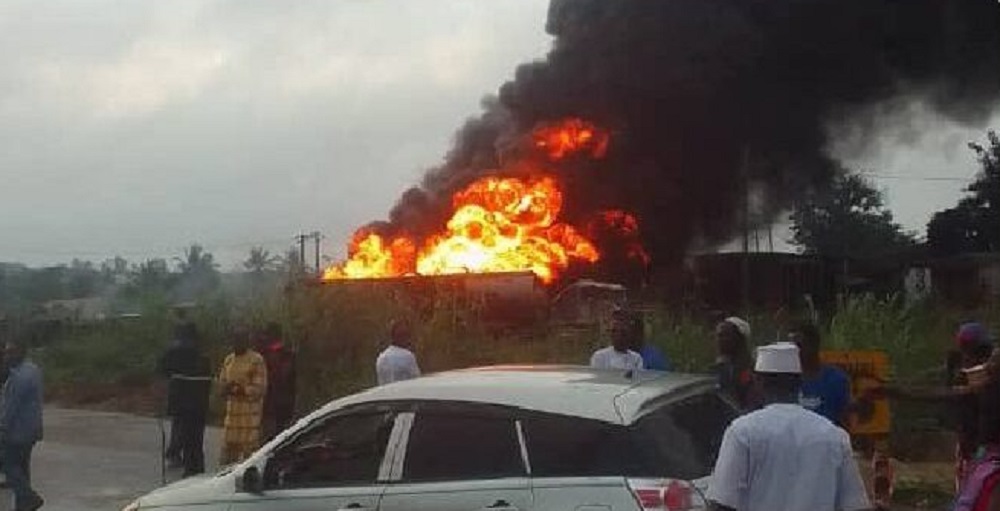
Oil marketers have yet to commence the loading of Premium Motor Spirit, popularly called petrol, despite assurances by the Federal Government that the commodity will be available this weekend.

It was gathered that though some PMS vessels had arrived in the country at the NNPC’s Apapa and Port Harcourt depots, loading by independent marketers had yet to begin.
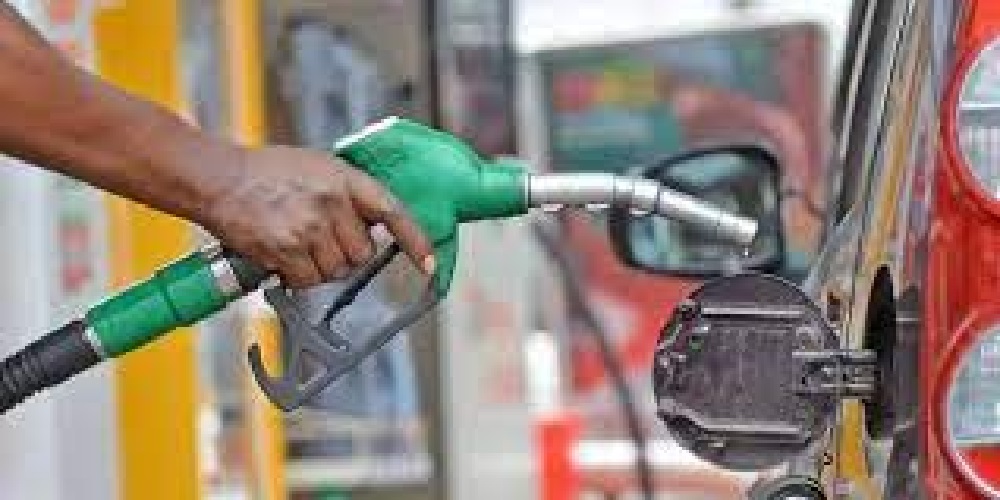
As a result, petrol queues in major cities persisted on Friday despite the Minister of State for Petroleum Resources (Oil), Heineken Lokpobiri, earlier promising that the product would be massively available before the weekend.

But the National Operations Controller of the Independent Petroleum Marketers Association of Nigeria, Mustapha Zarma, said on Friday that the loading of products at depots had yet to commence, stressing that the queues could last till Monday.
“Maybe the improvement in supply will start tomorrow or Sunday but as of yesterday (Thursday) and today (Friday), there has not been much loading of products. And even if there has been loading today, I don’t think it is much.
“That is why the queues are still visible. We cannot confirm the massive release of products as announced by the minister until maybe Monday,” Zarma stated.
On whether the petrol being expected was the one from the Dangote refinery, Zarma replied, “I am not in a position to answer that. It is NNPC that should answer that.”
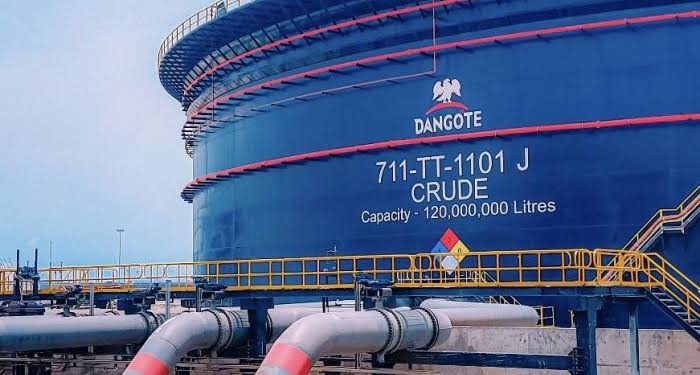
NNPC earlier stated on Thursday that it would start lifting products from the Dangote refinery on September 15, 2024.
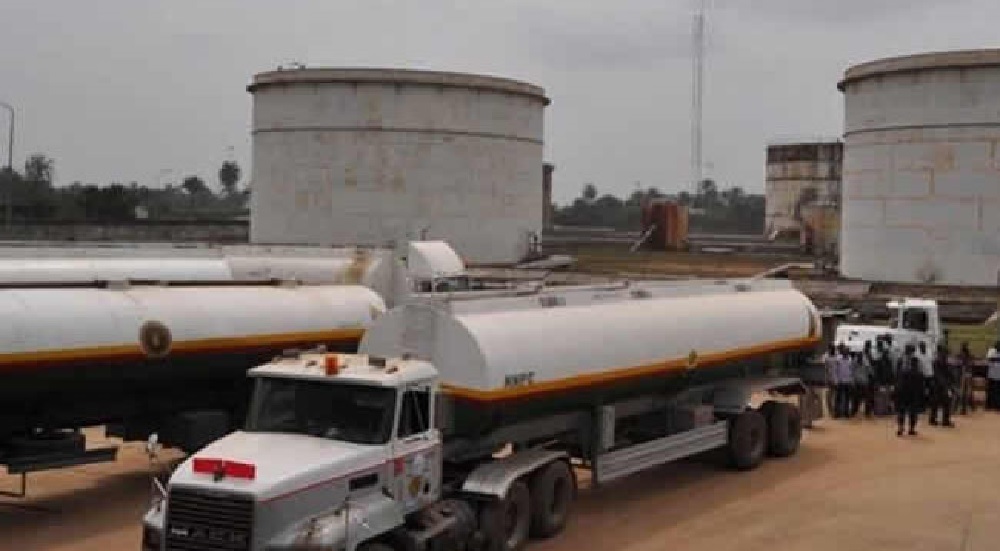
Zarma had told our correspondent on Thursday that about 2,000 petrol tankers were still at various NNPC depots waiting to lift products.
He said, “The queues in Abuja are heavy. Nobody is loading. Right now, most of the tickets of independent marketers, which had been paid for since the last three months have not been cleared to load.”
The President of the Petroleum Products Retail Outlets Owners Association of Nigeria, Billy Gillis-Harry, also confirmed that marketers had yet to start lifting petrol as required.
“We are aware of what the minister said, but we don’t have products yet. We have not started lifting the product as it is supposed to be and that is why the cost is very high in filling stations that have it.
“People struggle so much to get the product to sell to keep their businesses running. Once the products are readily accessible, the price will stabilise and the queues will clear. That is the situation.”
Presidential aide attacks Dangote
Meanwhile, a presidential aide said the Dangote Refinery was running away from pricing in order not to look bad to Nigerians.
The official, who spoke on condition of anonymity because of the sensitivity of the matter, noted that the refinery was the sole determinant of pricing, adding that it could not sell fuel below its cost price.
“The petrol price cannot be less than N1,000; that was why Dangote decided to push it to the government. So, if the price is determined by the Federal Government, people can attack the government. How does a private company ask the government to fix its price?” the official stated.
In a statement on Thursday, the Dangote Group Chief Branding and Communications Officer, Anthony Chiejina, had said the PMS market in Nigeria was strictly regulated and the refinery would wait for relevant government agencies for the price.
He said, “The PMS market is strictly regulated, which is known to all oil marketers and stakeholders in the sector, hence we cannot determine, fix, or influence the product price, which falls under the purview of relevant government authorities.”
However, the NNPC, in another statement by its spokesman, Olufemi Soneye, made a contrary claim about the price.
The company held that the PMS market had been deregulated and market forces would determine the price of the product.
Soneye was quoting the Executive Vice President of Downstream, NNPC, Adedapo Segun, saying Section 205 of the Petroleum Industry Act, which established NNPC Ltd, stipulated that petroleum prices were determined by unrestricted free market forces.
“Additionally, the exchange rate plays a significant role in influencing these prices,” the NNPC submitted.
Market forces
Experts told our correspondent that if the NNPC and the Federal Government allowed market forces to determine the price of Dangote petrol, it might be as high as N1,000 per litre.
“Can Nigerians buy petrol at N1,000 or N1,100?” a depot operator queried, asking the government to intervene to ensure affordable energy for Nigerians.
Speaking with our correspondent, an energy consultant and expert, Henry Adigun, said the cost of producing a litre of PMS is an average of N750, without any additional cost.
According to Adigun, this could rise to N800/litre when other margins are added, which will also increase when it gets to the filling stations.
He stated that the NNPC could decide to buy from Dangote and sell at a subsidised rate to the masses. The consultant, however, called for transparency in the entire process.
“Anybody that is expecting N400 or N500 petrol is just wasting his time. It won’t happen,” Adigun added.
Similarly, Professor Emeritus, Wumi Iledare, held that the PIA did not empower anyone to set the price of petrol, saying it should be determined by the forces of demand and supply.
Iledare stated that the Nigerian Midstream and Downstream Petroleum Regulatory Authority had the responsibility to ensure there was no price gouging.
The don advocated for a willing seller, willing buyer arrangement, saying the NMDPRA should not allow the NNPC to be the sole buyer of Dangote PMS.
He rejected the payment of shortfalls on PMS, nothing that the sale of petrol to all marketers in naira would crash the price.
Until the market becomes fully deregulated with many participants, Iledare suggested that Nigeria should practise what he called price modulation with a committee looking at important determinants of demand and supply to agree on a price to be reviewed as the situation changes.
He also said the price of diesel in Ghana was one cedis higher than that of petrol.
OPS warns NNPC
The Organised Private Sector on Friday warned that allowing market forces to determine the prices of fuel would bring about more volatility in the sector.
In a statement made available to Saturday PUNCH, the National President of the Nigerian Association of Chambers of Commerce, Industry, Mines, and Agriculture, Dele Oye, said the chamber condemned the recent announcement by the Minister of State for Petroleum, Heineken Lokpobiri, that the Federal Government would no longer interfere in the pricing of PMS in the country.
He said NACCIMA was particularly alarmed by the potential impact of this decision on businesses, consumers, and the overall economic landscape, adding that the deregulation of PMS prices, coupled with the influence of foreign exchange illiquidity, was likely to result in significant volatility and unpredictability in fuel prices.
“The possibility of a sharp increase in fuel prices, potentially exceeding the initial rise from N600 to N800 at NNPC stations is a grave concern. This will undoubtedly lead to a surge in inflationary pressures, eroding the purchasing power of consumers and putting immense strain on businesses already struggling to navigate the challenging economic environment.
“A more gradual and well-planned approach to PMS pricing is essential to ensure stability, predictability, and sustainable economic growth in Nigeria,” he stated.
In an interview with our correspondent, the President of the Manufacturers Association of Nigeria, Francis Meshioye, said the Federal Government should examine the underlying factors causing the price hikes before attempting to address the problem, noting the need to devise long-term solutions.
He said, “The effort to control fuel prices has been largely sabotaged, and the cost of goods has also increased. The government should take the time to examine the root of the issue. There are underlying factors causing these problems, and they cannot be addressed without tackling the fundamental issues that led to the price hikes.
It’s time to stop with superficial solutions; what we need are quick and effective measures. They must identify what triggered the increases and devise a strategic plan to address the underlying problem. The key concern is that the government should focus on long-term solutions because energy supply is crucial to manufacturers.”
Meshioye added that the inconsistencies in the energy sector were adversely affecting the operational strategies employed by manufacturers, as they were constantly required to plan in alignment with the current economic realities in the country.
According to the MAN boss, the Federal Government should engage the services of patriotic experts and stakeholders in the energy sector, whose recommendations would be adopted for implementation after brainstorming on how to get lasting solutions to the problem.
Also, the Director of the Centre for the Promotion of Private Enterprise, Dr Muda Yusuf, said fuel scarcity results in profiteering, and the only way the government can stop it is to ensure the availability of the product and promote competition.
“Generally, three critical factors determine the prices of petroleum products: procurement costs, logistics costs, and product availability. The different prices we are currently witnessing are consequences of these factors. If the conditions around these variables improve, we would see a moderation in prices as well as less variability. It is product scarcity that results in profiteering. The way to tackle this exploitative practice is to ensure product availability and promote competition,” he stated.
TUC considers strike
The Trade Union Congress criticised the increase in fuel prices, saying it undermined the new minimum wage of N70,000.
The TUC revealed that it would convene to discuss potential strike action, noting that “with the current situation, anything can happen.”
In an interview, the National Deputy President of the TUC, Tommy Etim, expressed concerns that the hike would lead to higher costs for goods and services.
He stated, “Our focus right now isn’t just on whether we are considering a strike. Given the current circumstances, anything is possible. It may not even originate from us. For instance, the #EndBadGovernance protest wasn’t initiated by us, it was a response to pressing economic issues.”
Etim emphasised that any decision regarding a strike would depend on the positions taken by individual labour centres.
“Once the various labour unions have made their decisions, we will formulate a unified stance for organised labour,” he added.
But the Nigeria Labour Congress reiterated that it would meet to give direction on how to engage the Federal Government on the fuel hike.
Spokesperson for the NLC, Benson Upah, said the appropriate organs of the body would meet and take decisions.
Nigerians trek, ride bicycles
Following the hike in fuel prices, which has increased the cost of transportation across the country, some Nigerians have resorted to the use of bicycles for interstate movement.
Our correspondents, who travelled to major cities in the country on Friday, reported that some Nigerians opted for trekking and cycling.
Some residents of Ogun State said they had abandoned their cars in favour of public transport, coupled with trekking, to cope with the unbearable hardship caused by the fuel crisis.
A senior health worker in the state, Mrs Fauziyah Adesola, said she had dropped her car and cut down on unnecessary journeys.
“With the fuel subsidy removal and the price rising from N200 to N600 per litre, I initially tried to stubbornly use my personal car, but I found out that it was a battle I couldn’t win. I was burning so much on fuel, children’s school bills were skyrocketing, and the cost of food and many other things were rising, yet the salary remained unchanged.
“So, I switched to using public transport when going to my workstation outside Abeokuta, and I added a bit of trekking. I have since found peace. I have also cut down on unnecessary journeys and social engagements,” she lamented.
Another resident, Mr Kola Adio, said he had also parked his car and embraced public transport and trekking to manage the burdensome cost of transportation.
He said, “I stopped taking my car to work in January, and I have noticed that many people in my neighborhood have done the same. I now use public transport to work, which costs me an average of N2000, compared to the N10,000 I was spending daily.”
A man, David Michael, said he now uses commercial motorcycles, popularly called okada, to get to work.
He said, “Is it not better to spend N1,200 on a bike to work daily than about N5,000 or even more driving myself? It is common sense. What I do now is just to take my car to church when the whole family is involved.
“I have also learnt to trek for at least 10 minutes from my house to the junction to get a bike to my work station. Many people are doing the same because this economy is harsh. It is terrible. None of us prepared for this situation, but God will see us through.”
In some parts of Delta State, a similar trend is observed as some Nigerians in Asaba trekked to work, while others used bicycles for movement within the state capital on Friday.
A resident in the city, Mr Monday Iwu, said he resorted to using a bicycle because he could not afford to buy fuel at the exorbitant price.
“I have a car, but since the fuel hike, I have parked my car and have been using a bicycle to work. However, our problem is the road. There are no proper roads, and cars, trucks, and even tricycles don’t allow us on the road; they harass us with their big vehicles. That’s our only fear, but we have no other options.”
Speaking with our correspondent, a young woman residing in the Ekeki axis of Yenagoa, Bayelsa State, Tarindo Mike, said she had reduced her movements due to the increase in transportation fares caused by the fuel price hike.
He said, “I’m just managing. Like today, where I used to pay N100, they now charge N150. I waited for two or three Keke before the last one carried me, and the rider said, ‘You know that fuel is high, and I’m just carrying you for N100.
“The situation is depressing. As a seller, I sample the prices of intend to buy the next day, but when I go with the money, I’m told the price has increased, and it makes me sad.”
In Ibadan, the Oyo State capital, a middle-aged woman” who identified herself only as Funke, said she trekked from Ring Road to the Challenge area of the city on Friday because she could not afford the high fares that motorists demanded due to the fuel price hike.
Similarly, a resident in the Odo-Ona Elewe area of Ibadan, who simply gave his name as Mr Luku, said, “Most of the people living in this community often trek long distances to major roads where they can then board Keke Maruwa (tricycle) or Micra taxi cabs when they have business in other areas of Ibadan.
“This is how we have been trying to cope with the fuel situation since Tinubu removed the subsidy on petrol. Many people in this community don’t go out except for important reasons.”
Also, a commuter in Abia state, said, “We have decided to trek so that instead of paying N400, we can now pay N300. Honestly, this fuel hike is changing the attitude of residents of the state. We now engage in trekking to cushion the effect of the hike.”
When our correspondent spoke to a bicyclist, he said, “I decided to fix my abandoned bicycle so I wouldn’t need to pay N400 from Douglas Road to Orji. Did you notice that passengers have resorted to trekking? There’s always a way out.”
News
NCDC Raises Red Flag Over Proposed Health Institute, Cautions Lawmakers on Overlapping Roles
By Gloria Ikibah
The Nigeria Centre for Disease Control and Prevention (NCDC) has expressed strong reservations about a proposed bill seeking to establish a National Institute for Public Health and Infectious Diseases, warning that the move could create institutional overlap and undermine the country’s disease control system.
The agency’s concerns were presented during a public hearing on the National Institute for Public Health and Infectious Diseases (Establishment) Bill, 2025 (HB 2629), organised by the House of Representatives Committee on Infectious Diseases at the National Assembly in Abuja on Thursday.
In its submission to lawmakers, the Director-General of NCDC, Dr. Jide Idris acknowledged the need to continually strengthen Nigeria’s health security architecture, including disease surveillance, epidemic preparedness and outbreak response. However, it maintained that the proposed institute will replicate responsibilities already assigned to the agency under existing legislation.
According to him, establishing another body with similar mandates risks creating administrative conflicts, duplicating public resources and blurring lines of authority during public health emergencies.
The NCDC boss argued that Nigeria already has a statutory institution responsible for coordinating infectious disease surveillance, prevention and emergency response, and that efforts should focus on strengthening existing structures rather than creating parallel agencies with potentially competing functions.
The development comes as lawmakers consider measures aimed at reinforcing the country’s capacity to prevent, detect and respond to emerging health threats. Supporters of the bill believe a dedicated public health institute could enhance research, coordination and preparedness for future disease outbreaks.
However, Idris insists that any reform intended to improve Nigeria’s public health system must avoid weakening existing institutions or creating uncertainty over leadership and accountability during health crises.
He urged lawmakers to carefully review the provisions of the bill to ensure that any new framework complements, rather than duplicates, the functions currently performed by the nation’s foremost disease control authority.
“The core responsibilities proposed for the new institute are substantially the same as those currently assigned to the NCDC,” Idris said, warning that the Bill raises serious concerns over duplication of mandates, institutional overlap, governance conflicts and fiscal sustainability.
He argued that public health emergencies require a single, clearly recognised national authority, stressing that creating another federal institution with overlapping responsibilities would generate uncertainty over leadership, accountability and operational command during disease outbreaks.
The NCDC further noted that the Bill designates the proposed institute as Nigeria’s National Focal Point for the International Health Regulations (IHR) and empowers it to coordinate national responses to infectious disease outbreaks functions that are already assigned to the NCDC under the NCDC Act and recognised by the World Health Organization (WHO).
According to the agency, such overlapping mandates could create confusion among state governments, development partners and international organisations that currently work through the NCDC as Nigeria’s official public health authority.
Drawing lessons from Nigeria’s successful response to Ebola, COVID-19, Lassa fever, cholera, meningitis, diphtheria, Mpox and other disease outbreaks, Idris maintained that the country’s public health system has evolved around a unified command structure, warning that introducing parallel institutions could fragment emergency response efforts when coordination is most critical.
The Director-General also questioned the financial implications of establishing a new federal institution with headquarters, zonal offices, state structures, governing councils and extensive staffing requirements at a time of competing national priorities.
He expressed concern over proposals to allocate part of the Basic Health Care Provision Fund to the proposed institute, warning that such a move would further stretch an already limited funding mechanism and reduce resources available for existing health priorities.
Idris noted that the Federal Government has invested significantly over the years in building the NCDC’s laboratory network, surveillance systems, emergency operations centres, genomic sequencing capacity, workforce development programmes and outbreak response infrastructure.
According to him, creating another institution with similar responsibilities would duplicate existing investments and undermine the Federal Government’s ongoing policy of streamlining public institutions.
He added that international best practice supports the existence of a single national public health institute responsible for disease surveillance, preparedness and emergency response, noting that Nigeria adopted the same model through the establishment of the NCDC.
The agency therefore urged the National Assembly to strengthen existing public health structures instead of creating parallel institutions.
While reiterating its support for upgrading the National Tuberculosis and Leprosy Training Centre, Saye, Zaria, into a tertiary institution dedicated to teaching, clinical services and research, the NCDC urged lawmakers to review provisions of the Bill that establish what it described as a parallel public health command structure.
The Director-General disclosed that the agency had submitted a detailed clause-by-clause analysis identifying areas of conflict between the proposed legislation and the NCDC Act, 2018, noting that several provisions of the Bill appeared to have been reproduced almost verbatim from the existing law.
He concluded that the issue before lawmakers was not whether Nigeria should strengthen its public health capacity, but whether that objective would be better achieved by strengthening the National Public Health Institute already established by law or by creating another institution with substantially overlapping responsibilities.
Earlier, Speaker of the House of Representatives, Rt. Hon. Tajudeen Abbas, described the proposed institute as a strategic investment in Nigeria’s health security and preparedness against future disease outbreaks.
Represented by Hon. Bashir Zubair, the Speaker said Nigeria’s experiences with Ebola, COVID-19, Lassa fever and other infectious disease outbreaks exposed significant vulnerabilities within the country’s health system and demonstrated the urgent need for stronger institutions capable of anticipating, preventing and responding effectively to emerging public health threats.
He stressed that a country of Nigeria’s population and strategic importance could no longer afford a reactive approach to disease outbreaks but must invest in scientific innovation, research, surveillance and sustainable preparedness.
According to Abbas, the proposed institute would provide a comprehensive framework for integrating disease prevention, surveillance, diagnosis, research, control and management within a coordinated national system while empowering Nigerian scientists to develop home-grown solutions to infectious diseases.
He maintained that the objective of the legislation was not simply to establish another government institution but to build a functional, agile and world-class institute capable of delivering measurable health outcomes for Nigerians and contributing to global public health.
In his opening remarks, Chairman of the House Committee on Infectious Diseases, Rep. Amobi Godwin Ogah, represented by Hon. Mark Esset, said the public hearing was organised to gather views and recommendations from stakeholders on two key pieces of legislation currently before the Committee — the National Institute for Public Health and Infectious Diseases (Establishment) Bill and the Tuberculosis Anti-Discrimination Bill.
Ogah explained that the proposal to establish a national public health institute was informed by findings from an oversight visit by members of the Committee to the National Tuberculosis and Leprosy Training Centre in Saye, Zaria, in October 2025. During the visit, lawmakers observed what he described as vast but underutilised human and infrastructural resources within the facility.
According to him, the discovery prompted the Committee to recommend the transformation of the centre into a national public health institute. It also influenced the decision to expand the Committee’s scope of responsibilities, leading to its renaming from the House Committee on HIV/AIDS, Tuberculosis and Malaria Control to the House Committee on Infectious Diseases.
The lawmaker disclosed that the Presidency had already granted approval for the upgrade of the Zaria-based training centre into a public health institute, expressing confidence that the proposed legislation would enhance Nigeria’s ability to prevent, detect, diagnose, treat and manage infectious diseases more effectively.
Speaking on the Tuberculosis Anti-Discrimination Bill, Ogah said the proposed law is designed to safeguard the rights and dignity of people living with or affected by tuberculosis. He noted that the legislation seeks to tackle stigma and discrimination, while promoting early testing, prompt diagnosis and access to treatment as part of broader efforts to reduce the burden of the disease across the country.
The hearing also featured submissions from representatives of the Federal Ministry of Health and Social Welfare, development partners, civil society groups, professional associations and public health institutions, as lawmakers continue deliberations on the two proposed laws.
News
Wike Slams David Mark Over ADC Claims On FCT Roads Construction, Defends Tinubu’s Development Agenda
Minister of the Federal Capital Territory (FCT), Barr. Nyesom Wike, on Thursday took a swipe at former Senate President David Mark over what he described as his poor infrastructure record while in office, arguing that the achievements of President Bola Tinubu’s administration in road infrastructure within three years had surpassed what was accomplished during Mark’s tenure in leadership positions.
Wike spoke at the commissioning of the Interchange at Arterial Road N16–Ring Road II Junction linking Jahi and Gwarimpa districts in Abuja, where President Bola Ahmed Tinubu was represented by Senate President Godswill Akpabio.
The minister’s remarks came in response to recent criticisms from the African Democratic Congress (ADC), which he said had nonetheless acknowledged the administration’s achievements in road infrastructure.
“ADC has conceded that in terms of road infrastructure, Mr. President has done very, very well,” Wike said. “Without roads, you cannot go to hospital, you cannot go to school, and you cannot go to farm. Roads are the bedrock of development in any society.”
Turning his attention to David Mark, whom he identified as chairman of a faction of a ADC, Wike questioned the former Senate President’s record on infrastructure delivery during his eight years in office.
According to him, the Akwanga-Makurdi road remained in deplorable condition despite being awarded during Mark’s tenure as Senate President under a ruling party’s government.
“The poor people could not afford to travel to Makurdi because there was no road. But David Mark, as Senate President then was flying helicopters,” Wike said.
“Today, because of the intervention of this administration, people can drive freely to Makurdi and Otukpo. The same David Mark, who once relied on helicopters can now travel by road too.”
The minister argued that the Tinubu administration had demonstrated what could be achieved through political will and commitment to continuity in governance.
He noted that the Jahi-Gwarimpa interchange project, commissioned on Thursday, was awarded before the current administration took office but had received no mobilisation or significant progress until the present government intervened.
“One of the problems of development in Nigeria is that new administrations often abandon projects initiated by their predecessors.
“But President Tinubu has shown that government is a continuum. What matters is completing projects for the benefit of the people, regardless of who awarded them,” he said.
Wike disclosed that residents of the area had long doubted the project would ever be completed, describing its delivery as a significant milestone in the ongoing transformation of the Federal Capital Territory.
He also rejected claims that the administration’s development efforts were limited to road construction, citing investments in water infrastructure across satellite towns.
The minister recalled the recent commissioning of water projects in Karu and announced that a similar project in Bwari would be inaugurated on July 14.
“It is not correct to say we are only doing roads,” he said.
“In Karu, we commissioned water supply infrastructure, and by July 14 we will commission another major water project in Bwari. These are projects designed to improve the lives of ordinary people.”
Wike challenged critics to point to comparable investments in satellite towns during previous administrations, insisting that the Renewed Hope Agenda was delivering tangible benefits across the FCT.
News
FG ready to review N70k Minimum Wage-Gbajabiamila reveals
The presidency has officially confirmed that plans are underway to alter the current national minimum wage configuration because the current economic situation has made the baseline salary unsustainable.
Chief of Staff to the President, Femi Gbajabiamila, made this disclosure while speaking in Abuja on Thursday during an event organized by a group called Working People United.
According to the former Speaker of the House of Representatives, the present N70,000 threshold established under President Bola Tinubu’s administration in 2024 is no longer capable of meeting the practical economic demands faced by citizens across the nation.
Addressing the gathering, the president’s representative pointed out that the current fiscal environment necessitates a thorough re-evaluation of what constitutes a living baseline for Nigerian workers.
He noted that the “N70,000 wage, which was a milestone in 2024 must be honestly reassessed against today’s realities,” signaling a strong commitment from the executive arm to reopen discussions surrounding statutory labor compensation.
Gbajabiamila assured organized labor groups that the administration does not view workers as adversaries but rather as key contributors to the progress of the country.
He emphasized that the government plans to approach the upcoming negotiations with a high level of empathy and cooperation.
“I can confirm to you that when the time comes to begin the process of reviewing the national minimum wage, this administration will approach that endeavor not as an adversary of Labour, but as a partner,” he said.
He further re-iterated the commitment of the president to human capital development and fair treatment of the workforce.
“President Tinubu has said time and again that the custodians of the nation’s machinery deserve a fair and commensurate wage, and as you all well know by now, this is the president who means precisely what he says and does exactly what he means,” Gbajabiamila stated, defending the president’s record on labor issues.
While urging trade unions and workers to maintain a peaceful posture, the Chief of Staff maintained that sustainable national growth requires an ongoing collaboration rather than perpetual conflict.
He mentioned that “It must be said that good governance is not a performance stage by government for the benefit of a passive audience, it’s a partnership between those who govern and those who are governed.”
He also emphasized that the relationship between the ruling political class and the working population remains the most crucial foundation for industrial harmony.
“No where is that partnership more vital than the relationship between government and the working people of Nigeria,” he added.
Concluding his address, the former lawmaker appealed directly to union leaders to choose the path of dialogue over strikes and industrial actions, which often cripple the national economy.
“It is with this understanding in mind that I ask the leaders of organized labour and the members of working people united to remain what you have so often been at your finest, partners in progress rather than antagonist in perpetuity, let us choose to dialog over disruption, because as we have proved again and again, we achieve far more when we visit together than when we retreat, retreat to our separate corners,” Gbajabiamila remarked.
-
News18 hours ago2027: Be Prepared to struggle for power, Wike tells PDP candidates
-
News11 hours agoViral ‘Sign-Out’ Video: Ondo Govt Withholds WAEC Results of 17 Students
-
News10 hours agoXenophobic attacks: FG evacuates another 66 citizens from South Africa
-
News7 hours agoDAY 12 of Projects Commissioning in the FCT: Watch Arterial Road N16 – Ring Road Il Intersection linking Jahi to Gwarimpa District
-
News6 hours agoSoldiers Reject Fresh Move To Deploy ‘Repentant’ Terrorists In Military Operations, Fear Sabotage, Intelligence Leaks
-
Metro19 hours agoArmed Men Are Vigilantes And Hunters – Police Dismiss Viral Katsina Video
-
News10 hours agoICPC arraigns El-Rufai, six others over alleged N8.68bn CCTV contract fraud
-
News19 hours agoSenate passes bill to double police trust fund allocation to 1%

Warning: Undefined variable $user_ID in /home/naijuinz/public_html/wp-content/themes/zox-news/comments.php on line 49
You must be logged in to post a comment Login