Connect with us

News

Reps Okay $75 Oil Benchmark Price, 2.06mbpd, NGN1400/USD Exchange Rate

Published

on

ADVERTISEMENT
Zoom Ad
ADVERTISEMENT
Zoom Ad
By Gloria Ikibah
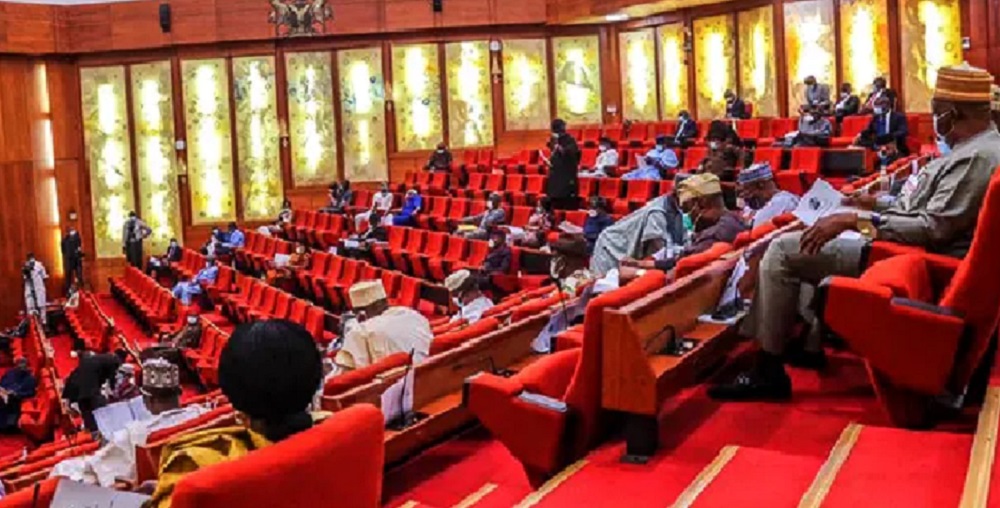
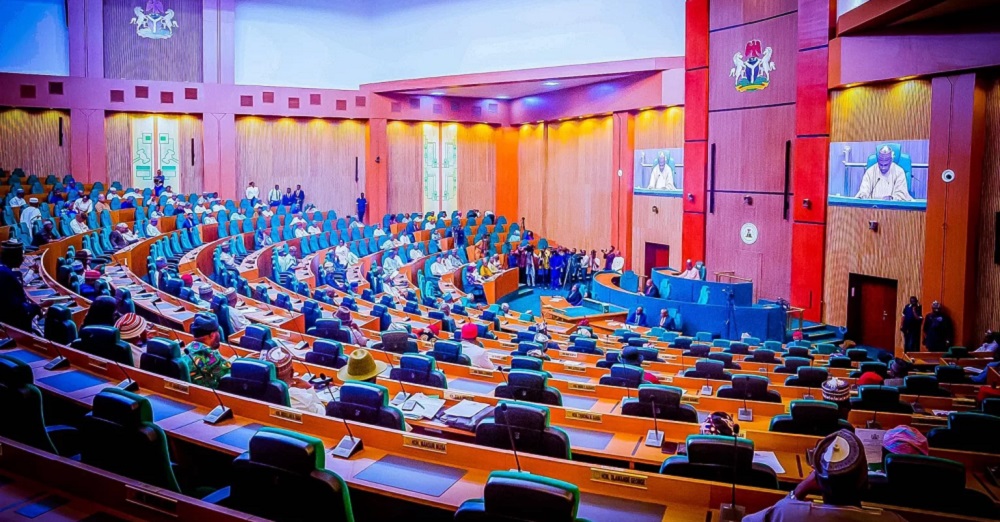
The House of Representatives has adopted the projected oil benchmark prices at $75, $76.2, and $75.3 per barrel for 2025, 2026, and 2027, respectively.
This according to Chairman House committees on Finance and National Planning, and Economic Development, Rep. James Faleke, is aimed at providing a stable foundation for the country’s budget and economic planning.
The report also projects a significant increase in domestic crude oil production.
The projected production levels are 2.06, 2.10, and 2.35 million barrels per day for 2025, 2026, and 2027, respectively.
Other key projections include a GDP growth rate of 4.6%, 4.4%, and 5.5% for 2025, 2026, and 2027, respectively. The projected exchange rate is NGN1400/USD for the same period. Inflation rates are projected at 15.75%, 14.21%, and 10.04% for 2025, 2026, and 2027, respectively.
The 2025 Budget proposes spending of NGN47.9 trillion, with NGN34.82 trillion retained and new borrowings of NGN9.22 trillion.
Debt service is valued at NGN15.38 trillion, while pensions, gratuities, and retirees’ benefits stand at NGN1.443 trillion.
The report also highlights concerns over the non-remittance of operating surpluses into the Federation Account by the NNPC, as well as the failure of some revenue-generating agencies to comply with the Fiscal Responsibility Act.
“The three-year projections for domestic crude oil production had a significant increase from 1.78mbpd in the preceding year to 2.06, 2.10 and 2.35 for the subsequent years of 2025, 2026 and 2027.
“Some critical Agencies such as NNPC, NLNG, Immigration Services and others that are relevant to the attainment of set revenue targets engage in Public Private Partnership and Joint Venture
Arrangements that are inimical to the revenue growth of the Country.
“Historical non-remittance of operating surpluses into the Federation Account by the NNPCL due to what it called under recovery with the claim that the federating units owed it the sum of Ten Trillion Naira.
“The GDP growth rate is projected at 4.6%, 4.4% and 5.5% for years 2025, 2026 and 2027 respectively. The projected exchange rate which stands at NGN1400/USD for years 2025, 2026 and 2027.
“Inflation rates projections are 15.75%, 14.21% and 10.04% for 2025, 2026 and 2027; following the criteria in the overview of the framework for revenues and expenses, the 2025 FGN Budget proposed spending stands at NGN47.9 trillion, of which NGN34.82 trillion was retained. New borrowings stood at NGN9.22 trillion which constitutes both domestic and foreign borrowings.
“Debt service was valued at NGN15.38 trillion; pensions, gratuities and retirees’ benefits stood at NGN1.443 trillion and fiscal deficit at NGN13.08 trillion.
“Capital expenditure is projected at NGN16.48 trillion which is exclusive of transfers; statutory transfers stand at NGN4.26 trillion; Sinking Fund is projected at NGN430.27 billion.
‘Total recurrent (non-debt) is projected at NGN14.21 trillion; special intervention for recurrent and capital is pegged at NGN200 billion and NGN7 billion respectively.
“That the existing liabilities and debt obligations are largely responsible for increasing debt profile of the Country.
“Most revenue generating agencies violate the Fiscal Responsibility Act due to the lack of punitive provisions in the Act. Noncompliance with the Nigerian Export Supervision Scheme (NESS) Act by relevant government agencies, specifically focusing on the inspection and monitoring of oil and gas exports as well as non-oil exports.
The committees findings also Identified systemic gaps and irregularities in the operations of the Import Duty Exemption Certificate (IDEC); and that the Federal Government Ministries Departments and Agencies (MDAs) as well as the Government Owned Enterprises (GOEs) are not complying with the financial reporting standards.
Among other recommendations, the House noted: That the National Assembly, through its Committees on Finance, National Planning and other relevant Committees should carry out in-depth investigation of such agreements by the NNPC, NLNG and Immigration Services with a view to reconcile remittances to the Federation Account.
It added that the Committees on Finance,Petroleum Upstream, and Petroleum Downstream are tasked to
investigate reports from the Revenue Mobilization, Allocation, and Fiscal Responsibility Commission alleging that the NNPC withheld ₦8.48 trillion as claimed subsidies for petrol.
Additionally, the investigation will address the NEITI report stating that NNPC failed to remit $2 billion (₦3.6 trillion) in taxes to the Federal Government.
The committees are further directed to
verify the total cumulative amount of unremitted revenue (under-recovery) from the sale of Premium Motor Spirit (PMS) by the NNPC between 2020 and 2023.
That the GDP growth rate which is projected at 4.6%, 4.4% and 5.5% for years 2025, 2026 and 2027 respectively be approved ; and that the projected exchange rate which stands at NGN1400/USD for years 2025, 2026 and 2027 be approved subject however to review in early 2025 according to monetary and fiscal policies.
The House further noted that the Inflation rates projections which are 15.75%, 14.21% and 10.04% for 2025, 2026 and 2027, be approved.
That the following the criteria in the overview of the framework for revenues and expenses, the 2025 Federal Government of NigeriaBudget proposed spending stands at NGN47.9 trillion, of which NGN34.82 trillion was retained; new borrowings stood at NGN9.22 trillion which constitutes both domestic and foreign borrowings; debt service was valued at NGN15.38 trillion; pensions, gratuities and retirees’ benefits stood at NGN1.443 trillion and fiscal deficit at NGN13.08 trillion.
That the Capital expenditure is projected at NGN16.48 trillion which is exclusive of transfers statutory transfers stand at NGN4.26 trillion; Sinking Fund is projected at NGN430.27 billion; That the Committee approves the respective figures for total recurrent (non-debt) at NGN14.21 trillion; special intervention for recurrent and capital is at NGN200 billion and NGN7 billion; and that the National Assembly do approves the Promissory Note Programme and Bond Issuance to  settle outstanding claims and liabilities of Federal Government owed to States, high priority judgments as well as liabilities incurred by Federal Ministries, Department and Agencies on behalf of Government.

News

Tinubu government begins 2026 Tertiary Institutions National Laureate Programme

Published

on

ADVERTISEMENT
Zoom Ad
ADVERTISEMENT
Zoom Ad

● Institutions directed to Constitute Laureate Committees as Nigeria Begins Search for its Finest Academic Research

The Tertiary Institutions National Laureate Committee has formally announced the commencement of the 2026 National Laureate Programme, marking the inaugural edition of what is expected to become Nigeria’s foremost national platform for recognising outstanding student academic research, innovation and scholarly excellence across tertiary institutions.

The launch of the Programme signals a major milestone in the Federal Government’s commitment to promoting research excellence, strengthening the nation’s knowledge economy and placing scholarship at the centre of Nigeria’s development agenda.

The National Laureate Programme, inaugurated by the Federal Government under the leadership of the Honourable Minister of Education, Dr Tunji Alausa, CON, is designed to identify, evaluate, celebrate and reward exceptional undergraduate dissertations, master’s theses and doctoral research produced in accredited Nigerian tertiary institutions.

Advertisement

Supported by an annual research prize fund of ₦365 million, the Programme ranks among Nigeria’s most prestigious academic recognition initiatives and reflects the Federal Government’s determination to encourage original research, innovation and solutions capable of addressing national and global challenges.

Beyond recognising academic excellence, the Prize is intended to strengthen Nigeria’s research ecosystem by promoting innovation, encouraging the commercialisation of research outputs, supporting industrial development, inspiring future researchers and establishing scholarship as a strategic national asset.

As part of the commencement of the 2026 edition, all accredited universities, polytechnics, colleges of education, monotechnics, military institutions and other eligible tertiary institutions are requested to immediately commence internal preparations for participation.

Every eligible institution is expected to constitute an Institutional Laureate Selection Committee made up of experienced academics with proven research records, unquestionable integrity and the capacity to conduct objective evaluations in accordance with the approved National Laureate Programme framework.

Advertisement

Institutions are also required to formally submit the names and designations of the Chairman, Secretary and members of the Committee, after which the Committee will coordinate the institution’s participation in the Programme.

Following the institutional evaluation process, each participating institution is expected to nominate up to eighteen outstanding research works, comprising six undergraduate dissertations, six master’s theses, and six doctoral theses in the case of universities, or their equivalents for polytechnics, monotechnics, colleges of education, and other tertiary institutions, drawn from the six approved thematic areas, such as Agriculture, Teaching Innovation, Medicine and Health Sciences, Engineering, Science, and Technology, Law, Arts and Social Sciences.

The Programme offers Star Prizes of ₦35 million for the undergraduate category, ₦50 million for the master’s category, and ₦100 million for the doctoral category.

In addition, 15 Thematic Laureate Awards, valued at ₦12 million each, will be presented to other outstanding winners.

Advertisement

Institutions are reminded that every nominated research work must first be formally submitted as required under the National Policy for the Nigeria Education Repository and Databank (NERD) and assigned a valid National Document Number (NDN) before it can be considered for the National Laureate Programme.

This requirement reinforces the Federal Government’s commitment to research integrity, proper documentation and the preservation of Nigeria’s academic output within the national knowledge infrastructure.

The Committee further reminds participating institutions that the National Laureate Programme operates a rigorous three-tier evaluation system, comprising Institutional, Regional, also referred to as Zonal, and National assessments.

This multi-layered process has been designed to guarantee transparency, fairness, objectivity and merit in the selection of the country’s finest academic research.

Advertisement

Institutions are therefore encouraged to conduct their internal assessments with the highest standards of professionalism and impartiality, recognising that only the very best research works will progress through the successive stages of evaluation.

The management of every participating institution is responsible for constituting its Institutional Laureate Selection Committee in accordance with the approved guidelines. Once constituted, the institution’s approved NERD Focal Officer (NFO) is required to designate the Committee members through NFO dashboard on NERD.

This formal designation grants authorised members secure access to make entries, evaluate submissions and digitally manage the institution’s participation on the national Laureate Dashboard throughout the Programme.

The National Laureate Committee also calls on Nigerian professional bodies and associations to play an active role in safeguarding the integrity of the Programme by nominating distinguished scholars and subject experts for appointment into the Regional Laureate Selection Committees across the six geopolitical zones of the Federation.

Advertisement

Professional bodies representing agriculture, science, engineering and technology, medicine, law, arts and social sciences, teaching, and related disciplines are encouraged to submit nominations of suitably qualified experts with established records of scholarship, peer review, integrity and professional leadership.

Those appointed will participate in the independent regional evaluation of research submissions before the national assessment. All nominations will undergo rigorous screening based on merit, experience, integrity, diversity and conflict of interest requirements to ensure that the Programme maintains the highest standards of credibility and academic excellence.

Institutions and professional bodies are advised to conclude the selection of committee members and subject matter experts by 15 August 2026 while the submission of institutional entries will continue until the 31st of August 2026.

It noted that submissions would include mandatory digital transmission as provided in the guideline on the National Laureate portal.

Advertisement

Describing the Programme as a landmark national investment in intellectual capital, the Chairman of the National Laureate Committee, Emeritus Professor Abubakar S. Sambo (OON), said the National Laureate Programme was designed to elevate academic excellence to national prominence, encourage world-class research, inspire innovation and recognise scholars whose work has the potential to transform lives, industries and the future of Nigeria.

He encouraged every eligible institution and every relevant professional association to participate actively in ensuring the success of the inaugural edition of the Programme.

Further information, including detailed guidelines, committee manuals and application procedures, is available on the National Laureate Programme website at www.nationalaureate.ng.

Additional guidance may also be obtained through the Committee Guide and the Application Guide available on the website.

Advertisement

Issued by:
Ita Ekpenyong
Spokesperson
National Laureate Committee

Continue Reading

News

Troops rescue 34 abductees, nab ISWAP informant, recover arms

Published

on

ADVERTISEMENT
Zoom Ad
ADVERTISEMENT
Zoom Ad

Troops of the Nigerian Army have, in the last 24 hours, rescued 34 kidnap victims, apprehended suspected ISWAP informants and recovered arms and ammunition in coordinated operations nationwide.

This is contained in an operational report made available to the News Agency of Nigeria (NAN) on Sunday.

The report said that troops of Operation HADIN KAI rescued 31 kidnap victims from terrorists along the Buratai-Kamuya road in Biu Local Government Area of Borno.

It said the rescue followed a swift response after troops of 135 Special Forces Battalion detected ISWAP/JAS terrorists abducting civilians from four vehicles through CCTV surveillance.

Advertisement

According to the report, troops immediately deployed a quick reaction force, engaged the terrorists and forced them to abandon the victims and flee, with one motorcycle left behind.

“In another operation, troops of 145 Battalion conducted a fighting patrol to the Turoh general area of Damasak in Mobbar Local Government Area.

“The terrorists reportedly fled on sighting the troops, leaving behind two motorcycles and illicit drugs recovered during exploitation of the area.

“Also, troops of 232 Battalion Tactical apprehended a suspected ISWAP informant at Garaha Market in Hong Local Government Area of Adamawa,” it said.

Advertisement

In the North-West, the report revealed that troops of Operation FANSAN YAMMA engaged terrorists moving with rustled cattle in Tsafe Local Government Area of Zamfara.

It added that the troops’ superior firepower forced the terrorists to withdraw in disarray during the encounter.

The report also revealed that troops of Operation MESA rescued a kidnapped woman and her two children along the old Obajana-Jakura-Tajimi road in Lokoja Local Government Area of Kogi.

According to the report, preliminary investigation revealed that the victims were abducted on July 29 from a Ruga settlement in the Gada-Biyu area of the same local government.

Advertisement

“In Plateau State, troops of Operation Enduring Peace responded to reports of an attack on a herder in Bassa Local Government Area.

“The assailants had fled before the troops arrived, while the deceased and recovered cattle were handed over to the victim’s family,” it added.

In the South-East, the report said the troops of Operation UDO KA recorded a major breakthrough with the arrest of three suspected terrorists linked to the ambush of troops in Imo on May 4.

It added that the operation, conducted in Delta and Imo states, followed intelligence obtained from earlier arrested suspects.

Advertisement

According to the report, troops recovered four AK-47 rifles, one FN rifle, a pistol, 11 AK-47 magazines, two FN magazines, 239 rounds of assorted ammunition, a fragmentation jacket and other military items from terrorist camps.

“The recovered weapons included rifles earlier carted away during the May ambush on troops, while further exploitation led to the discovery of another terrorist camp containing additional arms and ammunition,” it said.

Continue Reading

News

Joint military task force rescue kidnapped Lt Col, civilian after 10-day search operation

Published

on

ADVERTISEMENT
Zoom Ad
ADVERTISEMENT
Zoom Ad

A joint military task force has rescued a senior Nigerian Army officer, Lt. Col. Ofor Amobi, and a civilian, Mr. Ikechukwu Onwuanra, after an intensive 10-day search-and-rescue operation across forests and communities in Enugu State.

This was contained in a military operational report made available to the News Agency of Nigeria (NAN) on Saturday, August 1, 2026 in Abuja.

The breakthrough came in the early hours of Saturday following sustained operations by troops of Sector 1, Operation UDO KA (OPUK).

The search mission involved personnel of the 82 Division Garrison, 103 Battalion (Rear), the Nigerian Navy Special Boat Service (NN SBS), and the 197 Special Forces Battalion, operating under the leadership of the Commander, 82 Division Garrison, with support from the Air Component.

Advertisement

According to the report, between 6:00 p.m. on July 31 and 6:00 a.m. on August 1, the joint troops continued search operations using actionable intelligence across Inyi, Awlaw and Akpugo-Eze forests and adjoining communities in Oji River Local Government Area of Enugu State.News

At about 2:00 a.m., the Divisional Police Officer (DPO) of Inyi Division alerted the troops to the suspected location of the kidnapped victims.

The troops immediately mobilised and launched a fighting patrol into the area, where they discovered Lt. Col. Amobi and Mr. Onwuanra abandoned at the edge of a forest. The civilian was found with a gunshot wound.

The victims were successfully rescued and evacuated to Inyi before being moved to the 82 Division Medical Hospital for medical treatment and comprehensive evaluation.

Advertisement

During preliminary debriefing, the victims disclosed that they had been blindfolded shortly after their abduction and transported to an unknown location.

They said they were later abandoned in a forest around the Enugu–Anambra border as the kidnappers came under sustained operational pressure.

The military attributed the successful rescue to the relentless pressure mounted by the joint force, supported by the Air Component, which maintained continuous dominance of the suspected hideouts and denied the abductors freedom of movement throughout the 10-day operation.

The sustained search-and-rescue mission ultimately forced the kidnappers to abandon the captives and flee.

Advertisement

Further investigations and follow-up operations are ongoing to identify, track and apprehend those responsible for the abduction.

Continue Reading

Trending

Copyright © 2024 Naija Blitz News