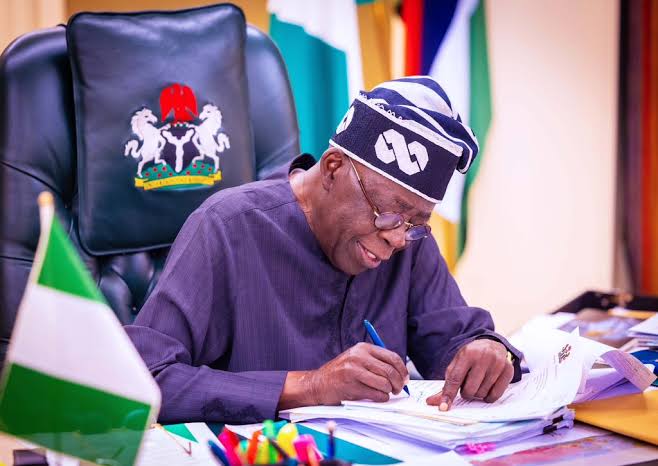
Amid strong opposition to the proposed Tax Reform Bills in the National Assembly, leading northern groups have outlined key conditions for withdrawing their resistance, citing concerns over the potential economic impact on the North.
The Northern Elders Forum (NEF), Arewa Youth Consultative Forum (AYCF), and Arewa Consultative Forum (ACF) in a chat with Vanguard have demanded accountability, transparency, expanded consultations, and trust-building as prerequisites for their support of the fiscal reforms.
The proposed laws, which include the Nigeria Tax Bill 2024, Nigeria Tax Administration Bill, Nigeria Revenue Service Establishment Bill, and Joint Revenue Board Establishment Bill, aim to overhaul Nigeria’s tax system. 
Despite passing Second Reading in the Senate, the bills have faced significant pushback, particularly from the North.
The spokesman for the NEF, Abdul-Azeez Suleiman, emphasized the importance of addressing historical inequalities to achieve sustainable peace.
He said, “In my opinion, a ceasefire on the controversy surrounding President Tinubu’s tax reform bills is achievable, but only through a concerted effort towards genuine negotiation.
“This necessitates inclusivity, transparency, accountability, and a commitment to addressing the underlying socio-economic challenges of Northern Nigeria.
“It requires walking a tightrope between the need for fiscal responsibility and the imperative of social justice.
“The path to resolution is fraught with complexities, requiring a nuanced understanding of the diverse perspectives at play and a commitment to dialogue.
“A simple cessation of hostilities is insufficient; rather, a sustainable peace requires addressing the underlying grievances and building trust.”
Poverty
“The core of the opposition stems from concerns regarding the potential impact of these reforms on the already strained economic conditions of Northern Nigeria.
“The region grapples with significant challenges – from poverty and unemployment to limited access to education and healthcare.
“Many fear that the proposed tax increases, without accompanying measures to alleviate these existing pressures, will disproportionately burden the most vulnerable populations, exacerbating existing inequalities and fueling social unrest. This fear is not unfounded.
“The lack of transparency in the initial presentation of the bills, coupled with the perceived absence of adequate consultation with regional stakeholders, has further inflamed these concerns.
“This has led to a perception that the reforms are being imposed rather than negotiated, feeding into existing anxieties about marginalization and unequal distribution of resources.
“The call for negotiation, therefore, is not merely a tactical manoeuvre but a fundamental requirement for restoring confidence and achieving a lasting ceasefire.”
Inclusivity
“The first crucial condition for successful negotiation is genuine inclusivity.
“The dialogue must not be limited to a select group of elites but must actively involve representatives from all segments of Northern society – from farmers and traders to professionals and religious leaders.
“Their diverse perspectives and concerns must be actively sought and integrated into the process. “This demands a conscious effort to bridge the communication gap between the federal government and the Northern populace, ensuring that information is disseminated transparently and that concerns are addressed directly and honestly.
“Furthermore, any meaningful negotiation must be predicated on a commitment to transparency and accountability.
“The government must provide clear, detailed explanations of the rationale behind the proposed tax reforms, outlining how the revenue generated will be utilized to benefit the northern region specifically. “This includes outlining clear plans for the improved provision of public services like healthcare,r education, and infrastructure.
“Simply stating that the reforms are necessary for national development is insufficient; a concrete plan demonstrating tangible benefits for the North is essential.”
Inequality
“This transparency should also extend to the process of revenue allocation and expenditure, ensuring that the people see the direct benefits of their contributions.
“Equally important is the establishment of independent monitoring mechanisms to ensure accountability and transparency throughout the implementation process.
“An independent body, comprising representatives from both the government and civil society, could be tasked with overseeing the implementation of the reforms and reporting regularly on their impact on the Northern region.
“This will help build trust and alleviate fears of misuse or misappropriation of funds.
“Finally, a ceasefire requires a genuine commitment to addressing the historical inequalities that have contributed to the current crisis.
“The North has long faced systemic challenges that have hindered its economic development.
“These include limited access to credit, inadequate infrastructure, and a lack of investment in human capital.
“Addressing these structural issues is not merely desirable but essential for building a sustainable and equitable future for the region.
“The tax reforms, if properly integrated into a broader strategy of regional development, can play a positive role in this process.
“However, this requires a significant investment in capacity building, infrastructure development, and targeted social programs designed to alleviate poverty and create opportunities for economic advancement.”
Not carried along
Similarly, the President of AYCF, Yerima Shettima, lamented that the region wasn’t carried along by its elected representatives during the formulation of the bills.
He, however, called for a more participatory approach that involves dialogue and addresses the specific concerns of the North before implementation.
He said, ”The position of the AYCF, a significant demographic group in Northern Nigeria, on this complex issue, requires careful consideration of our socio-economic context and perceived impact of the bill on our communities.
“While a monolithic stance is unlikely, our concerns generally revolve around equity, fairness, and the potential for disproportionate burden on the Northern region.
“Our primary concern stems from the perception of inequitable distribution of resources and infrastructure development across the country.
“We believe that despite contributing significantly to the national GDP through agriculture and other sectors, the North historically receives less in return in terms of public services, infrastructure investment, and developmental projects. “Consequently, the introduction of new taxes, without addressing this existing imbalance, is viewed with skepticism.
“They believe that increased taxation without corresponding improvements in infrastructure – roads, schools, hospitals, would unfairly burden a population already struggling with poverty, unemployment, and limited access to essential services.”
Economy
“Another key concern is the potential impact of the tax reforms on informal sectors which heavily dominate the Northern economy.
“A large portion of the Arewa youth population is employed in the informal sector – agriculture, small-scale businesses, and artisanal trades – which often operates outside the formal tax net.
“The implementation of the tax reforms bill, particularly if it extends tax obligations to the informal sector, could pose a significant challenge. “We fear that increased tax burdens could cripple these businesses, leading to job losses and further economic hardship.
“The lack of adequate education and awareness about tax regulations also exacerbates this concern. “Many young people in the informal sector lack the knowledge and resources to understand and comply with new tax laws, potentially leading to fines and penalties, further marginalizing them economically.
“Furthermore, our position is also influenced by the perceptions of governmental transparency and accountability.
“Mistrust in government institutions and concerns about the proper utilization of tax revenue are prevalent.
“We question whether the increased tax revenue generated will be effectively utilized for the benefit of all Nigerians, or if it will be mismanaged or disproportionately benefit certain regions.”
Corruption
“Concerns about corruption and lack of accountability in government spending further fuel this skepticism and contribute to our reluctance to embrace the tax reforms without robust guarantees of transparency and equitable distribution of resources.
“The lack of visible development projects and infrastructure in the North, despite past tax contributions, strengthens our belief that increased taxation without guarantees of responsible governance is unproductive.
“The absence of robust engagement and consultation with the Arewa youth by Northern Senators during the formulation of the tax reforms bill is a point of considerable frustration.
“We feel our concerns and perspectives have been largely ignored in the decision-making process. This lack of inclusivity fuels our distrust and reinforces our opposition to the bill in its current form. We call for a more participatory approach that involves meaningful dialogue and addresses our specific concerns before implementation.”
Dialogue
Also speaking, National Publicity Secretary of ACF, Prof Tukur Muhammad Baba, said, “As an organisation, ACF is yet to say anything publicly on the tax reform issue.
“It’s already looking like the Federal Government has agreed for dialogue on critical or contentious aspects of the proposed bills.
“Already, the Attorney-General of the Federation is billed to appear before the Senate on the bills. If anything, it’s probably now that ACF should come out to urge all parties, for or against the bills, to negotiate on truth, honesty and sincerity of purpose for the good of the nation.”