
News
RMAFC Challenges Tinubu’s Tax Reform Bills Over Constitutional Validity


- /home/naijuinz/public_html/wp-content/plugins/mvp-social-buttons/mvp-social-buttons.php on line 27
https://naijablitznews.com/wp-content/uploads/2024/10/images-2024-10-22T131108.436.jpeg&description=RMAFC Challenges Tinubu’s Tax Reform Bills Over Constitutional Validity', 'pinterestShare', 'width=750,height=350'); return false;" title="Pin This Post">
- Share
- Tweet /home/naijuinz/public_html/wp-content/plugins/mvp-social-buttons/mvp-social-buttons.php on line 72
https://naijablitznews.com/wp-content/uploads/2024/10/images-2024-10-22T131108.436.jpeg&description=RMAFC Challenges Tinubu’s Tax Reform Bills Over Constitutional Validity', 'pinterestShare', 'width=750,height=350'); return false;" title="Pin This Post">


The Revenue Mobilisation, Allocation and Fiscal Commission (RMAFC) has strongly opposed President Bola Ahmed Tinubu’s contentious tax reform bill, which the National Assembly is currently considering.
In a comprehensive nine-page memorandum obtained by Economic Confidential, RMAFC outlined a range of legal, constitutional, and technical objections to the proposed legislation.
The document, signed by RMAFC Chairman Mohammed Bello Shehu, emphasized that Section 162(2) of the 1999 Constitution (as amended) grants the Commission the authority to determine the formula for equitable revenue sharing among the three tiers of government.
This mandate also includes ensuring that the formula reflects principles of fairness and justice.
“The Constitution designates RMAFC as the final authority on matters of revenue allocation,” the memorandum stated.
“As such, no Act of Parliament, including the VAT Act, can infringe upon this constitutional responsibility. Any such attempt would constitute a violation of the Constitution.”
RMAFC maintained that its role as the exclusive arbiter in developing fair revenue allocation formulas must be respected. Any deviation from its constitutional duties, it argued, could undermine the integrity of the Commission and compromise the principles of justice in revenue sharing.
In its submission, the Commission called for an approach to Value Added Tax (VAT) allocation that accounts for the unique nature of VAT as a consumption tax.
It proposed a formula developed by RMAFC that would ensure equitable distribution among federal, state, and local governments.
The memorandum outlined the following points:
1. Equitable Allocation Formula: VAT allocation and derivation should be based on a formula developed by RMAFC. This formula would consider VAT’s consumption-based nature, ensuring fairness in distribution.
2. Recognition of Consumption Patterns: The formula would factor in consumption rather than merely production or the location of company headquarters, ensuring balanced benefits.
3. Support for Weaker Economies: Special consideration would be given to states with weaker economies, promoting national cohesion and fairness across all tiers of government.
RMAFC concluded the memorandum with several recommendations.
It urges he federal government to empower the Commission to finalize a VAT allocation formula in line with its constitutional mandate, reinforcing Constitutional Mandates by ensuring that VAT allocation strictly follows RMAFC’s framework, not arbitrary provisions in the VAT Act or the proposed reform bill.
The memo urges dialogue among federal, state, and local governments to secure consensus on the RMAFC’s formula, thereby reducing tensions and ensuring acceptance.
The memo also cautions legislative or executive measures that undermine RMAFC’s authority and advocates implementing systems like electronic invoicing to tag VAT collections to end-user locations, enhancing transparency and accuracy.
The Commission warned that the proposed tax reform bill threatens national unity and constitutional harmony.
By adhering to its constitutional mandate, RMAFC believes it can provide an equitable solution to revenue allocation disputes while safeguarding the principles of fairness and justice.
PRNigeria reports that the Revenue Mobilisation, Allocation, and Fiscal Commission (RMAFC) is a constitutional empowered to ensure the equitable distribution of the country’s financial resources among the three tiers of government: the federal, state, and local governments.
It is mandated that the revenue allocation formula be reviewed to ensure equitable distribution among the three tiers of government to reflect fairness, justice, and equity, taking into account.
It is also empowered to monitor the accruals and disbursements from the Federation Account to ensure compliance with the revenue-sharing formula and advise the federal, state, and local governments on fiscal efficiency and revenue diversification.







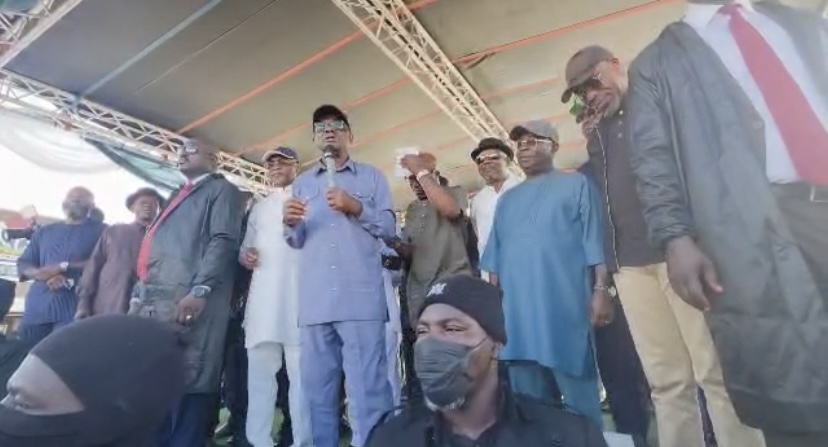
Again the Minister of Federal Capital Territory FCT Nyesom Wike has queried Rotimi Amaechi over Power Plants $308million.
He called on all national television stations to invite Amaechi and ask him where is the $308m.
The FCT Minister spoke during a Town Hall interactive meeting with the Ogbakor Etche and other stakeholders in Etche Local Government, Rivers State today.
Watch:

By Gloria Ikibah
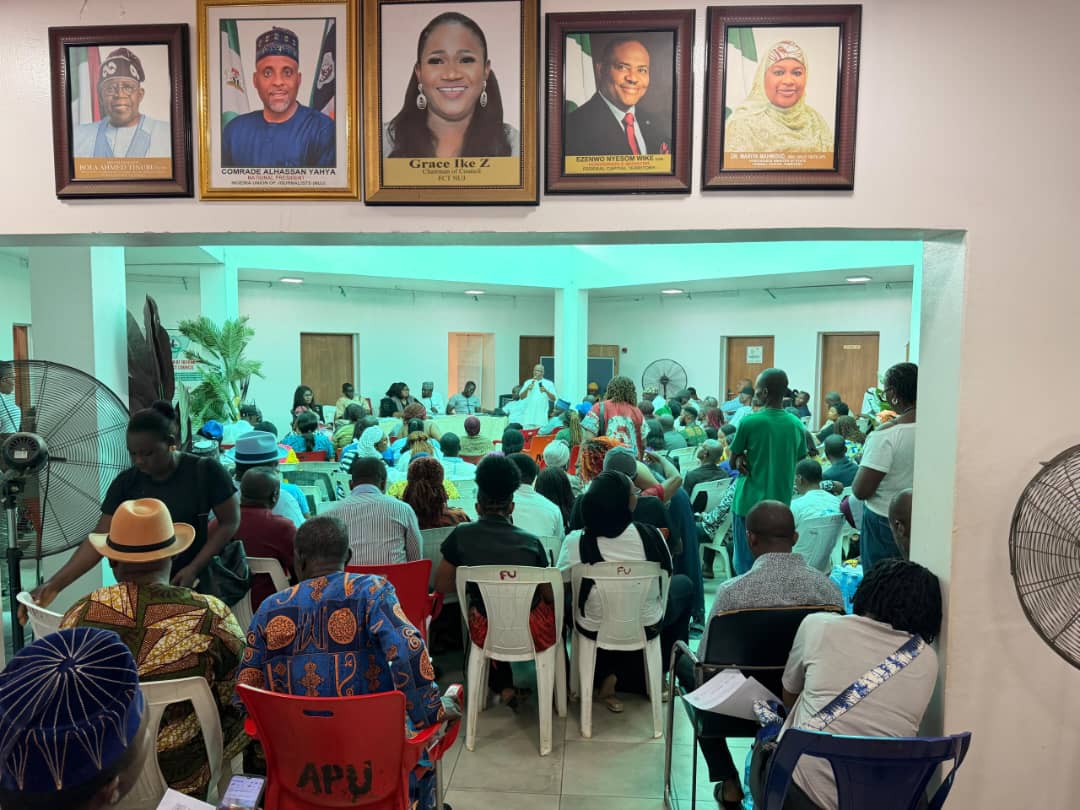
The Nigeria Union of Journalists (NUJ), FCT Council, has urged journalists to exercise greater caution in gathering, verifying and publishing political information ahead of the 2027 general elections.
The call was made at the October 2026 Congress of the NUJ FCT Council in Abuja, where members deliberated on issues affecting journalists, the Union, the media profession and the wider Nigerian society.
The Congress warned journalists against publishing unverified information, particularly reports capable of inflaming tensions, misleading the public or undermining peaceful democratic participation.
It emphasised the need for journalists to fact-check information before publication and give all relevant parties a fair opportunity to respond to allegations.
Congress also reiterated the importance of compliance with the NUJ Code of Ethics and other professional standards, urging members to ensure that their reports remain accurate, balanced, fair and in the public interest.
On professional disputes within the journalism community, the Congress expressed concern over the tendency of some journalists to take disagreements involving fellow practitioners directly to security agencies and other external institutions without first exhausting the Union’s internal mechanisms.
It therefore urged members to make greater use of the NUJ Ethics and Disciplinary Committee of the Council to resolve professional and ethical disputes.
“Members were reminded that the existence of the committee provides an established platform for addressing complaints and disagreements among practitioners in accordance with the principles and procedures of the Union,” the communiqué stated.
The Congress also commended the FCT Council leadership under its chairmanship, particularly its interventions on issues affecting journalists, including ongoing efforts to improve members’ access to health insurance and other welfare initiatives.
A member who spoke during the Congress expressed appreciation to the Council for its intervention on health insurance, noting that members were already benefiting from the initiative.
The Congress, however, called for greater participation of younger journalists in Union activities and urged the Council to introduce initiatives capable of attracting more young practitioners to Congress meetings.
Members also advocated structured mentorship programmes through which experienced journalists could transfer professional knowledge, skills and ethical values to younger practitioners.
According to the Congress, strengthening mentorship will help develop the next generation of journalists and promote professionalism across the industry.
Regulation of locally made products
The Congress also expressed concern over issues surrounding the regulation and certification of products manufactured in Nigeria.
Speaking on recent developments involving locally produced goods, Felix Ojo called for greater clarity and coordination among regulatory agencies.
He particularly questioned the role of the Standards Organisation of Nigeria (SON) in ensuring that locally manufactured products meet required standards.
The Congress stressed the importance of effective regulation, quality control and consumer protection, while calling for policies that would support legitimate Nigerian manufacturers.
Journalists warned against cyberbullying
On preparations for the 2027 elections, Princess Halima Jubril urged journalists to exercise caution and professionalism in their coverage of political activities.
She stressed the importance of fact-checking reports before publication and warned journalists against exposing themselves or their organisations to avoidable legal and professional difficulties.
She also cautioned against cyberbullying, inflammatory publications and the misuse of social media platforms.
According to her, journalists should apply wisdom in their reporting and allow professional ethics to guide their coverage of political actors and campaigns.
The Congress also commended Nigerian security agencies for their efforts in rescuing members of the National Youth Service Corps (NYSC) reportedly targeted while travelling to their orientation camp.
Members expressed concern over attacks involving young Nigerians participating in the national service programme and called for stronger measures to protect corps members travelling to and from their places of deployment.
The Congress stressed that the safety of NYSC members and other young Nigerians must remain a priority for relevant security authorities.
It also called on journalists, political actors, security agencies and other stakeholders to contribute to a peaceful electoral environment ahead of the 2027 elections.
Journalists, it said, must report political activities responsibly, avoid unverified claims and refrain from publications capable of escalating political tensions.
“Congress also reminded members that their responsibility as journalists is to inform the public accurately and provide citizens with credible information needed to make informed decisions.”
At the end of its deliberations, the Congress resolved to strengthen adherence to professional ethics and responsible journalism among members and encourage journalists to fact-check political and other sensitive reports before publication.
It also resolved to promote the use of the NUJ Ethics and Disciplinary Committee in resolving professional disputes, develop mentorship initiatives for younger journalists and sustain welfare interventions, including efforts to improve access to health insurance.
Other resolutions included promoting responsible use of social media by journalists, discouraging cyberbullying and inflammatory content, and ensuring balanced, fair and credible coverage of the 2027 electoral process.
The Congress further called on relevant authorities to strengthen the protection of NYSC members and other vulnerable citizens.
It urged government agencies to promote effective regulation and quality assurance of products manufactured in Nigeria while ensuring that legitimate local manufacturers were not unduly hindered.
The NUJ FCT Council also resolved to continue engaging government agencies and other stakeholders on issues affecting journalists, the media and Nigerian society.
Congress reaffirmed the commitment of the NUJ FCT Council to the promotion of press freedom, professional journalism, journalists’ welfare, ethical standards and the public interest.
News
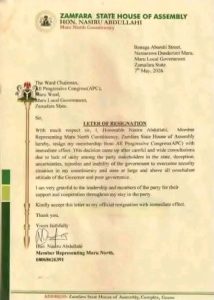
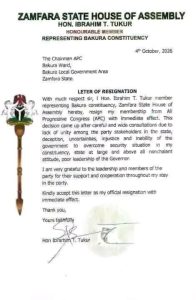
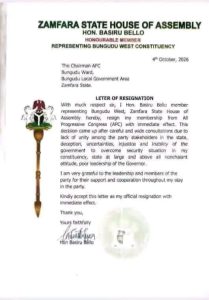
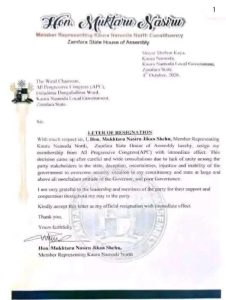
Political Earthquake in Zamfara as Eight APC Lawmakers Quit Party, Reportedly Eye Wike-Backed Rainbow Coalition


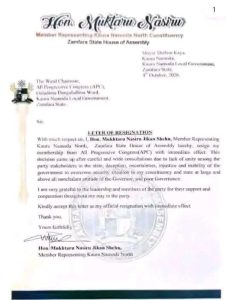
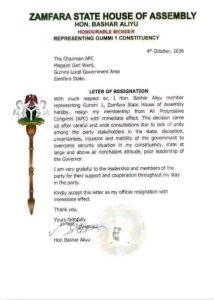
A major political shake-up has hit Zamfara State ahead of the 2027 general elections, following the defection of eight members of the State House of Assembly from the All Progressives Congress (APC), in a move that could reshape the political landscape of the state.
The lawmakers announced their resignation from the APC during plenary at the Zamfara State House of Assembly in Gusau, the state capital.
The defectors represent Mafara South, Maradun One, Bakura, Bukkuyum North, Gummi One, Bungudu North, Maru North and Kaura constituencies.
Their departure marks a significant blow to the APC’s strength in the state legislature, coming amid growing political realignments as politicians and party leaders intensify manoeuvres ahead of the 2027 elections.
Although the lawmakers have yet to officially announce their next political destination, sources within the Assembly suggest they are likely to join the Peoples Democratic Party (PDP), which currently controls the Zamfara State Government.
There are also indications that the defectors may align with the broader political movement associated with the Minister of the Federal Capital Territory, Nyesom Wike, and his Rainbow Coalition. However, the lawmakers have not publicly confirmed any formal alliance with the group.
With 24 members, the Zamfara State House of Assembly could witness a significant shift in its political balance following the exit of eight lawmakers, representing one-third of its total membership.
The development adds to the growing wave of political defections and behind-the-scenes negotiations across the country as political actors begin positioning themselves for the 2027 general elections.
The latest move could also trigger further political calculations within Zamfara, particularly as rival parties seek to strengthen their influence ahead of the next electoral cycle.
As of press time, the Zamfara State chapter of the APC had yet to issue an official statement on the lawmakers’ resignation or the possible political implications of their departure.

(Video) Again Wike queries Amaechi You Sold Rivers Power Plants For $308m, Where is the money?

2027 Elections: NUJ-FCT Urges Journalists to Fact-check, Shun Inflammatory Reports

Political Earthquake in Zamfara as Eight APC Lawmakers Quit Party, Reportedly Eye Wike-Backed Rainbow Coalition



-

 News15 hours ago
Was Tinubu’s Speech AI-Generated? Elon Musk’s Grok AI Makes Strong Revelation
-

 News15 hours ago
Imo Police Locate Kidnappers’ Camp, Reveal Why Abducted Corps Members Are Yet to Be Rescued
-
 News23 hours ago
Confusion As Abductors Of Oyo Corps Members Demand ₦50m Ransom For Each Victim
-

 News15 hours ago
Edo 2027: APC Chairman ‘AK-47’ threat – Amnesty International Makes Strong Demand
-

 News15 hours ago
How I Hired Cars To Get Drivers Abducted By My Gang, Kidnap Suspect Reveals
-
 News3 hours ago
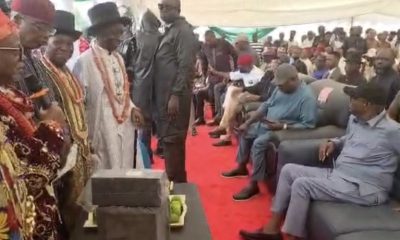
Monarchs in Etche LGA presenting symbolic traditional kola to FCT minister Wike at ongoing interactive meeting with Ogbakor, other stakeholders (Video)
You must be logged in to post a comment Login