The Federal Government on Wednesday revealed plans to boost Nigeria’s electric power supply by 150MW before 2024 ends.


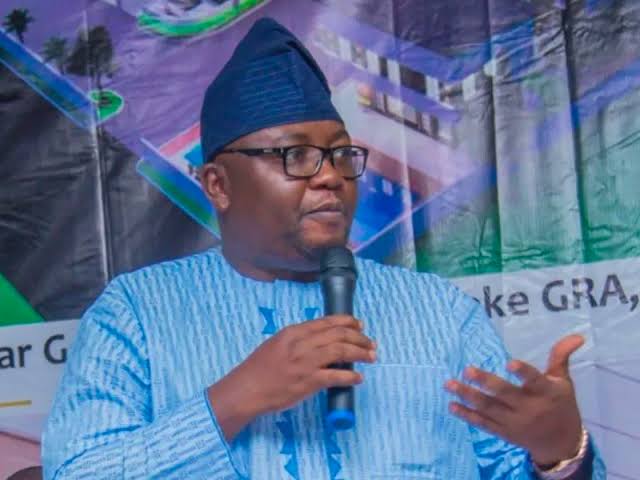
The Minister of Power, Adebayo Adelabu, disclosed this to State House correspondents after a business session at the State House during the state visit of the German President, Frank-Walter Steinmeier, to President Bola Tinubu.
“So we believe that before the end of the year, an additional 150MW of capacity is going to be added upon completion of the entire pilot phase,” Adelabu said while explaining the implementation of the Presidential Power Initiative agreement. 
On December 1, 2023, the Nigeria and Germany signed the Presidential Power Initiative agreement to inject 12,000 MegaWatts of electricity into the national grid.
The signing was presided over by the leaders of both countries, President Bola Tinubu of Nigeria and German Chancellor Olaf Scholz, on the sidelines of the United Nations Climate Change Summit, COP28, in Dubai, the United Arab Emirates.
Managing Director of the Federal Government of Nigeria Power Company, Kenny Anuwe, and the Managing Director (Africa), Siemens AG, Nadja Haakansson, signed the agreement.
Adelabu, who attended the business session, said, “The game now is about cooperation, collaboration and partnership. The flagship of this bilateral relationship has to do with what we call the Siemens project, which is our Presidential Power Initiative where Siemens is implementing the Brownfield and Greenfield transmission substations of the Presidential Power initiative.
“Since signing the agreement in Dubai at COP 28 in December 2023, we have made significant progress. We have completed the pilot phase of this project, up to 80 per cent.
“This involves the importation, installation and commissioning of 10 power transformers and 10 power mobile substations. They’ve been imported. They’ve been installed, and lots of them have been commissioned. We have just about two left to be commissioned before the end of the year.”
He added, “The project had added at least 750 megawatts to our transmission grid capacity, which is why the relative stability we are seeing in the grid today is the direct positive impact of the pilot stage completion.”
His comments came hours after the national grid collapsed for the 12th time in 2024.
Grid failures are not strange in one of Africa’s largest economies, whose power sector still suffers gross underinvestment, says the Special Adviser to the President on Energy, Olu Verheijen.
Despite an installed capacity of about 13,000MW, Nigeria’s power grid transmits only 4000MW due to ageing infrastructure, the Minister of Power, Adelabu, revealed at a briefing on October 28.
However, that amount is grossly inadequate for over 200 million citizens, leaving many areas without reliable electricity as individuals and government entities struggle to pay mounting power bills.
In addition to weak infrastructure, Nigeria’s power grid has also been a target of sabotage.
In October, armed groups damaged the Shiroro-Kaduna transmission line, cutting electricity supply to 17 northern states.
Following the incident, repair crews could not access the site due to security concerns. Repairs began only after President Bola Tinubu directed the National Security Adviser to work with the Army and Air Force to deploy adequate security personnel, including aerial cover, to protect the engineers fixing the damaged transmission line.
However, Adelabu is sure that the administration’s steps will the stabilise power supply.
“We are quite confident from the satisfaction that we got from the completion of the pilot stage. When we are done with the Phase One project in the transmission, the entire grid will not remain the same.
“That’s why we tell Nigerians this is a very old grid. It’s quite fragile, and it’s dilapidating.
“We need to revamp the entire grid to ensure stability going forward. That is the presidential power initiative,” he stated.
Adelabu also announced that the FG is moving into the first phase of the project, which involves rehabilitating 14 existing substations and constructing 23 new ones nationwide.
He explained that the commercial aspects of the first phase have been concluded, and the next step involves securing a no-objection approval from the Bureau of Public Procurement.
Following this, the proposal will be presented to the Federal Executive Council. Once approved, the financing arrangements will be finalised, enabling the commencement of the project’s first phase.
The minister highlighted the FG’s commitment to renewable energy as a key component of its energy transition plan to achieve net zero emissions by 2060.
He emphasised the need for collaboration and partnership with technologically advanced countries like Germany, leveraging their expertise to harness Nigeria’s abundant natural resources, including solar energy, with over 30 states receiving a minimum of 10 hours of sunshine daily.
“We also talked about renewable energy, which we believe is the way forward. We have an energy transition plan to achieve net zero emissions by 2060.
“To achieve this, we must collaborate. We must partner. We must cooperate with a country like Germany, which has the technology, and we have the sun. Over 30 states in Nigeria have a minimum of 10 hours of sunshine every day.
“They have the technology. We have the wind. We have the desert wind up north and the coastal winds down south. The new highway from Lagos to Calabar is opening up our coastal offshore wind across the nine coastal states of Lagos, Ogun, Ondo, Edo, Delta Rivers, Bayelsa, Akwa Ibom, and Cross River,” Adelabu explained.
Furthermore, the minister pointed out the untapped potential of over 300 dams for hydroelectric power, which could be accessed through developments like the new Badagry-Sokoto road.
He stressed that these opportunities create immense potential for expanded energy access in collaboration with Germany.
Adelabu argued, “Then, talking about our hydroelectric power plants, we have over 300 dams we have not utilised for hydroelectric power because of poor access.
“With the new road of Badagry to Sokoto, a lot of these dams will also be opened up. So we have so many opportunities and potentials on what we can do with Germany to achieve expanded energy access to our people going forward.”
The power minister also reiterated that an off-grid system is the key to addressing Nigeria’s energy challenges, emphasising the need to implement a distributed power model.
This approach would allow each of the 36 states and the Federal Capital Territory to develop their power-generating plants embedded within their states.
Such a model, he explained, would shield states from disruptions on the national grid, providing backup power in case of national grid failures.
“The off-grid system is the solution. Still, we must implement a distributed power model whereby each of our 36 states and FCT will have their own generating plants within the state.
“This network will be embedded within the states, and they will be shielded from any problem on the national grid. When there is a problem on the national grid, they will all have a backup.
“We have a preponderance of rural areas. We must electrify our rural areas and have isolated tertiary health and education institutions that we must use. So, that is the use of renewable energy for off-grid solutions,” he said.
He highlighted Germany’s role in this effort, particularly through its development agency, GIZ, which has supported grid extensions and renewable energy initiatives.
Additionally, he revealed that several German companies and private investors have shown interest in renewable energy projects in Nigeria, including solar, wind, and hydropower.
While no new agreements were signed at the meeting, discussions focused on accelerating the implementation of existing agreements.