
News
INEC to destroy over six million uncollected PVCs

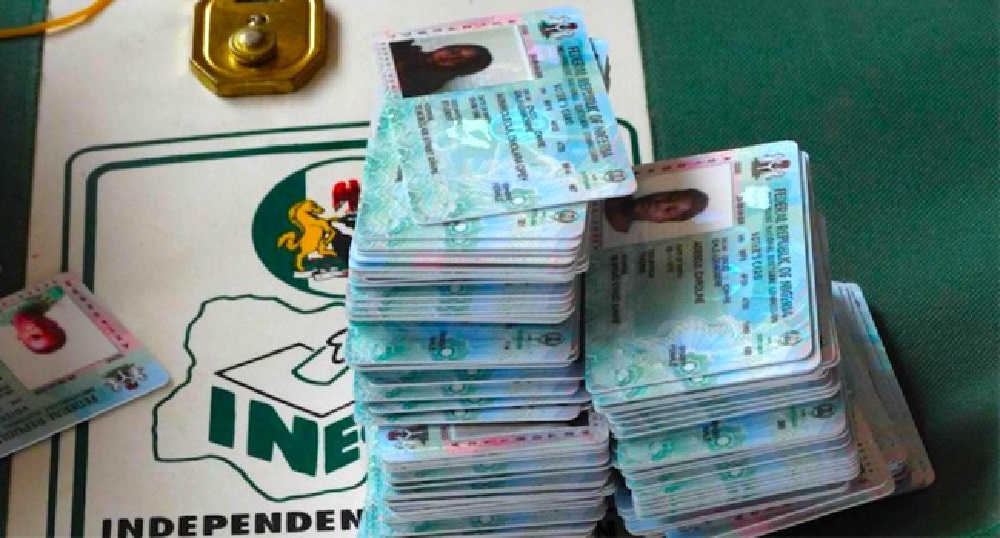


The Independent National Electoral Commission is contemplating a policy to withdraw and destroy Permanent Voter Cards that remain uncollected for a decade, The PUNCH has learnt.
This recommendation was among 208 proposals arising from the commission’s review of the 2023 general elections.
The move stemmed from the persistent issue of unclaimed PVCs, with over six million cards still uncollected as of the 2023 elections, including many issued as far back as 2015.
Stakeholders in the post-election review recommended that INEC address the backlog of uncollected PVCs by implementing a policy to withdraw PVCs that remain uncollected for extended periods, starting with cards issued in 2015.
The rationale is that these cards are unlikely to be claimed, and their retention clogs the voter management system.
“Following the publication of the Register of Voters, the commission made available the PVCs for collection by voters on December 12, 2022. The exercise was initially planned to end on the 22nd of January 2023. However, the fact that a huge number of registered voters had yet to collect their PVCs forced the commission to extend the deadline to the 5th of February 2023 after devolving the collection to the ward level between January 6-15, 2023 to ease the process.
“The low rate of PVC collection and other related challenges are illustrative of the problem of processing and managing voters in Nigeria. To increase the rate of collection of PVCs, the commission implemented a policy that made it possible for voters to locate their PVCs online and subsequently pick them up. Several CSOs supported the commission’s drive to increase PVC collection by working with INEC’s state/FCT Offices to record all uncollected PVCs and to inform their owners where and how to collect them.
“With support from the development partners, some of the CSOs also created information centres in selected states and the FCT to assist voters locate and collect their PVCs. Despite these efforts, over six million PVCs remained uncollected, many of them dating back to 2015.
Consequently, one recommendation from the review was that the commission should consider withdrawing PVCs issued in 2015 since it is not clear if the owners will ever collect them,” INEC said.
Also, the commission proposed plans to modernise Nigeria’s electoral process, including the gradual phase-out of PVCs and the introduction of diaspora voting.
It was explained that with the adoption of the Bimodal Voter Accreditation System, PVCs may no longer be necessary for voter accreditation. Instead, voters could use computer-generated slips or credentials downloaded from the commission’s website.
“Unlike the SCR, the voters’ register is now resident in the BVAS. The new device does not read and extract voters’ details from the PVC. Moreover, the Electoral Act 2022 has made biometric accreditation (fingerprint or facial) mandatory for voting.
“The utility of the PVC is now limited to voter identification. It is therefore possible to identify voters using their registration slips which obviates the need for PVCs, the cost of producing them, the logistics for their distribution and the fact that voters without them are unable to vote, thus raising serious issues of disenfranchisement.
With the BVAS, voters can be identified using their registration slips otherwise known as the Temporary Voter’s Card and accredited biometrically without the need for a plastic PVC.
“However, such a step requires the amendment of Section 47(1) of the Electoral Act 2022 which makes the presentation of the card (PVC) to the PO at the PU mandatory before accreditation and voting,” the recommendation said.
Political parties divided
Political parties in the country hold differing opinions about INEC’s plan to destroy uncollected PVCs.
In an interview with The PUNCH, the National Legal Adviser of the Labour Party, Kehinde Edun, believed that the initiative was in order, stressing that there was a need to declutter the voters register, especially if it is confirmed that many of those registered have died.
He said, “I am sure most of those uncollected PVCs must have been as a result of irregularities in the process of registration and all that. If truly people register to vote and register as eligible electorate, they must have collected over a long period, after being given enough time.
“But I believe no system is perfect. So I think destroying them may be in order. If people have not collected over a long period, there is a likelihood those lapses were the result of some irregularities in the process of registration.”
But the Peoples Democratic Party raised a concern that destroying uncollected PVCs could be another ploy by INEC to distract Nigerians.
The PDP Deputy National Youth Leader, Timothy Osadolor, who spoke to The PUNCH, said INEC had given Nigerians enough reasons to be suspicious.
He asserted that people refused to collect the PVCs because they had lost faith in INEC to make their votes count during elections.
Osadolor said, “How do you contemplate destroying cards produced with billions of taxpayers’ money because INEC has failed the credibility and integrity test that has made millions of Nigerians lose faith in the commission’s ability to organise free, fair and credible elections?
“I urge INEC to, as a matter of immediate action, begin an image laundering and rebranding campaign to convince Nigerians and stakeholders that the commission is ready to be truly independent in spelling, actions and character.”
Also, the New Nigeria People’s Party advised INEC to reconsider the plan to destroy PVCs.
The National Publicity Secretary of the NNPP, Ladipo Johnson, said destroying over six million voter cards would amount to sheer waste of money.
He said, “If people register and haven’t come to collect over a long period of time unless they know those people have passed on, I think the cards should not be destroyed as long as they are in safekeeping.
“If you destroy about six million PVCs, and all of a sudden, some of the owners show up and want to vote, it will cost God-knows-how-much to register them again. It’s a waste of money.”
SANs back INEC
However, some Senior Advocate of Nigeria, who spoke to The PUNCH backed INEC to destroy the uncollected PVCs, asserting that there are no legal impediments.
A former Chairman of the Presidential Advisory Committee Against Corruption, Prof. Itse Sagay (SAN), said some of the uncollected PVCs were likely products of double registration.
“They (uncollected PVCs) are taking space. My suspicion is that the owners don’t exist. It is double fraudulent registration by a lot of people. Just as I am sure that we are not up to 200 million neither do I believe that we are up to 90 million registered voters when only 20 percent of that is always voting. There is a lot of fake information and fake facts in this country and I’m sure this is part of it. So, let them destroy the uncollected PVCs,” he said.
Sharing a similar view, another SAN, Sam Erugo, said, “The PVCs have been uncollected over time, so I don’t see anything wrong in them destroying them because not collecting them means something is definitely wrong with the owners. Either they are dead or they are duplication. Now, that brings the question whether eligible voters have voters card or that will will impede their right to vote or not.
That is a different question altogether but if they have uncollected voter cards, of course, they have a right to destroy them because that will help stop people from using them to rig elections. Given that they are uncollected, they are useless already and money has been wasted already.”
But Paul Obi (SAN) differed, calling for greater awareness instea of rushing to destroy the PVCs.
“What is the basis for destroying six million voters cards?” he queries. “Even if they are uncollected, they belong to Nigerians who are also supposed to use them in the next election and they spent money in producing them.
“I think greater awareness should be created for people who own those PVCs to collect them. It doesn’t make sense spending money and next time they will still have to produce PVCs for those people who own them. More awareness should be done for collection,” he said.
Credit: PUNCH







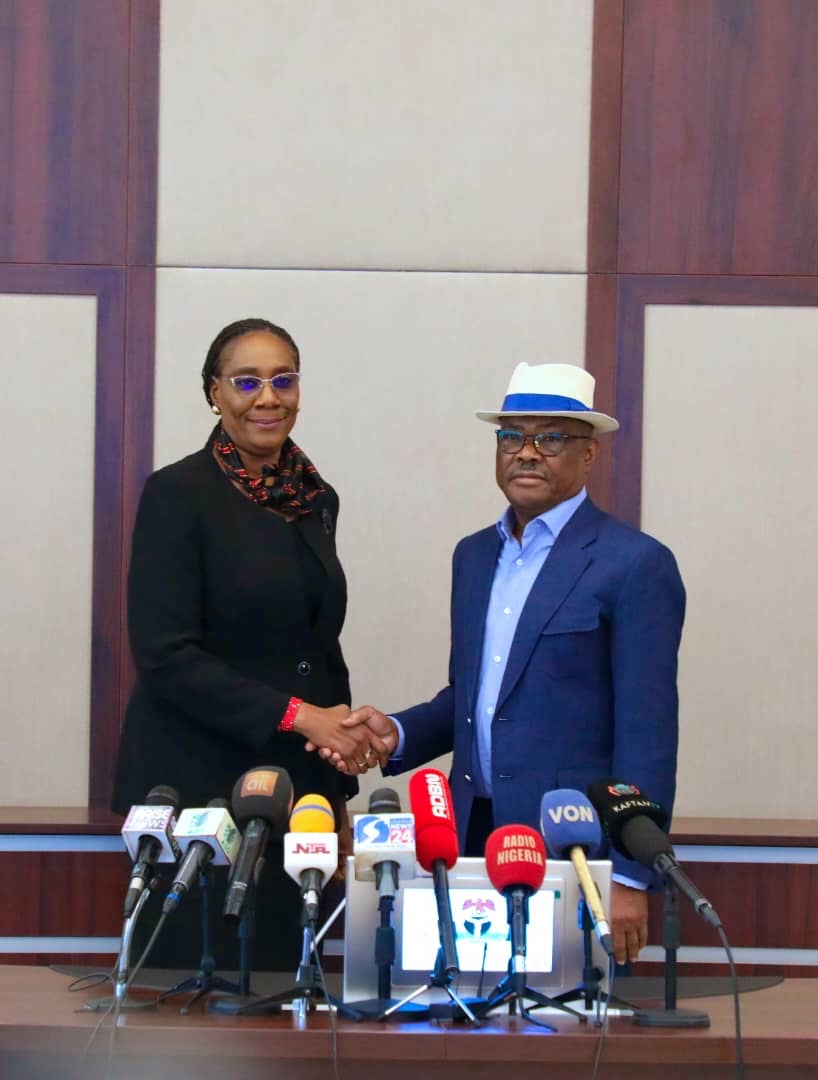
The Minister of the Federal Capital Territory (FCT), Nyesom Wike, has granted an immediate waiver of fees for the Certificate of Occupancy (C of O) for the Nigerian Law School’s Abuja campus in Bwari.

Speaking during a meeting with the school’s management in Abuja, Wike also declared an “emergency” on the construction of staff quarters and other critical infrastructure to enhance the institution’s learning environment.
Responding to an appeal from the Director-General of the Nigerian Law School, Dr. Olugbemisola Titilayo Odusote, Wike expressed surprise that the institution had operated without a C of O since moving to Bwari.
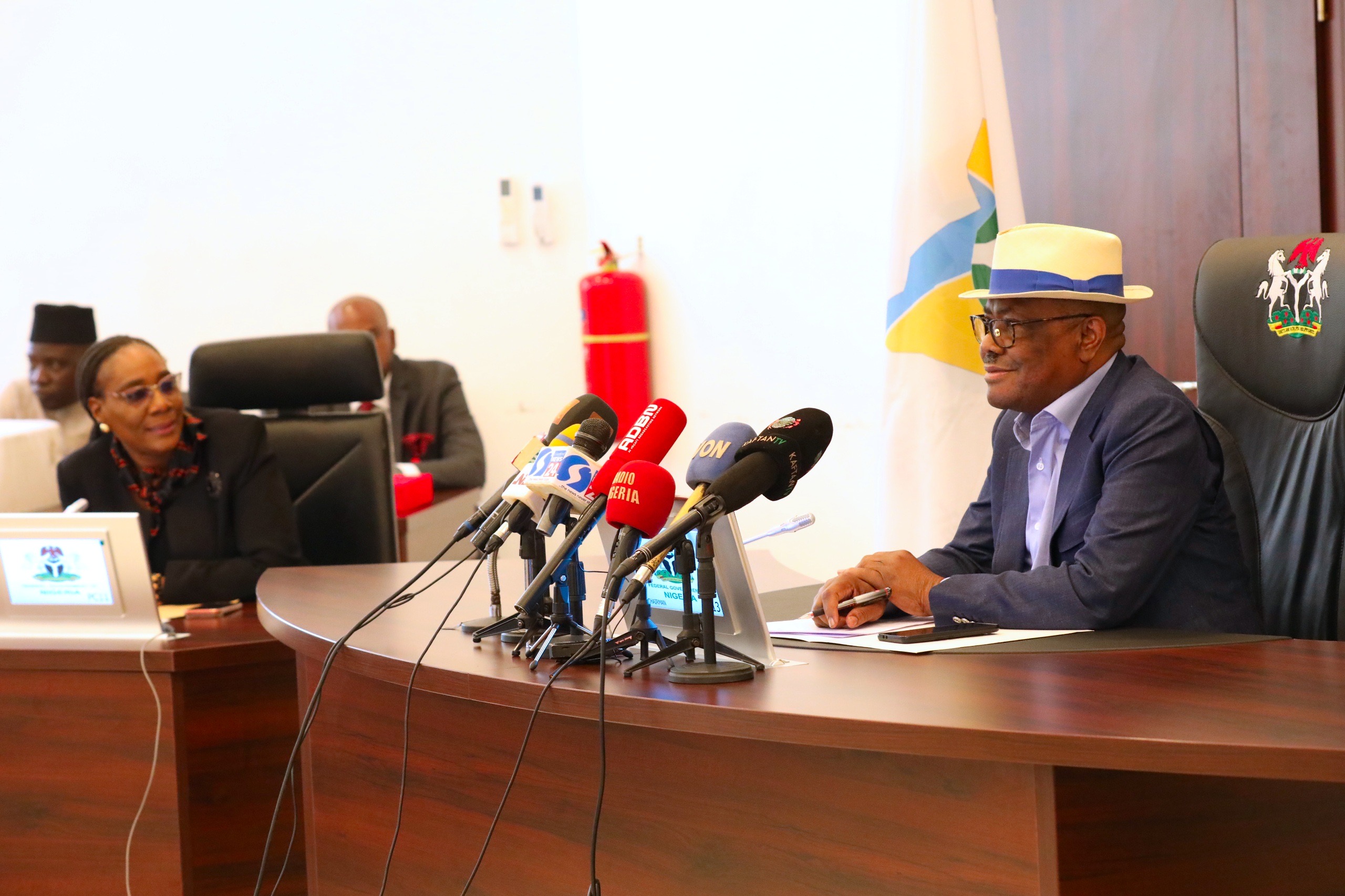
He described the lack of official documentation for government institutions as a trend that his administration is actively correcting.
The Minister directed the Director of Lands to waive all processing fees for the school’s C of O, and issued a firm directive to ensure the document is processed and ready within one week.
He noted that regularizing the land is essential to move the school from what he colloquially termed an “illegal session” to rightful ownership.
Beyond land matters, the Minister committed the FCT Administration (FCTA) to several high-priority projects aimed at resolving overcrowding and improving staff efficiency.
Wike announced that 10 staff quarters have already been completed and will be commissioned as part of the President’s third anniversary.
He further pledged to construct an additional 10 units using existing prototypes to save on design costs.
According to him, work is progressing on two new hostels—one for male students and one for female students—to alleviate overcrowding.
The Minister confirmed he has approved the budget for a new auditorium and questioned why the contractor had not yet moved to the site.
To modernize administrative functions, Wike directed the school to liaise with the FCTA General Counsel, to explore digitization solutions similar to ongoing efforts at the FCT High Court.
Wike emphasized that these interventions are part of President Bola Ahmed Tinubu’s broader agenda to support legal education and the judiciary.
He noted that the President is currently constructing “presidential apartments” for judges to ensure their security, welfare, and autonomy.
”Anything we can do to help our children, we are willing to do that,” Wike stated, adding that the staff quarters must be treated as an emergency project to ensure rapid delivery.
Earlier, Dr. Odusote congratulated the Minister on his appointment and praised the visible infrastructure developments across the FCT, while highlighting the specific challenges of disrepair and infrastructure deficits facing the Law School.
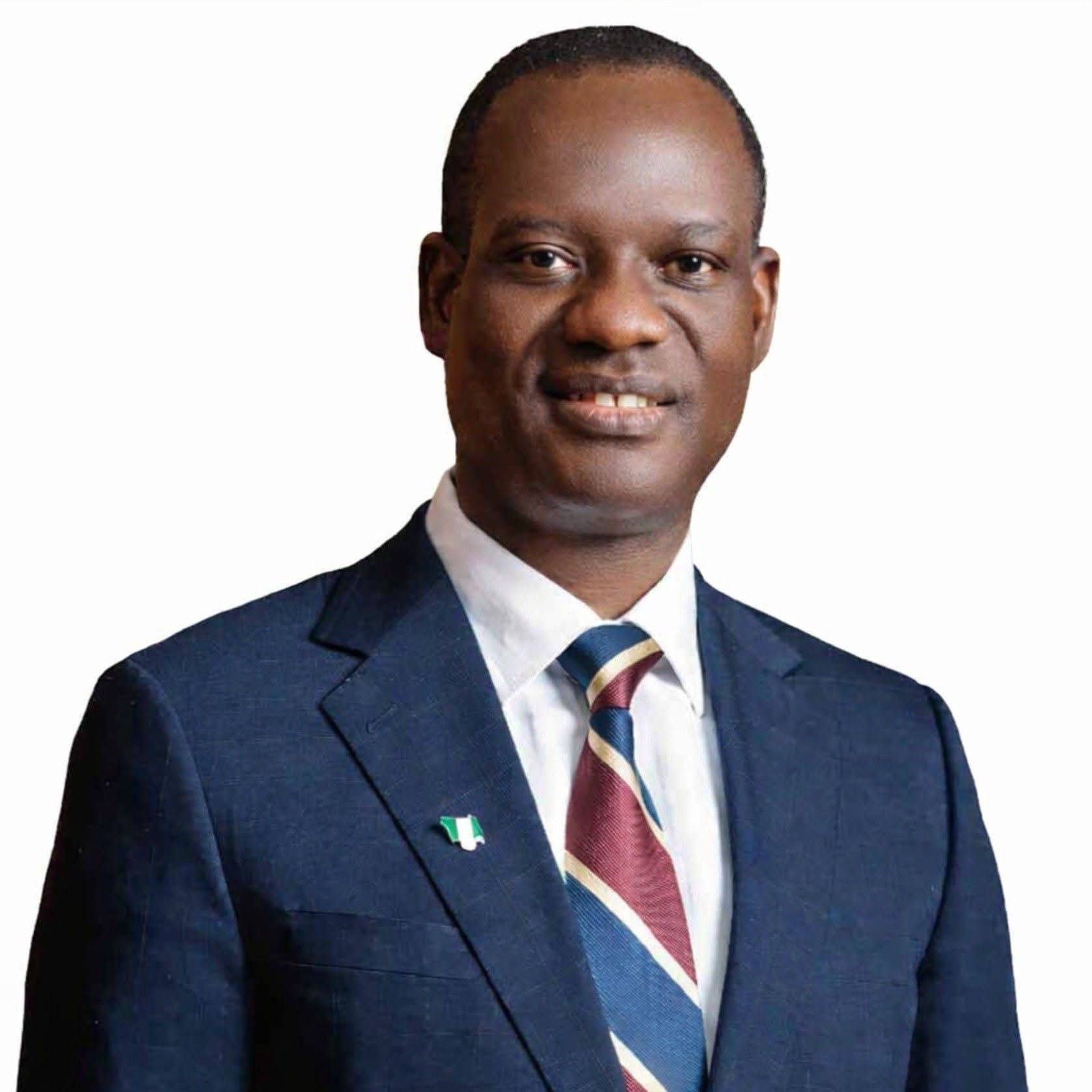
Nigeria’s Minister of Finance and Coordinating Minister of the Economy, Taiwo Oyedele, has assured investors that the government will stay the course on economic reforms, declaring that policy reversals will not define the current phase of the country’s economic management.
The Minister stated this while speaking at the launch of the Nigerian Economic Summit Group Private Sector Outlook 2026 in Lagos on Thursday.
Oyedele said the administration is shifting from stabilisation to measurable growth, where reforms will be judged by outcomes rather than intent.
His comments came barely 48 hours after he assumed office, following the exit of Wale Edun from the Federal Executive Council.
“We are not looking back,” Oyedele said, stressing that consistency in policy direction remains critical to investor confidence.
He warned that mixed signals or abrupt reversals could stall progress, noting that “businesses need to know that today’s decisions will still hold tomorrow.”
While pointing to early signs of macroeconomic stabilisation, including a more aligned exchange rate and improved revenue performance, the minister said these gains must translate into tangible outcomes such as job creation, productivity growth and better living standards.
He identified four priorities for driving investment in the next phase which includes, policy consistency, predictability across fiscal and regulatory frameworks, reduction in the cost of doing business, and improved access to capital.
On financing, Oyedele said the government is working to expand credit across the economy, from consumer lending to industrial financing, with support from institutions such as the Bank of Industry, to stimulate growth and unlock private sector participation.
He added that Nigeria must target stronger real GDP per capita growth to make a meaningful impact on poverty, noting that modest growth figures would not be sufficient given the country’s population dynamics.
The minister further described the current stage of reforms as decisive, where success will depend on execution. “Reforms on their own do not create growth. We need investment at scale,” he said, adding that investors respond to stable and predictable environments, not policy announcements.
On the area of productivity, Oyedele said Nigeria must move beyond consumption-driven expansion and focus on improving output and competitiveness in key sectors, including agriculture, manufacturing, energy and the digital economy.
He also called for deeper collaboration between government and the private sector, maintaining that economic growth cannot be delivered by public policy alone.
As the country enters what he termed a consolidation phase, Oyedele said the government would continue to deepen reforms, strengthen public financial management and improve coordination across all tiers of government.
He, however, acknowledged risks, including reform fatigue, inflationary pressures from global uncertainties, and political tensions ahead of the election cycle, but maintained that these challenges are surmountable with discipline and cooperation.
“Our task now is execution,” Oyedele said.
“This phase demands focus, consistency and accountability. That is the direction we are pursuing he added
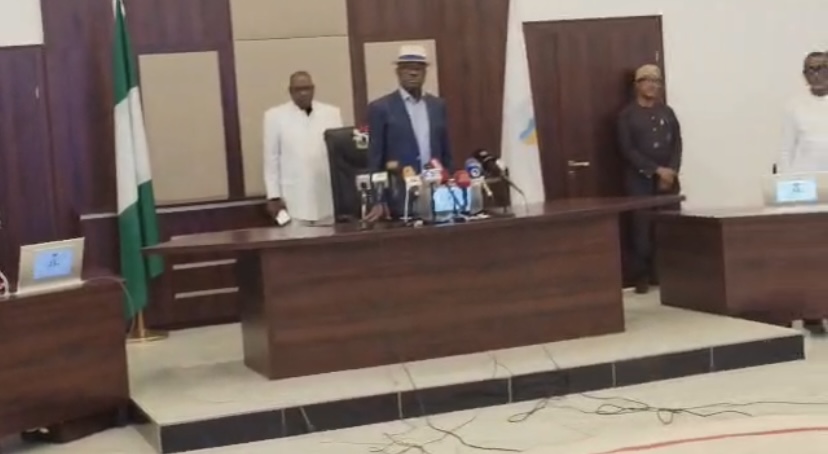
The Federal Capital Territory FCT minister Nyesom Wike is presently holding a meeting with primary school teachers in the Territory over ongoing strike.
Watch:

Wike waives C-of-O fees for Nigerian Law School, orders emergency staff housing(Photos)

We’re not going to reverse reforms, Finance Minister, Oyedele tells investors

FCT minister Wike engages teachers over strike(Video)




-

 News19 hours ago
BREAKING: Finally, Power Minister, Adelabu resigns from Tinubu’s cabinet
-
 News23 hours ago
Gumi wants Nigerian government to consider dialogue in tackling terrorism
-
 News23 hours ago
Kano Gov nominates Garo as deputy
-

 News24 hours ago
“Nigeria Too Blessed to Be Poor” — Agro Firm Boss Pushes Value-Driven Farming Revolution
-

 News23 hours ago
Iran Seizes Two Ships attempting to cross Strait of Hormuz
-

 Economy9 hours ago
FG, states, LGs share N2.036trn March revenue
-

 News10 hours ago
Adeleke inaugurates 52-member campaign council for August guber polls
-

 Sports9 hours ago
Meet New Head Coach As Chelsea Sack Liam Rosenior
You must be logged in to post a comment Login