
News
OF DEMOCRACY COMPASS, 2027 ELECTIONS GAMBIT, AND GHANA’S CHALLENGE



BY BOLAJI AFOLABI
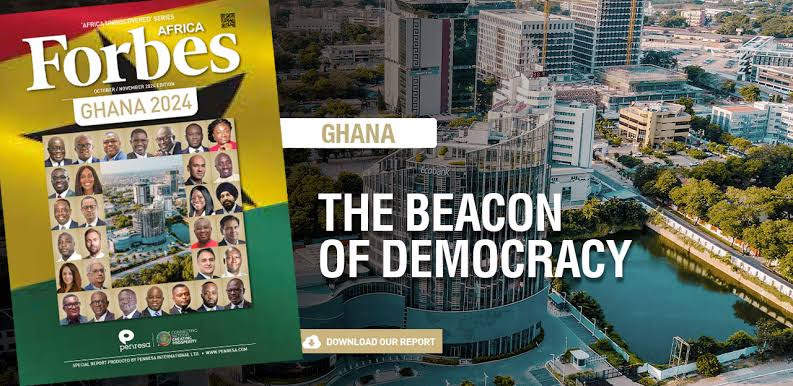
Concerned about the many uninspiring, and despairing postures, actions, comments, and positions of the political class to issues of nation building, cross-sectoral development, and national cohesion, the writer did a treatise which was published in the last few days of 2024. Conscious of encouraging political developments in a neighboring country, the piece; “Ghana, Raising The Bar of Democracy in Africa” was intended to challenge Nigerian politicians to change their approach to politics; and raise national issues beyond unnecessary politicking. Also, to attract some measures of citizens believability; ingeniously use politics as a veritable platform for national growth and development. As well as deploying politics as vehicle for the promotion of unity, peace, and tranquility amongst Nigerians irrespective of tribe, ethnicity, religion, and other categorization.
Given the flurry of reactions, comments, and requests by readers, at home and abroad, which by the way are humbling and inspiring , an encore to the earlier piece becomes inevitable. Moreso, a developing political matter between Leaders of some opposition parties has made this compelling.
As Nigerians were looking forward to welcoming the New Year; whilst bidding 2024 a timely exit with the numerous personal difficulties, tensions, and challenges people experienced, the political atmosphere was charged by one of the top politicians. Rabiu Musa Kwankwanso, presidential candidate of the New Nigeria People’s Party (NNPP) at the 2023 general elections made some daring allegations, and damning revelations. The Kano-born water engineer has traversed Nigeria’s politics, and public service occupying various juicy positions. At various times, he was Deputy Speaker, House of Representatives; Kano state Governor; Defence Minister; and Senator. Indeed, in his over three decades visibility in Nigeria’s political and governance landscape is among the few and privileged people to have both legislative and executive experiences.
Typical of his nature and style, Kwankwanso had a no-holds barred interview with the Hausa Service of the British Broadcasting Service (BBC). Described as bold, frank, and fearless by his admirers, he was audacious, unapologetic, and fiery in his responses. In the engaging, thought provoking, and revealing interview, Kwankwanso said inter alia, “I was terrified about the information that I got that the PDP are meeting clerics and other leaders and in their last meeting, which involved about 45 clerics, that we reached an agreement that Atiku (Abubakar) will serve one term, and myself will also serve one term and Peter Obi will serve two terms. This is a lie, I never took part in any agreement. This is completely false; such an agreement never existed.”
Not done yet, Kwankwanso in his staccato shots declared that, “I was deeply angered about the information. Elderly people aged 70 to 80 years will sit and lie, telling clerics and other leaders something that never happened. With this (these) lies, we can’t believe such people that they can only serve one term in office if you entrust them with leadership.” The two-terms Kano state Governor revealed that, “such lies and deceit are precisely why we left. Myself, Peter Obi, Wike, and others all left.” Confident of his position, he alluded that, “Iam still alive and healthy, there is no way you can assemble over 40 people without me having 2 or 3 among them that will inform me of what transpired. This is not good for personality to lie. In such incident, if a government is formed on the basis of lies, it’s like starting a foundation on a week structure.”
Perhaps unknown to Kwankwanso, these allegations are not only weighty but has opened the pandora box about what transpired between personalities, groups, and associations in the opposition ranks before the 2023 presidential election. Perhaps, it could be deliberate, or unintended, there are some uncompleted comments, missing gaps that will provoke further enquiries. One is confident that, some day, in the nearest future, the true-story of what happened before, during, and after the last presidential election will be unearth. Nigerians would be curious to know what led to the loss of opposition parties in an election that people believed the uninspiring performance of Muhammadu Buhari should profit them. Scholars, students, policy makers, and analysts would want to know reasons behind the exits of Kwankwanso, and Obi from the umbrella party, which opened the flanks of opposition such that they were painfully and pitiably divided into three parties; PDP, LP, NNPP before the elections.
Sadly, the Kwankwanso’s diatribe, cobwebbed shape of leading opposition parties, and undisguised desperation for power by some politicians when juxtaposed with the realities on ground, paints terribly low image of Nigeria’s politics. The PDP is patently and sharply divided to almost irredeemable position. With litany of cases over its neck, it appears the party swims in perpetual crisis. The Labour Party (LP) is no better as it has its own share of issues which bothers on leadership. A party that have three individuals laying claim to National Chairman cannot be taken seriously. That Governor Alex Otti of Abia state allegedly ensured the victory of Zenith Labour Party (ZLP) at the Local Government elections speaks volumes about the LP. Even Kwankwanso’s NNPP is experiencing it’s share of political turmoil. The unfolding crisis is sweeping through the party’s national working committee; national executive council; and national assembly. Indeed, other smaller political parties in the opposition ranks are bedeviled with varied degree of factionalisation.
Discerning Nigerians are saddened that few leaders in opposition parties are dissipating energies and resources towards gaining upper hand for the 2027 election, in a rudderless and unconscious manner. Apolitical minds conclude that the approach will further exacerbate crisis within the parties. Some analysts wonder why few leaders are eternally fixated on having their names feature on the ballot, that they have refused to see the imperative of resolution of crisis, consensus building, and realistic party growth as the critical issues of the moment. A school of thought argues that the resort to propaganda, misinformation, and falsehood by few leaders which is geared towards the hoodwink, blackmail, and submission of perceived political enemies, and opponents will boomerang. Another school of thought opines that since opposition parties have continually failed to elicit citizens confidence and believe, largely due to the craze, and penchant for “grab-it-all” and selfish, arrogant posturing of some leaders, the desire to win power remains a long ambition.
It is good to romanticize, and wish that the Ghana scenario happens in Nigeria. However, the focus, intent, and operations of politicking in Nigeria differs from what is obtained in Ghana. Pathetically, our political parties are only concerned about elections; participating and (likely) winning. Politicians pay little or no attention to party growth and development. Whereas in Ghana, politicians devote time, resources, and enablement into building, deepening, and nurturing political parties. Can the political class; especially opposition parties in Nigeria dedicatedly follow the template of Ghana’s leading opposition party, the National Democratic Congress (NDC)? Since it lost presidential and parliamentary elections to the National People’s Party (NPP) in 2016, the entire leadership, elders, and critical stakeholders in the party remained faithful. Unlike here where opposition lawmakers cross-carpet to the ruling party with the speed of light, such action is unheard of in Ghana. Rather than embark on ludicrous and irresponsible defections, Ghanaian politicians stay back, stay through, and resolutely determined in building opposition.
True, the 2027 general elections is not far away. Rather than engaging in theatrical positioning, and hysterical posturing in the quest for party-control, leaders of opposition should embark on sincere, and serious clean-up of selves, and by extension parties. They must relegate arrogance, personal ambitions, stubborn pursuit of power, and similar tendencies to the background. With the preponderance of socio-economic challenges in the country, the opposition parties must paper all the cracks, mend the bends, and resolve all issues towards playing it’s role effectively and efficiently. They must take enduring lessons from the NDC, who for years grew the party to the level at which Ghanaians chose it over and above the ruling NPP. They did not only mouth but worked assiduously for political power-change. However, it is instructive to note that in all these years, Ghanaian president-elect; John Mahama Dramani was the face of opposition in truth and deed.
* BOLAJI AFOLABI, a development communications specialist was with the Office of Public Affairs in The Presidency.





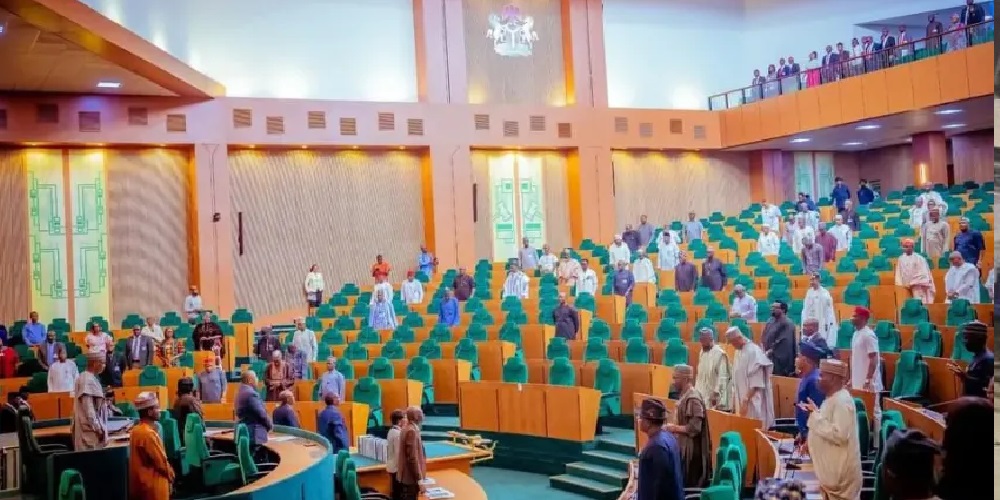
Party realignments in the House of Representatives gathered further pace as more lawmakers crossed over to rival platforms, underscoring intensifying political manoeuvres ahead of the 2027 elections.
During plenary, presided over by the Speaker, a fresh batch of six members from the New Nigeria Peoples Party and the Peoples Democratic Party formally defected to the All Progressives Congress and the African Democratic Congress.
The shift was particularly notable within the Kano caucus, where four NNPP lawmakers abandoned their party to align with the ADC, signalling a significant shake-up in the state’s political configuration.
The latest movement adds to an already growing trend of defections within the lower chamber, as legislators continue to reposition themselves amid evolving alliances and internal party tensions.
Speaker Abbas read the letter of resignation from the NNPP lawmakers, which noted “persistent leadership crisis in the NNPP resulting in internal divisions,” as reason for aligning with the ADC.
“I find it imperative to align with a platform that guarantees inclusion and I hereby notify the House of my intention to join the African Democratic Congress,” the letter read in part.
Still in Kano, three members of of the NNPP, Rep. Umar Zakari, Rep. Umar Datti and Rep. Abdulhakeem Ado resigned their membership from the NNPP and joined the ADC, citing protracted leadership crises both at the sub-national and national levels.
In Zamfara State, Rep. Ahmadu Kabiru, member representing Gusau/Tsafe Federal Constituency stated his resignation from the PDP “with immediate effect due to irreconciliable differences.”
He therefore announced his decision to join the APC, pleading his readiness to “align with the transformatory policies of the President as contained in the Renewed Hope Agenda.”
Also defecting from the PDP to APC is Rep. Chinedu Martins, member representing Ahiazu/Ezinihitte/Mbaise Federal Constituency of Imo State.
The lawmaker from Imo State confirmed that his switch to the APC had been concluded at ward level as far back as March 2026.
Following the steady stream of defections in recent months, the APC continues to dominate the House with a commanding 282 members. The PDP trails significantly with 30 seats, while the ADC has emerged as a growing force with 24 lawmakers.
Other parties hold smaller blocs, with the Labour Party at 10 seats, APGA with five, and the Accord Party controlling four. The Action Peoples Party and the Social Democratic Party each have two members, leaving the NNPP with just a single seat in the chamber.

President Bola Tinubu has approved a fresh set of appointments across critical institutions in Nigeria’s education sector, reinforcing leadership in examination bodies, technical education, and national library services.
The appointments were confirmed in an official statement issued by the Presidency on Wednesday.
New and Renewed Appointments
Among those appointed is Modupe Adeola Adelabu, who will serve as Chairman of the Governing Board of the National Examinations Council.
Ibrahim Dantani Wushishi has been retained as Registrar and Chief Executive of NECO, ensuring continuity in the management of the national examination body.
In the technical education space, Babatunde Salako has been appointed Chairman of the Governing Board of the National Board for Technical Education.
Meanwhile, Idris Bugaje has been reappointed as Executive Secretary of NBTE for a second and final five-year term.
Polytechnic and Library Leadership
The President also approved the appointment of Bongfa Binfa as Rector of the Federal Polytechnic, N’yak-Shendam in Plateau State, where he will serve a five-year tenure.
Additionally, Chinwe Veronica Anunobi has had her tenure renewed as Director-General/Chief Executive of the National Library of Nigeria for a final five-year term.
Focus on Continuity and Stability
The mix of fresh appointments and renewals suggests a strategy aimed at maintaining stability while strengthening leadership across key education agencies.
Observers say such decisions are critical to sustaining reforms, improving institutional performance, and ensuring continuity in policy implementation within the sector.
The Supreme Court has reserved its judgment regarding an appeal filed by the Peoples Democratic Party (PDP) to reinstate its national convention, which was previously nullified by the Court of Appeal.
The convention in question took place on November 15 and 16, 2025, at the Lekan Salami Stadium in Ibadan, Oyo State.
A five-member panel of Justices, led by Justice Lawal Garba, announced that a date for the final ruling would be communicated to all parties involved.
This decision followed the adoption of written briefs by legal representatives for and against the appeal.
The Tanimu Turaki-led faction of the PDP is urging the apex court to set aside the lower court’s decision, which invalidated the Ibadan convention.
The faction maintains that the dispute is an “internal party affair, which is not justiciable,” and argues that all necessary legal procedures were followed during the event.
However, previous rulings from the Federal High Court and the Court of Appeal favored aggrieved members, barring the Independent National Electoral Commission (INEC) from recognizing the convention’s outcomes and restricting access to the party’s national secretariat.
The legal trouble began in October 2025, when Justice James Omotosho of the Federal High Court stopped the convention from proceeding.
The judge ruled that the party had failed to conduct valid state congresses as required by the 1999 Constitution, INEC guidelines, and the PDP’s own constitution, stating that the party must comply with “relevant statutory provisions including the Electoral Act and Regulations and Guidelines for Political Parties (2022).”
A second major blow came from Justice Peter Lifu, who ordered the party to halt the convention after a suit was filed by former Jigawa State Governor, Sule Lamido.
Lamido alleged he was unfairly excluded from the chairmanship race. Justice Lifu noted:“The evidence before the court established that Lamido was unjustly denied the opportunity to obtain a nomination form to contest the position of national chairman of the party, in violation of the PDP constitution and its internal regulations.”
On November 14, 2025—just one day before the event—Justice Lifu issued a final order restraining the party from moving forward, holding that the PDP had failed to “afford a former governor of Jigawa State, Sule Lamido the opportunity to prepare and contest as a chairmanship candidate.”
With the Supreme Court now set to have the final say, the PDP remains in a state of legal uncertainty as it awaits the verdict that will determine the legitimacy of its current national leadership.

Defections Deepen as NNPP, PDP Lawmakers Switch Sides in Reps

BREAKING: Tinubu endorses six new appointments in education sector

PDP leadership tussle: Supreme Court takes major position



-

 News9 hours ago
How Tinubu Sacked Finance Minister Wale Edun Weeks After Hon. Alex Mascot Exposed ‘Missing’ N1.15tr
-

 News22 hours ago
US Lawmaker Accuses Tinubu’s Minister Of Bribery To Cover Up Genocide Report
-
 News9 hours ago
Yul Edochie Under Attack Over Disparaging Post Against Peter Obi
-
 News9 hours ago
Okowa Accuses Ned Nwoko of Misleading Anioma People Over State Creation Proposal
-

 Entertainment9 hours ago
Davido Bags Political Appointment
-
 News23 hours ago
Saudi Arabia seeks partnership with FCT on green city, security, economy
-

 Health9 hours ago
Cross River reports outbreak of Covid-19, activates response centre
-
 News22 hours ago
Tinubu approves minor cabinet reshuffle, sacks Edun, Dangiwa
You must be logged in to post a comment Login