News
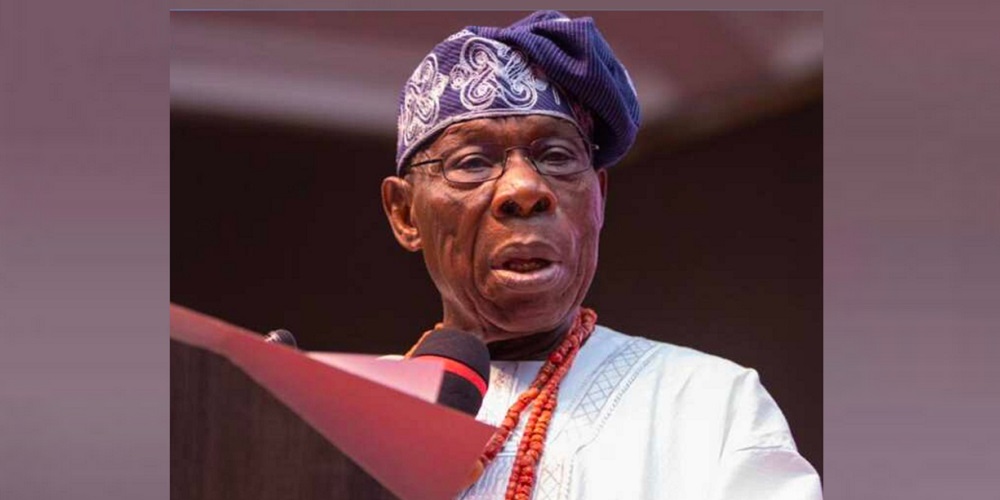
Reactivated refineries : Obasanjo queries their capacities
Ex- Nigerian President Olusegun Obasanjo has made fresh assertions about the management of government-owned refineries in Nigeria, criticizing the Nigerian National Petroleum Corporation Limited (NNPCL) and raising concerns about its capacity to operate the refineries effectively.

In an interview with Channels Television, published on Thursday, Obasanjo questioned recent claims by President Bola Tinubu’s administration that the refineries have resumed operations.
He expressed skepticism, using a Yoruba proverb to emphasize that those who lie about their accomplishments will eventually be forced to confront the truth.

Shell’s Rejection and a Missed Opportunity
Obasanjo recalled his efforts during his presidency to involve Shell in managing the nation’s refineries. Despite his offer, Shell declined, citing concerns about the operational inefficiency and political challenges surrounding the facilities.
He also shed light on a missed opportunity in 2007 when billionaire businessman Aliko Dangote and his team offered $750 million to manage the Port Harcourt and Kaduna refineries under a Public-Private Partnership (PPP). Obasanjo negotiated the deal, only for his successor to reject it and refund Dangote’s investment. The rejection, according to Obasanjo, was based on assurances from the NNPCL that it could handle the refineries. However, Obasanjo firmly asserted that the corporation lacked the expertise and capacity to fulfill such promises.
Despite his criticism of the NNPCL, Obasanjo expressed faith in Dangote’s ability to manage the privately owned Dangote Refinery in Lagos. Highlighting Dangote’s track record as an entrepreneur, Obasanjo noted that private sector-led initiatives are often more efficient and less burdened by bureaucratic challenges than government-run enterprises.
Refineries and Nigeria’s Oil Sector
Obasanjo’s remarks reignite longstanding debates about the effectiveness of Nigeria’s approach to managing its oil sector. Many observers argue that government-owned refineries have struggled due to poor maintenance, mismanagement, and corruption. While privatization and public-private partnerships have been proposed as solutions, successive administrations have often resisted such measures, citing concerns over national sovereignty and control.
The Bigger Picture
Obasanjo’s criticism comes at a time when Nigerians are grappling with high fuel prices and economic challenges. His statements could further fuel discussions on the need for structural reforms in the oil and gas sector. Meanwhile, the success of the Dangote Refinery, expected to be a game-changer for Nigeria’s refining capacity, may serve as a benchmark for what private sector participation can achieve.
This candid reflection by the former president underscores the importance of leadership, transparency, and innovation in addressing Nigeria’s long-standing energy challenges.

News
Aggrieved Delta Oil Communities plan show down with operators
Having waited patiently for the Asset Management Team and the Sterling Global Oil Exploration and Energy Company, working with the NNPC Exploration and Production Limited (NEPL) to operationalise the Petroleum Industry Act (PIA) ,Delta State host communities under OML 26 have said they can no longer wait and are now prepared to take their destinies in their hands.
This was contained in a statement signed by Erere Okpako and Angela Akpofa
For Isoko Grassroots Mobilizers.
According to the group, Chapter 3 of the PIA is very clear about the responsibility of the Settlor to the host communities.
“It is expected that three percent of the settlors yearly Operating Expenditure (OPEX) is set aside for community development through the Host Community Development Trust (HCDT).
“But strangely, the settlor only made a paltry remittance to the HCDT of OML 26 contrary to the PIA.
“This was in October 2025 nearly two years after the inauguration of the HCDT.
“Curiously, the remittance was short paid by about #2.4billion.
“The Board of Trustees (BOT) raised an alarm of the short payments by drawing the settlor’s attention to the shortfall in November 2025 but the company didn’t respond until December 22, 2025 when a virtual meeting held without any resolution despite the assurance of the company that it would respond within two weeks.
“A petition to the Nigerian Upstream Petroleum Regulatory Commission (NUPRC) followed in January 2026 which now hosted a tripartite meeting of NEPL, the HCDT BOT at the NUPRC Abuja office on April 15, 2026 where the operator categorically said the shortfall was allegedly spent on Special Intervention Projects contrary to the PIA 2021 and the Global Memorandum of Understanding (GMoU) before the advent of the PIA.
“Although, the PIA allows for a one year transition, that one year post PIA elapsed in August 2022.
But we the stakeholders under the Isoko Grassroots Mobilizers are worried that the company Asset Management Team (AMT) led by Sterling Global Oil Exploration and Energy Company is playing games and we can no longer accept this.
“We are aware of the efforts of the BOT to ensure development of the communities but paucity of funds has been a clog in this direction.
“Before the Abuja meeting, we were aware of the Security Meeting the Isoko North Council Chairman, Hon.Godwin Ogorugba held with the security representatives in the Local Government Council area with NEPL and the BoT to nip in the bud any attempt to block the roads to the oil installations but that too yielded no results. This was on April 9,2026.
“We are not unmindful of the implications of a blockade but we can no longer wait endlessly for developments that are not forthcoming.
“These communities have lived without electricity and other amenities for ages,whereas the funds were meant for projects development in OML 26 as stipulated by the Petroleum Industry Act(PIA).
“The Isoko Grassroots Mobilizers have been monitoring the activities of the Asset Management Team and Sterling Global Oil Exploration and Energy in OML 26 and note with sadness the lukewarm response to the underdevelopment of the communities.
“A strange development not known to the PIA was introduced by the company where it said the funds deducted from 2023 to 2025 were adjusted OPEX but this is strange to the law thus creating the impression that the company was playing games with the 3 percent OPEX as stipulated in PIA thus starving the communities the necessary funds for development.
“The HCDT is handicapped in every material particular in the absence of the funds
for projects development.
” It is expected that the tripartite meeting held on the April, 15, 2026 hosted by NUPRC with Nigeria Exploration and Production Limited(NEPL), the Asset Management Team, Sterling Global Oil Exploration and Energy Company and representatives of the board of OML 26 Host Communities Development Trust(HCDT) in attendance may resolve the dispute but that meeting ended without any concrete resolution.
“NUPRC only directed NEPL to revert to them in two week’s time with detailed documented evidence of special intervention projects executed with that shortfall.
“We of the Isoko Grassroot Mobilizers are not happy with this recent claim of the Assets Management team and y Sterling Global Oil Exploration and Energy Company of the alleged Special Intervention Projects.
“By this statement we call on NUPRC to prevail on Asset management Team and Sterling Global oil to do the right thing by remitting the shortfall payment to the HCDT without fail.
“It is on record that OML 26 is lagging behind in terms of infrastructural development in the Niger Delta.
“Our findings have confirmed that no single project has been executed since the PIA took off in OML 26, since February 13, 2024 when the BOT was inaugurated.
“We therefore call on relevant government agencies to prevail on the Asset management Team and Sterling Global Oil to resolve the issue and pay all the outstanding monies to avert shutdown of their operations in OML 26.
“Oil exploration should ordinarily bring development to host communities but from the antics of Sterling Global, the Assets Management team and NEPL, oil exploration is almost turning to a curse to the host communities. But as critical stakeholders, we are ready to mobilise all our people to end this injustice once and fall all.
” We say no to economic oppression and sabotage. ENOUGH IS ENOUGH.
News
Ibiyeomie: I give $12k every Sunday, don’t need your offerings to stay rich
David Ibiyeomie, the presiding pastor of Salvation Ministries in Rivers State, has stirred fresh conversation around tithing and church giving after declaring in a viral sermon that he gives a minimum of $12,000 every Sunday — and that his personal wealth is entirely independent of his congregation’s offerings.
Ibiyeomie, one of Nigeria’s most prominent Pentecostal clergy, made the remarks while preaching on what he described as the foundational role of tithing in Christian covenant living, insisting that any believer who neglects the practice will face financial stagnation.
“You cannot say that you are walking in a covenant if your foundation is not in place. Your foundation covenant is your tithe,” he told his congregation.
“Trying to walk in covenant wealth without tithing is like trying to build a house without a foundation.”
To underscore his commitment to the principle he was preaching, the pastor disclosed the scale of his own giving.
“The minimum I give on a Sunday is $12,000. That is the minimum. Every Sunday. And the minimum I give on weekdays is $2,000.
“Even when I am not in church, even when I travel, my offering will be there,” he said.
Perhaps more striking was his assertion that his prosperity bears no relationship to what his members contribute to the church.
Addressing his congregation directly, he said their offerings — or the withholding of them — had no bearing on his financial standing.
“If you don’t give your offering, I will be rich, stinkingly rich. I am not depending on your money. If my birthday is coming, get angry and don’t give me any money.
“This guy will be rich because it is not coming from you. It is coming from my covenant work with God,” he declared.
The sermon has since circulated widely on social media, reigniting debate around the theology of tithing, pastoral wealth, and the financial expectations placed on church members in Nigeria’s booming Pentecostal landscape.
News
Atiku, U.S House of Reps Caucus Meet Over Nigeria’s Electoral Integrity Concerns
Fresh concerns about the credibility of Nigeria’s electoral process have drawn international attention, following a high-level meeting between representatives of former Vice-President Atiku Abubakar and senior staff of the U.S. House Democratic caucus.
The engagement, which took place remotely, was facilitated by Washington-based lobbying firm Von Batten-Montague-York, recently retained by Abubakar to manage his international political outreach and bolster his reputation in the United States.
In a statement shared on social media platform X, the firm disclosed that the meeting brought together congressional staff aligned with U.S. House Democratic Caucus and representatives of the former Nigerian vice-president’s political camp. According to the firm, discussions centered on what it described as “serious concerns regarding election integrity in Nigeria.”
Central to the deliberations were allegations that Nigeria’s current administration, led by President Bola Ahmed Tinubu, may be undermining democratic processes through electoral manipulation.
The lobbying firm claimed that participants examined “credible allegations” suggesting attempts to “circumvent the will of the Nigerian people.” While these claims were not independently verified, they reflect a growing narrative among opposition figures who have consistently questioned the transparency of recent elections.
The meeting also reportedly explored broader governance concerns, including what was described as a pattern of political consolidation that could tilt Nigeria toward a de facto one-party system. Though no official position has been issued by U.S. lawmakers, the framing of such concerns at a congressional level signals rising international scrutiny of Nigeria’s democratic institutions.
As of the time of filing this report, neither the Abubakar campaign nor the U.S. House of Representatives has released an official statement detailing the outcome of the discussions. The absence of formal communication leaves much of the substance of the meeting open to interpretation, with only the lobbying firm’s account providing insight.
Political analysts note that while such engagements are not unusual in international diplomacy, they often carry significant implications, particularly when tied to election integrity and governance issues in emerging democracies.
Abubakar’s engagement with U.S. policymakers comes on the heels of his formal agreement with Von Batten-Montague-York, a deal aimed at strengthening his “reputational standing” abroad.
Documents filed with the U.S. Department of Justice indicate that the contract, signed in March 2026 by the firm’s managing partner Karl Von Batten and Nigerian politician Fabiyi Oladimeji, outlines a robust advocacy strategy. This includes countering what the firm described as the Nigerian government’s “lobbying narratives” in Washington.
Under the agreement, the firm is tasked with arranging strategic meetings between Abubakar and key U.S. government officials, including members of Congress. It is also expected to provide advisory services on policy positioning and broader engagement strategies.
In a move that has further heightened tensions, Von Batten-Montague-York recently signaled its intention to recommend sanctions against Nigerian political actors and officials of the Independent National Electoral Commission (INEC) found to be complicit in electoral malpractice.
In an earlier statement, the firm said it would begin identifying individuals involved in election rigging and forward their names to the offices of the U.S. President and Congress. Proposed measures include asset freezes and travel bans, tools commonly used by Western governments to penalize individuals accused of undermining democratic processes.
This development aligns with a broader trend of international actors taking a firmer stance on election-related misconduct in Africa, particularly in countries with significant geopolitical and economic influence like Nigeria.
Nigeria’s electoral system has long faced criticism over logistical challenges, allegations of vote manipulation, and institutional weaknesses. However, the latest developments suggest that these concerns are increasingly resonating beyond the country’s borders.
For Abubakar, who remains a central figure in Nigeria’s opposition politics, the outreach to U.S. lawmakers may serve both as a strategic diplomatic move and a signal to domestic supporters that his campaign is pursuing all available avenues to address perceived injustices in the political system.
For the Nigerian government, the allegations, and the prospect of international sanctions, pose a reputational challenge that could impact diplomatic relations and investor confidence if not addressed.
While it remains unclear what immediate outcomes will arise from the meeting, its occurrence underscores the growing intersection between Nigeria’s domestic politics and international diplomatic engagement.
Observers caution that while foreign involvement can amplify calls for transparency, it also raises questions about sovereignty and the appropriate limits of external influence in national electoral matters.
As Nigeria continues to navigate its complex political landscape ahead of future elections, the spotlight from global actors is unlikely to dim anytime soon. The coming months may reveal whether these discussions translate into concrete actions, or remain part of a broader war of narratives between political stakeholders.
-
News20 hours agoEl-Rufai issues public alert in prison
-
News19 hours agoAisha Yesufu faults FCT teachers’ strike, wants Wike to intervene
-
News18 hours agoJust in: Terrorists invade military camp, k!ll three soldiers in Kwara
-
News18 hours agoPDP Holds First NEC Meeting After Police Reopen National Secretariat
-
News21 hours agoAlleged support for APC: Utomi, Falana, Others Demand INEC Amupitan’s Resignation
-
Economy14 hours agoSee Black Market Dollar To Naira Exchange Rate Today 20th April 2026
-
News11 hours agoIran executes two men over spying for Israel
-
News3 hours ago2027: APC Snubs Gbenga Daniel, Throws Weight Behind Dapo Abiodun for Senate

You must be logged in to post a comment Login