Connect with us

News

New year message: Peter Obi advises Tinubu to spend holidays in different states

Published

on

ADVERTISEMENT
Zoom Ad
ADVERTISEMENT
Zoom Ad

…to understand the pains of Nigerians

…outlines good governance indicators

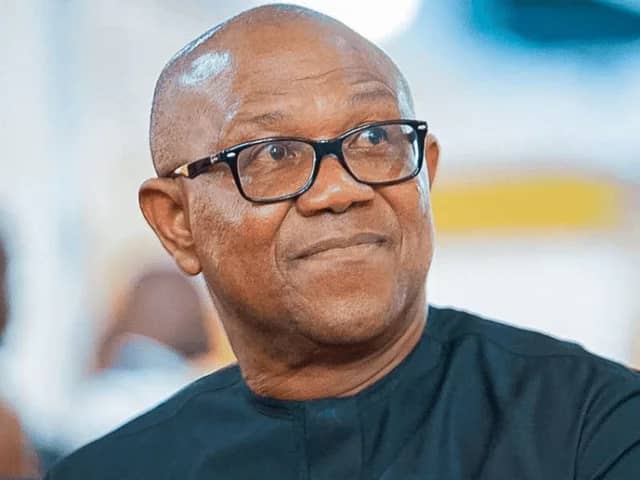
Peter Obi, ex- Governor of Anambra State and Labour Party Presidential Candidate in Nigeria’s 2023 Presidential Election has advised President Bola Tinubu to spend his holidays in different states of Nigeria.

READ FULL MESSAGE BELOW:

Advertisement

My Fellow Nigerians, Happy New Year!

As we begin the New Year 2025, it has become imperative for me to speak to you as a Nigerian interested in the progress of the country.

The political, economic and security situation of our country is worsening daily, despite contrary positions and claims by the government of improvement in different spheres of human endeavour.  Our national challenges are visibly worsening. Our nation and its fortunes are in clear reverse.

“The indices are clearly indicative of our decline, thus:Our national indices tell a disconcerting story Nigeria remains one of the poverty capitals of the world, with over 100 million people living in extreme poverty and more than 150 million in multidimensional poverty.

Advertisement

“The situation has deteriorated significantly over the past 18 months under the current administration. As a nation, we have fallen from being the largest economy in Africa, with a GDP of $574 billion and a per capita income of over $3,500 in 2014, to now ranking fourth on the continent. Our current GDP is less than 50% of what it was a decade ago, standing at approximately $200 billion, with a per capita income of barely $1,000.Nigeria remains one of the most insecure and least peaceful nations in the world, with countless communities and families displaced from their homes and now living in IDP camps.

According to the Global Peace Index (GPI), Nigeria ranks 143rd out of 163 countries in terms of peacefulness – an indication of a high level of distress.Food insecurity has become our new national norm, making Nigeria one of the hungriest countries in the world.

” Gainfully employed and middle-income Nigerians now spend nearly their entire incomes on feeding, with some even resorting to borrowing just to eat. For those living on the margins – low-income earners and the unemployed – the situation is even more dire.

“The newly approved minimum wage of N70,000 cannot afford a bag of rice or even half a bag of beans. As a result, many Nigerians go to bed hungry, while a significant number now rely on palliatives and charitable support.

Advertisement

“Tragically, this has recently led to several avoidable deaths. Nigeria’s ranking on the 2024 Global Hunger Index is 110th out of 127 countries, reflecting a critical level of hunger and food insecurity in the nation.We have earned the dubious distinction of being one of the countries with the largest number of people without access to electricity.

“In 2024, despite abysmal and unacceptable power generation and distribution, the frequency of National Grid collapse increased significantly, with the Grid failing 12 times in 12 months. As a result, we are now mockingly referred to as the “generator country.”

“This persistent lack of adequate energy supply continues to hinder our national development.Corruption, official malfeasance, fiscal profligacy, and the mismanagement of public resources continue to rise astronomically in our country, spreading across all spheres of government.

“Similarly, nepotism and the disregard for the Constitution, the rule of law, and due process have become the norm.

Advertisement

“Our national debt has risen astronomically, from approximately N15 trillion in 2015 to N100 trillion today.

” This sharp increase has occurred within the past 18 months under the current administration. Ironically, these borrowings are largely allocated to non-regenerative programmes and projects, leaving little to no tangible developmental assets to show for the debt.Inflation remains at an all-time high, businesses are collapsing, and manufacturing companies are barely surviving, further contributing to the already high unemployment rate.

“We hold periodic elections that are no longer genuine. Our electoral processes are visibly flawed, lacking transparency and credibility.

” Although Nigeria is a democratic country, the electoral processes fall far below acceptable standards, with the people’s votes often not counting.Suggestions on the way forwardFrom all indications, Nigeria urgently needs selfless and exemplary leadership across the three arms and tiers of government. However, this much-needed exemplary leadership must begin at the very top.

Advertisement

“Since the ultimate responsibility lies with Mr. President, I will direct my attention to him.

“Mr. President, present-day Nigeria aligns closely with Dr. Martin Luther King Jr.’s powerful words: “We are confronted with the fierce urgency of now. This is no time for apathy or complacency. This is a time for vigorous and positive actions.”

” Because we all love Nigeria and desire its prosperity, I would like to suggest some actions I would have personally approached differently. It is time to confront our national problems boldly, decisively, and with a sense of urgency. My suggestions are as follows: Commence a visible and verifiable reduction in the cost of governance to allocate much-needed resources to critical areas of development, such as security, health, education, and poverty alleviation.Aggressive and visible attention should be given to combating corruption effectively.

“While addressing past corrupt activities, we must ensure proper investigations and recoveries related to missing funds or their sources.

Advertisement

“The focus should be on eliminating current and future official malfeasance through increased transparency and accountability in public procurement and contract award processes, as well as thorough monitoring of execution to ensure that limited resources are efficiently utilized and applied productively.

“All future borrowing must be tied to regenerative investments and visible, productive assets that benefit the nation.

” This will ensure both productivity and the ability to service and amortize such loans, rather than continuing the current practice of accumulating massive debt with no tangible returns, which places undue strain on future development revenue.Mr. President, out of the approximately 580 days you have been in office, it is reported that you have spent over 30%, or around 180 days, on more than 30 publicly recorded overseas trips.

” My appeal is that you dedicate at least 20% of 2025 – roughly 72 days – to visit each of Nigeria’s 36 states for two days each. As President, such visits would give you the opportunity to better understand the dire economic and security situations across the country.

Advertisement

” Furthermore, it is time for you to visit our national hospitals. Consider, for example, that your next medical examination be conducted at one of our National Hospitals or Regional Federal Medical Centres, such as the FMC in Sokoto or Birnin Kebbi or Calabar or Umuahia or Akure, among others. This will allow you to assess the state of healthcare facilities available to Nigerians.

” It will also help you understand the condition of our hospitals and clinics, enabling you to make informed decisions on how to upgrade and make them efficient.

“Endeavour to travel by road to observe the condition of most highways.

” You can take short trips, for example, from Calabar in Cross River State to Uyo in Akwa Ibom State, a distance of less than 100 km, or from Benin in Edo State to Warri in Delta State.

Advertisement

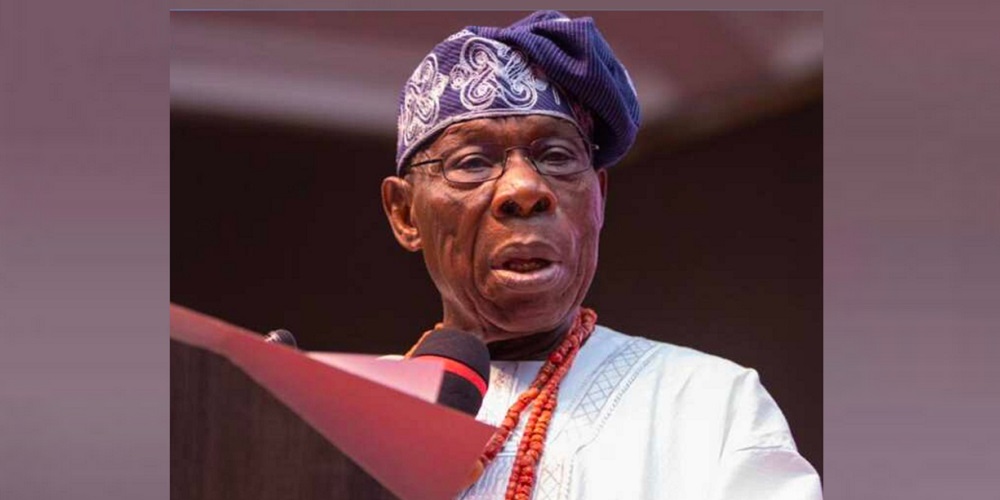
” I recall taking President Olusegun Obasanjo on a trip from Awka to Onitsha on a federal highway when I was the Governor of Anambra State.

“That journey prompted him to immediately approve the reconstruction of parts of the road by the Anambra State government, with subsequent reimbursement by the federal government.

” Such actions are immensely valuable.

“Make both impromptu and planned visits to our tertiary institutions, where our children and future leaders are being trained, are essential to familiarize yourself with the available infrastructure, facilities, and amenities.

Advertisement

“These visits will provide valuable insight into whether the resources of the Tertiary Education Trust Fund (TETFund) are being utilized optimally and what is needed to sustain the education system.

” I recall President Shagari visiting the University of Nigeria, Nsukka, when I was a student there and telling us, ‘I have seen the facilities myself, and I assure you of my intervention.’

Institutional facilities improved significantly thereafter. As Commander-in-Chief, visit our military formations and security agencies, especially during their field operations, and provide them with morale-boosting assurances and support for operational efficiency.

Reiterate that they and their families will always be taken care of Mr. President, many Nigerians are ‘refugees’ and ‘exiles’ in their own country.

Advertisement

Visit various IDP camps and assure these Nigerians that they will soon return to their communities, and that you are working hard to restore peace and normalcy to the country. Nigeria is not a war-torn nation.

The proliferation of IDP camps is a troubling sign as President, you are no longer the Governor of Lagos State; therefore, consider spending your holidays in different parts of the country.

Let your next Sallah, Easter, and Christmas holidays be spent in places like Adamawa, Sokoto, Jos, Akure, Yenagoa, or Abakaliki, among others.

The single most challenging test you face is ensuring that future elections are credible and truly reflect the will of the people..

Advertisement

Finally, Mr. President, Nigerians need to hear directly from you, not through your proxies.

Quarterly updates on what you are doing to improve the situation in Nigeria is crucial.

God bless the Federal Republic of Nigeria.
Advertisement

News

Nigeria-EU Push to Seal Long-delayed Readmission Deal

Published

on

ADVERTISEMENT
Zoom Ad
ADVERTISEMENT
Zoom Ad

By Gloria Ikibah

Nigeria and the European Union have renewed efforts to conclude the long-pending EU-Nigeria Re-Admission Agreement as both sides seek to deepen cooperation on migration, legal mobility and security.

The issue featured prominently during a meeting between the Minister of Foreign Affairs, Ambassador Bianca Odumegwu-Ojukwu, and the EU Commissioner for Internal Affairs and Migration, Magnus Brunner, on the sidelines of the 81st United Nations General Assembly in New York. The  .

In a statement by the Nigerian Foreign Ministry the proposed agreement which was initiated in 2016, was also extensively discussed during the eighth Nigeria-EU Ministerial Dialogue in March 2026.

Advertisement

Brunner stressed the importance of concluding the agreement, saying its finalisation would provide a basis for broader cooperation between Nigeria and the EU on migration.

Odumegwu-Ojukwu, however, emphasised that any migration partnership should address Nigeria’s development interests, including support for the reintegration of returnees, infrastructure development and expanded legal pathways for Nigerians seeking opportunities abroad.

She also stressed the need for structured and lawful mobility opportunities for Nigeria’s large and youthful population.

The EU delegation indicated that Nigeria’s concerns had been incorporated into a proposed broader migration and security cooperation framework.

Advertisement

The framework is expected to cover strategic dialogue on talent partnerships, legal migration pathways, reintegration of returnees, border management and support from the European Border and Coast Guard Agency, Frontex.

The proposed cooperation will also explore an arrangement for information exchange with Europol to strengthen Nigeria’s capacity to combat transnational organised crime.

Brunner said the EU was interested in developing legal migration pathways through talent partnerships, which could help address skills shortages in Europe while creating opportunities for Nigerian professionals.

The initiative is also expected to address concerns surrounding brain drain by creating more structured opportunities for Nigerians to work abroad while maintaining links with their home country.

Advertisement

The two sides further discussed cooperation against irregular migration, with Brunner indicating that progress in tackling irregular migration could help create greater opportunities for legal migration.

The European commissioner expressed interest in continuing discussions during a proposed visit to Abuja in November 2026, although the specific date is yet to be agreed by both sides.

The renewed engagement comes as the EU continues work towards formalising the readmission agreement. EU Council documents published in July 2026 also showed proposals for the signing and conclusion of an agreement with Nigeria covering the return and readmission of people who no longer meet the conditions for entry, presence or residence in the territories of either party.

The Nigeria-EU discussions therefore seek to address irregular migration and return while also expanding legal mobility, reintegration assistance, border management, security cooperation and opportunities for Nigerian professionals and young people.

Advertisement
Continue Reading

News

Foreign Policy Begins at Grassroots, Enikanolaiye Tells LG, Traditional Rulers 

Published

on

ADVERTISEMENT
Zoom Ad
ADVERTISEMENT
Zoom Ad

By Gloria Ikibah

Minister of State for Foreign Affairs, Ambassador Sola Enikanolaiye, has said Nigeria’s grassroots development and mobilisation are central to the country’s foreign policy projection and international image.

The Minister stated this on Tuesday in Abuja while delivering a goodwill message at the 2026 maiden National Conference of the 774 Local Government Chairmen and Chairmen of Traditional Rulers’ Councils at the State House Banquet Hall.

The conference, convened by the Federal Ministry of Special Duties and Inter-Governmental Affairs, was themed, “Cascading President Bola Ahmed Tinubu’s Renewed Hope Agenda to the Grassroots.”

Advertisement

Enikanolaiye said policies implemented at the local level could have implications for Nigeria’s image and relations with other countries.

He said: “For us in the Ministry of Foreign Affairs, we believe that every aspect of our government policy at home has implications for foreign policy and Nigeria’s international relations. Which is why we are interested in everything that goes on domestically because foreign policy is also a projection of domestic policy. And in this context, grassroots mobilization and development is critical to what we do abroad”.

He argued that inclusive governance should be built from the grassroots upwards, rather than imposed from the top, while describing traditional rulers as an important component of Nigeria’s governance structure.

Enikanolaiye commended President Bola Ahmed Tinubu for approving the conference and for recognising the roles of local governments and traditional rulers in the ongoing constitutional amendment process.

Advertisement

Linking his remarks to President Tinubu’s four-D foreign policy doctrine of demography, development, democracy and diaspora, the minister said the success of the Renewed Hope Agenda would ultimately depend on its impact at the grassroots.

On demography, he said Nigeria’s youthful population across the 774 local government areas represented a major asset that could strengthen the country’s position globally if properly empowered.

“On Demography, Nigeria’s youth in the 774 LGAs is our greatest global asset – empower the LGAs, convert numbers to power,” he said.

On development, Enikanolaiye said productive local governments were essential to achieving Nigeria’s economic ambitions, citing agriculture, mineral resources and major infrastructure projects as areas with potential to attract foreign investment.

Advertisement

“On Development, a $1 trillion economy is impossible without productive LGAs. With agriculture booming, 44+ minerals across 500 sites, and massive infrastructure like the Lagos-Calabar and Sokoto-Badagry highways, grassroots stability is what attracts FDI,” he stated.

The minister also linked stronger local governance to democracy, saying empowered local governments and traditional institutions would demonstrate the practice of participatory governance.

“Speaking On Democracy, empowering LGAs and traditional rulers proves Nigeria practises real, bottom-up democracy,” he said.

On the diaspora component of the doctrine, Enikanolaiye said improved conditions at home could encourage Nigerians living abroad to invest in the country and promote a positive image of Nigeria internationally.

Advertisement

“On Diaspora, when home is secure and working, the Diaspora will invest and sell the Nigerian story with confidence,” he noted.

He said the Ministry of Foreign Affairs would support the foreign policy component of grassroots development through investment matchmaking via Nigeria’s 110 diplomatic missions abroad and partnerships with Nigeria’s international partners.

The ministry, he added, would also leverage the community-level knowledge of traditional rulers in support of national security.

In a separate goodwill message, the Head of the Civil Service of the Federation, Mr Olumuyiwa Enitan Abel, represented by Dr Vitalis Obi, said local governments remained the closest tier of government to the people and were central to service delivery.

Advertisement

He also described traditional rulers as important actors in peacebuilding and reaffirmed the commitment of the civil service to accountability and measurable results.

Earlier, the Permanent Secretary, Special Duties and Inter-Governmental Affairs, Dr Onwusoro Maduka Ihemelandu, said the government lacked timely and verifiable data on interventions at the local government level.

He said the ministry had consequently developed an E-Tracking Framework to monitor projects, including their locations, values, timelines and verification status.

Advertisement
Continue Reading

News

*PIGD Calls For United Response To Plateau Violence*

Published

on

ADVERTISEMENT
Zoom Ad
ADVERTISEMENT
Zoom Ad


The National Coordinator of the Plateau Initiative for Growth and Development (PIGD), Nengak David, has appealed to residents to remain vigilant and help prevent further violence following renewed attacks in the state.
David urged people with credible information about threats, armed movements or plans for reprisals to alert the police or trusted community leaders promptly, without putting themselves in danger.
“Vigilance means recognising a threat and reporting it early. Tell the authorities where and when you saw it, and give only what you know firsthand. Do not approach armed people or attempt to confront them,” he said.
The appeal follows attacks in Barkin Ladi and Mangu. Plateau police confirmed the deaths of a senior officer and three civilians in separate incidents in Barkin Ladi, while a community group reported the killing of three men in Mangu.
David called on residents to reject reprisals and resist attempts to blame entire ethnic or religious communities for crimes committed by individuals.
“Every killing must be investigated, and those responsible must answer for it. Another innocent family must not suffer because someone chooses revenge or blames a whole community,” he said.
He urged traditional rulers, religious leaders, women and youth representatives to bring emerging disputes to trusted mediators before tensions escalate. The United Nations Development Programme has identified local mediation and early warning as ways communities can help prevent conflict.
The PIGD coordinator also cautioned against circulating old videos, unverified casualty figures and inflammatory claims. “Before forwarding a frightening message, check when and where it was recorded. A false claim can spread fear and provoke harm long after the truth catches up,” he said.
David asked residents of Barkin Ladi, Bokkos and Mangu to observe the state’s 6 p.m. to 6 a.m. curfew and motorcycle ban, announced to remain in effect until further notice. He also appealed for food, shelter and other assistance to reach affected neighbours through trusted local groups, regardless of their background.
“Residents can share information and refuse provocation. Government, in turn, must act on credible reports, protect those who come forward and investigate every killing fairly,” David said.

Continue Reading

Trending

Copyright © 2024 Naija Blitz News