
News
FG can retain VAT as it is – Oyedele

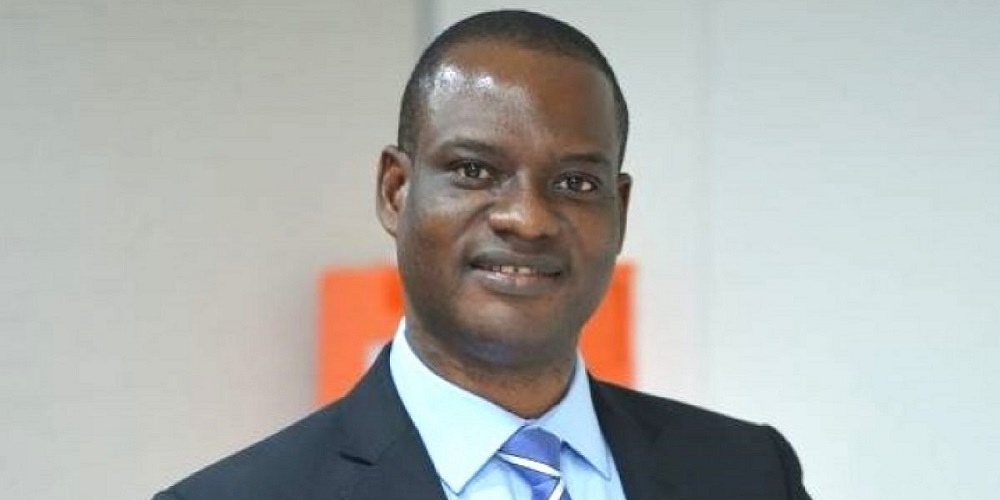


The Chairman of the Presidential Committee on Fiscal Policy and Tax Reforms, Taiwo Oyedele, has said it is possible for the current Value Added Tax structure to be kept as it is given the controversies it had stirred.
Oyedele said this on Sunday when he appeared on a live television programme on Arise TV to discuss the tax reforms proposed by President Bola Tinubu.
In October 2024, Tinubu introduced four Tax Reform Bills to the National Assembly to overhaul Nigeria’s tax system. The Bills – the Nigeria Tax Bill 2024, the Tax Administration Bill, the Nigeria Revenue Service Establishment Bill, and the Joint Revenue Board Establishment Bill – were to consolidate existing tax laws, streamline tax administration, and enhance revenue generation.
The proposed legislation has faced stiff resistance from various players in the country, as people argue that it would favour one section of Nigeria at the expense of others. Proposed reforms to the Value Added Tax were one of the main grief points.
Speaking on Sunday, Oyedele said what his committee proposed regarding Value Added Tax would benefit every part of the country.
He, however, noted that if the preference was for the current state, then his team was willing to oblige.
“There were two comments that Mr President made. His first point is that we have to do tax reforms. We cannot continue with the laws of the colonial era and hope that Nigeria will become a developed country. This tax system is holding us back. Then after a few other questions, someone asked a question again about whether he was willing to move and make a compromise, and he said, ‘Yes’. So his point is that we have to carry out tax reform.
“That is what is non-negotiable, otherwise, we will be missing out on a significant opportunity to move Nigeria forward. But in terms of the details of those bills, everything is up for grabs. I can tell you, as we speak today, if they want us to keep the current VAT formula, we’ll keep it 100 per cent. So, the fact that people keep using the problem we are trying to solve against us, is what I need to understand.
“We are saying today that Lagos State is getting the benefit for calls made in Kano, Kwara, in Ekiti. We say, let’s change that. And then you come out and say they want to take what we are doing in Kano to Lagos,” he said.
The tax reforms committee boss tracing the history of the VAT in Nigeria said, “It seems to me that the more we explain it, the more people try not to understand because a lot of people don’t even understand the current position of the law.
“Let me quickly explain what the problem is, the value-added tax was introduced in 1993 by the military. Implementation started in 1994 and that was to replace the sales tax that was being done by states.”
Oyedele stated that in 1999 when Nigeria got into the Fourth Republic, the country needed a constitution.
“The people that put the Constitution together pretty much replicated 1979’s. In 1979 there wasn’t VAT. So in 1999 when they introduced the constitution, VAT was missing, but the government continued to collect VAT. Some states like Rivers State and Lagos State are in court saying that VAT should be collected by the state because they feel that they are not getting enough for the contribution they are making into the VAT pot, and therefore if they collect it as a state tax, they will be better off.
“That is the equivalent of 100 per cent derivation. For us, as we’re working on these tax reforms. We said if we get states to start collecting VAT in Nigeria, it will be chaotic for business because we know for a fact that states in Nigeria will not respect input-output.
“So we said, how can we make everybody at least comfortable and address inequity? What did we identify? As of today, when companies remit their VAT, they tend to remit from their head office because that’s where they have the finance department. So MTN, BUA, Dangote, Airtel, all the banks, most of them are headquartered in Lagos. Some of the oil companies are headquartered in Rivers State,” he stated.
Oyedele affirmed that the tax reforms became important seeing that there was no VAT in the Nigerian constitution.
He went on to warn that if the tax reform bills were withdrawn from the National Assembly, it would be hard to represent them as he feared that consultations would be frustrated.




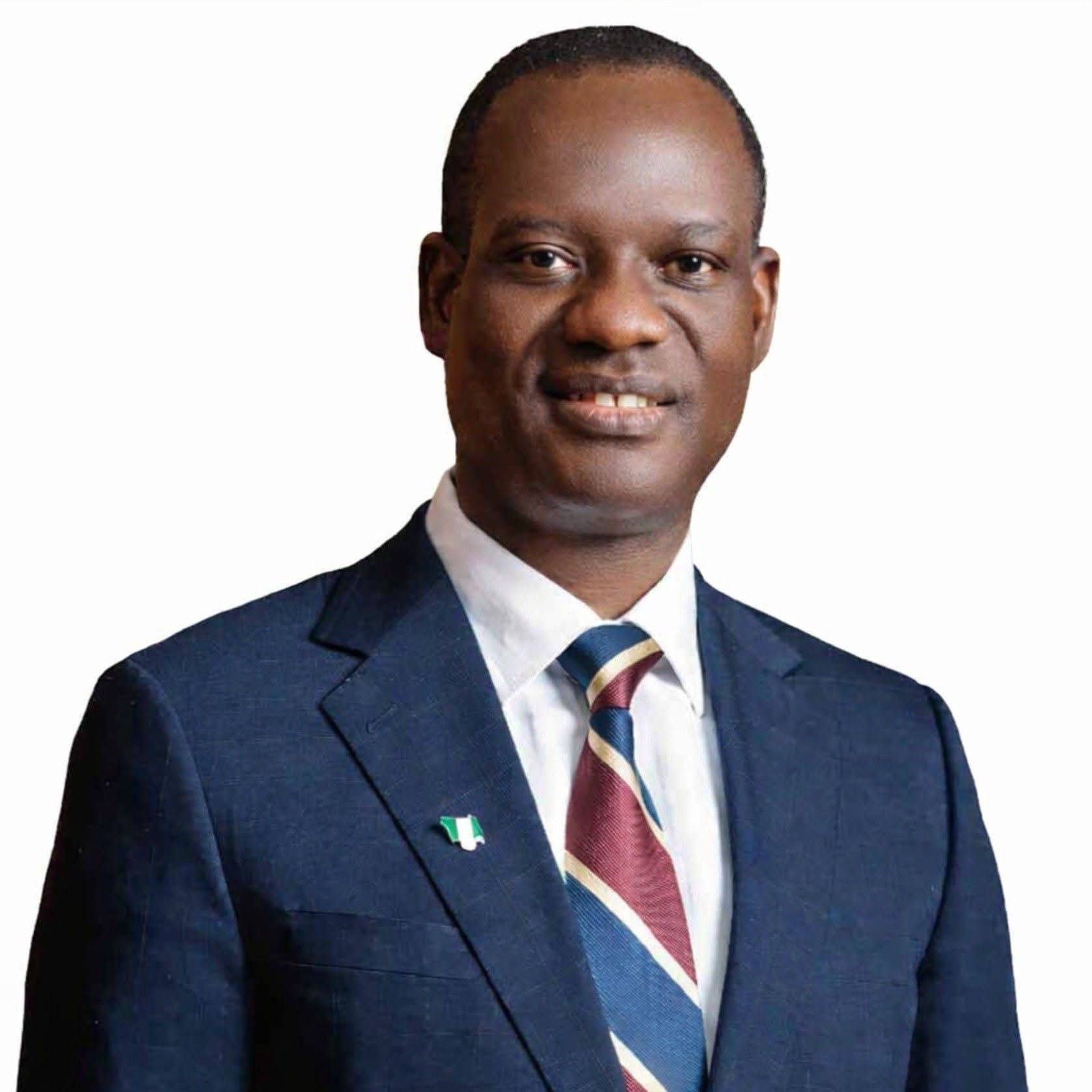
Nigeria’s Minister of Finance and Coordinating Minister of the Economy, Taiwo Oyedele, has assured investors that the government will stay the course on economic reforms, declaring that policy reversals will not define the current phase of the country’s economic management.
The Minister stated this while speaking at the launch of the Nigerian Economic Summit Group Private Sector Outlook 2026 in Lagos on Thursday.
Oyedele said the administration is shifting from stabilisation to measurable growth, where reforms will be judged by outcomes rather than intent.
His comments came barely 48 hours after he assumed office, following the exit of Wale Edun from the Federal Executive Council.
“We are not looking back,” Oyedele said, stressing that consistency in policy direction remains critical to investor confidence.
He warned that mixed signals or abrupt reversals could stall progress, noting that “businesses need to know that today’s decisions will still hold tomorrow.”
While pointing to early signs of macroeconomic stabilisation, including a more aligned exchange rate and improved revenue performance, the minister said these gains must translate into tangible outcomes such as job creation, productivity growth and better living standards.
He identified four priorities for driving investment in the next phase which includes, policy consistency, predictability across fiscal and regulatory frameworks, reduction in the cost of doing business, and improved access to capital.
On financing, Oyedele said the government is working to expand credit across the economy, from consumer lending to industrial financing, with support from institutions such as the Bank of Industry, to stimulate growth and unlock private sector participation.
He added that Nigeria must target stronger real GDP per capita growth to make a meaningful impact on poverty, noting that modest growth figures would not be sufficient given the country’s population dynamics.
The minister further described the current stage of reforms as decisive, where success will depend on execution. “Reforms on their own do not create growth. We need investment at scale,” he said, adding that investors respond to stable and predictable environments, not policy announcements.
On the area of productivity, Oyedele said Nigeria must move beyond consumption-driven expansion and focus on improving output and competitiveness in key sectors, including agriculture, manufacturing, energy and the digital economy.
He also called for deeper collaboration between government and the private sector, maintaining that economic growth cannot be delivered by public policy alone.
As the country enters what he termed a consolidation phase, Oyedele said the government would continue to deepen reforms, strengthen public financial management and improve coordination across all tiers of government.
He, however, acknowledged risks, including reform fatigue, inflationary pressures from global uncertainties, and political tensions ahead of the election cycle, but maintained that these challenges are surmountable with discipline and cooperation.
“Our task now is execution,” Oyedele said.
“This phase demands focus, consistency and accountability. That is the direction we are pursuing he added
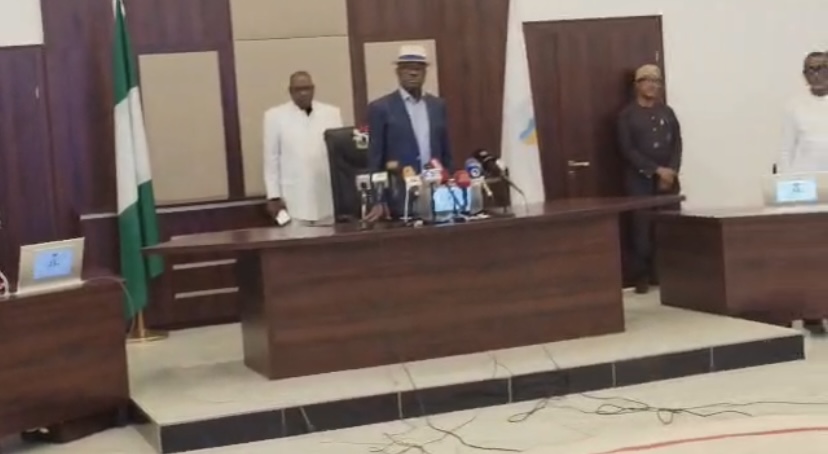
The Federal Capital Territory FCT minister Nyesom Wike is presently holding a meeting with primary school teachers in the Territory over ongoing strike.
Watch:
News
DSS arraigns El-Rufai for ‘invading’ NSA Ribadu’s phone conversation, now to face 5 count charge

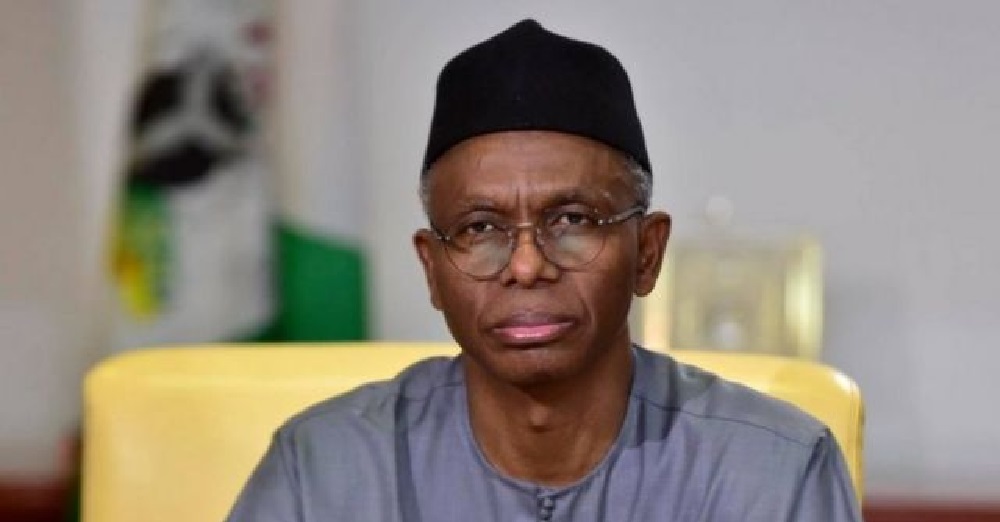
The Department of State Services, DSS, on Thursday arraigned ex- Kaduna State Governor, Nasir El-Rufai, for allegedly accessing the telephone conversation of Nuhu Ribadu, national security adviser, NSA.
El-Rufai is being prosecuted on a five-count amended charge before the Abuja Federal High Court.
The prosecution informed the court at the commencement of proceedings that the charge has been amended from three to five counts.
Consequently, the presiding judge, Justice Joyce Abdulmalik, struck out the previous count.
El-Rufai pleaded not guilty to the five-count amended charge.
Recall that the former FCT Minister had in February, during an interview on Arise Television’s Prime Time said “someone wiretapped” Ribadu’s phone, allowing him to listen to the NSA instructing security operatives to effect his arrest.

We’re not going to reverse reforms, Finance Minister, Oyedele tells investors

FCT minister Wike engages teachers over strike(Video)

DSS arraigns El-Rufai for ‘invading’ NSA Ribadu’s phone conversation, now to face 5 count charge




-
 News19 hours ago
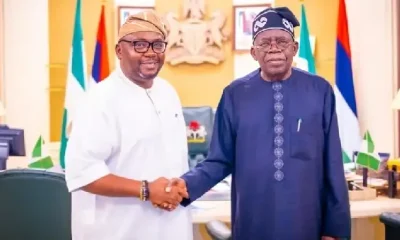
BREAKING: Finally, Power Minister, Adelabu resigns from Tinubu’s cabinet
-
 News23 hours ago
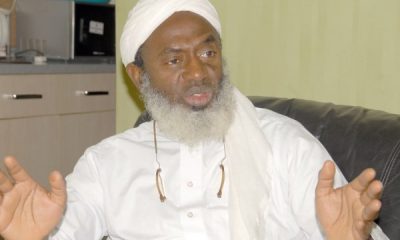
Gumi wants Nigerian government to consider dialogue in tackling terrorism
-
 News23 hours ago
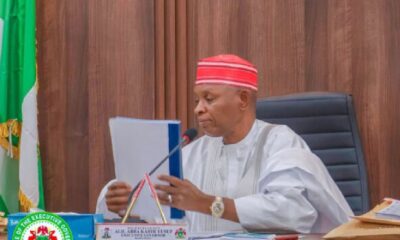
Kano Gov nominates Garo as deputy
-

 News23 hours ago
Iran Seizes Two Ships attempting to cross Strait of Hormuz
-

 News23 hours ago
“Nigeria Too Blessed to Be Poor” — Agro Firm Boss Pushes Value-Driven Farming Revolution
-

 Economy9 hours ago
FG, states, LGs share N2.036trn March revenue
-
 News9 hours ago
Adeleke inaugurates 52-member campaign council for August guber polls
-

 Sports9 hours ago
Man City Defeat Burnley To Top EPL Table
You must be logged in to post a comment Login