Connect with us

News

More funding required to end tuberculosis in Africa – Stakeholders

Published

on

ADVERTISEMENT
Zoom Ad
ADVERTISEMENT
Zoom Ad

By Francesca Hangeior

The Global TB Caucus and partners have identified adequate funding, strengthened multi-sectoral partnerships, and coordinated actions as strategies to ending Tuberculosis in Africa.

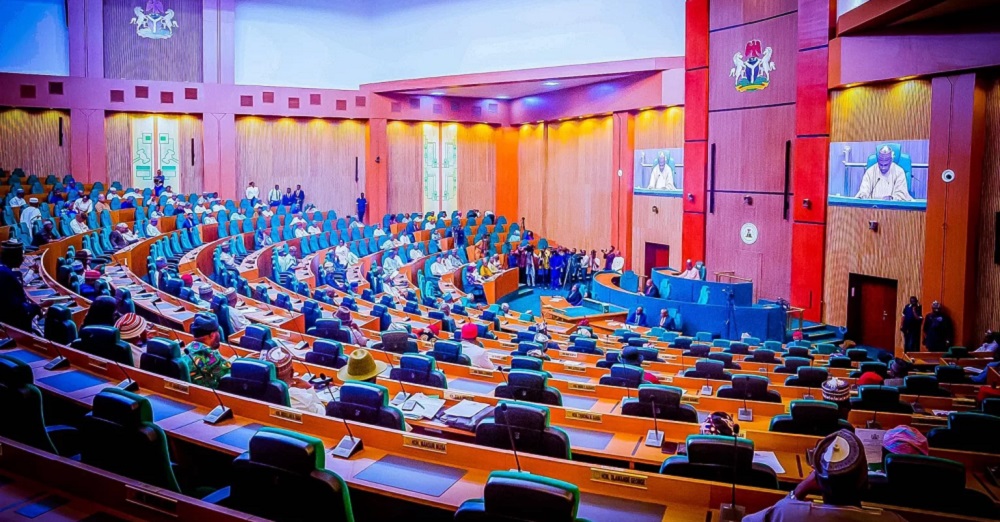
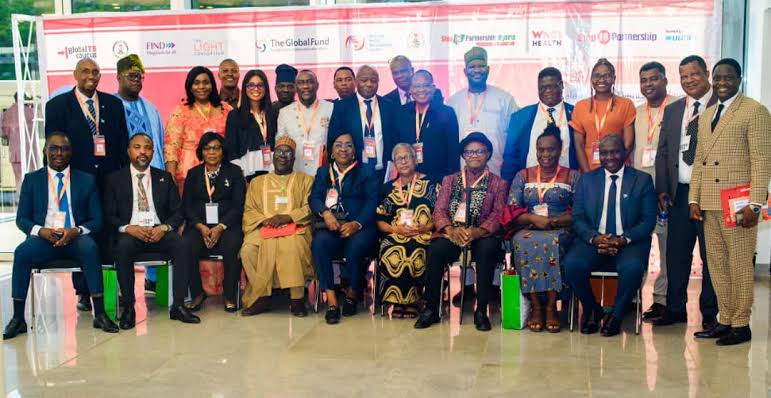
The TB caucus and partners including the Stop TB Partnership Geneva, the Global Fund, FIND, Light Consortium, WACI Health, among others, made this known in a communique issued on Wednesday, at the end of the 2024 fifth Africa TB summit held at the National Assembly, Abuja, with support of the AIDS, TB and Malaria Control Committee, parliamentarians from 18 African countries, civil society organisations, experts, and development partners.

The 18 countries include Cameroon, Central African Republic, Congo Brazzaville, Côte d’Ivoire, Democratic Republic of Congo, Eswatini, Gabon, Kenya, Lesotho, Malawi, Namibia, Nigeria, Sierra Leone, South Africa, Tanzania, Uganda, Zambia and Zimbabwe.

Advertisement

Building on commitments from the 2023 UN High-Level Meeting on TB, the summit aimed to bring parliamentarians abreast with current TB situation in the African region and review progress towards achieving the UN HLM target for TB diagnosis and treatment to be achieved by 2027.

It said the summit served as an opportunity to strengthen collaboration, foster unity across African nations, and empower parliamentarians with information to advance TB prevention, diagnosis, treatment, and funding, with key discussions focusing on enhancing domestic resource mobilisation, improving policies, and increasing funding for TB responses while addressing social determinants such as stigma and gender disparities.

“One of the summit’s significant outcomes was the adoption of the Abuja Statement on Financing to End TB in Africa, an outcome document of the Africa regional dialogue on financing to end TB in Africa co-organised by the Stop TB Partnership, African Union, Africa Parliamentary TB Caucus, and the Network of African Parliamentary Committees of Health representing governments, parliaments, civil society, technical partners, the private sector, and other stakeholders from 22 high TB burden countries, a landmark commitment that will be operationalised through the Global TB Caucus 2025 Roadmap for Africa.

“The meeting was brought to successful conclusion with commitments from parliamentarians to accelerate progress towards achieving the commitments of UN HLM political declaration through increased advocacy for domestic and global funding to close TB gaps, leveraging innovative funding models, strengthened multi sectoral partnerships with CSOs, relevant Ministries, Departments and Agencies, governments, and private entities for capacity building, advocacy, and coordinated actions in the fight against TB, prioritisation of vulnerable groups and affected communities, improved investment in advanced diagnostics, Research and Development.

Advertisement

“These will be centered on the Global TB Caucus pillar of enhancing legislative engagement through the launch and revitalisation of national caucuses, while mobilising more MPs/colleagues at the national level to champion TB, enact supportive laws, and drive public awareness campaigns for increased TB funding and mitigate against TB stigma and discrimination,” the communique partly read.

A Member of Parliament, Kenya, and Chair of Africa TB Caucus, Stephen Mule said, “We have witnessed 10 years of impact as the Global TB Caucus. We remain committed to ensuring we end TB by 2030. We as parliaments pledge our time and political influence until the battle is won.”

A Member of Senate Bureau, Cameroon, and Africa TB Caucus co-chair (Francophone), Dr Pierre Flambeau Ngayap stated, “We congratulate Nigeria on the remarkable progress in their fight against TB. This is evident in the display of high level political will in the fight against TB in the country. The lessons learnt from this summit both from participants and experts are valuable and I hope that the knowledge gained will support us in domesticating the advocacy priorities in our respective countries.”

Adding, a Member of Parliament Namibia, and co-chair, Africa TB Caucus, Hon. Elma Dienda said, “The technological advancements in the fight against TB especially in the area of new tools, diagnostic and treatment are commendable and this goes to show that the goal to end TB is achievable.”
Advertisement

News

Corruption Charges: Ex-CCT Chairman Umar gets N100m bail as trial begins Oct 29

Published

on

By

ADVERTISEMENT
Zoom Ad
ADVERTISEMENT
Zoom Ad

Six days after he was remanded in prison custody, a High Court of the Federal Capital Territory (FCT), sitting in Maitama, on Wednesday granted bail to the former chairman of the Code of Conduct Tribunal (CCT), Mr Danladi Umar, to the tune of N100 million.

The court, in a ruling delivered by Justice Peter Kekemeke, further directed the erstwhile CCT boss, who is facing a four-count corruption charge, to produce one surety in like sum.

According to the court, the surety must be an owner of a property located within the Federal Capital Territory (FCT), Abuja, who must depose to an affidavit of means.

Besides, the court ordered the defendant to surrender his international passport and not travel out of the country without permission.

Advertisement

The case was subsequently adjourned to October 29 for trial.

Umar was, on July 9, after being arraigned before the court by the Economic and Financial Crimes Commission (EFCC), remanded to Kuje prison.

The anti-graft agency said its investigations revealed that the defendant abused his official position by conferring an undue advantage on himself while he served as head of the tribunal.

He was alleged to have collected kickbacks totalling about N15.5 million from contractors.

Advertisement

The prosecution told the court that the defendant, in 2021, used his wife’s bank account to collect the sum of N5.5 million from a contractor engaged to paint the headquarters of the CCT in Abuja.

It was further alleged that on January 25, 2024, he also used his wife’s account to collect another N6 million from a contractor that handled the digitisation of the tribunal’s records.

Furthermore, the defendant was accused of directing a contractor to pay N2.43 million for his daughter’s tuition fee at Baze University, Abuja.

He was said to have committed offences punishable under Section 19 of the Corrupt Practices and Other Related Offences Act, 2000.

Advertisement

However, upon his arraignment, the embattled former CCT chairman pleaded not guilty to the allegations.

At the resumed proceedings on Wednesday, his legal team, led by Mr Sunday Edward, prayed the court to release him on bail pending the conclusion of the trial.

His bail application was anchored on Section 36(5) of the 1999 Constitution (as amended), as well as Sections 162 and 163 of the Administration of Criminal Justice Act (ACJA), 2015.

Even though the prosecution counsel, Mr Christopher Mshelia, opposed the bail request on the premise that the defendant had the capacity to influence some of the proposed witnesses, Justice Kekemeke dismissed the objection.

Advertisement

He held that nothing was adduced to establish that the defendant could interfere with an investigation that had already concluded, with all documentary evidence frontloaded before the court.

The court further set aside the prosecution’s claim that the defendant could commit another offence or evade trial.

It held that the charges contained bailable offences.

It will be recalled that the defendant, while in office as CCT Chairman, on January 23, 2019, issued a controversial ex parte order that led to the removal of a serving Chief Justice of Nigeria (CJN), Justice Walter Onnoghen.

Advertisement

Following the ex parte order, the late President Muhammadu Buhari, on January 25, swore in the next most senior jurist of the Supreme Court, Justice Tanko Muhammad, as Acting CJN.

Although Onnoghen later voluntarily resigned his position as CJN on April 4, Umar went ahead and convicted him on April 18, 2019, on the federal government’s allegation that he had failed to properly declare his assets as required by law.

He gave the federal government the go-ahead to confiscate all monies in five accounts belonging to the former CJN and also removed him as chairman of both the National Judicial Council (NJC) and the Federal Judicial Service Commission (FJSC).

In 2024, the Senate, citing alleged gross misconduct, removed Umar as chairman of the CCT.

Advertisement

President Tinubu has since appointed Mr Abdullahi Bello to head the tribunal.

Some of the counts in the charge against the former CCT chairman read:

“That you, Danladi Yakubu Umar, while serving as the Chairman of the Code of Conduct Tribunal and Chairman of the Code of Conduct Tribunal Tenders Board, on or about the 5th day of October, 2021, in Abuja, within the jurisdiction of this Honourable Court, did confer upon yourself a corrupt and unfair advantage by causing the sum of N5,500,000.00 (five million, five hundred thousand naira only) to be paid to your wife, Zulaihatu Danladi Umar, through her Keystone Bank Account No. 6031167105, by Kurchmives International Limited, a sub-contractor under the contract awarded by the Code of Conduct Tribunal to Momanaf Global Ventures Limited for internal and external painting of the headquarters of the Code of Conduct Tribunal, and thereby committed an offence contrary to Section 19 of the Corrupt Practices and Other Related Offences Act, 2000, and punishable under the same section.”

“That you, Danladi Yakubu Umar, while serving as the Chairman of the Code of Conduct Tribunal and Chairman of the Code of Conduct Tribunal Tenders Board, on or about the 25th day of January, 2024, in Abuja, within the jurisdiction of this Honourable Court, did confer upon yourself a corrupt and unfair advantage by causing the sum of N6,000,000.00 (six million naira only) to be paid to your wife, Zulaihatu Danladi Umar, through her Zenith Bank Account No. 2085458208, by Portal Realities Limited, a sister company of JTF Global Links Limited, a company which was awarded the contract for the digitalisation of the Code of Conduct Tribunal management records by the Code of Conduct Tribunal, and thereby committed an offence contrary to Section 19 of the Corrupt Practices and Other Related Offences Act, 2000, and punishable under the same section.”

Advertisement
Continue Reading

News

INEC portal submission completed before deadline, says LP

Published

on

By

ADVERTISEMENT
Zoom Ad
ADVERTISEMENT
Zoom Ad

The Labour Party has dismissed reports alleging that it failed to upload the names of its presidential and vice-presidential candidates before the Independent National Electoral Commission’s nomination portal closed, insisting that it completed the process four days ahead of the deadline.

In a statement issued in Abuja on Wednesday, National Publicity Secretary, Ken Asogwa, described the reports as “patently false and misleading” and urged its members and supporters to disregard them.

Asogwa explained that it successfully uploaded the names of all its duly nominated presidential, vice-presidential and National Assembly candidates before the July 14 deadline set by INEC.

According to him, the names of the party’s presidential and vice-presidential candidates were uploaded on July 10, in compliance with the electoral umpire’s timetable and guidelines.

Advertisement

He said, “The Labour Party wishes to categorically state that it successfully completed the upload of the names of all its duly nominated candidates for the presidential and National Assembly elections ahead of the closure of the INEC nomination portal on 14th July, 2026.

“Our attention has been drawn to media reports in certain quarters alleging that the party failed to upload the names of its presidential and vice presidential candidates before the expiration of the INEC deadline.

“This claim is patently false, misleading, and exists only in the imagination of the purveyors of that fake news.

“For the avoidance of doubt, the Labour Party successfully uploaded the names of its presidential and vice presidential candidates on 10th July, 2026, four clear days before the close of the INEC nomination window on 14th July, 2026.

Advertisement

“The process was completed seamlessly and in full compliance with the commission’s guidelines.”

The party also faulted the media report, accusing the unnamed organisation that published it of failing to verify the claim with the party’s leadership.

“It is, however, disturbing that a media organisation would publish such a weighty and misleading report without making the slightest effort to verify the information with the leadership of the Labour Party, particularly when the story was purportedly sourced from an anonymous INEC official.

“This raises legitimate questions about the professional responsibility of the media organisation concerned and whether the publication was intended to serve some ulterior political objective rather than the public interest,” he stated.

Advertisement

Asogwa, however, expressed confidence that INEC’s publication of the final list of validly nominated candidates for the 2027 general elections would settle the matter.

He urged Nigerians to ignore the report, insisting it was a deliberate attempt to discredit it ahead of the elections.

“In any event, INEC has already published its timetable for the release of the final list of validly nominated candidates for the 2027 general elections.

“Once the commission makes the publication, Nigerians will clearly see the names of all duly nominated candidates of the various political parties, including those of the Labour Party, thereby putting this baseless misinformation to rest.

Advertisement

“We, therefore, urge our teeming members, supporters and the general public to disregard the fake report in its entirety.

“Those who have become unsettled by the renewed strength, growing acceptance and increasing momentum of the Labour Party should channel their energies into preparing for the electoral contest ahead rather than resorting to crude propaganda and discredited tactics.

“This latest attempt has collapsed under the weight of the facts, like a pack of cards,” the statement added.

The clarification comes amid heightened political activities as parties conclude the nomination of candidates for the 2027 general elections in line with INEC’s timetable.

Advertisement

The electoral body earlier fixed 6 p.m. on July 11 as the deadline for the upload of names for presidential, vice presidential and National Assembly candidates by respective parties, before extending the deadline to Tuesday, July 14.

Continue Reading

News

FG begins fresh count of Nigeria’s out-of-school children

Published

on

By

ADVERTISEMENT
Zoom Ad
ADVERTISEMENT
Zoom Ad

The Minister of Education, Dr Tunji Alausa, has disclosed that the Federal Government will conduct a comprehensive nationwide household survey to establish a more accurate figure for Nigeria’s out-of-school children, acknowledging that existing estimates no longer reflect the current reality.

Speaking on Wednesday at the 2026 Annual Education Summit of the Education Correspondents Association of Nigeria in Abuja, Alausa said the Federal Ministry of Education was partnering with the National Bureau of Statistics to generate reliable data that would guide policy decisions and interventions in the sector.

The minister admitted that the widely cited estimates of out-of-school children required updating, stressing that the government was committed to replacing assumptions with credible, evidence-based statistics.

According to him, the nationwide household survey would provide a clearer picture of the magnitude and distribution of the challenge, enabling the government to design more targeted interventions to improve access to education.

Advertisement

Dr Alausa noted that although the government had succeeded in returning more than one million out-of-school children to classrooms over the past two years, obtaining accurate data remained critical to measuring progress and addressing the problem effectively.

Estimates put the country’s out-of-school children at between 15 million and about 20 million.

Alausa said President Bola Tinubu’s administration was committed to evidence-based policymaking, stressing that access to accurate data should empower both the media and citizens to demand greater accountability from public officeholders.

The minister said journalists must move beyond routine event coverage to investigative reporting that highlights gaps in the education sector and tracks government performance using verifiable evidence.

Advertisement

According to him, quality journalism backed by credible data would not only strengthen accountability but also improve education outcomes across the country.

Alausa also highlighted reforms being implemented under the Renewed Hope Agenda, including Technical and Vocational Education and Training, Science, Technology, Engineering and Mathematics, digital transformation, quality assurance, improved education governance and expanding access to education.

He noted that Nigeria had recorded three consecutive years without disruption of academic activities in universities, polytechnics and colleges of education, attributing the achievement to sustained engagement with tertiary institution unions.

The minister also disclosed that Nigeria now has 24 universities ranked among the world’s top 1,000 institutions, compared with 21 previously, with public universities occupying the country’s top four positions.

Advertisement

The summit, themed “Three Years of the Tinubu Administration: Assessing Reforms, Progress and Challenges in Nigeria’s Education Sector,” brought together policymakers, education stakeholders and journalists to evaluate reforms and challenges in the education sector.

Also speaking, the Minister of State for Education, Prof Suwaiba Ahmad, urged journalists to support education reforms through balanced and responsible reporting.

“Education is the foundation upon which we build a productive economy, strengthen democratic institutions, reduce poverty and promote social cohesion,” she said.

The Executive Secretary of the Universal Basic Education Commission, Dr Aisha Garba, reaffirmed the commission’s commitment to ensuring that every Nigerian child has access to quality basic education regardless of background or location.

Advertisement

“The most important objective is that no child should be left behind. Regardless of background, location or income level, every child must have access to quality education,” she said.

Chairman of the Nigeria Union of Journalists, FCT Council, Grace Ike, called on the media to intensify efforts towards promoting accountability and public awareness in the education sector.

She stressed that government, parents, school administrators, policymakers and journalists must work together to address challenges affecting the sector.

The Special Adviser to the Minister of Education on Media and Communication, Ikharo Attah, also advocated evidence-based journalism, saying credible reporting must be guided by facts rather than assumptions.

Advertisement

Earlier, ECAN Chairman, Chuks Ukwauta, said the summit was organised to examine the achievements, reforms and challenges recorded in Nigeria’s education sector under the Tinubu administration.

Nigeria has one of the highest numbers of out-of-school children in the world, making the issue a major national development challenge.

Despite years of government interventions, millions of children remain outside the formal education system due to poverty, insecurity, cultural barriers, inadequate school infrastructure, child labour, early marriage, displacement caused by conflict, and weak access to quality education, particularly in rural and underserved communities.

Advertisement
Continue Reading

Trending

Copyright © 2024 Naija Blitz News