
News
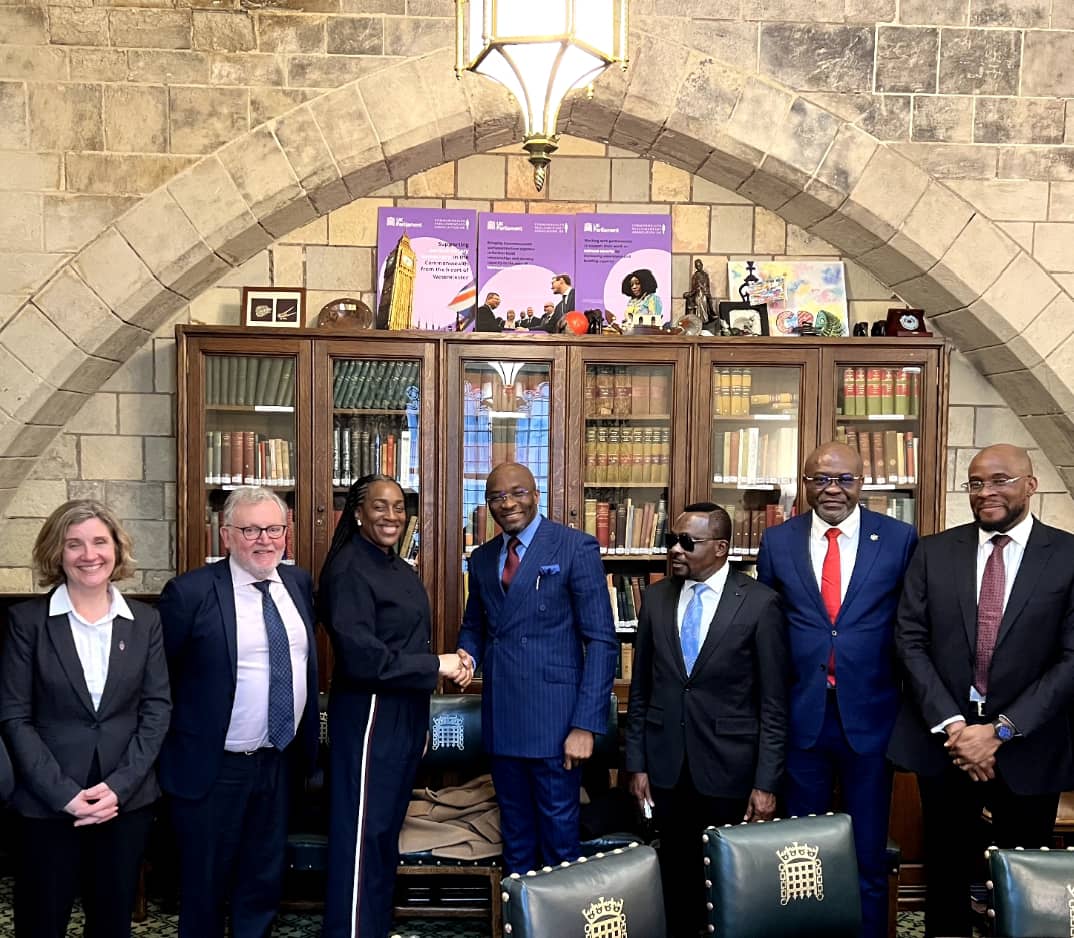
Tax Reform Bills: Our Goal is to Boost Revenue and Encourage Investments — Deputy Speaker






By Gloria Ikibah
Nigeria’s telecoms regulator has directed network operators to compensate subscribers with airtime where poor service delivery has been confirmed, signalling a firmer stance on consumer protection.
The Nigerian Communications Commission (NCC) said the move forms part of a strengthened enforcement regime aimed at improving network performance and holding operators accountable for persistent shortcomings.
The Executive Vice Chairman, Dr Aminu Maida, outlined the development at a media briefing in Abuja on Thursday, where he detailed fresh compliance measures being rolled out across the sector.
Under the new approach, operators will be required to provide airtime credits to affected customers in areas where they have failed to meet the commission’s minimum quality standards. The obligation rests entirely on the service providers, rather than the regulator.
The commission said it is now relying on more precise monitoring tools that track network performance at local government level. This allows regulators to identify specific locations and timeframes where service quality falls below expectations, rather than relying on broad or general complaints.
Maida said the targeted system will make enforcement more effective, ensuring that compensation is tied directly to verified lapses in service delivery.
The directive covers network failures recorded between November 2025 and January 2026 across several operators, marking one of the most concrete steps yet by the regulator to address ongoing consumer frustrations in the telecoms sector.
“Eligible subscribers will receive airtime credits with notifications explaining the cause and value of the compensation,” he said.
He added that notifications would improve transparency and help users understand why compensation was applied to their accounts.
Maida noted the commission has significantly strengthened its monitoring systems to capture real-time, location-specific service performance data.
“These systems ensure enforcement reflects actual user experience rather than generalised industry averages,” he said, highlighting improved regulatory precision.
He added that operators are required to implement the compensation directly, while the NCC provides oversight to ensure compliance.
“Independent checks will confirm that affected subscribers are properly credited,” he said, noting sanctions for non-compliance may follow.
Maida said the initiative formed part of broader reforms aimed at improving accountability and service standards within the telecommunications sector.
“Operators failing to meet obligations will face stricter enforcement measures,” he warned, signalling tougher regulatory action ahead.
He stressed that improving service quality required both sustained infrastructure investment and stronger operational discipline by network providers.
“Service providers must maintain performance standards consistently across all regions, including underserved and rural areas,” he said.
Maida reiterated the NCC’s commitment to balancing consumer protection with industry sustainability and long-term sector growth.
“Operators must take responsibility for the quality of experience delivered to subscribers,” he said, urging greater corporate accountability.
He added that the commission remained committed to ensuring Nigerians received value for money spent on telecom services nationwide.
“Persistent poor service quality is no longer acceptable under current regulatory direction,” he said, emphasising zero tolerance for continued lapses.

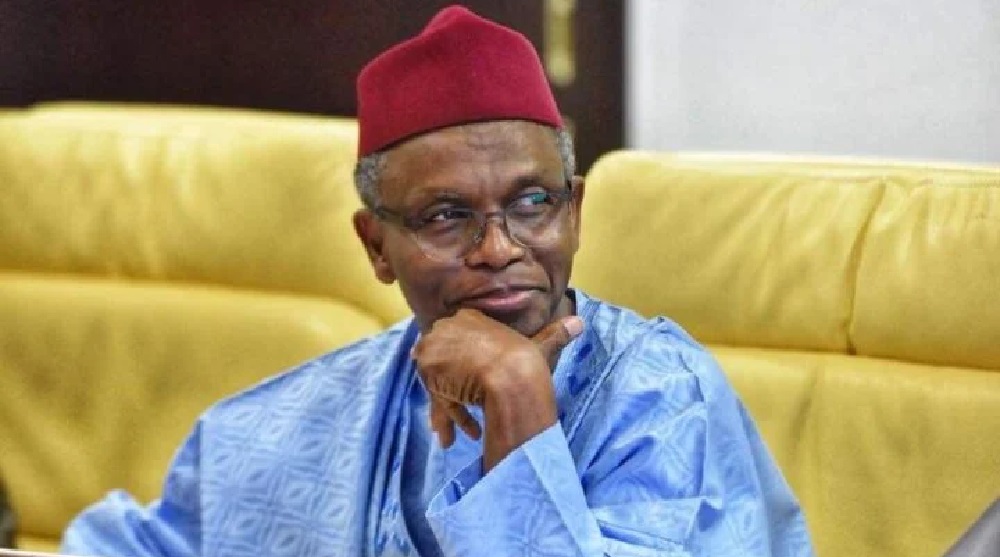
The former Governor of Kaduna State, Mallam Nasir El-Rufai was on Thursday arraigned before the Federal High Court in Abuja by the Department of State Services (DSS) over allegations bordering on unlawful interception of communications and threats to national security.
El-Rufai, who appeared before Justice Joyce Abdulmalik, denied all five counts contained in the amended charge filed against him by the prosecution. The case was brought by counsel to the DSS, Oluwole Aladedoye (SAN), who informed the court that the earlier three-count charge had been replaced with an expanded five-count amended charge dated April 13.
ifeanyi-Okowa-delta
According to the prosecution, the amended charges include allegations that the former governor unlawfully intercepted communications linked to the National Security Adviser, Nuhu Ribadu, without proper authorisation. He was also accused of engaging in activities involving technical systems that allegedly posed risks to public safety and national security.
El-Rufai, however, maintained his not-guilty plea when the charges were read in court.
At the proceedings, his counsel, Oluwole Iyamu (SAN), confirmed receipt of the amended charge and did not oppose its substitution for the earlier filing. The court subsequently struck out the initial three-count charge and proceeded with the new counts.
A key point of contention arose when the prosecution requested that the identities of two witnesses be protected through the use of pseudonyms, citing security concerns. The defence strongly objected, arguing that such a move would undermine the defendant’s constitutional right to fair hearing and to know his accusers.
The defence also challenged the prosecution’s request for consecutive hearing dates, stating that it could limit adequate access to legal representation, especially given El-Rufai’s ongoing custody under the Independent Corrupt Practices and Other Related Offences Commission.
Additionally, the defence informed the court of a pending bail application, noting that an earlier missing affidavit had been recovered and submitted. While the prosecution did not oppose the bail request, it urged the court to dismiss a separate application filed by the defence seeking to quash the amended charge, describing it as lacking merit.
The defence further asked the court to compel the prosecution to disclose its proof of evidence to enable proper preparation for trial, but the request was also opposed.
After listening to submissions from both sides, Justice Abdulmalik adjourned the matter to May 18, 19, and 20 for hearing.

President Bola Tinubu has formally written to the Senate, seeking approval for a $516.3 million foreign syndicated loan to support the construction of the Sokoto–Badagry highway.
In a communication read by the President of the Senate, Godswill Akpabio, on Thursday, President Tinubu requested a resolution in line with Sections 16 and 21 of the Debt Management Office (Establishment) Act, 2011, to enable the Federal Government to secure the financing for Sections 1, Phase 1A, and 1B of the project. The loan facility is to be arranged through Deutsche Bank AG.
President Tinubu explained that the superhighway project is a flagship initiative under his administration’s Renewed Hope Agenda, designed to enhance national connectivity, reduce travel time, and improve the movement of goods across key economic corridors.
The proposed 1,000-kilometre road will link Sokoto, Kebbi, Niger, Kwara, Oyo, Ogun, and Lagos states, connecting Illela to Badagry.
He noted that the financing arrangement will be backed by a partial risk guarantee from the Islamic Corporation for the Insurance of Investment and Export Credit (ICIEC), while the Federal Government will provide counterpart funding of over 265 billion naira for land acquisition, compensation, and related infrastructure.
According to the president, the loan is structured for nine years, including a three-year grace period, with an interest rate pegged at the Chicago Mercantile Exchange SOFR plus 5.3 per cent per annum. The Federal Executive Council has already approved the financing plan.
Following the presentation of the request at plenary, Akpabio referred the matter to the Senate Committee on Local and Foreign Debts, directing it to report back within one week.
Endorsing the move, the Senate President said that it is better to borrow for projects to improve road safety and foster national integration.

NCC inaugurates IPv6 Council, pushes for urgent adoption

NCC moves to improve telecom services in Nigeria
Telcos to Credit Users for Service Failures Under Tougher NCC Rules




-
 News24 hours ago
BREAKING: Finally, Power Minister, Adelabu resigns from Tinubu’s cabinet
-
 News14 hours ago
Adeleke inaugurates 52-member campaign council for August guber polls
-

 Sports14 hours ago
Meet New Head Coach As Chelsea Sack Liam Rosenior
-

 Economy14 hours ago
FG, states, LGs share N2.036trn March revenue
-

 Sports14 hours ago
Man City Defeat Burnley To Top EPL Table
-

 Economy9 hours ago
See Dollar to Naira exchange rate today, April 23, 2026
-
 Politics14 hours ago
Delta 2027: Warri Leaders Endorse Ereyitomi, Guwor, Calls for massive Support
-
 News9 hours ago
Two soldiers wounded, 24 terrorists eliminated as troops repel attack in Yobe-Army reveals
You must be logged in to post a comment Login