

Connect with us

News

Abolishing Death Penalty, Nigerians Will Decide – Deputy Speaker

Published

on

ADVERTISEMENT
Zoom Ad
ADVERTISEMENT
Zoom Ad

By Gloria Ikibah

Deputy Speaker, House of Representatives, Rep. Benjamin Kalu, has said that the decision to abolish death penalty in Nigeria rests with the people.

Kalu who stated this during a visit by officials of the Death Penalty Project and the British High Commission to his office in Abuja on Thursday, stressed the need for open discussions and collaboration among stakeholders, as opinions on the issue vary widely.

He noted that over 130 countries have already abolished the death penalty, either in law or practice. However, in Nigeria, capital punishment is still allowed for crimes such as murder, armed robbery, and treason.

Advertisement

The Deputy Speaker said that the number of death row inmates highlights the need for reforms in the criminal justice system. As chairman of the Constitution Review Committee, he said the committee has been studying the moral, ethical, and practical aspects of the death penalty.

While no bill on the matter is currently before the House, Kalu stated that the committee is considering it, and a proposal could be brought forward soon for debate and public input.
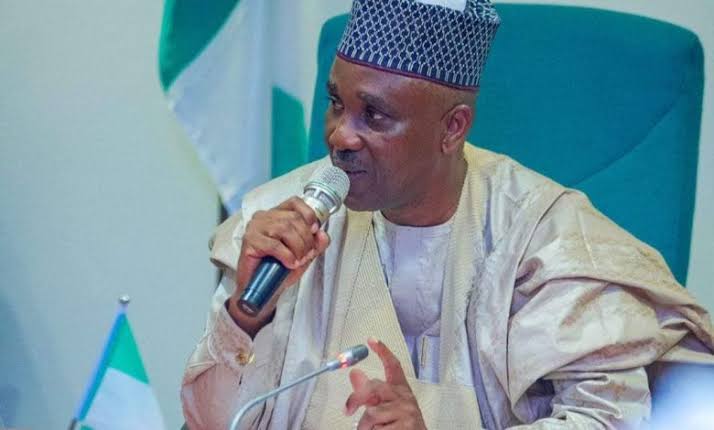
Kalu said, “Internationally, there is a growing trend toward the abolition of the death penalty, with over 130 countries having abolished it in law or practice. This shift reflects a global understanding that justice must incorporate rehabilitation and restorative practices rather than solely punitive measures.
In November 2024, the UN General Assembly’s Third Committee approved a resolution for a global moratorium on executions, aiming for full abolition, which was adopted on December 17, 2024, marking the tenth resolution since 2007 advocating for a moratorium, with support increasing from 104 states in 2007 to 130 in 2024, while opposition has declined. Notably, Nigeria abstained from the recent vote among 22 abstaining states. This trend indicates a strong movement towards the universal abolition of the death penalty. Within the African Union, 48 of 55 countries are now abolitionist in law or practice, with only Egypt and Somalia carrying out executions in 2023.
“The African continent is advancing towards the abolition of the death penalty more rapidly than any other region, with six countries having eliminated the death penalty for all crimes or for ordinary crimes in just the past four years (since July 2021).
We are willing to collaborate with you and have further engagements as we know that aligning our laws with international best practices enhances Nigeria’s reputation on the global stage.
“There’s no bill before the House of Representatives at the moment to address this issue as we speak, but there’s an intention for us to have conversations around it. I’m trying to give it legal framework by presenting it as a bill. We are considering presenting it before the parliament for debate, for us to know whether or not is what our society needs at the moment. It will pass through various stages of public hearing to allow the public make contribution on this subject matter. We are positive that our willingness to engage further on this discussion will send a clear message that we are committed to upholding human rights and ensuring that our criminal justice system reflects fairness and proportionality.”
The Deputy Speaker however stated that as further discussions are ongoing, the goal is not to diminish the seriousness of capital offenses but to create a justice system that is equitable, effective, and respectful of human rights.
“We owe it to our citizens to ensure that their rights are protected and that our laws reflect the highest standards of justice. I urge you all to support us as we take significant steps towards reforming our criminal justice system towards creating a Nigeria that embodies fairness, respect for human rights, and a commitment to justice for all,” Kalu added.
Earlier, leader of Delegation and Co-founder/Co-Executive Director of The Death Penalty Project, Saul LeurFeund, said the visit was to seek the collaboration of parliament on the potential abolishment of death penalty in Nigeria.
He said, “We’ve seen great progress, Zimbabwe abolished death penalty on new year’s eve. I had the pleasure of being here last August on the invitation of the British high commission .
“It will be helpful to have conversation around death penalty in Nigeria. It will be helpful to bring partners together to discuss potential abolishment, to see if we can change discussion around death penalty. So we want to bring our experience and to discuss with you, the possibility on how the Constitution can be amended and anything we can do to provide technical support”.


Advertisement

News

Tinubu condoles with Kemi Adeosun over husband’s death

Published

on

By

ADVERTISEMENT
Zoom Ad
ADVERTISEMENT
Zoom Ad

President Bola Tinubu has extended deep sympathy to former Minister of Finance, Kemi Adeosun, over the passing of her husband, Anthony Adeniyi Adeosun, at 62.

The President condoled with the Adeosun family, friends and business associates over the loss, urging comfort in the legacies of steadfast faith, community service and charity that the devout Christian left behind.

President Tinubu noted the outpouring of testimonies on the life, times and good works of Mr Adeosun, particularly his dedication to supporting the less privileged.

He prayed that the Almighty God will grant the former minister and the Adeosun family strength and comfort at this very difficult time, and grant the deceased eternal rest.

Advertisement
Continue Reading

News

NPC begins nationwide digital birth, death registration

Published

on

By

ADVERTISEMENT
Zoom Ad
ADVERTISEMENT
Zoom Ad

The National Population Commission (NPC) has begun nationwide digital registration of births and deaths. This, it said, is part of efforts to strengthen Nigeria’s civil registration system, improve access to legal identity, and provide reliable demographic data for national development.

The initiative was announced at a news conference marking the 2026 World Population Day and the nationwide rollout of the fully digitised birth and death registration system under the Electronic Civil Registration and Vital Statistics (E-CRVS) platform, known as VitalReg. This year’s World Population Day theme is “Realising the Hopes and Aspirations of Young People – Today and for the Future”. The event was held simultaneously across all 36 states of the federation.

Federal Commissioner of the NPC in Lagos State, Barr. Saidat Oladunjoye, said the VitalReg platform became fully operational nationwide on July 1, 2026. She explained that the digital platform is designed to provide faster, more accessible registration services, improve the accuracy of demographic records, reduce processing delays, and support evidence-based planning for national development.

According to her, this year’s World Population Day theme highlights the need to invest in Nigeria’s growing youth population through quality education, healthcare, employment opportunities, social protection, and access to legal identity.

Advertisement

“Nigeria, with an estimated population of more than 238 million people, is the most populous country in Africa. Young people are a significant proportion of this population and remain one of the country’s greatest resources,” Mrs Oladunjoye said.

The Federal Commissioner, however, expressed concern about the low rate of birth and death registration in the country, warning that millions of Nigerians risk being denied legal identity, while gaps in vital registration continue to undermine the availability of reliable population data required for effective planning and the equitable distribution of resources.

To address these challenges, Oladunjoye said the Commission is strengthening collaboration with government agencies, healthcare institutions, traditional and religious leaders, and development partners to ensure that all births and deaths are properly registered.

She said, “The new digital CRVS platform would simplify the registration process, reduce paperwork, improve data security, shorten processing time and strengthen Nigeria’s digital identity ecosystem. The NPC has entered strategic partnerships with the Association of Local Governments of Nigeria (ALGON), the National Identity Management Commission (NIMC), UNICEF and private technology partners to decentralise registration services and bring them closer to communities.”

Advertisement

While assuring Nigerians that birth registration remains highly subsidised, Oladunjoye urged parents and guardians to register every child immediately after birth. She also appealed to the media to sustain public awareness campaigns on population issues, youth development, and the importance of obtaining legal identity.

“The NPC will continue to partner with governments and development partners to build a modern civil registration system capable of generating credible demographic data for national planning and sustainable development,” she added.

Continue Reading

News

Nigerian University Disciplines Final-Year Students for Organising Sign-Out Parties

Published

on

By

ADVERTISEMENT
Zoom Ad
ADVERTISEMENT
Zoom Ad

The management of Chukwuemeka Odumegwu Ojukwu University in Anambra State has moved decisively to discipline final-year students who openly defied the institution’s long-standing ban on sign-out activities.

In a strongly worded memorandum dated 6 August 2026 and signed by Professor Innocent Ngangah, Dean of Student Affairs, the university expressed deep disappointment at what it described as a deliberate violation of its policy prohibiting all forms of sign-out celebrations both on and off campus.

Despite repeated earlier warnings, students from the Departments of Economics, Political Science, Criminology, English, Microbiology, Mechanical Engineering and Sociology organised and took part in such events at Otoko/Awkuzu, Awka and Uli on 4 and 5 August.

The university regards the gatherings as gross misconduct and a clear act of disobedience to constituted authority. It has therefore announced that all students, departmental executives and any other persons found to have participated in or facilitated the activities will face disciplinary measures in accordance with the institution’s regulations. Possible sanctions include appearance before the Students’ Disciplinary Committee, suspension from the university, the withholding of examination results or clearance, and any further penalties the University Senate may determine.

Advertisement

University authorities have long discouraged sign-out parties, warning that they can be exploited by mischievous elements for harmful acts such as pouring engine oil or urine on fellow students, and that some cult groups have used the occasions to target perceived enemies.

Professor Ngangah reiterated the ban in clear terms, stating that the university will not hesitate to enforce the full weight of its regulations against any individual or group found in further violation of the policy. All students have been firmly warned once again to desist from any form of sign-out activity.

Continue Reading

Trending

Copyright © 2024 Naija Blitz News