Connect with us

News

Hajj 2025: Poor turnout as fare payment deadline ends today

Published

on

ADVERTISEMENT
Zoom Ad
ADVERTISEMENT
Zoom Ad

By Kayode Sanni-Arewa

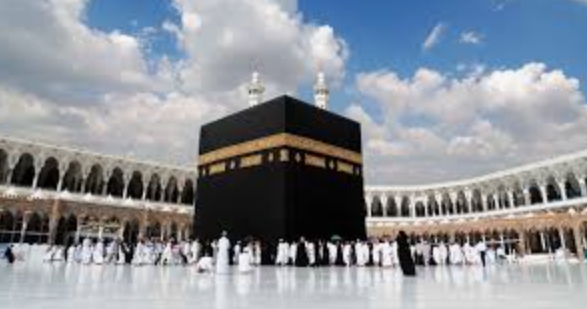
Nigeria may not fully utilise the hajj seats allocated it by the Kingdom of Saudi Arabia for the 2025 hajj pilgrimage due to low turnout as the payment deadline lapses today.

The National Hajj Commission of Nigeria (NAHCON) set the payment deadline for January 31, and reports indicate that there will likely be a repeat of last year’s situation where only 51,447 pilgrims paid, despite Nigeria receiving 95,000 slots.

The same number of slots have been allocated for 2025, but officials attribute the low turnout to the high hajj fares and short payment window.

Advertisement

This year’s hajj fare ranges between N8.3m and N8.7m for pilgrims travelling with state welfare boards. Those booking with private tour operators face even higher fares.

The early payment deadline was set by Saudi Arabia’s new policy, which requires all participating countries to finalise agreements four months before the start of the hajj to allow for better logistics planning.

While the payment deadline was extended last year due to low turnout, it remains unclear if that will happen this year.

FCT

Advertisement

In the Federal Capital Territory (FCT), the territory’s Muslim Pilgrims Welfare Board said only 700 intending pilgrims had completed payments by the deadline.

The board was allocated 4,148 seats, with 40% (1,659) reserved for the Jaiz Bank hajj scheme. The remaining 60% (2,489) were for general pilgrims, but as of January 30, only 700 had paid.

Muhammad Lawal Aliyu, the board’s spokesman, said while people are still rushing to make payments, the final count will be determined after the deadline.

States

Advertisement

In Kano State, which was allocated 4,356 seats, 2,100 intending pilgrims had completed their payments by January 30. The state government set February 3 as the payment deadline.

Sokoto State has 5,216 seats allocation, but officials are still compiling payment data from local governments and expect to finalize the list by February 2.

In Kaduna, over 6,000 seats have been allocated, and registration continues at 24 centres across the state. Officials could not confirm the exact number of registered pilgrims as of January 30, but they are hopeful that many will pay before the February 5 deadline.

In Kwara, the Pilgrims Welfare Board confirmed that over 1,000 pilgrims had made payments, with 4,365 seats allocated. The figure is expected to rise before the payment deadline.

Advertisement

Gombe had 1,480 seats allocated, but only 500 pilgrims had paid by January 30. The state is still encouraging more pilgrims to complete payments before the February 2025 deadline.

In Lagos, 500 pilgrims had completed their registration, but less than 50% of the 2,000 allocated seats have been filled as of January 30.

Officials cited the high cost of the hajj as a barrier, noting that many pilgrims were struggling to pay due to the economic situation in the country.

Alhaji Abdulfatah Abdulmojeed, a stakeholder in hajj operations, urged states to remit the funds for pilgrims who have paid to NAHCON to avoid delays in the preparation for the pilgrimage.

Advertisement

He also emphasised the importance of the Hajj Savings Scheme, similar to those in countries like Indonesia and Malaysia, to help Nigerian pilgrims manage the high costs.

He noted that the current economic situation may prevent Nigeria from filling all 95,000 hajj slots.

Efforts to reach NAHCON’s spokesman, Muhammad Ahmed, were unsuccessful. His phone number wasn’t reachable, and he also didn’t respond to text messages.

However, an internal source indicated that the commission might not extend the deadline due to the agreements already made with service providers for the 2025 Hajj.

Advertisement

He said early payments are crucial to securing accommodation and other logistics for Nigerian pilgrims.

By Faruk Shuaibu & Hussein Yahaya (Abuja) Salim Umar Ibrahim (Kano) Abubakar Auwal, (Sokoto) Mohammed Ibrahim Yaba (Kaduna) Mumini Abdulkareem (Ilorin) Haruna Gimba Yaya (Gombe) & Abdullateef Aliyu (Lagos)

News

Saudi Arabia ‘s Aramco Helicopter Crashes, Kills 14

Published

on

ADVERTISEMENT
Zoom Ad
ADVERTISEMENT
Zoom Ad

A helicopter crash in Saudi Arabia killed 14 Saudi citizens on Sunday, the kingdom’s official press agency reported, adding that the aircraft belonged to state oil giant Aramco.

The Saudi Press Agency, citing an official at the energy ministry, reported the helicopter crashed in Ras Tanura in the country’s east.

“The accident claimed the lives of all 14 passengers, all Saudi citizens,” the agency said, adding that an investigation was under way to determine the cause of the crash.

Aramco says it operates more than 60 aircraft, including helicopters serving more than 300 heliports in Saudi Arabia, making it one of the largest corporate fleets in the region.

Advertisement

The deadly accident comes as oil-rich Gulf nations seek to ramp up their output following Iranian attacks and the closure of the Strait of Hormuz, a vital waterway for the export of oil and gas.

The Gulf monarchy did not indicate the incident was in any way connected to a hostile attack.
During the Middle East war, Iranian attacks had targeted energy facilities in the Gulf.

Ras Tanura is home to one of the largest refineries in the Middle East, with a capacity of 550,000 barrels per day, and is critical to Saudi Arabia’s energy sector.

The refinery has been targeted several times, notably during an Iranian drone attack at the beginning of the conflict, which caused a fire and forced a partial shutdown.

Advertisement

Riyadh said in April that the weeks-long attacks had disrupted several production operations at key facilities, with refineries in Ras Tanura as well as Jubail, Yanbu and Riyadh targeted.
Saudi Arabia, the world’s leading crude exporter, produces a little over 10 million bpd.

AFP

Continue Reading

News

SAD! Bandits’ bomb hits vehicle, kills one, injures many in Sokoto

Published

on

ADVERTISEMENT
Zoom Ad
ADVERTISEMENT
Zoom Ad

An Improvised Explosive Device, IED, planted by alleged bandits along the Kurawa–Sabon Birni road in Sokoto State on Sunday hit a vehicle, killing one person and injuring many passengers.

The incident raised fresh concerns over the growing use of explosive devices by criminal groups operating in parts of the North-West.

The vehicle was said to be conveying passengers from surrounding communities to Sabon Birni when it ran over the explosive device, triggering a blast that severely damaged the vehicle and left several occupants injured.

A security analyst based in the area, Bashir Guyawa, disclosed the incident in a post on his Facebook page.

Advertisement

Guyawa described the incident as another reminder of the persistent security challenges confronting communities along the border axis.

He said the vehicle was on a routine passenger trip when the explosion occurred.

“The vehicle was conveying passengers early this morning on their way to Sabon Birni when the unfortunate incident happened,” he wrote.

Advertisement
Continue Reading

News

Twelve seriously injured in Kano farmers-herders clash

Published

on

ADVERTISEMENT
Zoom Ad
ADVERTISEMENT
Zoom Ad

Twelve people were injured in a clash between farmers from Larabar Gadan Sarki and herders from the communities of Majawa and Karade in Warawa Local Government Area of Kano State.

The chairman of Warawa Local Government, Lamido Sunusi Ahmad, disclosed this in a statement issued by his media aide, Musleem Garindau.

The statement said the council chairman visited the injured victims at Wudil General Hospital and directed that the local government should cover the cost of their treatment until they had fully recovered.

He also commended community leaders and security personnel for their swift intervention, noting that calm had been restored to the affected communities.

Advertisement

The chairman urged residents to refrain from spreading rumours or engaging in any act capable of escalating tensions and instead embrace dialogue to promote peaceful coexistence.

Speaking further, the Vice Chairman of Warawa Local Government, Hon. Ibrahim Abdu Madari, explained that the conflict involved residents of the communities, all of whom are indigenous to the area.

He said reports indicated that the violence began after a cow strayed into a farmer’s field and ate some crops. The farmer allegedly beat the cow, prompting its owner to assault the farmer, and the disagreement later escalated into a wider clash.

He also reiterated his appeal to residents to live peacefully and resolve disputes through dialogue and mutual understanding.

Advertisement
Continue Reading

Trending

Copyright © 2024 Naija Blitz News