Foreign
25% tariffs on Mexico, Canada begins today
- /home/naijuinz/public_html/wp-content/plugins/mvp-social-buttons/mvp-social-buttons.php on line 27
https://naijablitznews.com/wp-content/uploads/2025/01/Donald-Trump-1-1000x575.jpg&description=25% tariffs on Mexico, Canada begins today', 'pinterestShare', 'width=750,height=350'); return false;" title="Pin This Post">
- Share
- Tweet /home/naijuinz/public_html/wp-content/plugins/mvp-social-buttons/mvp-social-buttons.php on line 72
https://naijablitznews.com/wp-content/uploads/2025/01/Donald-Trump-1-1000x575.jpg&description=25% tariffs on Mexico, Canada begins today', 'pinterestShare', 'width=750,height=350'); return false;" title="Pin This Post">
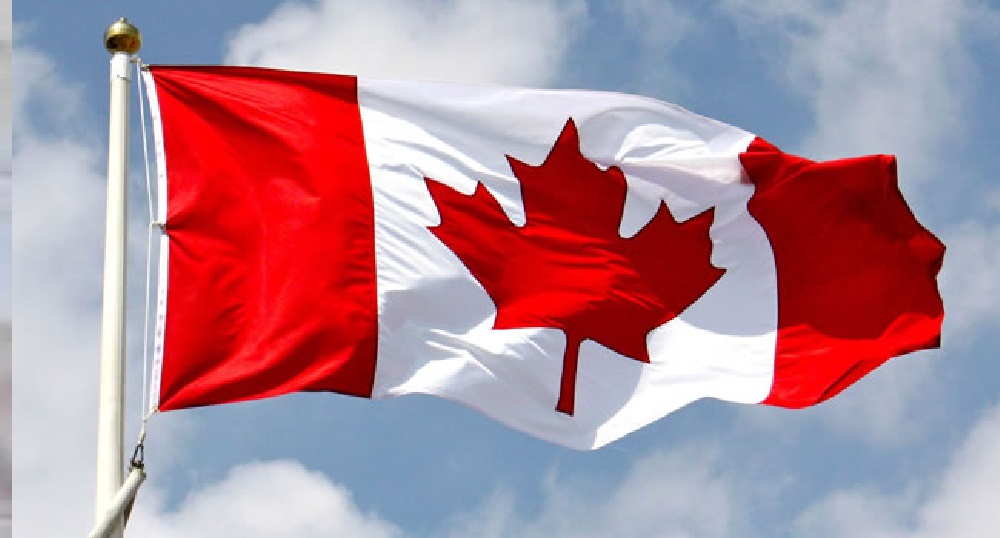
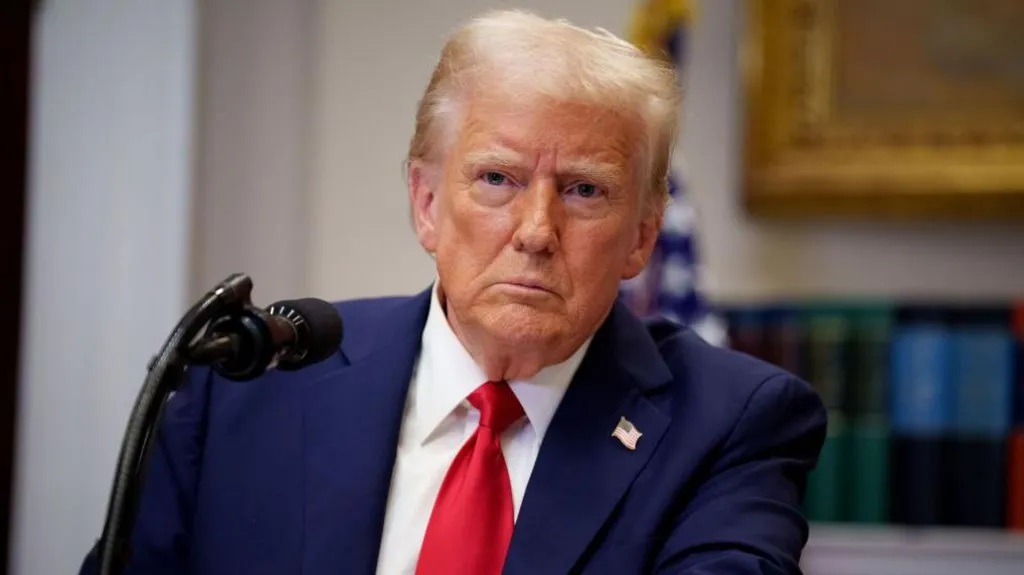
US President Donald Trump will impose tariffs on Saturday of 25% on Mexico, 25% on Canada and 10% on China, says the White House.

But Trump said on Friday that Canadian oil would be hit with lower tariffs of 10%, which could take effect later, on 18 February.
The president also said he planned to impose tariffs on the European Union in the future, saying the bloc had not treated the US well.

White House press secretary Karoline Leavitt said the Canada and Mexico duties were in response to “the illegal fentanyl that they have sourced and allowed to distribute into our country, which has killed tens of millions of Americans”.
Trump has also repeatedly said the move was to address the large amounts of undocumented migrants that have come across US borders as well as trade deficits with its neighbours.
Ms Leavitt told a news briefing at the White House on Friday: “These are promises made and promises kept by the President.”
During the election campaign, Trump threatened to hit Chinese-made products with tariffs of up to 60%, but held off on any immediate action on his first day back in the White House, instead ordering his administration to study the issue.
US goods imports from China have flattened since 2018, a statistic that economists have attributed in part to a series of escalating tariffs that Trump imposed during his first term.
Earlier this month, a top Chinese official warned against protectionism as Trump’s return to the presidency renews the threat of a trade war between the world’s two biggest economies – but did not mention the US by name.
Addressing the World Economic Forum in Davos, Switzerland, Ding Xuexiang, Vice Premier of China, said his country was looking for a “win-win” solution to trade tensions and wanted to expand its imports.
China, Canada and Mexico are the top US trading partners, accounting for 40% of the goods imported into the US last year, and fears are rising that the new steep levies could kick off a major trade war as well as push up prices in the US.
Canadian Prime Minister Justin Trudeau said on Friday: “It’s not what we want, but if he moves forward, we will also act.”
Canada and Mexico have already said that they would respond to US tariffs with measures of their own, while also seeking to assure Washington that they were taking action to address concerns about their US borders.
The BBC has reached out to the Chinese embassy in the US for comment.
If US imports of oil from Canada and Mexico are hit with levies it risks undermining Trump’s promise to bring down the cost of living.
Tariffs are an import tax on goods that are produced abroad.
In theory, taxing items coming into a country means people are less likely to buy them as they become more expensive.
The intention is that they buy cheaper local products instead – boosting a country’s economy.
But the cost of tariffs on imported energy could be passed on to businesses and consumers, which may increase the prices of everything from petrol to groceries.
Around 40% of the crude that runs through US oil refineries is imported, and the vast majority of it comes from Canada.
On Friday, Trump agreed tariff costs are sometimes passed along to consumers and that his plans may cause disruption in the short-term.
Mark Carney, the former head of Canada’s and England’s central banks, told BBC Newsnight on Friday that the tariffs will hit economic growth and drive up inflation.
“They’re going to damage the US’s reputation around the world,” said Carney, who is also in the running to replace Prime Minister Trudeau as leader of Canada’s Liberal Party.
Foreign
Trump says Iran has 22% of missiles left
Iran still has “21, 22 per cent” of its missiles left, US President Donald Trump said Friday, in a week in which Tehran fired dozens of them toward regional neighbours, despite a sputtering ceasefire.
“They still have capacity. They have some missiles, they have some drones. I would say, percentage wise, maybe 21, 22 percent of their missiles,” Trump told NBC News in an interview.
That figure for Iran’s missile stockpile is higher than one of 18 per cent Trump gave in May. He has often claimed to have completely destroyed Iran’s war-fighting capacity.
Iran’s military said Friday it had fired “warning missiles” at two US destroyers in the Gulf of Oman — a claim promptly denied by the US military. Two days earlier, Kuwait said it had intercepted 30 ballistic missiles fired as part of “heinous Iranian aggression.”
AFP
Foreign
US, allies oppose Bolivia President Paz’s ouster as unrest grow
The United States and allies on Friday condemned the ongoing efforts to overthrow the elected government of President Rodrigo Paz in Bolivia.
The Shield of the Americas member states said “mob rule” cannot replace the decision that most Bolivians made at the ballot box to remove “two decades of corrupt governments.”
The U.S., Argentina, Bolivia, Chile, Costa Rica, Dominican Republic, Ecuador, El Salvador, Guyana, Honduras, Panama, Paraguay, and Trinidad and Tobago signed the joint statement.
They affirm support for the Paz administration as it resists “attempts to drag Bolivia backwards through cynical efforts to prevent the delivery of food, medicine and other vital supplies.”
“Those who are funding these protests with dirty money from drug trafficking and transnational crime should be held accountable,” the allies urged.
The governments encouraged people who have grievances to dialogue with the government, warning against abusing their causes to “regain power.”
President Paz admitted Bolivia has been pushed to a “breaking point” amid weeks of widespread protests and a blockade that has paralyzed major cities.
Farmers, miners, transport workers and teachers are demanding immediate measures to ease the country’s worst economic crisis in four decades.
Defence Minister Marcelo Salinas and Education Minister Beatriz Garcia resigned this week as demonstrators continue to demand Paz’s resignation, a call he rejects.
The government accuses ex-President Evo Morales of fuelling unrest, which opposition figures believe could end with a referendum to decide whether Paz should remain in office.
Foreign
Russia claims deadly drone strike varsity hostel killed 21 students
Russian authorities have accused Ukraine of carrying out a deadly drone attack on a university complex in Starobelsk, in the Russian-controlled Luhansk region, claiming that 21 students were killed in the strike.
According to a statement circulated by Russian officials, the attack occurred on the night of May 22 and targeted the academic building and dormitory of Lugansk State Pedagogical University.
Russian authorities alleged that 16 unmanned aerial vehicles (UAVs), including four heavy drones, were deployed in three waves during the operation.
Officials described the incident as one of the deadliest attacks on a civilian educational facility in the region since the outbreak of the Russia-Ukraine war, claiming that the victims were students residing in the university dormitory.
“Just a week ago, they were students with dreams, plans and a future. Today, all that remains are photographs, memories and unbearable grief,” the statement said.
The authorities further alleged that the strike was deliberate and targeted civilians rather than military infrastructure.
The claims could not be independently verified, and Ukrainian authorities had not publicly responded to the allegations at the time of filing this report.
Since the start of the conflict, both Russia and Ukraine have repeatedly accused each other of carrying out attacks on civilian infrastructure, allegations that are often difficult to verify independently due to ongoing hostilities and restricted access to affected areas.
The reported incident has renewed concerns among humanitarian organizations about the impact of the war on educational institutions and young people caught in the conflict.
The Russia-Ukraine war, now in its fifth year, has resulted in thousands of civilian casualties, widespread displacement and extensive damage to homes, schools, hospitals and critical infrastructure across both countries.
International observers have consistently called for independent investigations into attacks involving civilian casualties, regardless of the parties involved, to establish the facts and ensure accountability under international humanitarian law.
-
News20 hours agoLEADERSHIP AND INFRASTRUCTURE DEVELOPMENT IN NIGERIA: LESSONS FOR FUTURE LEADERS
-
News16 hours agoBreaking: Finally police rescue Adelabu’s sister, her twins
-
Metro10 hours agoISIS Bride And Her Mother Charged After They Helped Dad Buy 15-Year-Old S£x Slave For £7,500 For Purposes Of R@ping
-
News19 hours agoFamous US actor stabbed to death in his apartment
-
Metro10 hours agoTragic End: Missing Port Harcourt Woman Confirmed De@d After Suspected ‘One-Chance’ Abduction
-
News19 hours ago‘If You Can’t Halt Insecurity, Step Aside’ — Apostle Suleman
-
Metro9 hours agoAbductors give conditions for release of ex-Defence spokesperson Rabe Abubakar, wife
-
News15 hours agoGroup Urges NASS to Speedily Pass Child Online Safety Bill

Warning: Undefined variable $user_ID in /home/naijuinz/public_html/wp-content/themes/zox-news/comments.php on line 49
You must be logged in to post a comment Login