Connect with us

News

Alleged N1.96bn fraud: Banker, director testify against ex-acting AGF

Published

on

ADVERTISEMENT
Zoom Ad
ADVERTISEMENT
Zoom Ad

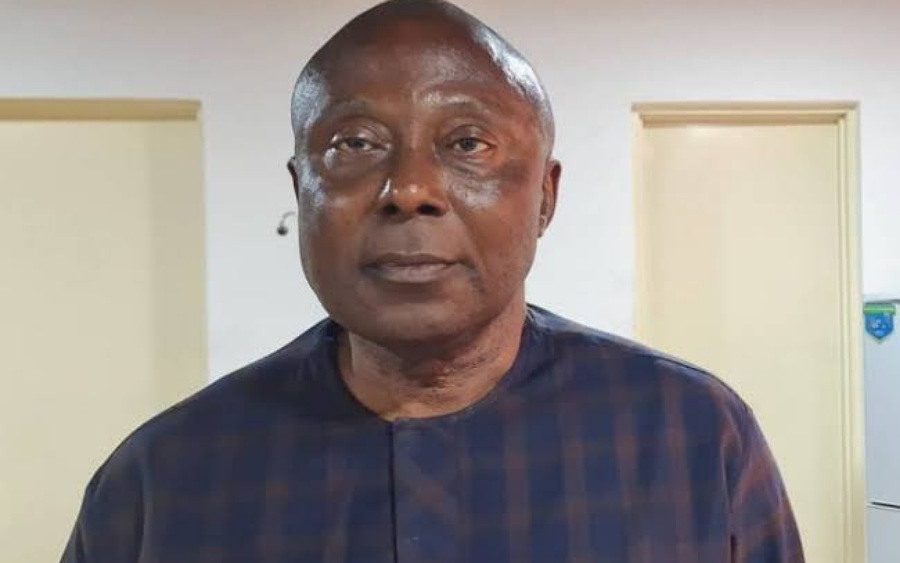
The Federal High Court sitting in Abuja, on Friday, heard how a former Acting Accountant-General of the Federation, AGF, Mr. Anamekwe Nwabuoku, used four different companies to siphon public funds to the tune of about N1.96billion.


A Director in the Federal Civil Service, Mr. Felix Nweke, made the revelation when he testified as a witness in the amended nine-count money laundering charge the Economic and Financial Crimes Commission, EFCC, preferred against the erstwhile Acting AGF.

Nweke, who mounted the box as the second prosecution witness, PW-2, told the court that in a bid to conceal the fraud, the looted funds were channelled into bank accounts that had one Gideon Joseph as the sole signatory.

Led in evidence by EFCC’s lawyer, Mr. Ekele Iheanacho, SAN, the witness, while tracing the origin of the fraud, told the court that he worked under the defendant while he served as a Deputy Director in the Defence Ministry.

Advertisement

According to the witness who disclosed that he was the Deputy Director in charge of the Ministry’s expenditure, between 2018 and 2020, part of his functions included the preparation of schedule of inflows and outflows that were due to the Army, Navy and the Air Force.

Nweke said in 2018 when the ex-Acting AGF was posted to the Ministry, he (Nwabuoku) told him that there was the need to make funds available to facilitate some critical stakeholders, the National Assembly and the Federal Ministry of Finance.

He said the defendant, who insisted that they must be creative, suggested that they should get some companies they could use to pull out funds.

He said it was at that point that they contacted Mr. Joseph who was always coming to the ministry with his brother to make supplies.

Advertisement

Continuing, the PW-2, said though Joseph was initially begging him for contracts, he was persuaded to shelve the idea as the issue of contract award was not within his purview.

He told the court that when he informed the defendant about Joseph, he advised that they could enlist him.

“I then took Gideon to Eucharia Ezeodi, who has been coming to the Ministry for business. I also assisted him to open account with Zenith Bank.”

The PW-2 said their contact in the bank assisted them to open four accounts with Joseph as the signatory.

Advertisement

He said they usually raise money either in naira or foreign currencies, adding that the money would then be handed over to the defendant, either directly or through a proxy.

“Sometimes, the director will also ask me to do some transfers to private persons.”

Nweke added that some of the funds they generated were often used to take care of welfare packages for the military since there was no provision for such.

When EFCC’s lawyer asked the witness how funds were paid into the accounts, he said “from the internal security operations account of the military.”

Advertisement

When he was asked who paid the money into the internal security operations account, the witness said, “it is from the ministry’s account that payments were made.”

The witness mentioned about five names from the bank documents who were workers in the Ministry of Defence.

He alleged that funds were also transferred into bank accounts of staff members and withdrawals made afterwards and paid back into accounts of the four companies.

Earlier in her testimony, an official of Zenith Bank Plc, Eucharia Ezeodi, admitted that she knew the defendant while he was a Director in the Federal Ministry of Defence.

Advertisement

The witness told the court that sometime in 2019, she met the defendant who was a Director of Finance and Account at the Federal Ministry of Defence, through the first witness.

She said the EFCC invited her in 2022 in respect of corporate accounts opened for the four companies that were allegedly used by the defendant to move funds out of the coffers of the ministry.

The banker went ahead to list the said companies as: Temeeo Synergy Concept Limited, Turge Global Investment Limited, Laptev Bridge Limited and Arafura Transnational Afro Limited.

She confirmed that accounts of the companies had Mr. Joseph as the sole signatory.

Advertisement

The witness identified bank documents, including statements of account for the four companies, account opening packages, the Corporate Affairs Commission (CAC)’s documents and also her signature on the documents.

While being cross-examined by counsel to the defendant, Mr. Isidore Udenko, the witness said she had no personal relationship with the ex-AGF, except on bank transactions.

When she was asked if the defendant’s name reflected in any of the transactions, the witness replied that a director must not necessarily be a signatory to a company’s account.

She, however, said that a signatory to an account must bring his Identity Card, a Bank Verification Number (BVN), passport photograph, among others, which she said Joseph did.

Advertisement

Ezeodi said the nature of transactions in the account statements was simply deposit and withdrawal, adding that Joseph did all the withdrawals, although the defendant was the alleged beneficiary.

Justice James Omotosho adjourned further hearing in the matter till February 26 and March 5.

It will be recalled that Nwabuoku was in May 2022, appointed to temporarily take charge of the Office of the Accountant General of the Federation (OAGF), after the then AGF, Ahmed Idris, was suspended from office and eventually placed on trial for allegedly laundering public funds totalling about N80.2billion.

EFCC later maintained that the Acting AGF, Nwabuoku, had before his appointment, also dipped his hands into the till.

Advertisement

Investigations into the allegation led to his removal from the office in July 2022, few weeks after he was appointed.

Though Nweke was initially listed as the 2nd defendant, his name was subsequently removed after he agreed to testify against the former Acting AGF.

In the amended charge marked: FHC/ABJ/CR/240/24, the EFCC alleged that Nwabuoku committed an offence that was contrary to Section 18 of the Money Laundering Prohibition Act, 2011, as amended by Act No. 1 of 2012, and punishable under Section 15(3) of the same Act.


Advertisement

News

NSITF promises Gambia of technical support, stronger partnership …As study tour ends in Abuja

Published

on

ADVERTISEMENT
Zoom Ad
ADVERTISEMENT
Zoom Ad

By Kayode Sanni-Arewa

The Nigeria Social Insurance Trust Fund (NSITF) has promised to provide technical support while continuing to share knowledge with the Industrial Injuries Compensation Fund (IICF), Social Security and Housing Finance Corporation (SSHFC) of the Gambia in advancing social protection and workers’ welfare in the West African sub-region.

Managing Director/CE of NSITF, Barr. Oluwaseun Faleye, gave the assurance at the closing ceremony of the one-week study tour by the Board of the Industrial Injuries Compensation Fund (IICF), Social Security and Housing Finance Corporation (SSHFC) of the Gambia to the Fund.

He said the “NSITF will continue to support the Industrial Injuries Compensation Fund under the SSHFC by sharing technical knowledge, exchanging experiences and providing guidance wherever we can.

Advertisement

“We see this as a partnership between brothers, working together towards the common goal of strengthening social protection and advancing the welfare of workers across our sub-region”.

Faleye, who was represented by the Executive Director (Administration), Barr. Samaila Abdu, said, “I therefore wish to assure you that this relationship does not end with today’s closing ceremony. Rather, it marks the beginning of an even stronger partnership between our two institutions.

“As you return home, please convey our warm regards to the Managing Director, the Board, Management and the entire Social Security and Housing Finance Corporation of The Gambia.

“As we come to the close of this week-long study visit, permit me to express our sincere appreciation to the delegation from the Social Security and Housing Finance Corporation of The Gambia for choosing NSITF as the destination for this important study tour.

Advertisement

“Your decision to understudy our institution is both an honour and a demonstration of the growing spirit of collaboration among social security institutions within our sub-region. We are grateful for the openness, professionalism and mutual respect that have defined our engagements throughout the week,” the MD enthused.

“Over the course of this engagement, we have shared experiences, exchanged ideas and explored practical approaches to strengthening the administration of employment injury compensation and social security,” he continued, adding that “beyond the presentations and technical sessions, what has been most rewarding has been the quality of our interactions. We have engaged in frank discussions, asked important questions and learned from one another. That, indeed, is the true value of a study visit”.

Speaking further on the collaboration by the two agencies, the NSITF helmsman stated that “We are particularly delighted by your invitation for NSITF to visit The Gambia and witness first-hand how some of the lessons from this engagement will be adapted and domesticated within your institution. We deeply appreciate that invitation and will certainly give it due consideration.

“As an institution, we readily acknowledge that we are still strengthening and expanding our own social security implementation. Like every progressive institution, we continue to learn, innovate, and improve. However, we remain committed to sharing our experiences and best practices in areas where we have made meaningful progress”.

Advertisement

Giving a summary of what transpired during the tour, the Managing Director said, “We began by examining the evolution of social security administration in Nigeria, tracing the journey from the National Provident Fund through the NSITF and ultimately to the Employees’ Compensation Scheme established under the Employees’ Compensation Act, 2010.

“We also had the opportunity to exchange views on institutional governance, policy evolution and the future direction of social security within our respective countries.

“We examined the operational backbone of the Scheme, employer registration, compliance management and contribution assessment. Discussions centred on the legal obligations of employers, our compliance strategies, assessment methodologies and the role of technology in enhancing transparency and accountability.

“The interactive exchanges demonstrated our shared commitment to improving compliance while expanding coverage, particularly within underserved sectors of the economy.

Advertisement

“We explored claims administration, compensation delivery, rehabilitation and return-to-work programmes. Beyond the statutory obligation to compensate injured workers, we highlighted the importance of restoring dignity through medical rehabilitation, vocational training and economic reintegration.

“Our discussions also focused on research, evidence-based policy formulation, actuarial planning and the role of digital transformation in modern social security administration,” he highlited, adding that “the demonstration of the Employees Compensation Scheme Application (ECSA) illustrated how technology is enhancing efficiency, improving compliance and strengthening service delivery within the Fund. More importantly, our discussions on future cooperation reaffirmed our collective resolve to sustain this partnership beyond the confines of this study visit.”

Faleye maintained that together, the two social security agencies have reaffirmed that effective social security administration is not a destination but a continuous journey of learning, innovation and improvement.

“Perhaps the most important outcome of this engagement is our shared commitment to continue working together. The invitation extended to NSITF to visit The Gambia and witness your own reform journey is one we sincerely appreciate, he summed.

Advertisement

In his response, the leader of the Gambian delegation, Permanent Secretary, Ministry of Trade and Employment, Lamine Camara, expressed appreciation for the opportunity, expressing the desire to improve on their operations.

“We are very pleased and not happy that this tour is coming to an end. We want to take this collaboration further in every area of social security. We are also looking at improving capacity from this collaboration.

“We are eager to learn from the NSITF experience. We also want to improve the areas of research we are behind in that area, and this will help improve us, and our experience can also be of great benefit to Nigeria. We also use this opportunity to invite NSITF to visit us in the Gambia, and we are very happy,” he stated.

Continue Reading

News

Plateau in panic mode as nine members of same family 2 month old baby killed in renewed attack

Published

on

ADVERTISEMENT
Zoom Ad
ADVERTISEMENT
Zoom Ad


No fewer than nine members of the same family, including a two-month-old baby, were killed in a fresh attack by suspected gunmen on Kum and Wereng-Camp communities in Riyom Local Government Area of Plateau State late Saturday night.

The attack, according to residents, began at about 11:30 p.m. on Saturday and lasted for more than one hour, leaving the village head of the community critically injured after he was allegedly attacked by the assailants.

Advertisement

A resident, Precious Tok, told Vanguard that the victims were slaughtered in their home during the coordinated assault, describing the incident as one of the deadliest attacks witnessed in the area in recent times.

He said the gunmen invaded the communities in large numbers, shooting indiscriminately and forcing terrified residents to flee into nearby bushes for safety.

The National Publicity Secretary of the Berom Youth Moulders Association, Rwang Tengwong, who confirmed the attack, said the assailants struck under the cover of darkness and unleashed violence on helpless residents.

According to him, the attack wiped out nine members of one family, including a two-month-old infant, while the village head sustained life-threatening injuries and was rushed to hospital for treatment.

Advertisement

He added that security agencies had been alerted and expressed hope that the perpetrators would be apprehended and brought to justice.

The latest attack has thrown the affected communities into mourning, with residents urging the Federal and Plateau State governments to strengthen security across Riyom and other vulnerable communities to halt the recurring attacks.

As of the time of filing this report, security personnel had reportedly been deployed to the affected communities, while many residents remained displaced and fearful of further attacks.

Efforts to obtain official confirmation from the Plateau State Police Command were unsuccessful. (Sunday Vanguard)

Advertisement
Continue Reading

News

Atiku Condemns Proposed N50,000 WAEC, NECO Examination Fees

Published

on

By

ADVERTISEMENT
Zoom Ad
ADVERTISEMENT
Zoom Ad

Former Vice President Atiku Abubakar has criticised the Federal Government’s decision to approve a uniform N50,000 registration fee for the Senior Secondary School Certificate Examinations (SSCE) conducted by the West African Examinations Council (WAEC) and the National Examinations Council (NECO), warning that the policy could further limit access to education for millions of Nigerian students.

The Federal Government, through the Federal Ministry of Education, approved the adoption of a uniform N50,000 registration fee for WAEC and NECO SSCE internal examinations, effective from 2027.

Under the new arrangement, NECO’s registration fee will increase from N30,000 to N50,000 per candidate, while WAEC’s fee will rise from N27,000 to the same amount.

The approval was contained in a memo dated June 18, 2026, signed by the Director of Senior Secondary Education at the Federal Ministry of Education, Adeniji Ibrahim, on behalf of the Minister of Education. The memo, addressed to the Registrar of NECO, stated that the decision followed a meeting between the ministry and examination bodies held on March 31, 2026, where stakeholders agreed to adopt a harmonised fee structure.

Advertisement

Reacting in a statement issued by his Senior Special Assistant on Public Communication, Phrank Shaibu, Atiku described the planned increase as “cruel, economically insensitive and fundamentally incompatible” with the government’s obligation to make education accessible to every Nigerian child.

He argued that the policy comes at a time when many households are grappling with rising inflation, escalating food and transportation costs, higher electricity tariffs, unemployment and declining purchasing power.

“It is unconscionable that at a time when Nigerian families are battling record inflation, soaring food prices, rising transportation costs, crippling electricity tariffs, stagnant incomes and widespread unemployment, the Tinubu administration has chosen to make education even more expensive,” Atiku said.

The former vice president maintained that education remains one of the most important pathways to social mobility, warning that higher examination fees could force more children out of school and deny qualified students the opportunity to pursue higher education.

Advertisement

“Every additional financial burden imposed on parents translates into another child being denied the opportunity to learn, dream and contribute meaningfully to society,” he said.

He noted that Nigeria already has one of the world’s largest populations of out-of-school children and argued that government efforts should be focused on reducing educational barriers rather than introducing policies that could worsen the situation.

“Nigeria already bears the painful distinction of having one of the largest populations of out-of-school children in the world. Any government confronted with such a national emergency should be investing aggressively to bring these children back into school,” he added.

Atiku further warned that the increase in WAEC and NECO fees, alongside the recent hike in fees for Federal Unity Colleges, would disproportionately affect low- and middle-income families already struggling to meet basic needs.

Advertisement

According to him, many academically qualified students may be unable to sit for the qualifying examinations required for admission into tertiary institutions due to financial constraints.

“The recent increase in WAEC and NECO examination fees represents far more than another financial burden on parents. It is a systemic filter that will inevitably restrict access to tertiary education for thousands of indigent but academically qualified Nigerian students,” he stated.

He also criticised the Federal Government’s reliance on the Nigerian Education Loan Fund (NELFUND), arguing that student loans cannot solve the challenges facing children who are unable to complete secondary education or afford examination fees.

“A university loan offers little comfort to a child who has already been priced out of secondary education or cannot afford the qualifying examination required to secure admission,” he said.

Advertisement

Atiku called on the Federal Government to prioritise investment in educational infrastructure, recruit more qualified teachers, expand the capacity of public tertiary institutions and implement policies that ensure poverty does not determine a child’s access to education.

He urged President Bola Tinubu’s administration to immediately reverse the increase in Unity School fees and the proposed N50,000 WAEC and NECO examination fees, while convening stakeholders to develop sustainable funding mechanisms for public education.

Continue Reading

Trending

Copyright © 2024 Naija Blitz News