Connect with us

News

Nigeria Needs Thinkers and Builders, Not Spectators – Speaker Abbas

Published

on

ADVERTISEMENT
Zoom Ad
ADVERTISEMENT
Zoom Ad

highlights youth as key to progress

By Gloria Ikibah 

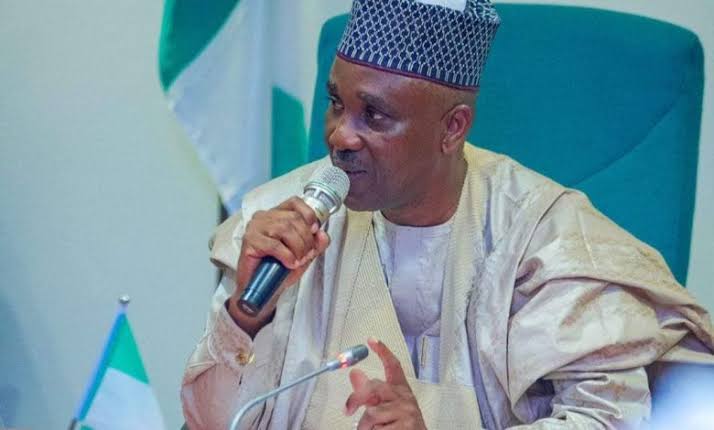
Speaker House of Representatives,Rep. Tajudeen Abbas, has emphasised  the need for Nigeria to have active thinkers, builders, and leaders rather than passive observers.

Giving a Convocation Lecture at the Federal University of Technology, Minna (FUT Minna), Speaker Abbas described Nigerian youths as the country’s most valuable assets, urging them to embrace innovation and technology to drive national development.

Advertisement

His lecture, titled “From Crisis to Prosperity: Harnessing Technology to Drive Nigeria’s Transformation,” focused on the role of technology in shaping the country’s future.

He said: “In an age characterised by rapid technological advancements that are fundamentally altering economies and societies, it is imperative for Nigeria to seize opportunities for growth and innovation. By strategically leveraging technology, the nation can effectively confront pressing challenges, stimulate economic development, and improve the overall quality of life for its citizens.”
Speaker Abbas explained how the strategic adoption and implementation of technological solutions can transition Nigeria from its current crises toward a trajectory of sustainable prosperity.
He noted that in Nigeria, there exists a pervasive belief that university degrees are inherently superior to diplomas from technical polytechnics and colleges.
“As Africa’s most populous nation and largest economy, Nigeria faces many socioeconomic challenges that hinder its development trajectory. Addressing these issues is crucial for the nation’s progress. This lecture focuses on how technology can transform Nigeria from a state of crisis to one of prosperity, offering innovative solutions to longstanding problems.
“This perception has led to an overwhelming demand for university admissions, often at the expense of technical and vocational education,” he said.
Abbas further noted that there is an erosion of technical skills essential for industrial development.
“Ironically, many university graduates find themselves pursuing vocational skills after graduation, such as hairdressing, makeup artistry, and catering, which could have been more comprehensively acquired through technical education.
“In contrast, countries like the United Kingdom and Germany have robust technical education systems, where polytechnics and vocational schools are integral to driving industrial innovation. Nigeria must learn from such models by strengthening its technical education sector to meet industry demands.
“The declining quality of graduates from Nigerian universities, is a reflection of broader systemic issues, particularly the insufficient number and lack of quality of academic staff. Nigeria faces a significant shortage of qualified lecturers, with the lecturer-to-student ratio far exceeding global standards.
“This overcrowding severely limits the ability of lecturers to provide personalised attention and quality instruction, undermining the learning experience for students,” he stated.
Speaker Abbas also noted that there was a  shortage of qualified academic staff, which he said is further aggravated by inadequate remuneration and limited opportunities for professional development.
“Compounding these challenges is the commercialisation of education, which has led to unethical practices such as exchanging grades for money or sexual favours. These practices not only tarnish the integrity of academic institutions but also erode public trust in the quality of education being delivered.
“The consequences of these systemic issues are evident in the poor performance of Nigerian universities in global rankings”, he asserted.
To address these challenges, the Speaker said there was an urgent need for targeted interventions, including increased funding for higher education, improved remuneration for academic staff, and expanded opportunities for professional development.
Additionally, he said stricter enforcement of ethical standards and the implementation of transparent evaluation systems could help curb academic corruption and restore the integrity of Nigerian universities.
“Nigerian universities face chronic underfunding, which has severely impacted infrastructure, research capabilities, and overall educational quality. While the expansion of universities aims to increase access to higher education, it often leads to stretched resources and diminished quality.
“A more strategic approach would focus on enhancing existing institutions through improved funding and resource allocation, drawing lessons from successful funding models employed by universities globally and within Africa”, Speaker Abbas said.
While noting that globally, universities adopt diverse funding models that reduce reliance on government allocations, the Speaker said Nigerian universities must rise to this challenge by envisioning and developing a ‘Nigerian Innovation Corridor’ that fosters collaboration between academia, industry, and government.
Speaker Abbas added that by positioning themselves as drivers of technological transformation, Nigerian institutions can create a thriving ecosystem that competes globally and propels the nation into a future powered by innovation.
The youths of Nigeria represent an invaluable assets to the nation. They exemplify qualities of intelligence, resilience, and a strong inclination towards innovation, particularly in the realm of technology. It is essential to leverage digital tools for personal development and entrepreneurial ventures.
“Young Nigerians are encouraged to utilise online learning platforms, engage in coding boot camps, and participate actively in technology communities to enhance their skills and entrepreneurial capabilities. The imperative for youth engagement is more pressing than ever, particularly in a rapidly evolving global economy driven by technology and innovation.
“The Nigerian government, under the leadership of President Bola Ahmed Tinubu, GCFR, has demonstrated its commitment to fostering an environment that supports young innovators through various initiatives. These initiatives aim to promote technological advancement by implementing policies that facilitate access to funding, mentorship programs, and platforms that stimulate innovation and entrepreneurship”, he added.
By prioritising youth engagement and increasing funding for technology and innovation, Speaker Abbas said the Nigerian Government is laying the foundation for a more inclusive and dynamic economy.
“These initiatives empower young Nigerians to harness their creative potential and position the country as a hub for innovation and entrepreneurship in Africa,” he said.

News

Peter Obi gives reason why he picked Kwankwaso as running mate

Published

on

ADVERTISEMENT
Zoom Ad
ADVERTISEMENT
Zoom Ad

Presidential candidate of the Nigeria Democratic Congress, Peter Obi, has disclosed reason behind his decision to pick the leader of Kwankwassiyya Movement, Rabiu Kwankwaso, as his running mate.

In an interview with Sun, Obi said he decided to settle for the former governor of Kano State because “Kwankwaso has the philosophy of pulling people out of poverty”.

Obi said himself and Kwankwaso have similar philosophy on reviving the country’s economy to better the lives of citizens.

“I have the same philosophy. Kwankwaso believes in education. You cannot change society without education.

Advertisement

“If you look at my X, formerly Twitter, I made it clear that I will emphasise on education. Education is going to change society.

“Nigeria must be seen to form its innermost human capital, which we need to develop. Kwankwaso believes in this. I do. We have synergy.”

Obi also dismissed speculation suggesting that there is disagreement between him and Kwankwaso, stating that they remain united in strategizing ahead of the January 2027 elections.

Advertisement
Continue Reading

News

Major Things To Know About Newly Elected NBA President

Published

on

ADVERTISEMENT
Zoom Ad
ADVERTISEMENT
Zoom Ad

The Nigerian Bar Association (NBA) has elected Oyinkansola Badejo-Okusanya, a Senior Advocate of Nigeria (SAN), as its next president after she secured the highest number of votes in the association’s election, which officially concluded on Sunday morning.

Mrs Badejo-Okusanya, the only female among the three presidential candidates, polled 12,317 votes to emerge victorious in the election, which was conducted electronically over a 24-hour period.

She defeated her two challengers after securing 47.18 per cent of the 26,106 votes cast in the presidential election.

Her closest rival, Lateef Akangbe, SAN, secured 7,934 votes, while Olumuyiwa Akinboro, SAN, polled 5,855 votes.

Advertisement

In this article, Nigerian Tribune takes a look at seven things to know about the incoming NBA president.

1. Education

Badejo-Okusanya holds degrees in both English and Law from the University of Lagos. She earned a Bachelor of Arts (B.A.) in English between 1983 and 1987 before returning to study Law, graduating with a Bachelor of Laws (LL.B.) in 2000. She later attended the Nigerian Law School, where she obtained her Barrister-at-Law (B.L.) qualification in 2002.

1. Legal career

Advertisement

The Senior Advocate of Nigeria has built a legal career spanning more than two decades in litigation, arbitration and alternative dispute resolution (ADR). She specialises in domestic and international dispute resolution and has represented both private and government clients in commercial matters before trial and appellate courts across Nigeria. She has also handled complex arbitration in the utilities sector and international investment disputes.

1. Public service

Before returning to private practice, Badejo-Okusanya served in the Lagos State Government. She was Senior Special Assistant to the Governor on Justice Sector Reform and Policy between 2007 and 2011 before serving as General Counsel to the Governor from 2011 to 2015. During her time in government, she worked on public-private partnerships, arbitration legislation, consumer protection and justice sector reforms.

1. Law firm leadership

Advertisement

Since May 2017, Badejo-Okusanya has been a partner at ALP NG & Co. Her practice covers litigation, arbitration, mediation, public policy and government relations. She is also recognised for her expertise in regulatory compliance and dispute resolution.

1. Arbitration and professional memberships

Badejo-Okusanya has played active roles in arbitration and legal organisations. She previously served on the Executive Committee of the Chartered Institute of Arbitrators (UK), Nigeria Branch, and currently serves on the Board of the Lagos Court of Arbitration. She is also a member of the International Council for Commercial Arbitration, ArbitralWomen, the Commonwealth Lawyers Association, the Nigerian Bar Association and the International Bar Association.

1. Mediation and dispute resolution expertise

Advertisement

An accredited Centre for Effective Dispute Resolution (CEDR) mediator, Badejo-Okusanya is recognised for her expertise in arbitration and ADR. She is frequently consulted on international arbitration matters and regulatory compliance, with experience across both domestic and international dispute resolution frameworks.

1. Historic victory

With her victory, Badejo-Okusanya became the 33rd President of the NBA and only the second woman to lead the association, after Priscilla Kuye, who served as NBA president from 1991 to 1992. She will serve a two-year term from 2026 to 2028.
(TRIBUNE)

Advertisement
Continue Reading

News

Kano NDC Senator Rufai Hanga Declares Obi-Kwankwaso Ticket does not have northern support

Published

on

ADVERTISEMENT
Zoom Ad
ADVERTISEMENT
Zoom Ad

Senator Rufai Hanga, a prominent leader of the Nigeria Democratic Congress (NDC) in Kano State, has openly declared that the presidential ticket of Peter Obi and Rabiu Kwankwaso stands no chance of winning the 2027 election, even as he holds high-level talks with top All Progressives Congress (APC) leaders.

The statement comes amid intense political realignments in Kano State and growing speculation that Hanga may be on his way to the ruling APC.On Sunday, the National Chairman of the APC, Prof. Nentawe Yilwatda, hosted a closed-door meeting with Deputy President of the Senate, Senator Barau I. Jibrin, and Senator Rufai Hanga.Famous Quotations Yilwatda confirmed the meeting on his verified X account, describing Hanga as “one of the foremost leaders of the NDC in Kano State.”

According to the APC chairman, the discussions centred on unity, peace, and the continued progress of Kano State. “I had the pleasure of meeting with the Deputy President of the Senate, Senator Barau I. Jibrin, alongside Senator Rufai Hanga… Our engagement was marked by frank, constructive, and cordial discussions centred on the unity and continued progress of Kano State,” Yilwatda stated.Campaigns & Elections He added that political leaders have a responsibility to foster dialogue and place the interest of citizens above partisan considerations. Neither Yilwatda nor the two senators revealed the full details of the meeting, but the timing has raised eyebrows given the fluid political situation in Kano ahead of the 2027 general elections.Senator Hanga, the only NDC senator from Kano, recently lost the party’s ticket for the Kano Central Senatorial District to former Deputy Governor Nasiru Yusuf Gawuna.

His dissatisfaction with what he termed his marginalisation within the NDC has further fuelled speculation of an imminent defection.Hanga had remained with the faction loyal to Senator Rabiu Kwankwaso after Governor Abba Yusuf defected from the New Nigeria People’s Party (NNPP) to the APC. That bloc later moved to the African Democratic Congress before adopting the NDC platform.

Advertisement

Executive Branch The NDC has since named former Deputy Governor Aminu Abdussalam Gwarzo as its governorship candidate for 2027, with Mustapha Rabiu Musa Kwankwaso as his running mate.Political observers note that Hanga’s recent moves and comments signal a significant shift that could further weaken the opposition structure in Kano, one of Nigeria’s most politically strategic states.

His declaration that the Obi-Kwankwaso ticket cannot succeed is seen by many as the clearest indication yet of his drifting away from the current NDC arrangement.As political permutations continue across the country, all eyes remain on Kano, where loyalty shifts and strategic alliances could play a decisive role in determining the outcome of the 2027 polls.

Continue Reading

Trending

Copyright © 2024 Naija Blitz News