
News
N11.5bn lost to Shonga rice plantation flooding – Kwara Rep

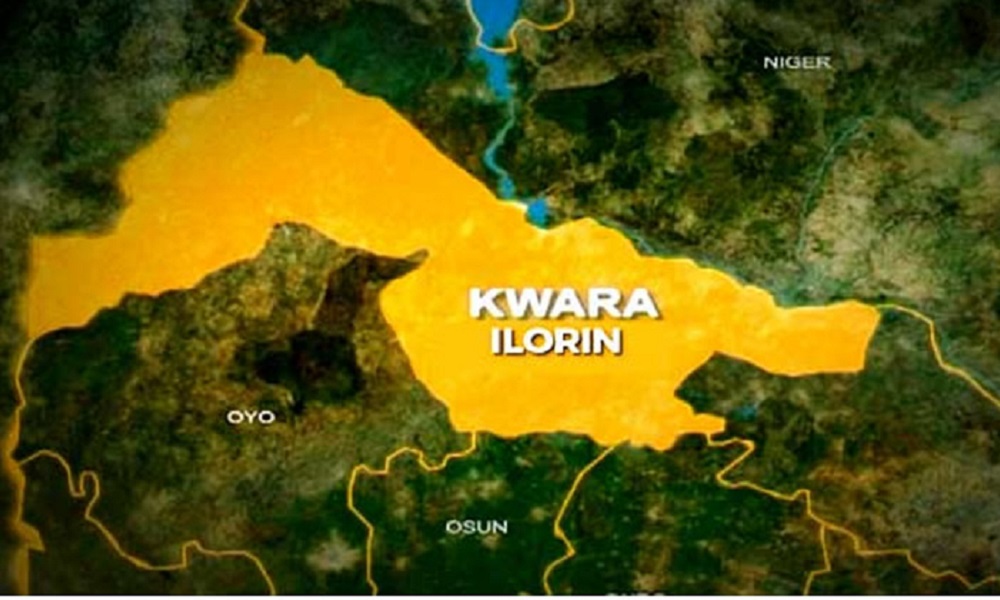


A member of the House of Representatives from Kwara State, Dr. Ahmed Saba, says about 5,000 hectares of rice plantations, worth N11.5bn, were devastated by the recent flooding at Shonga, Edu Local Government Area of the state.
The flood submerged farmlands in several communities across three local government areas of Kwara State.
The unusual flooding, which began on the night of Friday, February 24, 2025, affected communities in the Moro, Edu, and Patigi Local Government Areas.
Saba, who represents the Edu/Moro/Patigi Federal Constituency, visited the site of the disaster in Shonga, Edu LGA, on Saturday and confirmed that other communities were similarly impacted.
“The flooding has ravaged rice plantations in Fonga and Jebba in Moro; Lade, Patigi, and Kpada Districts in Patigi; and Shonga, Bacita, and Lafiagi in Edu LGA,” Saba reported. “Over 5,000 rice farmers have been affected by this incident, which is believed to have been caused by the opening of dams in Jebba and Kanji, Niger State,” he added.
Describing the flood as a major threat to the country’s food security, Saba expressed deep regret over the extent of the damage.
“Farmers who had been engaged in dry season farming were shocked to see their land flooded, as this typically does not happen outside the rainy season,” he said.
Saba further emphasised the high quality of rice produced in the affected areas, highlighting that the rice from Moro, Edu, and Patigi is some of the best in Nigeria and feeds many Nigerians.
“What happened to my people is devastating. We’re used to flooding during the rainy season, but this flood is unlike anything we’ve seen before, especially during the dry season,” Saba lamented. “The opening of the dams in Jebba and Kanji has caused serious harm. Billions of naira have been lost, and many farmers who had invested over the past three months are left in despair.”
Saba added that the flooding was a major food security risk, stressing that the rice produced in these areas is a crucial part of the national food supply.
“The opening of the dams seems suspicious. We need a thorough investigation into why this water was released, especially at this time of year when we’re in the dry season,” he said.
The legislator vowed to raise the issue in the House of Representatives as soon as the Assembly reconvenes from recess. He called on federal agencies to investigate the causes of the flood.
To help mitigate the effects of the disaster, Saba distributed aid to the affected farmers, including 150 bags of NPK fertilizer, 50 knapsack sprayers, 50 bags of rice seeds, 170 liters of pesticides, and 10 solar water pumping machines.
“The House of Representatives is currently on recess, but when we reconvene, we will introduce a motion to address this matter,” Saba said. “We also call on the Ministries of Agriculture and Water Resources to examine what happened and find ways to support the farmers so they can return to their work. At the National Assembly, we are doing our part by providing immediate relief through fertilizers, water pumps, and other supplies.”
Saba acknowledged the efforts of the Kwara State government, which had sent a delegation to the affected areas and provided support to the farmers.
In addition, Gideon Yisa, a member of the Kwara State House of Assembly representing Edu Constituency, expressed his concern for the farmers.
“This is a tragic situation,” Yisa said. “The farmers were not expecting this flood because they had already left their land fallow for the dry season. The dam operators did not warn them about the water release, which has severely impacted the farmers and the local economy. This is a threat to food security.”
Yisa urged the federal government to act swiftly to support the farmers.
“This is a matter of national importance. If nothing is done, it could lead to hunger and insecurity. Many of the issues we face, including insurgency and banditry, are linked to unemployment and lack of opportunities,” he said.
The Emir of Shonga, Dr. Haliru Yahya, also expressed surprise at the flooding during a visit by a state government delegation.
“There has been no rain from here to Ouagadougou in Burkina Faso, Niger, or Mali. The Sahel is dry, so how could there be flooding here?” he questioned. “The source of this flood must be local.”
The Emir confirmed that officials from the Kainji Dam denied any involvement in the flooding, while Jebba Dam authorities admitted to opening the dam and indicated they would soon close it.
He urged for a thorough investigation to prevent a repeat of the disaster.
“We have worked hard for many years to attract people to this area, and we hope this does not happen again, as it would exacerbate food insecurity,” he said.





President Bola Tinubu has assented to the 2026 Appropriation Bill, which provides for an aggregate expenditure of ₦68.32 trillion.
He also signed the bill extending the implementation period for the 2025 budget from March 31, 2026, to June 30, 2026.
This was announced on Friday in a statement by his Special Adviser on Information and Strategy, Bayo Onanuga.
The ₦68.32 trillion budget for this year earmarks ₦4.799 trillion for statutory transfers and ₦15.8 trillion for debt service.
It allocates ₦15.4 trillion to recurrent expenditure and ₦32.2 trillion to the Development Fund for Capital Expenditure.
“With capital expenditure accounting for about 50 per cent, the 2026 budget underscores the administration’s continued commitment to economic stability, national security, infrastructure development, and inclusive growth.
The allocations reflect a strategic balance between statutory obligations, debt servicing, recurrent expenditure, and capital investments critical to driving productivity and improving the quality of life for Nigerians,” the statement read in part.
The President also has assented to the Appropriation (Repeal and Enactment) (Amendment) Bill, 2026, which extends the implementation period of the capital component of the 2025 Appropriation Act from March 31, 2026, to June 30, 2026.
The extension, the statement revealed, would ensure the full and effective utilisation of appropriated funds, particularly for critical infrastructure and development projects that are at advanced stages of implementation across the country.
It will enable ministries, departments, and agencies (MDAs) to consolidate ongoing works, enhance project completion rates, and maximise value for public expenditure. With the 2026 Appropriation Act coming into force on April 1, the Federal Government will commence full implementation in line with the Renewed Hope Agenda,” it added.
Additionally, President Tinubu directed MDAs to ensure disciplined, transparent, and efficient utilisation of allocated resources, with a strong emphasis on value for money and timely project delivery.
He commended the National Assembly for its diligence, cooperation, and patriotism in expeditiously considering and passing the budget.
The President reaffirmed the importance of sustained collaboration between the executive and legislative arms of government in advancing national development objectives.
Tinubu also assured Nigerians of his administration’s resolve to deepen fiscal reforms, enhance revenue generation, and prioritise investments that will stimulate economic growth, create jobs, and strengthen social protection mechanisms.
The budget is also expected to be partly financed through external borrowing, following the approval of a foreign loan plan exceeding $21 billion to bridge the fiscal gap.
₦9.85trn Increase
The 2026 budget represents an increase of ₦9.85 trillion over the initial proposal of ₦58.47 trillion that Tinubu submitted to the National Assembly, and ₦13.33 trillion higher than the 2025 budget.
The President had while presenting the 2025 budget proposal before federal lawmakers in December 2025, pegged the capital expenditure at ₦26.08 trillion and the crude oil benchmark at US$64.85 per barrel.
He disclosed that the expected total revenue was ₦34.33 trillion; ₦15.52 trillion for debt servicing.
The proposal was anchored on a crude oil production of 1.84 million barrels per day, and an exchange rate of ₦1,400 to the US Dollar for the 2026 fiscal year.
Amid the growing concerns over insecurity across the country, Tinubu said his administration would “invest in security with clear accountability for outcomes—because security spending must deliver security results”.
“We will take decisive steps to strengthen agricultural markets. Food security is national security.
“The 2026 budget prioritises input financing and mechanisation; irrigation and climate‑resilient agriculture; storage and processing; and agro‑value chains,” he told the National Assembly members.
Nigeria’s budgets in recent years have come under fire with experts critcising the poor implementation and release of funds for the execution of important national projects.
But the Tinubu administration said that the 2026 national budget was well-planned to solidify the gains of its reform agenda.
“Our ‘Budget of Consolidation, Renewed Resilience and Shared Prosperity’ is critical. It is a commitment to double down on what is working, to solidify gains, and to ensure that the shared prosperity we speak of becomes a lived reality for more Nigerians, faster,” Minister of Information and National Orientation, Mohammed Idris, said in a statement.
Popular sports broadcast journalist with Classic FM 97.3, Temisan Okomi, has died.
A journalist with News Central, Olawale Adigun, confirmed his death in a statement shared on X on Friday.
He wrote on X, “The worst way to go into the weekend is hearing about Temisan Okomi’s passing. I’m so gutted and, at the same time, terrified. This man meant so much to me.”
Recall that news of his death has since stirred reactions on X, with colleagues and fans expressing shock and grief.
The late journalist had worked with Lagos Television, HiTV, and other prominent media organizations in Nigeria.
His last post on X was on April 14, 2026, when he wrote, “The Champions League is hard, man.”
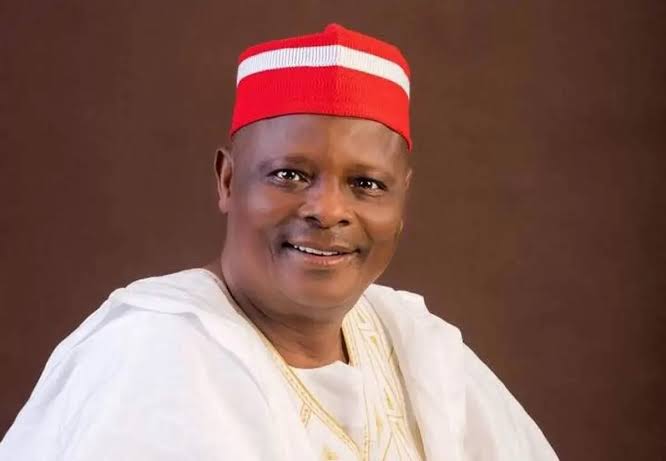
Ibrahim Abdulkarim, a political associate of ex-governor of Anambra State, Peter Obi, has claimed that the former governor of Kano State, Rabiu Kwankwaso, has agreed to deputize the Obi in the 2027 presidential race.
He spoke during an interview on Trust TV, said the Obidients and the Kwankwassiyya Movements are already aligning towards Obi/Kwankwaso ticket.
Asked if Obi and Kwankwaso had struck a deal, Abdulkarim said “yes, I can categorically tell you that they have agreed”.
We all know that. Both the Obidients and the Kwankwassiyya Movements are aware of the agreement”.
Recall that Kwankwaso recently decamped from the New Nigerian Peoples Party, NNPP to the African Democratic Congress, ADC.
His move stirred suspicion that the two political gladiators may have agreed to run for the 2027 presidency on a single ticket.

Just in: Tinubu assents 2026 Appropriation Bill, 2025 Budget Extension

BREAKING: Popular sports analystt, Okomi is dead

BREAKING: JAMB set to release first batch of 2026 UTME results today



-
 Economy17 hours ago
Nigerian stocks rally again as investors gain N1.66tn, market cap crosses N136tn
-

 News17 hours ago
I Am Ready For 2027 – President Tinubu Declares
-
 News11 hours ago
Just in: Ex-Senate president, Saraki, others to face death penalty charges
-

 News17 hours ago
Senator Abdulaziz Yari Accused of Using Billions to Secure Vice Presidential Ambition
-

 Foreign17 hours ago
Trump Says Iran Agrees To Hand Over Nuclear Dust Amid Strait of Hormuz Blockade
-

 News17 hours ago
ADC Reacts To Suspension Of Atiku, Lawal From Party
-
 News16 hours ago
INEC adjusts Osun governorship election campaign period
-
 Metro17 hours ago
Bauchi Govt Sacks Driver Over Road Crash That K!lled Two Journalists
You must be logged in to post a comment Login