News
Fubara whipping up sentiments, not sincere-Rivers Assembly
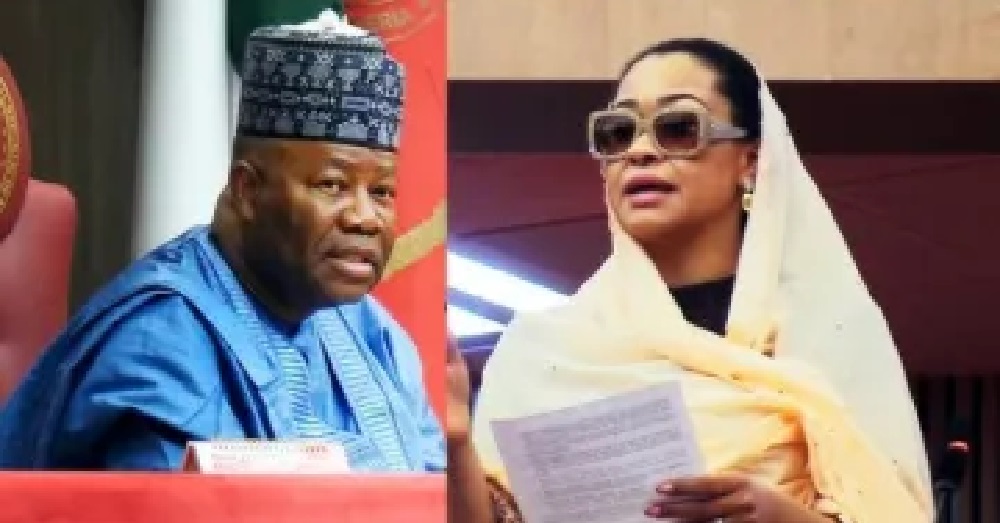
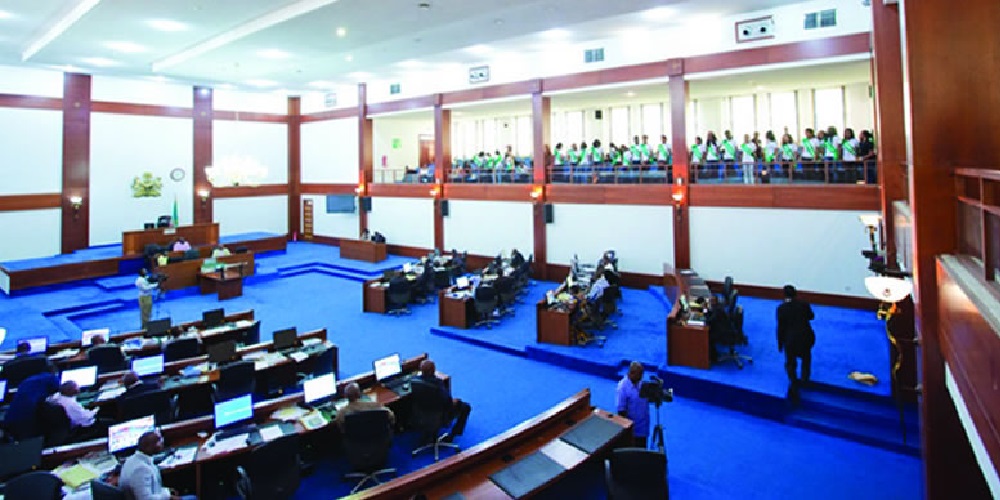
The Rivers State House of Assembly has faulted claims by Governor Siminalayi Fubara that he was blocked from entering the House to re-present the state 2025 Appropriation Bill.

The House said it never received any official communication from the governor indicating his interest in bringing the budget to the floor of the House, accusing him of whipping up unnecessary sentiments.
The spokesperson for the House and Chairman of the House Committee on Information, Dr Enemi George, stated this in Port Harcourt on Wednesday.

George said the claims of the governor were a mere comedy skit scripted to paint the House in bad light.
He recalled that on March 3, the House had written to the governor requesting him to bring his 2025 appropriation bill to the lawmakers following the judgment of the Supreme Court.
He said, “We were the ones, who immediately after that judgment appealed to the governor to bring his appropriation bill. We acted immediately because we had the interest of the state at heart and didn’t want Rivers people to suffer any harm.
“Despite withholding our entitlements for over a year and demolishing our chambers, we still wanted him to hasten up the presentation in the interest of the progress of Rivers.
“We indicated our intentions in that letter and even gave him a timeframe because of the urgency of the matter. To regularise his appointments, we also urged him during our subsequent sitting to submit the names of his nominees for the positions of commissioners and some boards’ membership for screening and confirmation.”
George added, “But the governor rebuffed our pleas. We sent employees of the Assembly to deliver these resolutions to him but as usual, they turned them down at the gate and even brutalised them. We resorted to engaging the services of a courier company.
“He still did not heed our call forgetting that there are essential services like hospitals, schools and others to be funded. Our intention was to finish everything about the budget on March 15th so that we could send necessary information and documents to relevant agencies of the government to allow the release of Rivers allocations at the end of March.
“But with what he is doing, we dont know what he wants to achieve. How can he turn around to claim that we blocked him from re-presenting his budget?
“This is the height of insincerity. We even need the budget to be passed because the governor has been owing us our entitlements for more than a year and without the budget, we can’t get our entitlements.
“The governor and his team simply and deliberately acted Wednesday’s drama with a singular motive to tarnish the image of the Assembly. The governor is simply playing to the gallery to whip up unnecessary sentiments. But it has backfired because the truth has come out.”
The House spokesman insisted that the letter the governor claimed to have sent to the Speaker never got to him, saying it was after Wednesday’s sitting that the lawmakers saw the letter trending on social media.
He added, “But even the letter trending on social media was dated March 11. Does it mean that the governor purportedly sent a letter on Tuesday—God knows when—and immediately mobilised to the assembly quarters on Wednesday morning, claiming he came to present his budget?
“That alone vitiates the claimed purpose. It is procedurally trite that after writing to the Assembly, the governor ought to wait for the letter to be acknowledged by the lawmakers, who will then invite him to appear before them and make his presentation. Governor Fubara ought to know this if he is sincere.
“But all we know is that this Assembly will continue to uphold the rule of law and will remain committed to promoting the interests of Rivers State.
“We urge him to do the needful so that Rivers people can breathe. He is toying with the lives and livelihood of Rivers people.”

News
BREAKING: Supreme Court restores Mark’s ADC leadership, voids status quo order
By Kayode Sanni-Arewa
The Supreme Court on Thursday set aside a controversial “status quo ante bellum” order made in the protracted leadership crisis rocking the African Democratic Congress, holding that the preservative directive could not validly subsist after proceedings had been concluded.
In a lead judgment delivered by Justice Mohammed Garba, the apex court held that although courts possess inherent powers to make preservative orders to protect the subject matter of litigation, such orders cannot survive once proceedings have been “fully, conclusively and finally concluded.”
The court subsequently allowed the appeal and nullified the order sustaining the status quo ante bellum in the dispute involving rival factions of the ADC leadership.
The judgment arose from the legal battle over the party’s leadership structure, including the legitimacy of appointments and congresses conducted by opposing factions within the party.
Justice Garba, in the judgment, explained that the trial court’s directive maintaining the status quo ante bellum was essentially a preservative order intended to prevent parties from taking steps capable of foisting a fait accompli on the court while proceedings were ongoing.
The justice, however, held that such powers must be exercised only in relation to live proceedings.
According to him, once proceedings have been “fully, faithfully, conclusively and finally concluded,” there would be “nothing left for that court to preserve.”
The apex court also addressed the competence of the appeal filed in the matter and the constitutional basis relied upon by the appellants
Justice Garba held that Section 241(1)(f)(ii) of the 1999 Constitution, which provides for appeals as of right in certain interlocutory decisions relating to injunctions, did not apply in the circumstances of the case.
He held that the trial judge neither granted nor refused an application for injunction but merely issued procedural directives aimed at preserving the subject matter of the dispute pending hearing.
The court further held that because the grounds of appeal were not purely on points of law, leave of court was required before the appeal could validly be filed.
The justice stressed that obtaining leave in such circumstances was a “condition precedent” to the validity and competence of the appeal.
He added that the competence of a notice of appeal goes to the jurisdiction of the court and once defective, the entire appeal becomes incompetent.
Despite those findings, the apex court proceeded to examine the propriety of the preservative orders made by the lower courts and eventually held that sustaining the status quo ante bellum after the relevant proceedings had ended was unnecessary and legally unsustainable.
News
Supreme Court Has Ended PDP Factional Crisis, Confirmed Party’s Unity — Wike
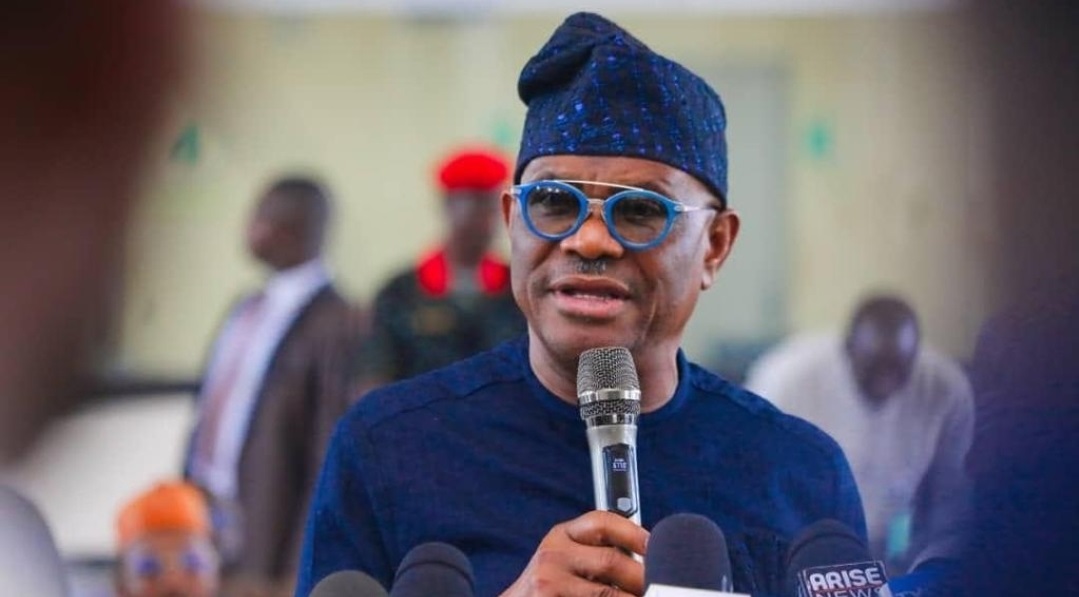
The Minister of the Federal Capital Territory (FCT), Nyesom Wike, on Thursday declared that the Peoples Democratic Party (PDP) has emerged united and free of internal factions following a decisive ruling by the Supreme Court of Nigeria.
Speaking at a press conference at his residence in Guzape, Abuja, Wike said the apex court judgment has finally laid to rest all disputes over parallel leadership structures within the party.
He dismissed insinuation that the Supreme Court affirmed the suspension of the PDP National Secretary, Senator Samuel Anyanwu, saying there was no such issue for determination before the court.
“Today, the Supreme Court has brought to an end the so-called factions of the PDP. There is no more faction in the party. There is only one PDP,” he said.
The minister explained that the court dismissed appeals challenging earlier judgments from lower courts, thereby upholding the legitimacy of the party’s convention and its current leadership.
According to him, attempts by aggrieved groups to overturn the outcome of the convention failed at all judicial levels.
“The Supreme Court has validated our convention and set aside all claims to any parallel structure. What this means is that the PDP has come to stay as one united party,” Wike stated.
He stressed the need for political actors to operate strictly within the framework of the law, warning against actions capable of undermining party constitutions and electoral regulations.
“The fact that you are in a position does not mean you can act outside the law. There are rules guiding party activities, and those rules must be followed,” he added.
Wike also dismissed the relevance of some defectors who exited the party during the crisis, describing them as politically insignificant, while leaving the door open for others to return.
“Those who left are not electoral assets; they are liabilities. However, those who left out of uncertainty may reconsider and return now that the situation is clear,” he said.
On ongoing coalition talks among opposition figures, the minister ruled out participation in alliances that lack clear national interest or constructive engagement.
“We do not believe in opposition for opposition’s sake. Our approach is constructive, not destructive,” he said.
He further noted that recent judicial pronouncements in political matters reinforce the need for due process, urging aggrieved parties to always seek redress through the courts.
Wike maintained that the PDP remains Nigeria’s foremost opposition platform, expressing confidence in its readiness to provide credible alternatives in the country’s democratic process.
“The PDP is stable, united and ready to play its role effectively. What has happened today is a victory for the rule of law and internal democracy,” he added.
News
“New Foreign Affairs Leadership Must Deliver Respect, Access, and Global Value for Nigerians”-ADSC Boss Oluwafemi
… hails emergence of Ojukwu as Foreign Affairs minister
Sir Victor Walsh Oluwafemi,
International Development Consultant
Reputation Architecture Strategist
President, Africa Development Studies Centre (ADSC) has said New Foreign Affairs Leadership Must Deliver Respect, Access, and Global Value for Nigerians”
Oluwafemi in a signed statement issued on Thursday evening stated that:
“I extend my warm congratulations to Her Excellency Bianca Ojukwu on her appointment as Nigeria’s Minister of Foreign Affairs, as well as to the Honourable Minister of State.
“This moment represents more than a routine transition. It is an opportunity to reset Nigeria’s diplomatic direction with clarity, intention, and measurable outcomes that directly impact the lives of Nigerians at home and abroad.
“At this critical time in our national journey, Nigeria’s reputation must be elevated to the very centre of foreign policy. Across parts of Africa and beyond, there has been a growing pattern of negative sentiment and perception about Nigerians, sometimes expressed in ways that undermine dignity and national pride.
“This reality calls for deliberate and coordinated action. Reputation is no longer an abstract concept in global relations. It is a strategic asset that influences how citizens are treated, how businesses are received, and how a nation is positioned in the global order. Nigeria must therefore take ownership of its narrative and actively shape how it is perceived through structured engagement, consistent communication, and firm diplomatic presence.
“The Ministry of Foreign Affairs must lead this repositioning effort by working closely with diaspora communities, international partners, and strategic institutions to project a confident, responsible, and forward-looking image of Nigeria.
” This is not merely about image-building. It is about restoring respect and ensuring that Nigerians are treated with dignity wherever they go. Others will inevitably define a nation that does not define itself, and often unfairly.
“Closely linked to this is the urgent need to expand global mobility for Nigerian citizens. The difficulty many Nigerians face in accessing visas to travel for business, education, tourism, or professional engagement is a matter that requires strong diplomatic attention.
“The ability of citizens to cross borders reflects a nation’s influence and bilateral strength. The new leadership must therefore be intentional in pursuing visa-free arrangements, visa-on-arrival frameworks, and simplified entry systems with key countries.
“Where visa-free access is not immediately achievable, there should be a clear push towards efficient e-visa systems and structured bilateral agreements that make travel less burdensome and more predictable for Nigerians. Improved mobility is not just a convenience. It is a driver of economic opportunity, global integration, and national pride.
“Equally important is the experience of Nigerians within Nigeria when interacting with foreign visa systems. It is deeply concerning that many citizens are subjected to undignified conditions while applying for visas, often standing for long hours under the sun or in the rain, with inadequate facilities and poor service structures.
“These processes, managed largely by third-party agencies on behalf of foreign missions, must be brought to a standard that reflects respect for Nigerian citizens.
” The Ministry of Foreign Affairs has a critical role to play in engaging with foreign embassies and ensuring that minimum standards of service, organisation, and human dignity are upheld. Nigerians should not feel diminished in their own country simply because they are seeking access to another.
“There must be a clear principle of reciprocity in how nations engage. If Nigeria extends respect and structured processes to foreign nationals, then the same standard should be expected in return for Nigerians. This is not a confrontation. It is mutual respect, and it must be pursued with professionalism and firmness.
“Beyond these immediate concerns, this moment calls for a broader transformation in how the Ministry operates. Diplomacy must move from being largely ceremonial to being results-driven, data-informed, and aligned with national development priorities. Through structured frameworks such as Policy-as-a-Platform and Results-as-a-Service, the Ministry can begin tracking outcomes, measuring impact, and ensuring that every international engagement delivers tangible value for Nigeria. Embassies must become centres of opportunity, not just representation, actively driving trade, investment, and strategic partnerships that benefit the country.
He explained that: “This is a defining opportunity to shift from intention to execution. The expectation is clear. Nigerians want to be respected, to travel with dignity, and to see their country command influence and credibility on the global stage.
“Diplomacy, at its highest level, is not about protocol alone. It is about protection, access, and national advantage. This new leadership has the opportunity to deliver on all three and to set a new standard for Nigeria’s engagement with the world.
Signed:
Sir Victor Walsh Oluwafemi, KJW
International Development Consultant
Reputation Architecture Strategist
President, Africa Development Studies Centre (ADSC)
Member, Harvard Business Review Advisory Council
-
News14 hours ago2027: Ogbeide-Ihama Joins Edo South Senatorial Race, Says Upper Chamber Not For Neophytes(Photos)
-
News14 hours agoJUST IN: Tinubu Appoints Bianca Ojukwu Foreign Affairs Minister
-
News14 hours agoMay Day: FG Announces Public Holiday for All Nigerians
-
News11 hours agoReps probe $4.6bn health grants, demand stricter oversight
-
Sports14 hours agoArsenal Hold Atlético Madrid To 1-1 Draw In UCL Semi-Final
-
News14 hours agoFG Raises Concern Over Fresh Xenophobic Attacks In South Africa
-
News14 hours ago2027: Adelabu, Alli pick APC governorship nomination forms
-
News22 hours agoPhotos: Appellate Court Advocacy Demands Precision, Discipline — Wike

You must be logged in to post a comment Login