Connect with us

News

No governance in Rivers when I declared emergency, President tells Supreme Court

Published

on

ADVERTISEMENT
Zoom Ad
ADVERTISEMENT
Zoom Ad

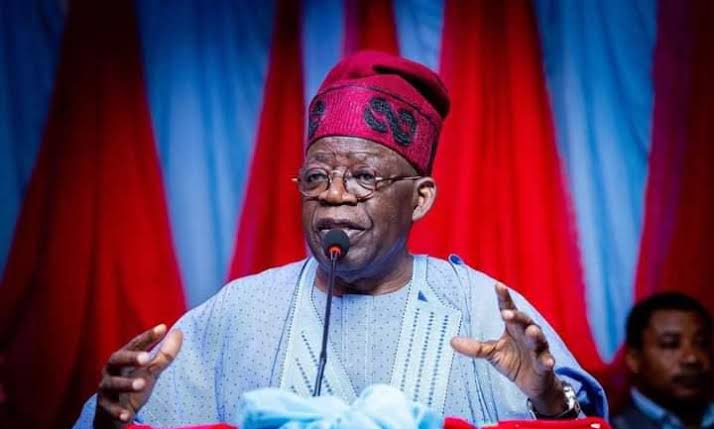
Supreme Court heard yesterday that there was no governance in Rivers State when President Bola Ahmed Tinubu slammed emergency rule on the state.


He said the Supreme Court had earlier confirmed it in one of its judgments, adding that the proclamation got the backing of the National Assembly.

The President said the Executive and the State House of Assembly were mired in conflict with many suits to wit.

Tinubu made the submissions in a joint affidavit filed on May 20 at the Supreme Court by the Senior Special Assistant to the President of the State House, and the Federal Ministry of Justice, Mr. Taiye Hussain Oloyede.

Advertisement

The affidavit was for the President, the Attorney-General of the Federation and Minister of Justice, Prince Lateef Fagbemi (SAN), Rivers State Administrator, Admiral Ibok-Ete Ibas and the suspended Governor Similayi Fubara.

The affidavit was in response to another application before the apex court seeking to nullify the declaration of a state of emergency in Rivers State.

The latest suit was filed by Yirabari Israel Nulong, Nengim Ikpoemugh Royal and Gracious Eyoh-Sifumbukho.

The presidential aide, who admitted that he was conversant with the case, said the President acted to prevent anarchy in the state.

Advertisement

He said Oloyede said the fact, leading to the proclamation of the state of emergency were captured in the address of the President to the nation.

He said: “I am also aware that, following the said proclamation, the President assumed responsibility for the administration of Rivers State and formally appointed the 3rd Defendant as Sole Administrator to oversee the affairs of the state during the emergency period, and the 3rd Defendant assumed responsibility for day to-day administration and oversight in Rivers State following the proclamation.

“The depositions in paragraphs 3(b),(c), (d), (f} and (g) of the JE Affidavit are true. The deposition in paragraph 3(e) is true, but only to the extent that after the inauguration of the members of the executive and legislative organs of the Rivers State Government (‘the RSG’), an intractable conflict ensued between both organs.

“The deposition in paragraphs 3(h) and 3(i) of the JE Affidavit are untrue and misleading. As at 18 March 2025, when the 1st Defendant issued the Proclamation, the executive and legislative organs of the RSG were still mired in conflict and there was no indication that the impasse was about to be resolved.

Advertisement

“Indeed, so intractable was the conflict that it paralysed the organs of government in the state and jeopardised public safety and order.

“In the proclamation itself, the 1st Defendant stated that there is a clear and present danger of an imminent breakdown of public order and public safety in Rivers State and that the crisis, if left unchecked, could degenerate, leading to massive loss of lives and property in the State.”

Oloyede said the two chambers of the National Assembly approved the declaration of the state of emergency.

He said although the Nigerian Bar Association (NBA) opposed the proclamation, many scholars and jurists said the President’s decision was in line with 1999 Constitution and current case law.


Advertisement
Continue Reading
Advertisement
Click to comment

Warning: Undefined variable $user_ID in /home/naijuinz/public_html/wp-content/themes/zox-news/comments.php on line 49

You must be logged in to post a comment Login

Leave a Reply

News

Reps Unveil Final Constitution Amendment Bills, Set for Crucial Vote on State Police

Published

on

ADVERTISEMENT
Zoom Ad
ADVERTISEMENT
Zoom Ad

…security, electoral reforms, devolution of powers among key proposals

By Gloria Ikibah

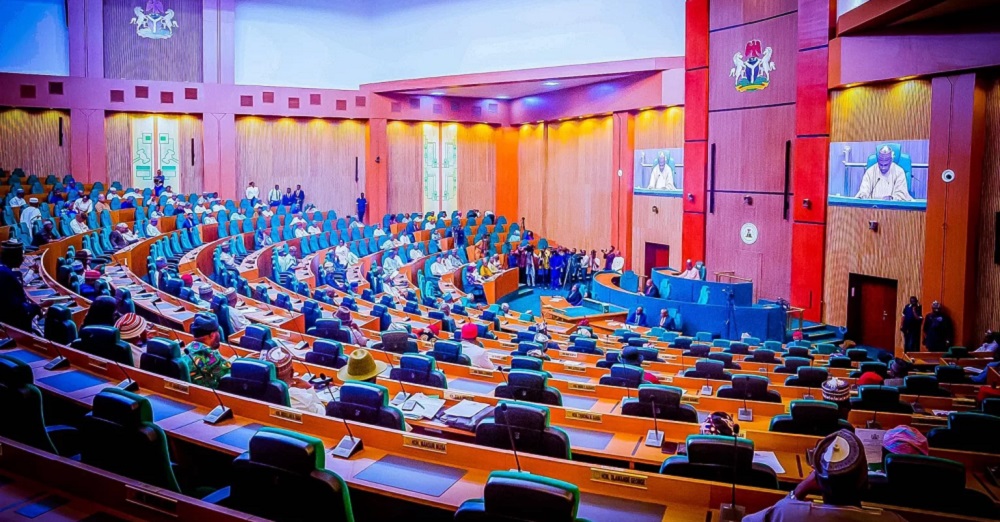
The House of Representatives has released the final version of the Constitution Alteration Bills ahead of a decisive vote scheduled for Thursday, signalling a major step in the ongoing effort to reshape key aspects of Nigeria’s constitutional framework.

The proposed amendments, which are expected to come before lawmakers during plenary, are the product of months of consultations, public hearings and stakeholder engagements conducted across the country by the House Committee on Constitution Review.

Advertisement

According to the House, the bills emerged after extensive consideration of proposals submitted by lawmakers, government agencies, professional bodies, traditional institutions, civil society organisations and ordinary Nigerians.

The review process included zonal and national public hearings, expert sessions, consultative meetings and town hall engagements held across the six geopolitical zones to gather public input on critical constitutional issues.

The bills cover a wide range of national concerns, including electoral reforms, judicial reforms, security and policing, local government administration, devolution of powers, fiscal reforms, human rights, citizenship, traditional institutions, legislative matters and the creation of states and local governments.

At the centre of public attention is the proposal seeking constitutional backing for the establishment of state police, a reform that has generated intense debate and attracted widespread support and opposition across the federation.

Advertisement

The proposed legislation seeks to create an additional layer of policing within Nigeria’s security structure while providing constitutional safeguards, operational guidelines and oversight mechanisms to define the relationship between federal and state policing authorities.

The House said the proposal reflects growing national calls for more localised and responsive approaches to tackling insecurity.

Speaking on the release of the final draft, the Deputy Speaker of the House of Representatives and Chairman of the House Committee on Constitution Review, Rt. Hon. Benjamin Kalu, described the development as a significant milestone in the constitutional review process.

According to him: “The release of the final print of these Constitution Alteration Bills reflects the extensive consultations, careful scrutiny, and bipartisan collaboration that have characterised this reform process. These proposals embody the aspirations, concerns, and recommendations expressed by Nigerians from all walks of life.

Advertisement

“Of particular significance is the proposal on State Police, which responds to longstanding calls for a more effective and decentralised policing framework capable of addressing emerging security challenges across the federation. As the House prepares to vote, we remain guided by our constitutional responsibility to strengthen democratic governance, deepen federalism, promote inclusion, enhance security, and build institutions capable of meeting the demands of a modern and prosperous nation.”

The House is expected to vote on the bills during plenary on Thursday, provided the constitutionally required quorum is achieved. If the required number of lawmakers is not present, consideration of the amendments will be postponed to the next legislative sitting in line with constitutional provisions and House rules.
The House leadership reiterated its commitment to an open and transparent constitutional review process, expressing confidence that the proposed reforms would strengthen democratic institutions, improve governance, promote national unity and respond to the evolving aspirations of Nigerians.

Continue Reading

News

SEDC Clears Air on Spending as Senate Review Continues

Published

on

ADVERTISEMENT
Zoom Ad
ADVERTISEMENT
Zoom Ad

…says no fund paid for Enugu headquarters rehabilitation, pledges full disclosure of records by June 23

By Gloria Ikibah

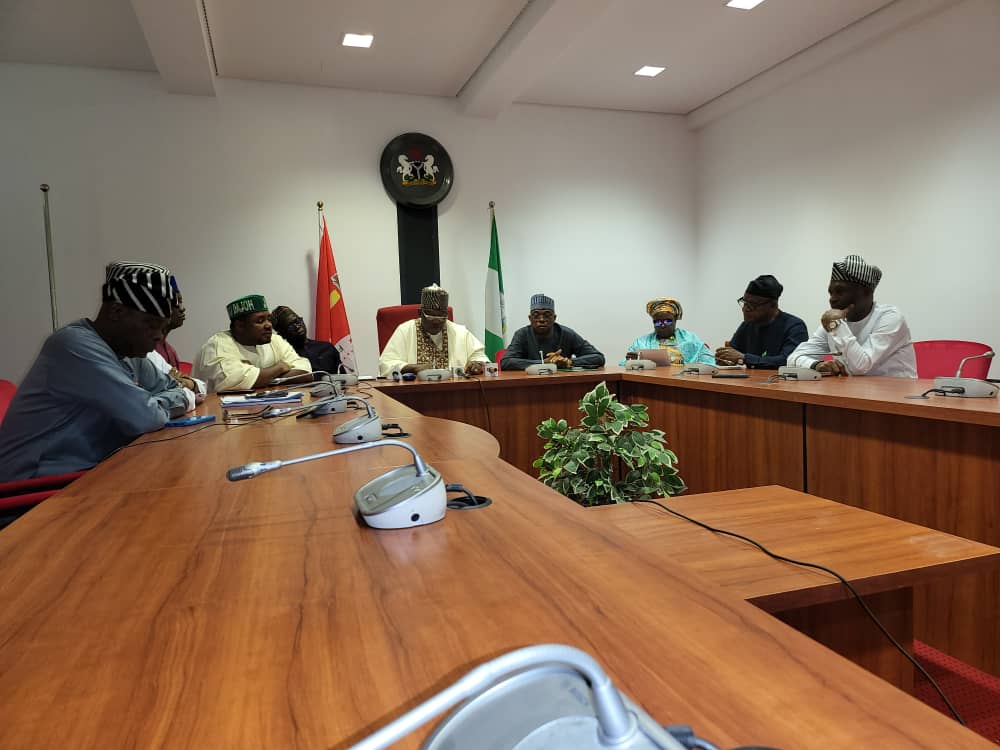
The South East Development Commission (SEDC) has reaffirmed its commitment to transparency, accountability and full cooperation with the National Assembly, following its appearance before the Senate Committee on the South East Development Commission.

In a statement issued on Tuesday, the Commission said it used the oversight session to provide detailed briefings on its finances, operational activities, procurement procedures, institutional growth, strategic partnerships and ongoing programmes across the South-East.

Advertisement

According to the Commission, the Senate Committee requested additional documentation relating to certain aspects of its operations and expenditure. It said it welcomed the request and sought a short period to compile and submit the required records.

“Following discussions, proceedings were adjourned to a later date pending submission of the requested documents, which the Commission will provide on or before 23 June 2026,” the statement said.

The Commission also addressed issues that have generated public discussion in recent days, particularly expenditure linked to its Abuja Liaison Office and references to what has been described as “implied expenditure”.

Abuja Liaison Office Explained
SEDC said the expenditure associated with its Abuja Liaison Office covered the establishment and operation of a fully furnished office at the Congress Building in Maitama, Abuja.

Advertisement

The Commission explained that the facility serves as its operational base for engagements with the National Assembly, federal ministries and agencies, development finance institutions and strategic partners.

“The expenditure cited reflects the cumulative cost of establishing and running the office since its inauguration on 11 February 2025 to date, covering rent, operational costs, utilities, and basic fit-out works across that entire period”, the statement read.

The Commission added that its board and management remain committed to relocating to its designated headquarters in Enugu as soon as possible.

According to the statement, rather than incur the cost of acquiring a new property, the Commission secured the transfer of an existing building from the Enugu State Government and entered into an agreement with the state to accelerate rehabilitation works and facilitate its relocation.

Advertisement

Clarification on ‘Implied Expenditure’
Responding to reports about so-called “implied expenditure”, SEDC said the references relate to a contract awarded for the rehabilitation of its future headquarters in Enugu.

The building, it noted, was transferred by the Enugu State Government but requires extensive work before it can serve as the Commission’s permanent headquarters.

It further clarified that the expenditure being discussed represents approved financial commitments rather than actual payments.

“The contract was awarded in accordance with the Public Procurement Act 2007, following approval by the Bureau of Public Procurement and the concurrence of the supervising ministry.

Advertisement

“These commitments represent budgeted obligations that have been lawfully committed but not yet disbursed, consistent with established public sector financial management practice. To be precise: this money has not left the Commission’s accounts,” the Commission stated.

Capital Funds Yet to Be Released
SEDC disclosed that it has not received any funding from its capital budget allocation.

Despite this, it said efforts have continued to advance strategic development initiatives across the region while laying the institutional groundwork required for future project implementation.

The Commission noted that spending so far has focused on two key areas: building its operational structure and advancing project development activities that would ordinarily be financed through capital releases.

Advertisement

“It is worth recalling that the Commission received its first disbursement of funds after more than ten months of being in existence,” the statement further said.

The Commission explained that institutional expenditure has included payment of staff salaries and arrears, training for seconded personnel, establishment of operational offices in Abuja and Enugu, and procurement of essential information and communications technology infrastructure.

Project Development and Regional Initiatives
On programme implementation, SEDC said it has financed feasibility studies and due diligence exercises for priority regional projects, including a proposed gas infrastructure partnership with significant economic and industrial implications for the South-East.

The Commission also highlighted its participation in the Intra-African Trade Fair in Algeria, which it said has opened discussions with Afreximbank on establishing a Project Preparation Fund aimed at reviving dormant industries across the region.

Advertisement

Other initiatives cited include the South East Vision 2050 Stakeholder Forum and the South East Venture Capital Programme.

According to the statement, the venture capital initiative has already provided investment support to 25 start-ups drawn from across the South-East.

Records to Be Submitted
SEDC assured the Senate Committee that comprehensive records would be submitted before the next hearing.

Reiterating its commitment to openness and accountability, the Commission said it remains focused on its mandate of driving economic transformation, infrastructure development, investment mobilisation and regional prosperity across the South-East.

Advertisement

“The Commission will submit comprehensive documentation, including procurement records, contract details, payment schedules, and supporting financial records, to the Senate Committee on or before 23 June 2026.

“The Commission remains focused on that mandate and is confident that a full review of the facts and supporting documentation will provide a complete picture of its activities and stewardship of public resources,” the statement added.

Continue Reading

News

Sparks Over ‘Cognate Legislative Experience’

Published

on

ADVERTISEMENT
Zoom Ad
ADVERTISEMENT
Zoom Ad

By Gloria Ikibah

Proceedings grew animated during debate on a motion by Rep. Jimi Benson seeking a precise definition of “cognate legislative experience” in the House Standing Orders.

Presenting the motion, Benson said the aim was to strengthen institutional memory and ensure experienced leadership within the chamber.

“The House notes that Order 7, Rule 15… states that only members with cognate legislative experience as members of the House of Representatives shall be eligible for appointment as principal officers of the House,” he said.

Advertisement

He added that global parliamentary best practice supported reserving principal offices for seasoned lawmakers to promote continuity and competence.

“The House resolves to define cognate legislative experience as meaning members who have completed at least one full four-year term.

“Resolves to state unequivocally that there is no other definition to the term cognate legislative experience other than as stated”, he stated.

While the motion was seconded and adopted by voice vote, some members raised concerns about its necessity.

Advertisement

Rising on a point of order, Rep. Bob Solomon argued: “Order 7, Rule 1, Sub-Rule 10 has already conferred on you the power to interpret the rules. You are there as an arbiter. This motion is totally redundant.

“What it means is that we are amending our rules for you to be able to exercise that power… You are in the position of a judge, an arbiter. What you say about the rules is final.”

In response, the Speaker maintained that once a question had been put and decided, it could not be revisited.

“After hitting the gavel, we cannot revisit any issue that has already been put to question,” he ruled, drawing the matter to a close.

Advertisement

With the day’s agenda concluded, the House adjourned after setting in motion legislative processes that could reshape price regulation, military pensions, and internal parliamentary governance.

Continue Reading

Trending

Copyright © 2024 Naija Blitz News