Connect with us

News

Baro Inland Port: Reps Takes Step to Restore Neglected Infrastructure

Published

on

ADVERTISEMENT
Zoom Ad
ADVERTISEMENT
Zoom Ad

By Gloria Ikibah

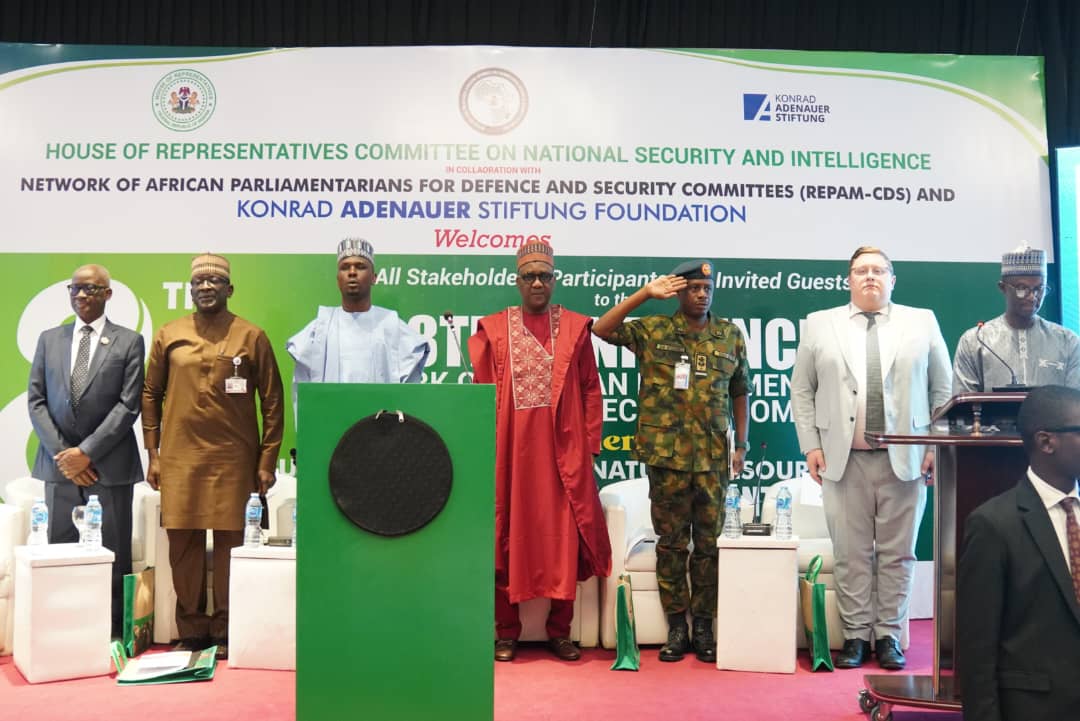
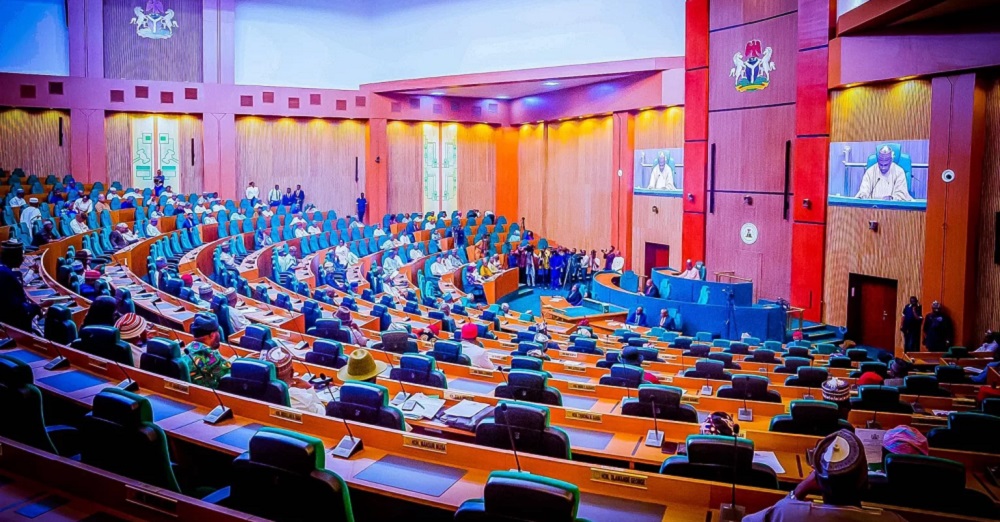
In an effort to rejuvenate Nigeria’s inland waterway systems, the House of Representatives Ad-hoc Committee on the Rehabilitation and Operationalisation of the Baro Inland Port convened its inaugural session. 

The committee’s chairman, Rep. Saidu Abdullahi, at its meeting held on Wednesday in Abuja, presented an ambitious agenda aimed at converting years of stalled progress into measurable outcomes.

Rep. Abdullahi underscored the urgency of shifting from mere discussions to decisive actions that will reactivate Baro Port in Niger State. He highlighted the port’s potential to reclaim its place as a critical hub within Nigeria’s transportation and economic framework.

Advertisement
“This committee is tasked with converting the endless talk over the years into real action. Baro Inland Port is a sleeping giant, and our job is to wake it,” he said.
 

Rep. Abdullahi reflected on the significant legacy of the Baro Inland Port, which functioned as a key logistics center during the colonial period. At that time, agricultural goods from northern Nigeria moved efficiently through a coordinated multimodal network—transported by rail to Baro and onward by inland waterways to coastal ports.

He observed that, after independence, the country’s emphasis on oil revenue and road development caused a steep decline in investment in inland waterways. According to him, this prolonged neglect has carried economic costs and undermined both environmental sustainability and the lifespan of road infrastructure.

To illustrate the possibilities for inland ports, Hon. Abdullahi cited global examples. He described a recent visit to China’s Yangtze River Port, which extends over 6,100 kilometers and sustains dynamic commercial operations. He also pointed to the Mississippi River Port network in the United States, spanning more than 12,000 miles and facilitating trade across 31 states.
“These examples are proof that inland waterways can be the backbone of national logistics. If countries like China and the U.S. have built prosperity around such systems, Nigeria too must rise to the occasion,” he said.
 
According to the Committee Chairman, three major components currently preventing the Baro Inland Port from becoming operational are, the dredging of the capital channel, ensuring navigability for vessels along the river; rail connectivity between Baro and Minna, linking the port to the larger national rail grid; and access roads to the port, providing viable land routes for cargo movement.
 
“All necessary operational equipment has already been procured by the federal government. What remains is to fix these three key issues so the port can start functioning as designed,” he added.
 
The committee’s role, he explained, is to coordinate relevant stakeholders, diagnose the roadblocks, and engineer collaborative solutions that will make the port viable again.
 
In addressing the broader question of infrastructure financing, Rep. Abdullahi stressed that Nigeria cannot rely solely on public funds, and that government alone cannot carry that burden.
 
“The reality is that we must explore innovative financing and private-sector partnerships. If we continue waiting for government budgets alone, we won’t achieve even half of what’s needed,” he argued.
 
He advocated for exploring investment windows, development finance institutions, and public-private partnerships (PPPs) to help revive infrastructure like the Baro Port and others.
 
Rep. Abdullahi expressed confidence that the committee’s work will not only revamp the Baro Port but also serve as a national model for how to successfully plan and execute infrastructure revival.
 
“With the quality and diversity of members drawn from all six geopolitical zones, this committee is well-equipped to deliver. What we build here can become a reference point for future projects across Nigeria,” he said.
 
He called on the media to play a key role in amplifying the conversation and holding all parties accountable throughout the process.
 
“This is serious work. We’ll be depending on you to give this assignment the visibility it deserves. Let’s revive Baro together, for commerce, for communities, and for the country,” he said.
 
Rep. Abdullahi, said the committee will roll out a comprehensive engagement plan with the help of a technical committee in achieving their mandate.
 
The work-plan of the Committee was adopted at the meeting.
 
Members emphasised the need for regional alignment and strategic planning, particularly around attracting global shipping lines, to ensure the success of the long-abandoned facility.
 
Former Deputy Speaker, Rep. Idris Wase, one of the committee members, noted the importance of understanding the full scope of the project and its regional significance.
 
“This project is not just for Niger State; we’re speaking as representatives of Nigeria. When discussing the Baro Port, it’s important to be clear that it’s not just for Niger or even Nigeria. The project has the potential to serve the wider Northern African sub-region. That’s the original conception behind it,” he said.
 
He urged members and consultants to frame the project in national terms during engagements.
 
“When presenting to this parliament, we must speak as Nigerians, not locals. I know it’s easy to get carried away by enthusiasm, but let’s not water down the national significance of this discussion,” he said.
 
Another member of the Committee and Chairman of the House Committee on Customs, Rep. Leke Abejide, raised a technical but critical concern over the lack of incentives for major shipping lines, which has caused similar ports across Nigeria to fail.
 
“We’ve seen this happen with other ports, Calabar, Warri. They failed because planners didn’t factor in incentives for shipping lines. No port can thrive if shipping companies don’t see value in using it,” he said.
 
He pointed to global examples and success stories like the Lagos Free Trade Zone, which secured operations from one of the world’s major shipping lines. That move, he explained, created a ripple effect, forcing other lines to compete and increasing traffic at the port.
 
“You don’t need to attract everyone at once. Target one major shipping lines and let them drive initial operations. Others will follow. That’s what was done in Lagos, and it worked. It wasn’t done in Calabar, and the result is what we see today”, he stated.
Advertisement
Continue Reading
Advertisement
Click to comment

You must be logged in to post a comment Login

Leave a Reply

News

Insecurity: FG redeploys police from VIP escorts to frontline security after Kwara massacre

Published

on

ADVERTISEMENT
Zoom Ad
ADVERTISEMENT
Zoom Ad

The Federal Government has ordered the immediate withdrawal and redeployment of Nigeria Police Force (NPF) officers previously assigned to VIP escort duties.

”Further strengthening the security architecture, the Nigeria Police Force has executed a large-scale redeployment of officers previously assigned to VIP escort duties nationwide.”

The move, announced by the Minister of Information and National Orientation, Mohammed Idris, on Friday, marks a strategic pivot from protecting private individuals to safeguarding the general public.

The decision to pull officers from VIP details comes on the heels of a devastating terrorist attack in Kwara State, where 75 villagers were killed.
For years, the use of police personnel for private VIP protection has been a point of contention in Nigeria.
This latest “large-scale redeployment”, according to the minister, seeks to rectify that imbalance by returning thousands of officers to their primary mission: community policing.

Advertisement

Minister Idris confirmed that these personnel have already been integrated into frontline security structures.

Key states seeing immediate personnel increases include: Kwara and Plateau, Benue and Kogi, Nasarawa, Niger, and the Federal Capital Territory (FCT)
The minister also added that ”Security has also been strengthened around places of worship, including increased visible presence around churches during Sunday services, in coordination with community and faith leaders.”

According to Idris, President Bola Tinubu, the country’s counter-terrorism strategy remains Nigerian-led and sovereignty-driven.

However, the government said it remains open to strategic cooperation, including intelligence, surveillance, and reconnaissance support from partners such as the United States, where such collaboration aligns with Nigeria’s national interests.

Advertisement

He also said the administration remains resolute in its commitment to restoring peace and ensuring that all Nigerians can live and worship freely without fear.

Gruesome Attack
Gunmen had attacked the Woro community and the neighbouring Nuku area in Kwara North at about 5:30 p.m. on Tuesday, killing at least 75 people.

The attackers also set shops ablaze, torched the residence of a traditional ruler, and forced many residents to flee into nearby bushes.

The Northern States Governors’ Forum (NSGF) condemned the killings in Kwara, Katsina and Benue states, describing them as “barbaric, senseless, and a direct assault on the collective conscience of the nation.”

Advertisement

Kwara State Governor, Abdulrahman AbdulRazaq, also described the attack as a “pure massacre,” confirming that the victims had been buried.
In response to the violence, President Bola Ahmed Tinubu has ordered the deployment of an army battalion to Kwara State to reinforce security operations.

Continue Reading

News

Court grants demand to probe academic qualifications of Interior Minister, Tunji-Ojo

Published

on

ADVERTISEMENT
Zoom Ad
ADVERTISEMENT
Zoom Ad

The Federal High court in Abuja has granted a request by an activist, Mr. Emorioloye Owolemi, to inquire into the academic qualifications of the current Minister of Interior, Olubunmi Tunji-Ojo.

Justices Binta Nyako granted the permission while ruling in an ex-parte application brought before her by the social crusader, Owolemi.

Owolemi had approached the court where he sought an order of court to inquire into Secondary School Certificate said to have been issued to the Minister by the West African Examination Council, (WAEC).

The activist predicated his request against Olubunmi’s Secondary School Certificate on the ground that there were discrepancies in the academic claims.

Advertisement

However, in another development, Justice Joyce Abdulmalik also of the Federal High Court in Abuja on Friday refused a similar request by the activist to inquire into the discharge certificate said to have been issued to the Minister by the National Youth Service Corps, NYSC.

The activist through his lead counsel, Mr Philemon Yakubu SAN had argued a motion ex-parte brought pursuant to order 34 of the Federal High Court Civil Rules 2019, sections 1, 20 and 21 of the Freedom of Information Act 2011 to seek for permission of the court to inquire into the legality or otherwise of the Minister’s NYSC discharge certificate.

Specifically , the activist applied for an order of mandamus to compel the National Youth Service Corps to supply to him, the information he requested in his letter of November 17, 2025 regarding the discharge certificate of the Minister of Interior in the custody of the organization.

Among others, the applicant also wants the NYSC to supply him monthly clearance records, where the Minister served before his alleged absconding, bank account details, and financial information submitted by the Minister through his 2006 NYSC registration and all monthly allowance payment logs, including dates, amounts, bank scheduled and the account to which payments were made.

Advertisement

Others are, official NYSC documentation detailing the date, nature and status of the Minister’s alleged absconding and all internal memos, queries, disciplinary reports or correspondence issued in relation to the alleged absconding as well as registration, posting, deployment and service documents associated with the Minister’s 2006 service year.

However, Justice Abdulmalik after taking argument on the ex parte application declined to grant the request.

The judge held that the applicant did not indicate that he was acting in the public interest as required by law.

Speaking with newsmen after the court ruling, Mr Philemon Yakubu SAN said that he will consult with his client to determine the next line of action in the legal battle.

Advertisement

He said that the desire of his client is to ensure transparency, accountability and probity among the public office holders in the country.

Continue Reading

News

Just in INEC Finally Fixes February 20 For 2027 Presidential Election, March 6 For Guber

Published

on

ADVERTISEMENT
Zoom Ad
ADVERTISEMENT
Zoom Ad

Finally, INEC has released 2027 election timetable; February 20 for presidential and national assembly, March 6 for gubernatorial and state assemblies.

The Chairman of the Independent National Electoral Commission (INEC), Joash Amupitan, on Thursday formally set in motion the electoral process for the 2027 general election, announcing that the Presidential and National Assembly polls will hold on February 20, 2027, while Governorship and State Houses of Assembly elections will take place on March 6, 2027.

Briefing journalists, the INEC Chairman said the announcement was in strict compliance with constitutional and statutory provisions guiding the conduct of elections in Nigeria.

“By virtue of the Constitution of the Federal Republic of Nigeria, 1999 as amended, the tenure of the President, the Vice-President, the Governors, and Deputy Governors of states of the Federation, except Anambra State, Bayasa State, Edo States, Ekiti States, Imo State, Ogi, Kondo, and National States, will expire on the 28th day of May, 2027,” he said.

Advertisement

He added that, “membership of the National and State Assemblies will stand dissolved on the 8th day of June, 2021.”

Citing constitutional timelines, Amupitan explained: “Pursuant to Section 76(2), 116(2), 132(2), and 178(2) of the Constitution of the Federal Republic of Nigeria, 1999 as amended, elections to the said offices shall hold not earlier than 150 days, and not later than 30 days, before the expiration of the term of office of the holders.”

Related News:
INEC Postpones March 11 Governorship Election, Fixes March 18 as New Date
APC Declares Edo Primary Election Inconclusive, Fixes February 22 for Completion
INEC Fixes June 20, August 8, 2026 for Ekiti, Osun Governorship Elections
He stressed that the Commission’s action was in line with the law.

“This action we are taking today is pursuant to the provisions of the Constitution of Nigeria, and in particular, Section 28, subsection 1 of the Electoral Act, 2022, which mandates the Commission to publish the notice of election not later than 360 days before the date appointed for the election,” he said.

Advertisement

Reaffirming INEC’s independence, the Chairman stated: “Let me reiterate that the authority and power to publish the date of election is that of the Independent National Electoral Commission.”

He outlined the scope of the 2027 polls, noting that, “The 2027 general election will hold nationwide for the following offices: President and Vice-President of the Federal Republic of Nigeria; Governors and Deputy Governors of the states of the Federation, except those states I had mentioned; members of the Senate; members of the House of Representatives; and members of the Houses of Assembly of states.”

Formally declaring the commencement of the process, Amupitan said: “Therefore, in exercise of the powers conferred on the Commission by the Constitution of the Federal Republic of Nigeria, 1999 as amended, and the Electoral Act of 2022, and all other powers enabling it in that behalf, the Commission hereby sets in motion the electoral process for the 2027 general election, and fixes the date of the 2027 general election as follows: Presidential and National Assembly election will come on the 20th February, 2027; Governorship and State Houses of Assembly will be on the 6th March, 2027.”

According to him, “The detailed timetable and schedule of activities have been uploaded to the Commission’s website this morning, and have been circulated to registered political parties and relevant stakeholders.”

Advertisement

He directed that, “All the 36 Resident Electoral Commissioners and that of the FCT are hereby directed to publish the notices in each constituency in respect of which an election is to be held.”

“These dates reflect our commitment to ensuring that our electoral processes are transparent, credible, and adhere to the provisions of our laws,” he added.

On the next steps, the INEC Chairman said: “In accordance with the approved timetable and schedule of activities, primaries will be conducted within the statutory period stipulated by law. Submissions of nomination forms by political parties will commence and close within the designated windows as provided in the schedule, which I will just release. Campaigns by political parties shall commence on the date specified by law and end 24 hours before the election.”

He also addressed the proposed changes to Nigeria’s electoral laws currently before lawmakers.

Advertisement

“I must also take a moment to address the current Electoral Amendment Bill that is pending in the National Assembly. This Bill has sparked important discussions and concern among the various stakeholders in our democracy,” he said.

“We recognise the necessity of enhancing our electoral framework to ensure that it meets the ever-evolving needs of our society and reflects our aspiration for free, fair, and credible election.”

Continue Reading

Trending

Copyright © 2024 Naija Blitz News