Connect with us

News

2027:”Running as VP is not in the agenda of coalition-Obi reveals

Published

on

ADVERTISEMENT
Zoom Ad
ADVERTISEMENT
Zoom Ad

…insists he submitted one term template to respect zoning arrangements

By Kayode Sanni-Arewa

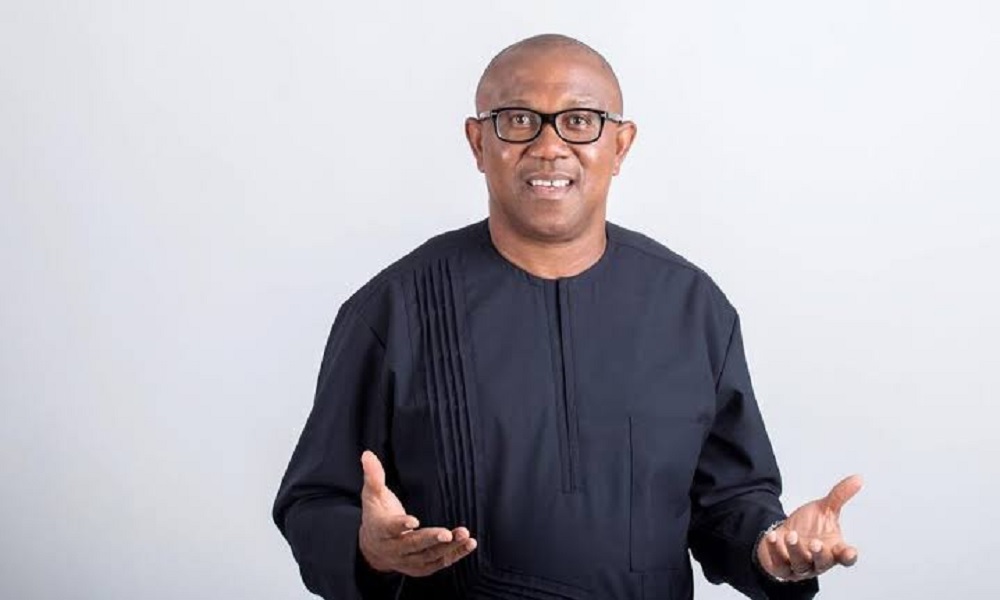
Former Presidential candidate of the Labour Party (LP), Peter Obi, has said nobody discussed the issue of a running mate in the coalition as this was not part of the agenda.

He also gave reason for his decision to run for one term of four years in 2027 is to respect the sanctity of zoning, which has been a stabiliser to our polity despite not being in our constitution.

Advertisement

Speaking during an interview with Channels tv on Sunday night, Obi said that four years is enough for any serious and sincere leader to make an impact.

“One term is enough to establish that good governance is possible, and if they can impact negatively on us for just two years, why won’t someone achieve a lot in four years?

“It’s also to respect the gentleman’s agreement of zoning, which has been a stabilising factor even though it’s not in our constitution.

““I don’t need a day more than four years. I will show the direction of good governance. In two years, there has been maximum damage. Two years can change it in a good direction. People want to get up and see a president who cares and shows compassion,”

Advertisement

Obi, who responded to questions about burning issues around his ambition, reiterated his determination to run for the presidency again in 2027, stating that he is qualified for the office.

“I’m going to contest for the President of the Federal Republic of Nigeria, and I believe I am qualified for it,”

On the possibility of his becoming the running mate to former Vice President Atiku Abubakar in the 2027 election, Obi said emphatically: “This is not in play; nobody has ever discussed that.

” People assume so many things. Nobody has ever discussed with me whether I am going to be A, B, or C.”

Advertisement

The 2023 Labour Party standard bearer equally dispelled speculations that he had left the Labour Party following his open support for the coalition, which has adopted the African Democratic Congress (ADC).

“I am part of the coalition which will be able to produce a president with the capacity and compassion to save this country.”

On why he was associating in the coalition with persons who were known to have played key roles in previous failed administrations, Obi explained that their experience would be required to prevent the government he intends to form from failing.

“In fact even some who have been in that government, their experience is critical.
“I can tell you one of the major companies in the world hired two people who have worked in failed companies because they can tell you why they failed.

Advertisement

“You need the experience of those who have failed and those who have succeeded to move on, and I need everyone.

“It is a critical experience because they know what can fail a system and they know what was wrong with the system.”

Obi also criticised President Tinubu for a perceived lack of compassion over numerous deaths in the country, particularly victims of insecurity.

“Today, we are in a country that has leadership without compassion. Several children died in Ibadan on 18 December last year, and on 19 December, the president of Nigeria flew from Abuja to Lagos for Christmas festivities.

Advertisement

There is no compassion, and we can change that if we move in the right direction,” he said
Obi also questioned the priorities of Tinubu’s government, citing the commissioning of a bus station project in Abuja while around 20 soldiers were killed in Niger, asking when ceremonial projects became more important than soldiers’ lives.

The former governor said that, if elected, he would declare war on insecurity rather than merely a state of emergency, asserting that non-state actors must not be allowed to challenge the authority of the state.
He also promised to empower states, local governments, and communities to establish police systems alongside the federal police.

“From day one, I will tackle insecurity head-on. Non-state actors cannot be stronger than the state. We must declare war on insecurity, but we must concentrate more on natural security, which is pulling people out of poverty.”

Obi denounced what he described as the extravagant spending of the Tinubu administration, citing the purchase of private jets and luxury items while critical sectors such as education and health continue to suffer neglect.

Advertisement

He criticised the “disorganised” removal of the fuel subsidy, saying the government had failed to make adequate provisions to mitigate the impact.

He accused the Tinubu administration of borrowing more funds than the combined governments of Presidents Goodluck Jonathan, Umaru Musa Yar’Adua, and Muhammadu Buhari, raising Nigeria’s debt from approximately ₦80 trillion to ₦180 trillion in just two years—with little to show for it.

He pledged to borrow only for investment purposes, particularly to finance electricity, following examples such as India, Egypt, and Vietnam, which have made significant, strategic investments in their power sectors.
Reiterating his mantra of shifting Nigeria’s economy from consumption to production, Obi promised to invest heavily in agriculture and rural development, especially in northern Nigeria, which he described as the country’s “greatest asset” due to its vast land resources.

On his relationship with late Gen Sani Abacha, Obi reiterated his earlier explanation of a chance meeting with him from a protest over decongestion of the seaport, and he was appointed to the decongestion committee that lasted just two weeks.

Advertisement
Continue Reading
Advertisement
Click to comment

Warning: Undefined variable $user_ID in /home/naijuinz/public_html/wp-content/themes/zox-news/comments.php on line 49

You must be logged in to post a comment Login

Leave a Reply

News

Breaking: Customs to unveil yearly hiring, open 2026 recruitment portal soon

Published

on

ADVERTISEMENT
Zoom Ad
ADVERTISEMENT
Zoom Ad


The Nigeria Customs Service has announced a significant shift in its recruitment policy, stating that future recruitment exercises will be conducted annually instead of at irregular intervals.

The Comptroller-General of Customs, Adewale Adeniyi, revealed this during a press briefing on the release of the final list of successful candidates for the 2024/2025 recruitment exercise at the service headquarters in Abuja on Tuesday.

He said the decision was part of efforts to create a predictable manpower planning system that would enable the service to replace retiring officers promptly while giving young Nigerians regular opportunities to join the organisation.

Advertisement

According to Adeniyi, the service has moved away from a recruitment model under which applicants had to wait several years before another opportunity became available.

He explained that the new structure would make recruitment a continuous process, with the 2026 exercise expected to commence later this year.

The 2026 Recruitment Exercise will open later this year, and it is my firm intention that it will be completed within a single calendar year, from advertisement to final list.”

The Comptroller-General said the lengthy process experienced during the 2024/2025 recruitment exercise was largely due to the need to establish a robust recruitment architecture capable of supporting future exercises.

Advertisement

He said the service had invested time and resources in building the framework, adding that subsequent recruitment exercises would benefit from the structures already put in place.

“The systems, the screening architecture and the verification processes built during this exercise now exist, and they will not have to be built again,” he said.

“The delays of this cycle were in significant part the cost of constructing that machinery. That cost has now been paid.”

Adeniyi said the annual recruitment model would benefit both the service and prospective applicants by improving workforce planning and reducing uncertainty among young Nigerians seeking employment.

Advertisement

He explained that the approach would enable the service to anticipate manpower gaps arising from retirements and other exits instead of waiting until shortages occur before recruiting.

“An annual cycle serves the Service and the applicant equally. It allows us to plan our manpower against known retirements rather than in reaction to them,” he said.

He added that the new system would also provide clarity for unsuccessful applicants by allowing them to prepare for future opportunities without prolonged uncertainty.

“And it means that a young Nigerian who is unsuccessful this year knows precisely when the next opportunity arrives, rather than waiting in uncertainty for an announcement that may be years in coming,” he stated.

Advertisement

The announcement followed the conclusion of the 2024/2025 recruitment exercise, which attracted significant interest from Nigerians seeking employment in the paramilitary agency.

Adeniyi also announced that 3,852 candidates had been offered appointments across the service’s three entry cadres.

Of the successful candidates, 1,275 were recruited into the Superintendent Cadre, 367 into the Inspectorate Cadre, and 2,210 into the Customs Assistant Cadre.

Advertisement
Continue Reading

News

Nigeria-Israel Renew Push for Stronger Security, Trade and Technology Partnership

Published

on

ADVERTISEMENT
Zoom Ad
ADVERTISEMENT
Zoom Ad

By Gloria Ikibah

Nigeria and Israel have reaffirmed their commitment to deepening bilateral cooperation in security and defence, agriculture, technology, healthcare and trade as both countries seek to strengthen their long-standing diplomatic and economic relationship.

The commitment was reaffirmed during a valedictory visit by the outgoing Israeli Ambassador to Nigeria, Mr. Michael Freeman, to the Minister of Foreign Affairs, Ambassador Bianca Odumegwu-Ojukwu, in Abuja.

Receiving the envoy, the Minister commended Ambassador Freeman for his efforts in advancing relations between Nigeria and Israel during his diplomatic assignment.

Advertisement

She reiterated Nigeria’s determination to broaden cooperation in key areas of mutual interest, particularly in counter-terrorism, intelligence sharing, border security, security financing and capacity building.

The Minister also underscored the need to deepen collaboration in innovation and technology by fostering stronger partnerships between Nigerian start-ups and Israeli technology companies.

She noted that Nigeria would also benefit from Israel’s expertise in water resource management and modern agricultural practices to improve food production and strengthen national food security.

Speaking during the visit, Ambassador Freeman described Nigeria as “an amazing country” with “warm and welcoming people,” stressing that sustained engagement would be crucial to unlocking the full potential of the relationship between both nations.

Advertisement

He reaffirmed Israel’s commitment to expanding cooperation with Nigeria across several strategic sectors.

“Israel remains committed to supporting Nigeria in innovation, agriculture, healthcare, education, skills development and security,” he said.

The outgoing envoy also expressed confidence that economic relations between both countries would continue to grow, noting that bilateral trade, currently estimated at about 200 million dollars annually, has significant room for expansion.

He said stronger partnerships between the public and private sectors of both countries would help unlock new investment opportunities and drive economic growth.

Advertisement

Both sides expressed optimism that the longstanding relationship between Nigeria and Israel will continue to flourish through enhanced cooperation in security, commerce, technology and sustainable development.

Continue Reading

News

Prepare Young People for Leadership Now – Speaker Abbas

Published

on

ADVERTISEMENT
Zoom Ad
ADVERTISEMENT
Zoom Ad

…say youths must shape Nigeria’s future today, not tomorrow

…back greater inclusion of women, persons with disabilities in governance

By Gloria Ikibah

Speaker of the House of Representatives, Rt. Hon. Tajudeen Abbas has called for deliberate investment in preparing young Nigerians for positions of leadership, insisting that they should no longer be viewed simply as the leaders of tomorrow but as active contributors to the country’s development today.

Advertisement

Speaking at the launch of the Leadership for Equity, Advocacy and Development (LEAD) Fellowship organised by the Gender Mobile Initiative (GMI) at the National Assembly  on Tuesday, in Abuja, Speaker Abbas said Nigeria’s youthful population must be equipped with the knowledge, values and institutional understanding needed to drive meaningful change.

Represented by the Chairperson of the House Committee on Women Affairs and Social Development, Rep. Kafilat Ogbara, the Speaker said leadership is far more than occupying political office.

“It is high time we prepared young people for power. As the trustees of our tomorrow, they must understand how government works and how to use political office to change society for the better. Without this preparation, they risk squandering the opportunity to effect real, lasting good,” he said.

He described the fellowship, which targets students in tertiary institutions, as a strategic investment in Nigeria’s democratic future.

Advertisement

“The youths are no longer merely the leaders of tomorrow; their time has come. As voters, innovators, entrepreneurs and community leaders, they deserve the power to influence the decisions that shape their lives today,” Abbas added.

According to him, the programme will nurture a new generation of leaders who understand public policy, appreciate the responsible use of power and are committed to building strong institutions.

The Speaker also praised the fellowship’s emphasis on inclusion, as he said meaningful democracy cannot thrive while significant sections of society remain excluded from governance.

“The inclusion of women, persons with disabilities, and historically marginalised groups is not an act of benevolence. It is a matter of basic justice, democratic legitimacy and institutional effectiveness. A democracy that excludes large sections of society cannot be said to be representative,” he stated.

Advertisement

Abbas reiterated the commitment of the 10th House to expanding women’s participation in politics through the proposed constitutional amendment seeking reserved seats for women in the National Assembly and State Houses of Assembly.

He identified inadequate campaign financing, exclusion from party structures, cultural stereotypes and electoral violence as some of the major obstacles preventing women from seeking elective office.

“Let me be absolutely clear: we are not attempting to lower the standard of leadership. We are attempting to remove the barriers that prevent capable women from even reaching the starting line.

“Nigeria does not need a generation that is simply more ambitious than the one before it. Our nation needs a generation that is wiser, more ethical, more inclusive, more technologically advanced and more institutionally minded,” he said.

Advertisement

The Speaker urged participants in the fellowship to focus on solving societal problems rather than pursuing political office for its own sake.

To sustain the impact of the programme, Abbas proposed the creation of a LEAD Alumni Policy Network that will allow fellows to continue mentoring one another, undertake policy research and collaborate on initiatives that promote national development.

He reaffirmed the readiness of the House to partner with the Gender Mobile Initiative in promoting inclusive governance, civic participation and constitutional reforms.

“The work before us is both legislative and societal. We continue to change the law where the law is the barrier. We are also changing institutions where institutions are the barrier. Finally, we must change attitudes where attitudes are the barrier,” he added.

Advertisement

Abbas who described investment in people as the most valuable investment any nation can make, expressed confidence that the fellowship will produce future legislators, policymakers, entrepreneurs, jurists, academics, innovators and civil society leaders committed to strengthening Nigeria’s democracy.

Earlier, Executive Lead of the Gender Mobile Initiative, Omowumi Ogunrotimi, said the LEAD Fellowship was conceived to bridge the gap between student leadership and meaningful participation in governance after graduation.

The 18-month programme aims to train 1,000 student leaders drawn from 10 tertiary institutions across Nigeria.

She disclosed that the initiative is being implemented in partnership with the Office of the Speaker of the House of Representatives, National Institute for Legislative and Democratic Studies (NILDS), Office of the Senior Special Assistant to the President on Student Engagement, with support from the Open Society Foundations.

Advertisement

Ogunrotimi said the idea was inspired by a female student leader who questioned what opportunities existed for ethical student leaders after graduation.

Recalling the encounter, she said the student asked: “Even if I survive all this, if I graduate and maintain my integrity, where do I go next? That single, courageous reflection became a mirror held up to our entire national governance ecosystem. It became the catalytic seed for why we are convened here today.”

She argued that although many young Nigerians already demonstrate leadership on campuses, the country has failed to provide structured pathways into governance.

According to her, Nigeria is grappling with what she described as a “democratic formation deficit”, where emerging leaders are often exposed to patronage, transactional politics, exclusion and abuse of influence at an early stage.

Advertisement

She also identified a “transition deficit”, noting that many outstanding student leaders struggle to find opportunities to contribute to governance after leaving school.

“As a result, civic talent is often disconnected from the very institutions that need it most,” she said.

Ogunrotimi explained that the fellowship was designed to address both challenges by providing structured leadership training, mentoring, institutional exposure and policy engagement.

She described the initiative as more than a leadership programme, urging government institutions, development partners and civil society organisations to support it as an investment in national development.

Advertisement

“We are intentionally incubating 1,000 student leaders across 10 pilot institutions. Our ambition is to cultivate women and men whose exercise of leadership will be defined by ethics, constitutionalism, evidence, inclusion and an unwavering commitment to service because democratic stewardship does not emerge by accident,” she said.

Also speaking, SpokespersonoftheHouse, Rep. Akin Rotimi Jr., urged young Nigerians to place character, competence and service above the pursuit of political office.

“Strong institutions require capable leaders. Leadership must therefore be identified, nurtured and developed,” he said.
Rotimi said the fellowship aligns with his legislative philosophy of “Leaving No One Behind,” which seeks to promote inclusion, accountability and equal opportunities for women, young people, persons with disabilities and underserved communities.

He therefore commended the Gender Mobile Initiative for its contributions to legislative reforms, recalling its advocacy role in the passage of the Sexual Harassment in Tertiary Educational Institutions Bill.

Advertisement

The lawmaker highlighted his sponsorship of the Independent Candidacy Bill and the Special Seats for Special Interest Groups Bill, saying both proposals are designed to deepen democratic participation.

He noted that the 10th House of Representatives has consistently expanded citizen engagement through structured policy dialogues, including the Youth Town Hall held during the 2026 National Assembly Open Week.

“These efforts reflect a clear conviction: young people must not remain spectators in governance. Democracy works best when young people participate, organise, engage institutions, contest ideas and hold leaders accountable,” he said.

Addressing the pioneer fellows, Rotimi urged them not to confuse popularity with leadership or political office with service.

Advertisement

“Leadership demands character, competence, discipline, empathy and commitment to the common good,” he said.

Quoting former Ekiti State Governor, Dr. Kayode Fayemi, he reminded participants that, “Politics is not a sprint; it is a relay. One must learn how to carry the baton before aspiring to receive it.”

He encouraged them to embrace mentorship, develop competence, strengthen institutions and prioritise service over personal recognition.

“Nigeria needs leaders who place service above self, strengthen institutions, expand opportunity and advance the public interest,” Rotimi added.

Advertisement

Also speaking, Director-General of the National Institute for Legislative and Democratic Studies (NILDS), Prof. Abubakar O. Sulaiman, represented by Dr. Shuaibu Danwanka, described the fellowship as a timely intervention in Nigeria’s democratic journey.

Sulaiman said Nigeria requires leaders whose competence is matched by integrity and whose ambition is guided by service.

“Today’s event represents far more than the unveiling of another fellowship programme. It is the launch of a bold national investment in ethical leadership, democratic resilience and inclusive governance.

“I have consistently maintained that strong democracies are built not merely by strong institutions but by leaders who possess the intellectual capacity, ethical discipline, emotional intelligence and patriotic commitment to strengthen those institutions,” he stated.

Advertisement

He warned that unless ethical values are deliberately nurtured at the formative stage of leadership development, young leaders could replicate the same negative practices that weaken public institutions.

“Unless we intentionally nurture ethical leadership, democratic values and a culture of service at this formative stage, we risk producing future leaders who replicate these negative practices in our public institutions rather than reforming them,” he said.

Sulaiman reaffirmed NILDS’ commitment to supporting the fellowship through research, democratic education, legislative capacity development and strategic partnerships, expressing confidence that the initiative would produce a new generation of ethical leaders committed to strengthening Nigeria’s democracy.

Advertisement
Continue Reading

Trending

Copyright © 2024 Naija Blitz News