
Foreign
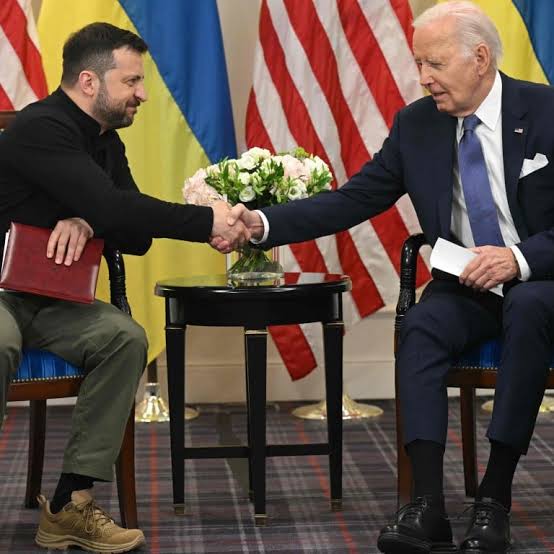
Kremlin kicks as US President moves to send more weapons to Ukraine

- /home/naijuinz/public_html/wp-content/plugins/mvp-social-buttons/mvp-social-buttons.php on line 27
https://naijablitznews.com/wp-content/uploads/2024/06/images-16.jpeg&description=Kremlin kicks as US President moves to send more weapons to Ukraine', 'pinterestShare', 'width=750,height=350'); return false;" title="Pin This Post">
- Share
- Tweet /home/naijuinz/public_html/wp-content/plugins/mvp-social-buttons/mvp-social-buttons.php on line 72
https://naijablitznews.com/wp-content/uploads/2024/06/images-16.jpeg&description=Kremlin kicks as US President moves to send more weapons to Ukraine', 'pinterestShare', 'width=750,height=350'); return false;" title="Pin This Post">


By Francesca Hangeior
President Donald Trump has said the United States will send additional weapons to Ukraine, triggering Russian criticism after Moscow claimed new gains in its grinding war against its neighbor.
The Kremlin warned Tuesday that sending arms to Ukraine only serves to prolong the conflict, a day after Trump’s pledge for “more weapons” for Ukraine to defend itself.
“It is obvious of course that these actions probably do not align with attempts to promote a peaceful resolution,” Kremlin spokesman Dmitry Peskov was quoted by Russian news agencies as saying in a briefing.
Trump’s announcement to send weapons to Ukraine Monday followed Washington saying last week that it was halting some weapons shipments to Kyiv, leaving Ukrainian officials caught off guard and scrambling for clarity.
A pause poses a potentially serious challenge for Kyiv, which is contending with some of Russia’s largest missile and drone attacks of the more than three-year war.
“We’re going to have to send more weapons — defensive weapons primarily,” Trump told journalists at the White House.
“They’re getting hit very, very hard,” he said of Ukraine, while adding that he was “not happy” with Russian President Vladimir Putin.
Trump has reportedly promised to immediately send 10 Patriot interceptors — anti-missile systems — to Ukraine, according to US news website Axios.
Putin launched the full-scale invasion of Ukraine in 2022 and has shown little willingness to end the conflict despite pressure from Trump.
The US president’s pledge to ship more arms to Ukraine came after Moscow said Monday that its forces captured its first village in Ukraine’s central Dnipropetrovsk region after advancing towards it for months.
Russia launched a fresh large-scale drone and missile barrage before the announcement, including on Ukraine’s military recruitment centers.
Kyiv also said it carried out a drone attack on a Russian ammunition factory in the Moscow region.
Russia said its forces captured the village of Dachne in the Dnipropetrovsk region, an important industrial mining territory that has come under mounting Russian air attacks.
Last month, Moscow said its forces had crossed the border into the Dnipropetrovsk region for the first time in its campaign.
Russian forces appear to have made crossing the regional border a key strategic objective in recent months, and deeper advances there could pose logistical and economic problems for Ukraine.
Kyiv has so far denied any Russian foothold in Dnipropetrovsk.
Ukraine’s military said earlier Monday its forces “repelled” attacks in Dnipropetrovsk, including “in the vicinity” of Dachne.
Dnipropetrovsk is not one of the five Ukrainian regions — Donetsk, Kherson, Lugansk, Zaporizhzhia and Crimea — that Moscow has publicly claimed as Russian territory.
Describing the situation in Dnipropetrovsk as “difficult” for Kyiv’s forces, Ukrainian military expert Oleksiy Kopytko said Russia hopes to create some kind of buffer zone in the region.
“Our troops are holding their ground quite steadily,” he told AFP.
The White House said last week it was halting some key weapons shipments to Ukraine that were promised under Trump’s predecessor Joe Biden, without providing details on which weapons programs were affected.
It said the decision was taken after a review of US defense needs and of its military assistance to foreign countries.
Kyiv has long feared halts to US aid after Trump returned to the White House in January, having criticized the tens of billions of dollars in support and weapons sent by Biden.
Under the Biden administration, Washington committed to providing more than $65 billion in military assistance to Ukraine.
Trump has announced no new military aid packages for Kyiv since taking office for the second time.
The Republican president instead has pushed the two sides into peace talks, including in phone calls with Putin. The Russian leader has rejected pleas for a ceasefire and demanded Ukraine cede more territory if it wants an end to the war.
Ahead of Trump’s remarks on Monday, Ukraine’s President Volodymyr Zelensky said air defense remained the “top priority for protecting lives,” and his country was counting on partners to “fully deliver on what we have agreed.”
Foreign
Iran cautions, says Middle East war will expand geographically If US falls for zionists deception


Iran’s army has warned that the conflict in the Middle East could expand further if the United States launches additional attacks on the Islamic Republic, ahead of Israeli Prime Minister Benjamin Netanyahu’s visit to Washington this week.
Army spokesman Mohammad Akraminia issued the warning during an interview with Iranian state television on Sunday, July 26, saying any renewed US military action would widen the geographical scope of the conflict.
“I believe that if the Americans once again fall for the Zionists’ deception, or move in line with them, and insist on continuing the war, particularly through air strikes, geographically this will expand further,” he said.
Akraminia claimed the conflict had already spread to the Bab al-Mandab Strait at the entrance to the Red Sea, referring to the recent escalation involving Yemen’s Iran-backed Houthi movement and Saudi Arabia. “The scope of our operations now encompasses the entire region, from US bases in Jordan to the countries along the Persian Gulf,” he said.
He added that the United States now faced an increasingly unstable security environment in the Middle East and suggested Washington was reassessing its approach. “The situation in the Middle East for the United States is difficult and unsettled,” he said, adding that the US was looking “for a new strategy.” “We are prepared for each of the options and scenarios that appear likely.” The comments come ahead of Netanyahu’s scheduled meeting with US President Donald Trump at the White House on Tuesday.
According to the Israeli prime minister’s office, Netanyahu will depart for Washington on Monday before meeting Trump and attending the funeral service of Senator Lindsey Graham, whom the statement described as “a friend of Israel.” Since Trump’s return to office last year, the two leaders have met six times, most recently in Washington on February 11.
While Trump and Netanyahu initially presented a united front following the launch of military operations against Iran in late February, reports suggest differences have since emerged over whether to continue military action or pursue diplomatic efforts.
Netanyahu has previously described Trump as “the greatest friend” Israel has ever had in the White House. Earlier this month, Trump also spoke about their relationship during an interview with Axios. “We get along very good. (Netanyahu) knows who the boss is,” Trump said.
Relations between the two leaders reportedly came under strain during ceasefire negotiations between the United States and Iran in April. The ceasefire has since collapsed.
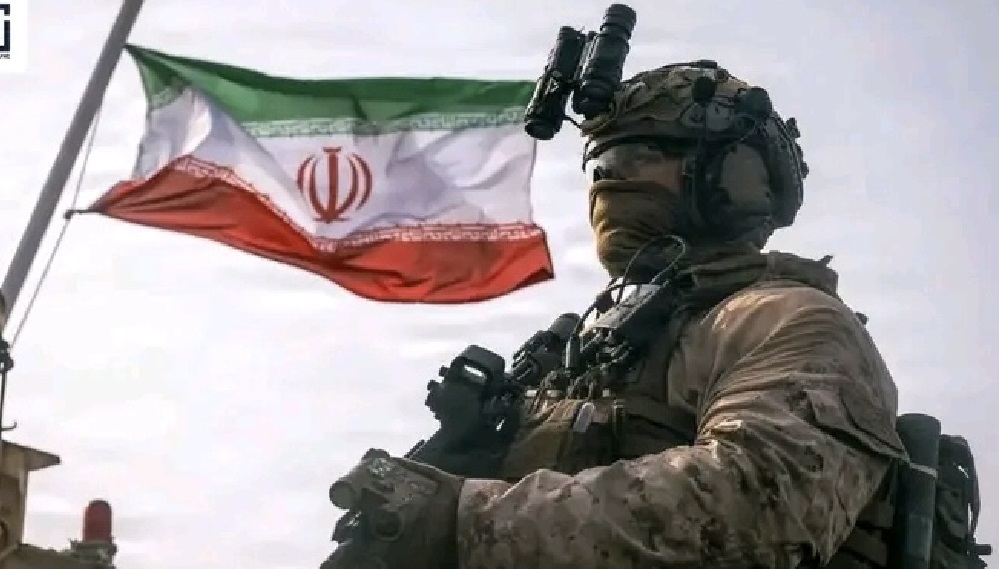
A senior Iranian military commander has threatened that one US soldier would be killed for every Iranian citizen killed in US attacks, marking a sharp escalation in rhetoric as tensions between Tehran and Washington continue to intensify.
Ali Abdollahi, commander of Iran’s Khatam al-Anbiya Headquarters, said on Friday that what he described as a principle previously demonstrated on the battlefield would now become an official equation governing Iran’s response.
According to Abdollahi, any US attack resulting in the death of an Iranian citizen would trigger a direct response against American forces.
“For every martyr from the proud people of the Islamic Republic of Iran, one American force will be eliminated,” he said.
He concluded his message with a strongly worded warning directed at US forces, saying they had been issued what he described as “a one-way ticket to hell.”
The remarks come as military tensions between Tehran and Washington continue across the region, with both sides exchanging threats amid the ongoing conflict.
Separately, Iranian Foreign Minister Abbas Araghchi said Tehran would not accept a temporary ceasefire under any circumstances unless its demands regarding the Strait of Hormuz are met.
Araghchi said the current dispute with Washington is not the result of a lack of mediators, noting that Pakistan and Qatar continue to play mediation roles. Instead, he argued that the core issue lies in US policies, which he said must change.
Responding to a question about discussions with counterparts from Russia, China, Ukraine, and Pakistan, Araghchi said Iran maintains continuous and organized consultations with Moscow and Beijing and engages in dialogue whenever opportunities arise.
He added that recent meetings with Chinese Foreign Minister Wang Yi and Russian Foreign Minister Sergey Lavrov provided an opportunity to discuss the conflict in greater detail.
Regarding Pakistan, Araghchi said it was natural to discuss mediation initiatives and proposals with Islamabad but reiterated that the fundamental problem between Tehran and Washington is not the absence of mediators but US policy.
Araghchi also stressed that Iran would not yield to what he described as American pressure or intimidation.
“Iran has shown that it will not bow to US coercion. We do not respond to the language of force, pressure, or threats. We are not afraid of threats, we do not submit to pressure, and we do not accept the language of intimidation,” he said.
He reaffirmed that protecting the Iranian people and safeguarding Iran’s interests in the Strait of Hormuz remain fundamental and non-negotiable principles for Tehran, adding that Iran would maintain its current position until what he described as the legitimate demands of the Iranian people are achieved.
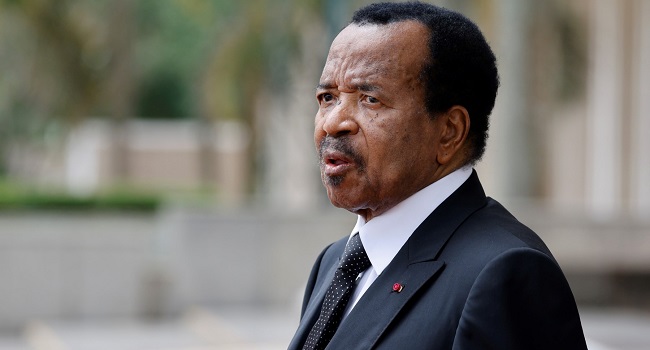
Cameroon is facing renewed political debate as President Paul Biya remains outside the country for 48 days, raising concerns among opposition leaders and many citizens over delays in government decisions and the country’s leadership.
Biya, 93, who has ruled Cameroon for more than four decades and is the world’s oldest serving head of state, left the country on June 7 for what officials described as a brief private visit to Europe with his wife, Chantal Biya.
Since then, he has remained in Switzerland, where he has frequently travelled over the years.
His prolonged stay has again led to rumours about his health. Earlier reports claimed he had been admitted to a clinic in Geneva, but Cameroon’s Communication Minister, Rene Emmanuel Sadi, denied the reports on June 18, insisting that the president had not been hospitalised.
Despite the government’s assurance, opposition parties say Biya’s continued absence has left the country without active leadership.
Mamadou Mota, vice-president of the Cameroon Renaissance Movement (MRC), said the situation reflects a clear gap in the country’s institutions.
The leader of the Cameroon Democratic Union (UDC), Patricia Tomaino Ndam Njoya, also called on the government to create a clear legal process for determining when a president is temporarily or permanently unable to carry out official duties.
The ruling party has rejected claims that the country lacks leadership. Higher Education Minister Jacques Fame Ndongo said President Biya remains fully involved in government work and continues to receive and review official documents wherever he is staying.
This is not the first time Biya’s absence has attracted public attention. In late 2024, he also spent about 50 days outside Cameroon, leading to similar concerns.
The opposition Social Democratic Front (SDF) described the country as operating without active direction, saying government activities appear to be continuing without proper leadership.
Many Cameroonians have also expressed frustration over the slow pace of government decisions. Viviane Ondoua Biwole, a public management professor at the University of Yaounde, said many people are tired of waiting for changes. She noted that the current government has remained in office for eight years, while many citizens expected a cabinet reshuffle after the last election.
Biya secured an eighth presidential term in the October election, but the result sparked protests across the country. Security forces moved against demonstrators, and the government later confirmed that several dozen people died during the unrest, although it did not release a full casualty figure. Opposition parties rejected the election outcome, while several Western embassies reacted with caution.
In his New Year’s address on December 31, Biya promised to appoint a new government in the coming days. More than seven months later, no new cabinet has been announced.
At the same time, municipal and parliamentary elections have been postponed several times, allowing current office holders to remain in their positions beyond their expected terms.
Although Cameroon has introduced some constitutional and institutional changes, including replacing the heads of both chambers of parliament in March and creating the office of vice-president through constitutional reforms in May, no one has yet been appointed to fill the new position.
The uncertainty has also encouraged the spread of false information. In June, fake documents made to resemble an official presidential decree were sent to a state-owned radio station in the capital, claiming that a vice-president had been appointed. Journalists verified that the documents were not genuine and refused to broadcast the claim.
As questions continue over who could eventually succeed Biya, political observers say there are reports of disagreements among people close to the president.
According to political analyst Stephane Akoa, different groups within Biya’s inner circle are competing for influence, while First Lady Chantal Biya is becoming more involved in government matters and is increasingly mentioned in discussions about appointments and key decisions.
Under Cameroon’s constitution, if the presidency becomes vacant and no vice-president has been appointed, Senate President Aboubakary Abdoulaye would take over temporarily until a new presidential election is held.

We Have the Right to Deal With Illegal Migration— South Africa Fires Back at Nigeria

Buhari Media Office Denies PFIPC Link, Says Former President Created Only PEAC

Mutfwang’s Apology Was Statesmanship, Not Historical Revisionism




-

 News12 hours ago
Fugitive drug kingpin, ex-int’l footballer bag 24 years jail term for cocaine importation(Photos)
-
 News16 hours ago
We don’t have current negotiations with US — Iran
-
 News30 minutes ago
UK Eases Student Visa Rules for Three African Nations
-
 News12 hours ago
Reps Order IGP to Produce Alleged Fake Presidential Council DG as Probe Uncovers Fresh Forgery Claims
-
 News19 hours ago
Army Nabs Wanted Soldier Accused Of Supplying Uniforms To Terrorists While Escaping to Cameroon
-

 News16 hours ago
Zamfara federal lawmaker urges constituents to withdraw money to buy weapons to defend themselves
-
 News33 minutes ago
Nigeria, South Africa Set for Fresh Diplomatic Talks Amid Xenophobia Concerns
-
 News14 hours ago
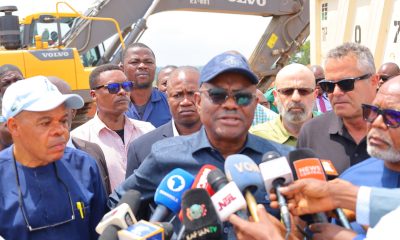
No Rest Until Key FCT Projects Are Delivered, Wike Declares(Photos)
Warning: Undefined variable $user_ID in /home/naijuinz/public_html/wp-content/themes/zox-news/comments.php on line 49
You must be logged in to post a comment Login