By Sonny Aragba-Akpore


Early last week,the Association of Licensed Telecommunications Operators of Nigeria (ALTON) announced a temporary suspension of Subscriber Identification Module (SIM) card services nationwide to address concerns raised by the National Identity Management Commission (NIMC) on migration of SIM related services to the national platform.
In a statement issued on Tuesday July 1,2025 and signed by ALTON chairman, Gbenga Adebayo an engineer and publicity secretary, Damian Udeh, a lawyer,said the transition, which affects processes such as SIM swap, SIM replacement, new SIM activations, and Mobile Number Portability (MNP), has introduced unforeseen technical challenges, temporarily disrupting real-time identity verification services nationwide.
Although it claimed it was giving such directives on the instructions of NIMC,there are also strong indications that the steps were being taken to forestall and minimize further congestion on the various networks which have continued to experience outages leading to uncomfortable customer experience.
Poor services have been traced to tired and sometimes decaying infrastructure as Mobile Network Operators (MNOs) are believed to have been traumatized by rising foreign exchange rates,dwindling revenue occassioned by customer aparthy to subscriptions as a result of a comatose economy and unrealistic purchasing power.There are also issues of right of way challenges created by local government and state officials.
While operators emphasize services in the urban and semi urban areas where the economy appears resilient,rural dwellers have been left to bemoan a fate that makes them resort to their own devices to communicate.
Even in the so called urban centres,there are several black spots so much that no urban dwellers can lay claim to robust services and as a result,subscribers are plagued constantly by incomplete calls,drop calls and poor data services.
Except for those who may pretend that all is well,the situation is not as rosy as we imagine.
Strangely,ALTON and its members are helpless.
Even the regulator,the Nigerian Communications Commission (NCC) appears handicapped as it cannot go beyond dishing out guidelines to improve service delivery in an economy guided by business decisions.
Beautiful as such guidelines and policies may seem,the operators are clearly the ones to determine how fast and far they can run especially since any race or decision is based on funding more so when foreign direct investment (FDI) has been on a steep decline in the last few years.
Although not generally discussed, one critical factor is the shortage of foreign exchange in Nigeria.
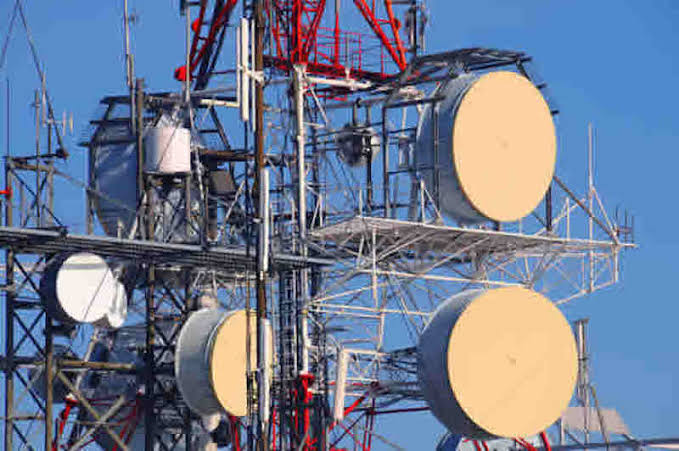
Due to paucity of local funding,operators rely heavily on foreign exchange for imported equipment and services—ranging from base stations,towers and routers to software licensing and satellite connectivity, and so foreign exchange sourcing remains a nightmare and operators face delays in importing vital infrastructure components;Costs of equipment rise, especially when they have to source foreign currency from the parallel market at higher rates;Payments to international vendors are delayed, straining business relationships and slowing maintenance or support services; and expanding projects are stalled, as the deployment of 4G and 5G networks is hindered.ALTON stated last week that“this disruption (of SIM service suspension)follows a recent directive from the NIMC, mandating our Mobile Network Operator (MNO) members to transition to a new identity verification platform. The migration process, which is central to the verification required for SIM registration and other services, has unfortunately impacted service availability,”In 2024, the NCC) established comprehensive Quality of Service (QoS) thresholds to enhance the performance of telecommunications services in the country. These standards, outlined in the Nigerian Communications (Quality of Service) Regulations, 2024, and the accompanying Business Rules, set clear expectations for telecom operators across various network segments.
These were enshrined in the Key Performance Indicators (KPIs) and Thresholds specifically for operators’ guidance.
The regulations define specific KPIs for 2G, 3G, and 4G networks, focusing on critical metrics such as:
.Drop Call Rate: The percentage of calls that are unexpectedly terminated.
.Call Setup Success Rate: The percentage of calls successfully connected.
.Traffic Congestion: The level of network congestion affecting call and data services.
Operators were required to meet these KPIs to ensure optimal service delivery.
Penalties were also prescribed for failure to comply .
These penalties include a fine of ₦5 million per infraction, plus an additional ₦500,000 for each day the violation persists .
The regulator categorized the country into three priority reporting areas to tailor service quality efforts:
For instance Priority 1 Areas including Lagos, Abuja, Rivers State Require 100% compliance with QoS KPIs.
While priority 2 Areas: Require 80% compliance.
Priority 3 Areas: Require at least 70% compliance.
“This tiered approach ensures that regions with higher demand receive focused attention .”Telecom operators were expected to submit monthly QoS reports to the NCC, detailing their performance against the established KPIs.
“The NCC employs various methods to assess compliance, including drive tests, consumer surveys, and data from Network Operating Centres (NOCs).”
Although the NCC has the authority to impose administrative fines on operators who fail to meet QoS standards but it is not clear how this could be done especially when the operators are handicapped .
The NCC fines range from ₦5 million to ₦15 million per infraction, with daily penalties of ₦500,000 to ₦2.5 million for ongoing violations .
“These regulations aim to improve the overall telecommunications experience for Nigerian consumers by ensuring consistent and reliable service delivery across the country” NCC documents submit.
In reality,poor quality of service is traceable to a myriad of factors including Inadequate Infrastructure which are
Poorly maintained or outdated network infrastructure leading to frequent breakdowns and service interruptions.
There are also insufficient investments in expanding network coverage, especially in rural areas.
The recurrence of poor and
unreliable electricity supply forces telecom operators to rely heavily on expensive generators, increasing operational costs and causing downtime.
High subscriber density without proportional infrastructure expansion causes network congestion, leading to dropped calls and slow data speeds.
Regulatory challenges especially in delays and inconsistencies in government policies and regulatory frameworks hinder timely upgrades and improvements in telecom services.
Lack of efficient customer support and service management contributes to unresolved complaints and customer dissatisfaction.
Frequent vandalism of telecom equipment and theft of cables disrupt network services and increase maintenance costs.
Scarcity of adequate frequency spectrum allocated to operators restricts network capacity and quality.
There is deficiency in expertise through Shortage of skilled technical personnel that affects the maintenance and optimization of telecom networks.
Above all high operational costs and economic instability limit the ability of operators to invest in quality infrastructure.
“Difficult terrain and dispersed populations make infrastructure deployment costly and challenging, impacting service consistency” operators lament.