Connect with us

News

Broadband access and affordability worry ITU

Published

on

ADVERTISEMENT
Zoom Ad
ADVERTISEMENT
Zoom Ad

By Sonny Aragba-Akpore

Even when it seems that Nigeria wobbles on the road to broadband penetration especially as its quest to meet its own 70% set target appears unrealistic going by the National Broadband Plan(2020-2025), the country is not alone .
The United Nations (UN) body on information and communications technology (ICT) the International Telecommunications Union (ITU) and United Nations Education,Scientific and Cultural Organization ( UNESCO ) are more worried.
The ITU in collaboration with UNESCO created Broadband Commission in July 2010, and it was specifically to ensure broadband connectivity as part of global Sustainable Development .
But when they met in Geneva,Switzerland on July 6,2025 to mark the 15th anniversary of the commission,and take stock of what has been achieved in broadband connectivity in 15 years, its verdict was not very comfortable.
“In this landmark year for the Broadband Commission, it is heartening that 95 per cent of humanity is within reach of broadband, however, the real challenge is ensuring that everyone can afford access, express themselves, and use information in a meaningful way,” according to Tawfik Jelassi, UNESCO Assistant Director-General.
Speaking further,he said “UNESCO, together with its partners, is working to address the barriers – including those related to skills development and local language content – to ensure that the promise of connectivity for sustainable development becomes a reality for all.”
What this means is that though ,broadband penetration is possible for 95% of global population,the twin problems of access and affordability remain hard nuts to crack.
Are ITU and UNESCO in a dilemma?
The meeting last week in Geneva threw more light on this.
“The Broadband Commission´s work over 15 years has helped change global connectivity and digital development,” said Carlos M. Jarque, representing Carlos Slim Helu ,Co-Chair of the Commission. “Since 2010, the number of Internet users has grown by the billions. To expand on this progress, we need to encourage forward-looking regulatory frameworks, strong investment, digital transformation in businesses and public institutions, and digital skills of the population.”
With 2.6 billion people around the world still offline, the Broadband Commission’s work serves as a policy and programmatic guide for national and international action in broadband development and for achieving universal connectivity.
“Fifteen years ago, we began with the simple conviction that broadband must reach everyone, everywhere, because it is an essential driver of sustainable development,” said President Kagame, Co-Chair of the Commission.
“Today, broadband powers economies, expands access to knowledge in rural as well as urban areas, and brings communities closer, across continents.”
​​​​​The United Nations (UN)Broadband Commission for Sustainable Development met in Geneva, Switzerland, July 6,2025 to commemorate 15 years of advancing universal broadband access and digital inclusion.
The meeting took place as digital technology communities get set to join together for the World Summit on the Information Society (WSIS)+20 High-Level Event 2025 and the AI for Good Global Summit 2025, which also took place in Geneva last week.
Founded in 2010 by the International Telecommunication Union (ITU), the United Nations Educational, Scientific and Cultural Organization (UNESCO), co-Chaired by President​ Paul Kagame of Rwanda, and Carlos Slim Helú,a Mexican investor and philanthropist,the public-private collaboration has elevated universal broadband connectivity to the forefront of global policy discussions.
Commissioners, including global leaders, CEOs and heads of international organizations, have championed broadband as a cornerstone of economic growth and sustainable development.
Once seen as technical infrastructure, broadband is now central to national competitiveness and essential services that benefit economies, governments, and societies.
“Since our first gathering in 2010, this Commission has put broadband at the front and centre of every global development conversation, and consistently championed connectivity by setting ambitious targets for access, use, affordability, skills and policy,” said ITU Secretary-General Doreen Bogdan-Martin, Co-Vice Chair of the Commission. “This work has been transformative for expanding digital connectivity, and is a valuable precedent for future collaborative, multistakeholder work to connect the unconnected.”
During the meeting, the Broadband Commission reviewed the results of the Data Governance Toolkit: Navigating Data in the Digital Age.
The toolkit provides practical guidance for policymakers reviewing data regulation, cross-border flows, and responsible data use in the era of AI and emerging technologies.
The Commission’s Working Group on Data Governance​​ report was formally issued on Tuesday, July 8 at the World Summit on the Information Society (WSIS)+20 High-Level event 2025.
The Broadband Commission for Sustainable Development was established in 2010 by ITU and UNESCO with the aim of boosting the importance of broadband on the international policy agenda and expanding broadband access in every country as key to accelerating progress towards national and international development targets. Led by President Paul Kagame of Rwanda and Carlos Slim Helù of Mexico, it is co-chaired by ITU’s Secretary-General Doreen Bogdan-Martin and UNESCO Director-General Audrey Azoulay. It comprises over 50 Commissioners who represent a cross-cutting group of top CEO and industry leaders, senior policymakers and government representatives, and experts from international agencies, academia and organizations concerned with development.
The ITU Facts and Figures released on November 27,2024 indicated that ​​​​​​ an estimated 5.5 billion people were online in 2024.This was an increase of 227 million individuals based on revised estimates for 2023, according to new figures from the ITU.
The estimates featured in ITU’s Facts and Figures 2024 show that connectivity continues to increase worldwide but reveal the complexities of reaching communities in low-income countries.
“While an estimated 68 per cent of the global population is now online and all indicators tracked in the report show improvement, stubborn digital divides persist and about one-third of the world’s people remain offline.Facts and Figures 2024 is a tale of two digital realities between high-income and low-income countries,” said ITU Secretary-General Bogdan-Martin. ““Stark gaps in critical connectivity indicators are cutting off the most vulnerable people from online access to information, education and employment opportunities. This report is a reminder that true progress in our interconnected world isn’t just about how fast we move forward, but about making sure everyone moves forward together.

Facts and Figures 2024 shows that Internet use remains tightly linked to the level of development.In high-income countries, 93 per cent of the population is estimated to be using the Internet in 2024. This contrasts with low-income countries where only 27 per cent of the population is estimated to be online.

“Connectivity challenges also remain in the least developed countries (LDCs) where only 35 per cent of the population is estimated online and landlocked developing countries (LLDCs) with only 39 per cent online.In total, an estimated 2.6 billion people were offline in 2024, accounting for 32 per cent of global population. This is down from the newly revised estimate of 2.8 billion for 2023, which represents 35 per cent of the population.“The world is inching towards universal access at a time that it should be sprinting,” said Cosmas Luckyson Zavazava, Director of ITU’s Telecommunication Development Bureau. “While we continue to make progress on connectivity, our advances mask significant gaps in the world’s most vulnerable communities, where digital exclusion makes life even more challenging. We must intensify our efforts to remove the barriers that keep people offline and close the usage gap, and renew our commitment to achieving universal and meaningful connectivity, so that everyone can access the Internet.”

Advertisement
Continue Reading
Advertisement
Click to comment

Warning: Undefined variable $user_ID in /home/naijuinz/public_html/wp-content/themes/zox-news/comments.php on line 49

You must be logged in to post a comment Login

Leave a Reply

News

Sad: Ebola Outbreak In DR Congo Claims Over 1,400 Lives, Cases Surpass 3,200

Published

on

ADVERTISEMENT
Zoom Ad
ADVERTISEMENT
Zoom Ad

The Democratic Republic of the Congo (DRC) is battling what health officials have described as the fastest-growing Ebola outbreak on record, with more than 1,400 people reported dead and over 3,200 confirmed cases.

According to government figures released on July 6, the death toll had risen to 1,405, while confirmed infections surpassed 3,200 since the outbreak was declared on May 15.

Health officials said the outbreak is spreading faster than any previous Ebola epidemic. During the 2013–2016 West Africa outbreak, which killed more than 11,000 people from over 28,000 confirmed cases, it took approximately eight months for the death toll to reach 1,000.

In the current outbreak, the same milestone was reached in less than 10 weeks.

Advertisement

The outbreak marks the 17th recorded Ebola outbreak in the DRC but only the third caused by the Bundibugyo strain of the virus. There is currently no approved vaccine or treatment specifically for the strain.

The World Health Organisation (WHO) has warned that the actual number of infections could be between two and four times higher than official figures.

Health authorities are also concerned that approximately 80 per cent of newly reported cases are emerging outside known chains of transmission, making it increasingly difficult to trace infections and contain the spread.

The outbreak has been further complicated by industrial action among healthcare workers over unpaid salaries and allowances.

Advertisement

About 100 doctors, nurses and security personnel at the Elikya Ebola Treatment Centre in Bunia, Ituri Province, reportedly stopped work and staged protests over unpaid performance bonuses. The disruption affected one of the region’s key Ebola response centres.

Healthcare workers at Bunia General Hospital, the largest medical facility in the region, also reportedly went on strike over unpaid salaries, with some staff telling the Associated Press that they had not received their wages since joining the Ebola response.

Director-General of the Africa Centres for Disease Control and Prevention, Jean Kaseya, told Sky News that a lack of resources was worsening the situation.

“These are people dying,” he said. “They are dying because we don’t have vaccines, we don’t have medicine, we don’t have funding.”

Advertisement

Ebola is transmitted through direct contact with the blood or bodily fluids of infected people or animals, as well as contaminated objects. The virus can also spread through contact with the bodies of people who have died from the disease.

Symptoms typically develop between two and 21 days after infection and may initially include high fever, severe muscle and joint pain, headaches and a sore throat.

As the disease progresses, patients may experience vomiting, diarrhoea, skin rashes, liver and kidney failure and, in severe cases, internal and external bleeding.

The Bundibugyo strain has an estimated fatality rate of between 30 and 50 per cent.

Advertisement

Despite the absence of an approved vaccine for the strain, researchers have begun testing an experimental vaccine developed using technology similar to that used in the Oxford-AstraZeneca COVID-19 vaccine.

According to the BBC, the first volunteer received the experimental vaccine last week as part of an early-stage clinical trial.

Meanwhile, the International Organisation for Migration (IOM) has warned that the movement of Ebola victims’ bodies between different parts of the country for funerals and burials could further accelerate the spread of the virus.

The organisation stressed that Ebola remains highly infectious after death, making safe and controlled burial practices critical to efforts to contain the outbreak.

Advertisement
Continue Reading

News

Tinubu will aim at third term if health permits him- Ex- SGF Babachir Lawal claims

Published

on

ADVERTISEMENT
Zoom Ad
ADVERTISEMENT
Zoom Ad

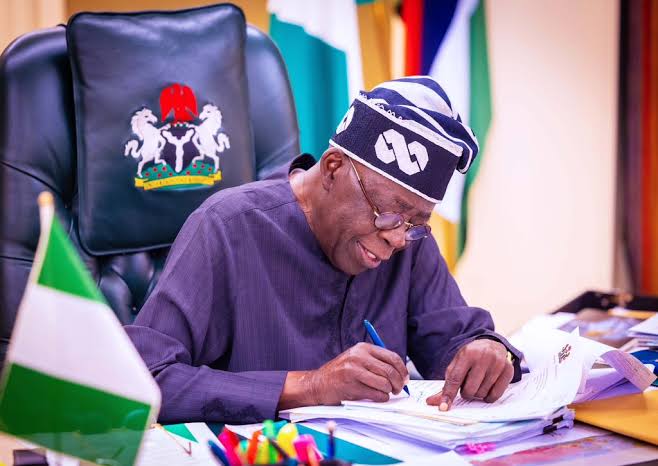
Ex-Secretary to the Government of the Federation (SGF), Babachir Lawal, has claimed that President Bola Tinubu could aim at a third term in office if circumstances allow it.

Lawal made the statement while speaking on The SYMFONI Podcast, where he discussed Nigeria’s political system, elections, and governance.

Reacting to questions if President Tinubu may attempt to extend his tenure beyond the constitutionally allowed two terms, the former SGF said he believed such a move could happen if the opportunity presents itself.

“But Tinubu will go for third term, if God gives him the long life to do it, he will.

Advertisement

What will stop him now? Blind Nigerians or a pliant National Assembly of crooks.”

Babachir Lawal, who served as Secretary to the Government of the Federation under former President Muhammadu Buhari, also criticised Nigeria’s electoral process, alleging that many political parties do not practise true internal democracy during their primaries.

He argued that after elections, aggrieved candidates often resort to legal battles while ordinary Nigerians eventually lose interest in challenging the system.

“The candidates will go to the courts and the lawyers will collect billions of naira and impoverish them further. And then that’s the end.”

Advertisement
Continue Reading

News

Just in: Ahead 2027, Kano NDC Senators Meet Tinubu over Planned Defection to APC

Published

on

ADVERTISEMENT
Zoom Ad
ADVERTISEMENT
Zoom Ad

Fresh challenge has surfaced over the political future of Kano Central Senator Rufa’i Hanga after he held a closed-door meeting with President Bola Tinubu at the Presidential Villa in Abuja, sparking widespread speculation that he may soon dump the Nigeria Democratic Congress (NDC) for the ruling All Progressives Congress (APC).

The meeting, which took place on Sunday, has intensified discussions within political circles, especially as Hanga is currently the only NDC senator representing Kano State in the National Assembly. Hanga arrived at the State House alongside former Senator Kabiru Gaya and was ushered into the Presidential Villa by Deputy Senate President Barau Jibrin.

Following the meeting, Barau described the engagement as “fruitful,” although he did not disclose details of the discussions.Government The senator’s visit to the Presidency came shortly after separate meetings with APC National Chairman Nentawe Yilwatda and Kano State Governor Abba Yusuf, further fueling reports that he is preparing to cross over to the APC ahead of the 2027 general elections. Political observers believe the sequence of high-level consultations is a strong indication that Hanga may be set to formally align with the ruling party after his relationship with NDC leader Rabiu Kwankwaso reportedly deteriorated.

The alleged rift between the two politicians became public after Hanga failed to secure the NDC senatorial ticket for another term and was also overlooked for the party’s deputy governorship nomination.

Advertisement

Executive Branch Analysts say welcoming Hanga into the APC would strengthen the party’s influence in Kano, particularly in Kano Central Senatorial District, one of the state’s most politically significant constituencies. Hanga is regarded as an experienced politician with deep roots in northern Nigerian politics.

He previously served as the founding National Chairman of the Congress for Progressive Change (CPC), the political platform established by former President Muhammadu Buhari before it merged with other parties to form the APC in 2013.Africans & Diaspora Over the years, the senator has built a reputation for maintaining close contact with his constituents through grassroots empowerment initiatives and welfare programmes across the 15 local government areas that make up Kano Central, including Kano Municipal, Tarauni, Dala, Nassarawa and Fagge. Although opinions remain divided over his personal political strength, supporters insist he enjoys considerable influence among traditional institutions, community leaders and grassroots supporters.

Many analysts believe that joining the APC could provide Hanga with renewed political relevance, access to federal support and the opportunity to secure a strategic position within the party in Kano State. His fallout with Kwankwaso became more pronounced during a recent radio interview in Kano, where he openly accused the former governor of betraying him by denying him both a return Senate ticket and the NDC deputy governorship slot.

Responding to claims that his age and health influenced the decision, Hanga dismissed the argument and insisted he remained physically fit to continue serving. “How can Kwankwaso cite my age and health condition to deny me the chance? As of today, I am healthier than Kwankwaso.

Advertisement

His frequent references to my leg condition are nothing but a sham. Regarding age, he is two years older than I am,” Hanga said. He maintained that his leg condition has never affected his performance in the Senate and accused the NDC leadership of deliberately sidelining him.

With political realignments gathering momentum ahead of the 2027 elections, Hanga’s latest engagements with President Tinubu and senior APC leaders have further intensified speculation that a formal defection announcement could be imminent.

Continue Reading

Trending

Copyright © 2024 Naija Blitz News