Connect with us

News

50% Deficit in Skilled Renewable Energy Workers Hindering Sector Growth – Rep Ogene

Published

on

ADVERTISEMENT
Zoom Ad
ADVERTISEMENT
Zoom Ad
HBy Gloria Ikibah 
 
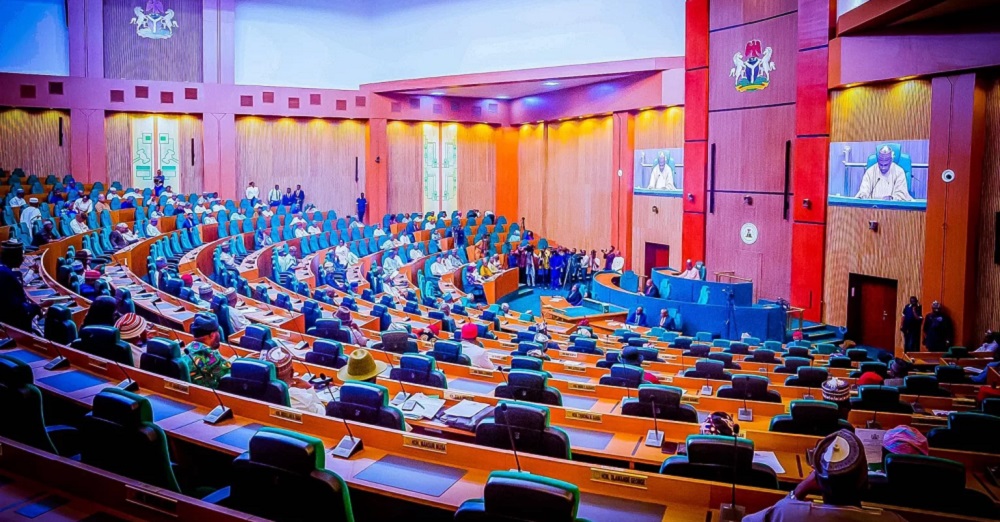
The House of Representatives committee on Renewable Energy has disclosed that Nigeria has 50 per cent unmet needs in the Renewable Energy skilled labour sector.
 
Chairman, House committee on Renewable Energy, Rep. Afam Ogene, stated this at the Africa Policy Dialogue (APD) workshop with theme: “Green jobs and low carbon transition,” on Thursday in Abuja.
 
According to Rep. Ogene the unmet needs had impeded employment of quality technicians and employees in the sector.
 
He said: “Today, nearly 50 per cent of skilled labour needs in Nigeria’s renewable sector remain unmet. 
 
“Employers across the country consistently report difficulty hiring qualified technicians, engineers, and system operators”.

He noted a significant shortfall in the local production of renewable energy equipment, stressing that much of the machinery used in the sector is still sourced from abroad.

This reliance on imports, he warned, limits opportunities for creating environmentally friendly jobs within the country.

Ogene clarified that the problem does not stem from a lack of raw materials for local production. Instead, it is largely due to insufficient technical expertise and weak policy frameworks that fail to encourage effective knowledge transfer.

He emphasised that the challenge goes beyond workforce limitations, pointing to structural policy gaps as a major contributing factor.

Advertisement

Citing China as an example, the Committee Chairman highlighted how government-backed initiatives and funding have helped the Asian nation generate over seven million green jobs.

He therefore urged Nigerian universities and research institutions to adapt their curricula to meet the evolving requirements of the energy transition.

Reaffirming the legislature’s commitment to advancing renewable energy, Ogene stressed the importance of enacting robust green jobs legislation, particularly targeting women and young people.

He added that crafting such laws would require careful planning to ensure they align with existing regulations and deliver real, measurable outcomes.

Advertisement

He expressed confidence in the capacity of his team which includes seasoned colleagues, expert legal consultants, and skilled legislative drafters—Ogene expressed optimism that they would produce a well-structured, impactful law that Nigerians could take pride in.
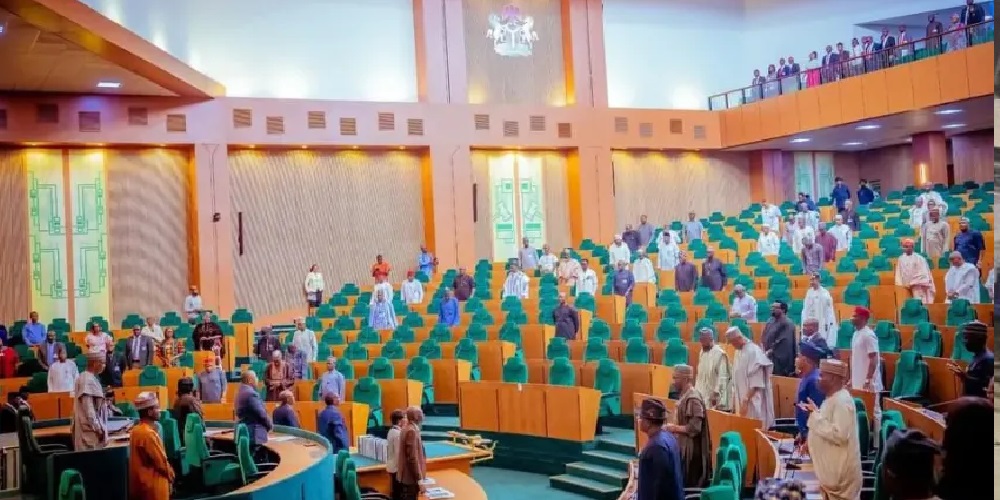
The Speaker, House of Representatives, Rep. Tajudeen Abbas said the dialogue was in line with the agenda of the 10th Assembly which aligned directly with the broader oversight and legislative responsibility.
 
Abbas who was represented by the Deputy Minority Whip, Rep. George Ozodinobi, affirmed the commitment of the 10th Assembly to investigate policy gaps and propose solutions that were meaningful, realistic and impactful in addressing the challenge.
 
He said: “Let me sincerely thank the Honourable Chairman and Members of the Committee on Renewable Energy for their diligence, foresight, and relentless effort in championing this important cause.
 
“As a responsible People’s House, we are fully aware of the strategic importance of green energy, not just because of its environmental significance but also due to its immense economic potential.”
 
Speaker Abbas also said that the loud and urgent call for a just energy transition in Nigeria was a reflection of a dual reality.
 
According to him, our vulnerability to the impacts of climate change and our untapped renewable energy potential. 
 
The Speaker reiterated the determination of the parliament to collaborate with relevant stakeholders in creating jobs to improving energy access, from preserving our ecosystems to reducing dependency on fossil fuels.
 
He further expressed the imperatives of the legislative agenda as placed on a strong emphasis on energy transition as a key pillar in tackling unemployment and environmental degradation.
 
He said that Nigeria was  at a critical juncture where bold and deliberate policy choices could determine expected leap ahead into a sustainable future or remain stalled by outdated systems.
 
Abbas also called for urgent action to tap into the renewable energy as a way forward in tackling youth unemployment and under-employment.
Also speaking, representative of INCLUDE Knowledge platform,  Ms Victoria Manya expressed the group’s belief in not just transition but  increasing renewable energy skills in Africa.
 
Manya warned that the low-carbon transition risked becoming the handmaiden of fossil fuel interests—delivering decarbonization targets on paper.
 
“What we must do is reclaim the transition—not only as a climate imperative—but as a generational opportunity to rewrite our social contract.
 
“In Nigeria, the data is clear: too many young people are unemployed or underemployed, and too many women are shut out of emerging green sectors.”
 
She explained that “a just transition must not only ask how we reduce emissions—but who gets the new jobs, who trains the workforce, and who shapes the policies.”
 
Manya said that Nigeria stood at the same global threshold with bigger renewable energy nations, with a unique opportunity to lead Africa in embedding labour justice into climate action.
Continue Reading
Advertisement
Click to comment

Warning: Undefined variable $user_ID in /home/naijuinz/public_html/wp-content/themes/zox-news/comments.php on line 49

You must be logged in to post a comment Login

Leave a Reply

News

Jonathan warns political parties, judiciary against undermining Africa’s democracy

Published

on

ADVERTISEMENT
Zoom Ad
ADVERTISEMENT
Zoom Ad


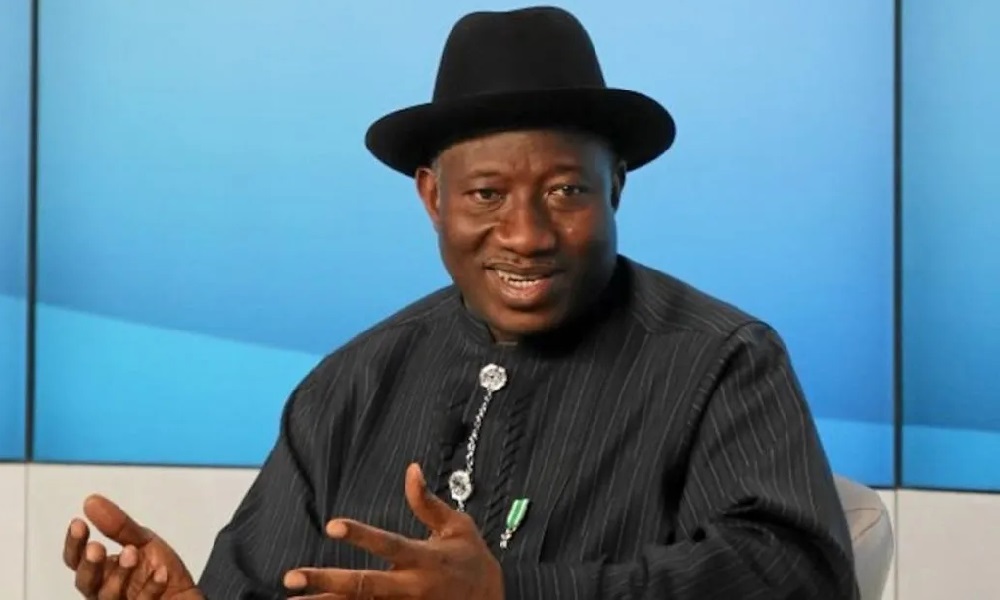
Ex-President Goodluck Jonathan has charged political parties and the judiciary across Africa to strengthen democratic institutions and protect the will of the people, warning that democracy could become a mere facade if its foundational principles are weakened.

Jonathan, Chairman of the Goodluck Jonathan Foundation (GJF), gave the charge on Tuesday at the closing of the 2026 GJF Democracy Dialogue in Bauchi, with the theme, “Beyond Elections: Can Political Parties and the Judiciary Save Africa’s Democracy?

He said political parties must become genuine democratic institutions by embracing internal democracy, producing credible leaders, respecting their own rules and putting national interest above
partisan interests.

Advertisement

“Strong democracies cannot emerge from weak political parties,” Jonathan said, calling for stronger frameworks across Africa to regulate political parties and enhance democratic integrity.

He cited Kenya’s model of having a dedicated institution to regulate political activities alongside the electoral management body, saying other African countries could adopt similar arrangements to strengthen political accountability.

The former president also placed a heavy responsibility on the judiciary, saying it carried “an equally or more profound responsibility” in protecting democracy.

He urged judicial officers handling political cases to be guided by the principles represented by Lady Justice; impartiality, fairness and the rule of law.

Advertisement

Jonathan expressed concern that in some African countries, electoral contests were increasingly being settled in courtrooms rather than at the ballot box.

While acknowledging the judiciary’s constitutional responsibility to resolve electoral disputes, he said democracy was healthiest when the freely expressed will of the people was clear, respected and accepted by all.

“The courtroom should not become the arena where political mandates are routinely determined,” he warned.

According to a statement by Jonathan’s Special Assistant on Media, Ikechukwu Eze, the former President said a functional democracy must rest on eight cardinal pillars: sovereignty of the people, rule of law, separation of powers, protection of fundamental rights and freedoms, accountability and
transparency, free and credible elections, political pluralism, and an active civil society.

Advertisement

He cautioned that although no country could score perfectly on all the pillars, substantial compliance with most of them was necessary for democracy to remain stable and sustainable.

“When several of these foundations of democracy are weakened, what emerges is not genuine democracy but a pseudo-democracy; one that retains democratic forms while steadily losing democratic substance,” he said.

Jonathan urged African leaders to consciously build their political parties, legislatures, executives and judiciaries around these democratic principles.

“History will judge our democracies not by the number of elections we conduct, but by the strength of the institutions we build and the fidelity with which we uphold these democratic pillars,” he said.

Advertisement

He called on African countries to move away from the cycle of political instability and electoral crises and build strong institutions capable of promoting peace, development and shared

prosperity.

Jonathan thanked the Bauchi State Government and Governor Bala Mohammed for supporting the dialogue, as well as former Nigerian President Olusegun Obasanjo, and other participants for attending the event.

Advertisement
Continue Reading

News

Just in: Police summon Osun Senator over alleged violence threat against Accord members

Published

on

ADVERTISEMENT
Zoom Ad
ADVERTISEMENT
Zoom Ad


The Osun State Police Command has summoned Senator Francis Fadahunsi, representing Osun East Senatorial District, over comments attributed to him in a viral video concerning members of the Accord Party.

The invitation followed public outrage over the video, in which Fadahunsi, speaking in Yoruba during an All Progressives Congress (APC) campaign event in Ilesa, was allegedly heard making remarks interpreted as a threat against Accord supporters.

In a letter dated August 11, 2026, the police directed the senator to appear before the State Criminal Investigation Department in Osogbo at 11am on Wednesday, August 12, to clarify the circumstances surrounding the remarks.

Advertisement

The letter, signed by Samuel Etaifo Erale, commissioner of police in charge of elections in Osun State, said the invitation was based on allegations that Fadahunsi made statements considered threatening, inciting and intimidating.

The invitation is premised on information in possession of the Nigeria Police alleging that during your address at the aforementioned programme, you made statements considered to be threatening, inciting and intimidating in nature, and the statement has already been in circulation on various electronic and social media platforms,” the letter stated.

The controversy erupted after a video surfaced in which Fadahunsi was reportedly heard telling APC supporters to “kill” Accord members. The remarks drew widespread condemnation as the state prepares for Saturday’s governorship election.

Fadahunsi later denied calling for violence, saying his remarks had been taken out of context. His media team explained that he was urging voters to defeat the Accord Party through their votes, describing the statement as political and metaphorical.

Advertisement

The controversy comes amid political tension in Osun, with incumbent Governor Ademola Adeleke seeking re-election on the Accord platform and APC candidate Bola Oyebamiji among the major contenders in the August 15 poll.

Continue Reading

News

Ebonyi State Assembly passes Bill regulating house rent, agent fees

Published

on

ADVERTISEMENT
Zoom Ad
ADVERTISEMENT
Zoom Ad


​The Ebonyi State House of Assembly has passed a landmark executive bill aimed at regulating the trade of metal and electrical scraps, standardising residential rent, and capping property agency fees across the state.

Presided over by the Speaker, Moses Odunwa, during Tuesday’s plenary at the Assembly Complex on Nkaliki Road, the law, cited as the Ebonyi State Sale of Scraps, House Rent, and Agent Fees Regulation Law 2026, came into effect immediately upon passage on August 11, 2026.

The legislation establishes strict regulatory frameworks to curb public property vandalism, checkmate environmental degradation, and eliminate exploitative practices within Ebonyi’s real estate market.

Advertisement

Some provisions of the law state that unlicensed buying, selling, possession, transportation, or disposal of metal and electrical scraps is now strictly prohibited. Violators face up to two years’ imprisonment, a fine not exceeding ₦500,000, or both.

It states that standard rent tariffs prescribed by Governor Francis Nwifuru will govern applicable housing categories; landlords are legally barred from demanding rates exceeding the prescribed caps. Furthermore, landlords who obtain possession orders through fraud, misrepresentation, or concealment of facts face up to two years’ imprisonment.

The legislation indicated that agency fees for real estate transactions are now capped at a maximum of 2% of the gross transaction value for both professional and non-professional agents.

To enforce transparency and accountability, all estate agents operating within the capital city must register with the Ministry of the Capital City.

Advertisement

Presenting the merits of the executive bill, Leader of the House Kingsley Ikoro urged his colleagues to give the measure swift passage, emphasising its role in safeguarding public infrastructure and protecting vulnerable tenants.

Echoing these sentiments, several lawmakers voiced strong support during deliberations: Victor Nwoke (Abakaliki North), Nwodo Nwodo (Ebonyi North West), Oluchukwu Ukie Ezeali (Afikpo East), Friday Ogbuewu (Ezza South), Celestine Ogba (Onicha East)

The lawmakers described the legislation as a timely intervention against the surge in municipal scrap theft and arbitrary rent hikes by speculative landlords.

Speaking shortly after the bill passed its third reading following a clause-by-clause consideration in the Committee of the Whole, Speaker Moses Odunwa remarked, “Scrap dealers have shown a brazen lack of restraint, causing widespread havoc to critical public infrastructure and private property. This law restores sanity to our property market and prioritises overall public safety.”

Advertisement

In other legislative business, the House considered and formally adopted the Auditor-General’s Report on the Consolidated Financial Statements of the Ebonyi State Government for the fiscal year ended December 31, 2025, confirming its alignment with standard accounting principles.

Channels TV

Continue Reading

Trending

Copyright © 2024 Naija Blitz News