
News
10th NASS To Provide Legislative Support For Crucial Sector – Speaker

- /home/naijuinz/public_html/wp-content/plugins/mvp-social-buttons/mvp-social-buttons.php on line 27
https://naijablitznews.com/wp-content/uploads/2025/07/IMG-20250730-WA0017-1000x600.jpg&description=10th NASS To Provide Legislative Support For Crucial Sector – Speaker', 'pinterestShare', 'width=750,height=350'); return false;" title="Pin This Post">
- Share
- Tweet /home/naijuinz/public_html/wp-content/plugins/mvp-social-buttons/mvp-social-buttons.php on line 72
https://naijablitznews.com/wp-content/uploads/2025/07/IMG-20250730-WA0017-1000x600.jpg&description=10th NASS To Provide Legislative Support For Crucial Sector – Speaker', 'pinterestShare', 'width=750,height=350'); return false;" title="Pin This Post">



. ‘We’ll continue to dismantle drug cartels and their financial spine,’ Marwa vows
. Gov. Sanwo-Olu, CG Customs Adeniyi, Naval Chief commend partnership with NDLEA on drug war
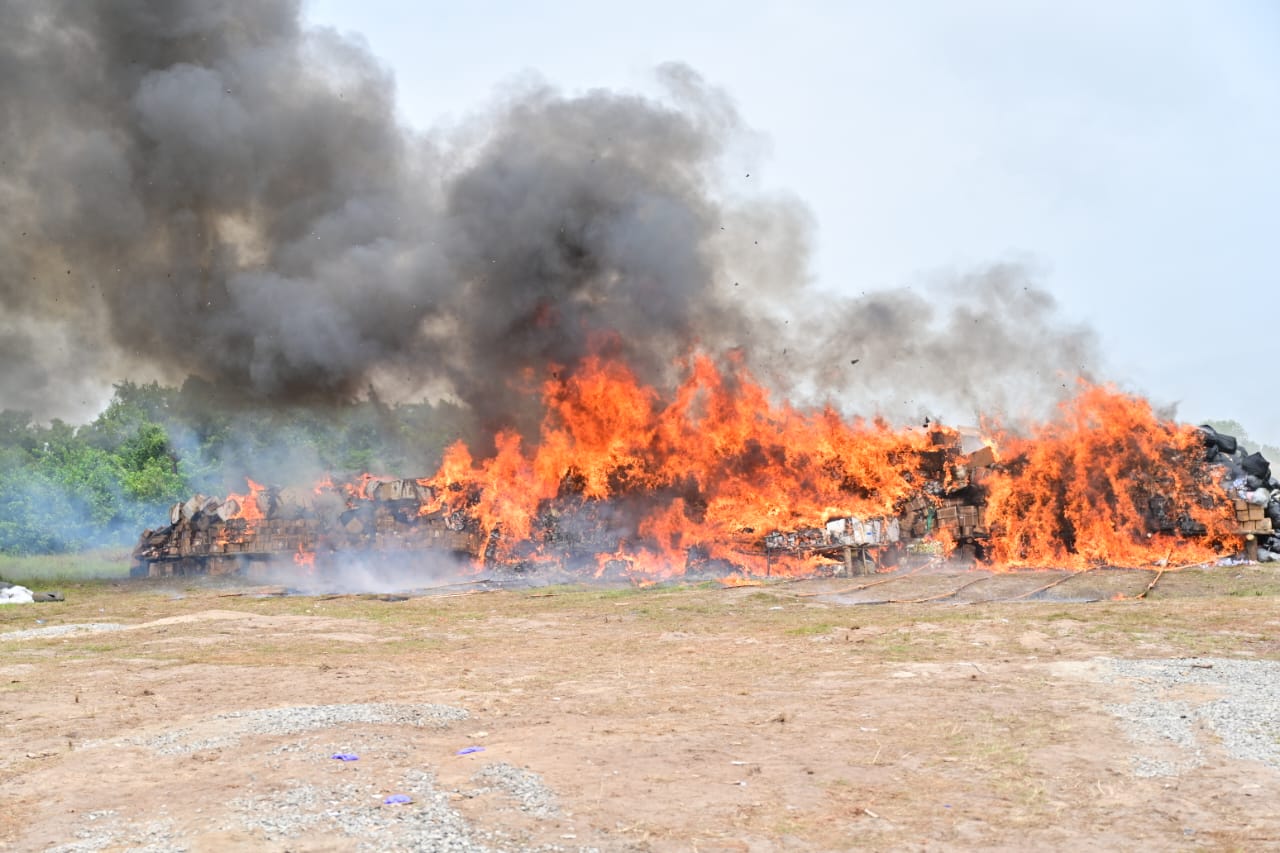
The National Drug Law Enforcement Agency (NDLEA) has publicly destroyed 329,865.585 kilograms of assorted illicit drugs with an estimated street value of Three Hundred and One Billion, Fifty-Eight Million and Seventy-Six Thousand Naira (N301,058,076,000) only in a court-ordered exercise carried out in Lagos.
The exercise, conducted pursuant to orders of the Federal High Court, Lagos Judicial Division, disposed of uncontested concluded cases and abandoned seizures. Of the total consignment, 246,864.535 kilograms were seized by the Lagos Strategic Command of the Agency between April 2025 and May 2026, while 83,001.05 kilograms came from the Murtala Muhammed International Airport (MMIA), Tincan and Apapa Strategic Commands, as well as the Marine Command and a Special Operations Unit, all operating within Lagos.
The destroyed illicit drugs comprised mainly cocaine, heroin, methamphetamine, cannabis of different strains including Canadian Loud and skunk, ephedrine, tramadol, codeine syrup and other opioids, as well as khat leaf.
Speaking at the event held at Navy Town in Ojo area of Lagos on Monday 17th August 2026, the Chairman/Chief Executive Officer of NDLEA, Brig. Gen. Mohamed Buba Marwa (Rtd) described the exercise as a bold demonstration of Nigeria’s resolve to protect its people and deny criminal enterprises the resources they need to thrive. He noted that behind every kilogram of narcotics destroyed lies a story of a young life at risk, a family torn apart by addiction, and communities endangered by drug-related crime and impaired driving.
Marwa said the destroyed consignment represented more than the elimination of contraband, stressing that illicit drugs weaken the labour force, raise healthcare costs, discourage investment and drain public resources that should go into education, healthcare and infrastructure. He added that every consignment intercepted by the Agency saves the country billions of naira in potential losses linked to addiction, crime and social dislocation.
The NDLEA boss also linked the trade in illicit drugs to Nigeria’s broader security challenges, noting that drug trafficking helps fund organised crime, terrorism and violent extremism globally, and that by seizing and destroying such substances, the Agency is strengthening the country’s national security architecture.

He commended the support of President Bola Ahmed Tinubu, and his administration’s strategic backing for the Agency’s mandate, as well as the partnership of the Judiciary, the Lagos State Government, the military, sister security agencies, international partners, civil society, traditional institutions, the media and members of the public.
Marwa paid tribute to NDLEA personnel across the country, particularly those serving in Lagos while acknowledging the risks and sacrifices they make in the course of their duty.
Issuing a stern warning to drug barons, traffickers, financiers, distributors and dealers, the NDLEA Chairman declared that their days of operating with impunity are over. “Wherever you hide, whoever sponsors you and however sophisticated your network may be, the long arm of the law will reach you,” he said, vowing that the Agency remains resolute, relentless and uncompromising in pursuing and dismantling every criminal network and its financial spine.
He called on all Nigerians, parents, schools, religious and traditional leaders, and the media to become active stakeholders in the war against illicit drugs, stressing that the battle cannot be won by the NDLEA alone.
Speaking at the ceremony, Lagos State Governor Babajide Sanwo-Olu said “the scale of what has been destroyed today, about 300 tons of narcotics and psychotropic substances, is a huge and sobering reminder of the enormity of the threat that illicit drugs pose to our communities, our young people, and our collective future. It is also, in equal measure, a powerful testament to what becomes possible when law enforcement, the judiciary, and the government work hand in hand, not merely to enforce the law, but to uphold justice, protect society, and secure a better future for our people. It reminds us that when institutions unite around a shared purpose, the law becomes more than an instrument of enforcement.”
Represented by the Secretary to the State Government, Mrs. Bimbola Salu-Hundeyin, the governor assured that “Lagos State is unwavering in its resolve to confront drug abuse and trafficking, and we will not relent in our efforts to do this.”
In his goodwill message, the Comptroller General of Customs Bashir Adewale Adeniyi noted that the “NDLEA deserves all the accolades they have received from local and international partners”, adding that “It is not just about the size of what we are seeing but about the scope of what has been taken from operations conducted in our seaports, at our airports, at our land borders. This therefore represents a very strong message to drug dealers that they are no longer welcome in Nigeria.”
He noted that there’s a nexus between drug dealers and violent non-state actors because drug continues to provide the oxygen for their crime. “Bandits, kidnappers, armed robbers, insurgents, terrorists, this is their oxygen and so the destruction that we are going to witness today is symbolic of two things: drug dealers are going to be losing investments worth billions of naira and we are going to be denying non-state violent actors the necessary oxygen that they need for their heinous crime and as we hope that we suffocate them, deny them access to this kind of thing, we believe that this will continue to be their lot. They will continue to invest and they will continue to lose their investments. I want to commend the chairman of NDLEA and in fact all our officers and men operatives throughout our commands who are responsible for this”, he added.
Speaking in the same light, the Chief of Naval Staff Vice Admiral Idi Abbas represented by the FOC Western Naval Command, Rear Admiral Abdullahi Mustapha assured of continued support for Nigeria’s drug control efforts being coordinated by NDLEA.
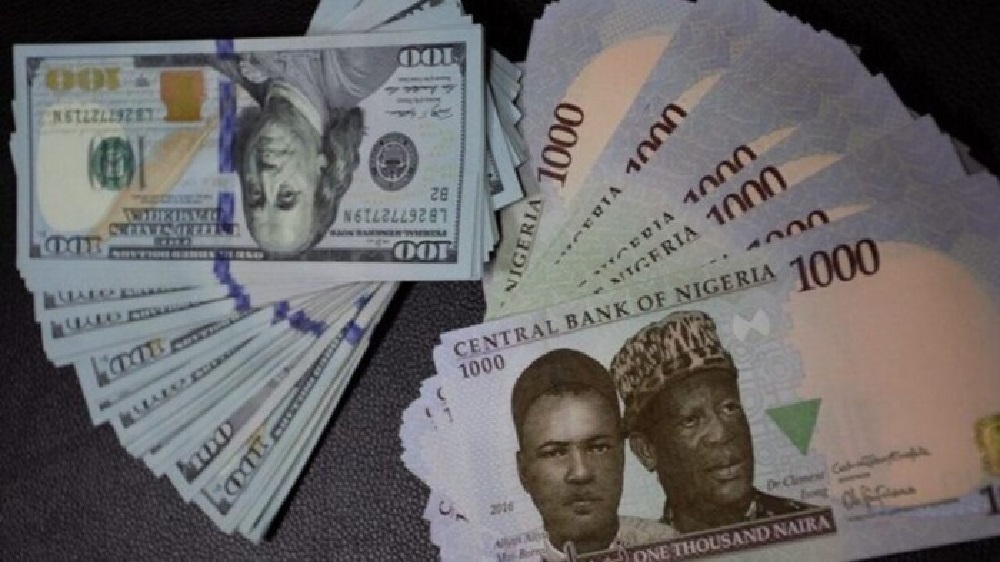
The Nigerian naira opened the week relatively strong against the United States dollar, with the local currency trading around N1,357.61 per dollar at the official Nigerian Foreign Exchange Market (NFEM) window and about N1,420 per dollar at the parallel market.
Data from the Central Bank of Nigeria (CBN) showed that the NFEM rate stood at N1,357.61 per US dollar as of the latest available official market data. The rate is based on the volume-weighted average of transactions in the official foreign exchange market.
The parallel market, meanwhile, continued to quote the dollar at around N1,420, leaving a gap of approximately N62.39 between the two markets. Proshare reported that the naira had appreciated by 59 basis points at the official market to N1,357.61/$, while the parallel-market rate remained at N1,420/$.
The latest official rate represents an improvement for the naira compared with the previous week’s N1,365.69 per dollar. The appreciation has been linked to improved foreign exchange liquidity and supply conditions in the official market.
More recent market indicators also point to continued stability in the naira-dollar exchange rate. A live USD/NGN rate source put the dollar at about N1,358.30 as of the early hours of August 17, while other market data placed the currency around the N1,358 level.
The naira’s performance comes amid stronger external reserves and recent changes by the CBN aimed at improving liquidity and efficiency in Nigeria’s financial markets. Nigeria’s external reserves rose to $52.19 billion as of August 12, 2026, their highest level in 17 years, according to recent reports.
For Nigerians buying or selling dollars outside the official market, the parallel-market rate remains higher than the NFEM rate. The difference reflects continued segmentation between the two foreign exchange channels, although the spread remains relatively contained compared with periods of severe market volatility.
As trading progresses on Monday, August 17, the official NFEM rate and parallel-market quotations could change depending on dollar supply, demand from importers and other FX users, CBN interventions and broader global currency movements.
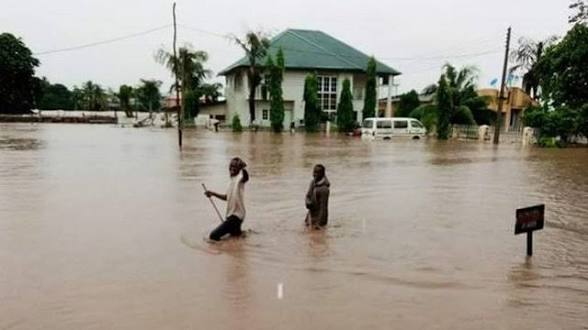
…say administration take steps to address recurring challenge
The heavy rainfall recorded in Abuja on Saturday resulted in flooding in parts of the Federal Capital Territory, with some affected areas experiencing temporary accumulation of water before the floodwaters receded.
Apparently peeved by Deji Adeyanju’s empty claims, FCT minister’s aide, Lere Olayinka gave a vivid breakdown in a statement on Monday.
The incident has, however, generated public debate, with some commentators linking the development to the administration of the FCT Minister, Nyesom Wike.
While concerns over flooding and drainage infrastructure remain legitimate, it is important to note that flooding has occurred in parts of Abuja for several years, predating the current administration.
Reports from previous years documented flooding in areas including Wuse, Jabi and Lokogoma in 2019, while similar incidents were reported in Lokogoma, Efab Estate, Gudu and surrounding areas in 2022.
The recurring incidents highlight the challenges associated with the rapid expansion of the nation’s capital, particularly in the areas of drainage capacity, waste management, urban planning and enforcement of development regulations.
The FCT Administration has said it is taking steps to address some of these challenges and prevent future occurrences.
Among the measures being considered is the review of the 1979 Abuja Master Plan to reflect the changing needs of a rapidly expanding capital city.
The administration is also paying attention to drainage infrastructure, including the replacement of drainage covers that are frequently removed by scavengers. The removal of drainage covers can expose drainage channels to refuse and other materials capable of obstructing the free flow of stormwater.
The latest flooding therefore underscores the need for sustained investment in drainage infrastructure, effective waste disposal, strict enforcement of planning regulations and improved maintenance of existing waterways.
While political actors and commentators may differ in their assessment of the FCT Administration’s performance, the flooding challenge is not a new phenomenon and requires a long-term, coordinated response rather than being viewed solely through the lens of partisan politics.
The priority, ultimately, should be to ensure that Abuja’s infrastructure keeps pace with its population growth and expansion, while reducing the impact of heavy rainfall on residents and businesses.

NDLEA destroys N301bn worth of cocaine, heroin, opioids, others in Lagos (Photos)

Edo Assembly elects Yekini Idiaye Speaker As Agbebaku Resigns

See Dollar to Naira exchange rate today, August 17, 2026




-
 News24 hours ago
3,000 Man O’War officers undergo intensive training in readiness for safe sch engagement (Photos)
-
 Politics24 hours ago
OSUN DECIDES: APC studying results across 332 wards, reveal next move
-

 News23 hours ago
FCT: Tinubu’s Govt Signs 26,272 Certificates of Occupancy To Aid Businesses, 17,575 More Than Those Signed in 13 Years
-
 Metro12 hours ago
‘I’ll Rather Eat Grass Under Muslim Leader Than Chicken Under Infidel Leader,’ Islamic Scholar Almaliky Defends Tinubu-Shettima Ticket
-
 News10 hours ago
Oluwo Hails Adeleke’s Re-election, Urges Closer Ties With Tinubu
-
 Foreign10 hours ago
US: How 17-year-old Boy Allegedly Killed Mother, Brother After ChatGPT Searches
-

 News10 hours ago
Police Arrest Suspected Armed Robber, Land Grabber in Ibadan, Recover Guns, Ammunition
-
 News10 hours ago
Ganduje’s son returns to APC after 3 months in Kwankwaso’s NDC
Warning: Undefined variable $user_ID in /home/naijuinz/public_html/wp-content/themes/zox-news/comments.php on line 49
You must be logged in to post a comment Login