

Connect with us

News

Reps Question Effectiveness of Anti-Corruption Transparency Units In MDAs

Published

on

ADVERTISEMENT
Zoom Ad
ADVERTISEMENT
Zoom Ad

By Gloria Ikibah

The House of Representatives has called to question the effectiveness of Anti-Corruption and Transparency Units (ACTUs) in Ministries, Departments, and Agencies (MDAs), and expressed worries that they might fall short of their core mandate to combat corruption from within the public service.

Chairman House Committee on Anti-Corruption, Rep. Koyode Moshood Akiolu, at the opening of a public hearing to launch an investigation into the operations of the ACTUs in Abuja, raised concerns of the current relevance and integrity of ACTUs, and feared that some may have strayed from their original purpose or become compromised.

He said: “While we recognize the challenges posed by the insidious nature of corruption, we must also confront the realities that not all actions taken in the name of anti-corruption have been entirely above board.

Advertisement

“It is paramount that we investigate and assess whether these units are truly fulfilling their mandates or if they have, regrettably, become enmeshed in the very practices they were created to eradicate”.

In the year 2001 with the approval of the Federal Government, ACTUs were established in over 400 MDAs by the Independent Corrupt Practices and Other Related Offences Commission (ICPC) as part of a decentralised strategy to monitor, report, and prevent corruption at the grassroots of government bureaucracy.

The initiative is aimed to address the ICPC’s limited manpower, then with just over a hundred staff, by embedding internal watchdogs in public institutions.

Rep. Akiolu explained that this model was built on the premise that employees within MDAs are best positioned to detect corrupt practices in their environments. He described the strategy as “brilliant” and said the ACTUs “were relevant in 2001; twenty-four years later, they are no less relevant.”

Advertisement

But despite their longevity and widespread presence, concerns have emerged regarding their operational efficiency and independence.

Akiolu who cited reports and public complaints alleged that some ACTUs have either become toothless or, worse, compromised by the very corruption they were designed to police.

According to him, this hearing, is not just a “legislative formality, but a crucial step in evaluating whether these embedded units still serve public interest or require structural reforms”.

“As representatives of the Nigerian people, it is our foremost duty to ensure that public resources are managed with the utmost care and that the trust bestowed upon us is not compromised.

Advertisement

“We must restore faith in our institutions and demonstrate, unequivocally, that there is no tolerance for corruption, whether from within or outside”, he added.

The hearing is expected to gather testimonies and data from civil society organizations, anti-corruption advocates, government representatives, and whistleblowers, with a view to understanding the strengths and weaknesses of the ACTU framework.

Key areas of focus include institutional independence, reporting mechanisms, enforcement capacity, and the credibility of their operations within MDAs.

Akiolu therefore stressed that the Committee would not “shy away from exposing weaknesses or recommending bold reforms”, as he noted that the ultimate goal is to create a public service that operates transparently and is driven by integrity.

Advertisement

“This public hearing is not just a responsibility we owe to ourselves as legislators; it is an obligation we owe to every Nigerian citizen who yearns for a government that is accountable and transparent.

“Let us together explore the gaps that exist, identify potential solutions, and lay down actionable recommendations that can fortify our commitment to anti-corruption,” he said.

In a presentation ICPC Chairman, Dr. Musa Ali, said that, only 84 MDAs currently have functional Anti-Corruption and Transparency Units (ACTUs) while 92 are yet to establish the units.

Represented by an official of the Commission, Olusegun Adigun, the ICPC Chairman further revealed that at the end of 2024, 127 MDAs had weak or ineffective ACTUs while Five others had units in name only which is hampering government anti-corruption efforts within those establishments.

Advertisement

Dr Ali noted that, Anti-Corruption And Transparency Units of MDAs are not working properly due to lack of funds, direct reporting to Chief Executive Officers of agencies, interferences, lack of political will and support, and resistance to change amongst others.

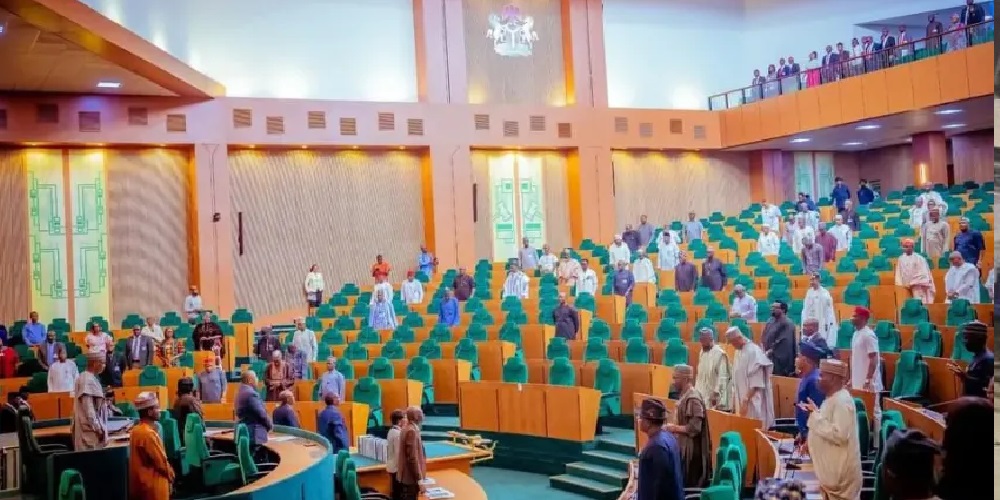
Declaring the public hearing open, Speaker Tajudeen Abbas, who was represented by Rep. Umar Ajilo, said the session was not a witch-hunt, but a proactive effort to assess the performance of ACTUs and strengthen institutional integrity.

“We gather not merely as legislators but as custodians of democracy and champions of integrity. Corruption continues to erode our institutions, diminish public trust, and stall our national progress. This hearing is an opportunity to reaffirm our resolve and take decisive action”. Abbas said.

He added that the ACTUs were originally established to monitor, report, and prevent corrupt practices, while also promoting a culture of transparency and ethical conduct in public service. However, the Speaker noted, their effectiveness hinges on political will and institutional support.

Advertisement

“This hearing allows us to assess the functionality of ACTUs, hear from stakeholders, and explore legislative solutions to strengthen their operations. We must dismantle the structures that allow corruption to thrive and institutionalize transparency and accountability,” Speaker Abbas noted.

Continue Reading
Advertisement
Click to comment

Warning: Undefined variable $user_ID in /home/naijuinz/public_html/wp-content/themes/zox-news/comments.php on line 49

You must be logged in to post a comment Login

Leave a Reply

News

Xenophobia: 271 Nigerians to return from South Africa today

Published

on

By

ADVERTISEMENT
Zoom Ad
ADVERTISEMENT
Zoom Ad

The Federal Government says 271 Nigerians will return from South Africa today, Friday, July 3, due to recent xenophobic protests.

According to the Ministry of Foreign Affairs, the evacuees will arrive at the Murtala Muhammed International Airport, Lagos, at about 5:30 a.m.

Its spokesperson, Kimiebi Imomotimi Ebienfa, said the exercise shows the government’s commitment to protecting Nigerians abroad and ensuring their safe return during crises.

The first batch of 258 returnees arrived in Lagos on June 11 aboard a special Air Peace flight. They were received by the Minister of State for Foreign Affairs, Sola Enikanolaiye, and handed over to government agencies for documentation and profiling.

Advertisement

The Ministry explained that logistic challenges delayed the second evacuation flight, prompting the Nigerian High Commission in Pretoria to temporarily accommodate and care for affected citizens awaiting their return.

It added that a Nigerian philanthropist voluntarily sponsored the air tickets of 66 stranded nationals, who returned to Lagos aboard a South African Airways flight on June 24.

According to the statement, a second government-arranged evacuation flight landed in Lagos on June 30 with 269 returnees, bringing the total number of Nigerians evacuated from South Africa so far to 593.

The Ministry further announced that three additional evacuation flights have been scheduled to bring home all Nigerians who voluntarily registered for evacuation and have completed the required screening and clearance process.

Advertisement

It also dismissed allegations that officials of the Nigerian Mission in South Africa demanded money from citizens before including them on the evacuation list.

It emphasised that all special evacuation flights are fully funded by the Federal Government and that no returnee is required to pay any fee.

According to the statement, claims that mission staff requested payment for evacuation are false and should be disregarded.

It commended the cooperation of relevant Ministries, Departments and Agencies (MDAs) involved in the operation, noting that their collaboration has contributed significantly to the success of the evacuation exercise.

Advertisement

It reaffirmed that the protection of Nigerians abroad remains a central pillar of Nigeria’s foreign policy, adding that the government will continue to provide support, dignity and care to citizens affected by crises overseas.

Continue Reading

News

Zeberced Group to Train 20,000 Nigerians in Technical and Vocational Skills, Create 40,000 Direct Jobs

Published

on

By

ADVERTISEMENT
Zoom Ad
ADVERTISEMENT
Zoom Ad

…Plans FIFA-approved children’s and youth football academy

Zeberced Group has unveiled an ambitious investment programme that will train 20,000 Nigerians through a world-class Technical and Vocational Training School while creating no fewer than 40,000 direct jobs, in what it describes as one of the largest skills development and industrial empowerment initiatives in West Africa.

The company also announced plans to establish a FIFA-approved football academy for children and young people to identify, nurture and develop football talents for national and international opportunities.

The Managing Director of Zeberced Group, Mr. Adil Aydin Kurt, disclosed this during a courtesy visit by the leadership of the Nigeria Union of Journalists (NUJ), FCT Council, led by its Chairman, Comrade Grace Ike, to the company’s facilities at the Abuja Industrial Park Free Zone, where both organisations explored opportunities for strategic collaboration.

Advertisement

Speaking during the meeting, Mr. Kurt revealed that the proposed Technical and Vocational Training School would admit and train about 2,000 young Nigerians annually in various technical fields, with a projection of producing approximately 20,000 skilled graduates over the coming years.

He said the initiative would simultaneously create about 40,000 direct jobs, describing it as a transformational project designed to address unemployment, strengthen Nigeria’s industrial workforce and promote entrepreneurship.

“Zeberced is currently working on a vocational training school which will offer training in various fields to young Nigerians and, in the process, provide 40,000 direct jobs. This is going to be a sample project and is presently the biggest operation of its kind in West Africa,” Mr. Kurt said.

According to the architectural design of the institution, the school will offer specialised training in Construction Technology, Machine and Design Technology, Motor Vehicle Technology, Plumbing Technology, Metal Technology, Furniture Technology, and Electrical and Electronics Technology.

Advertisement

Mr. Kurt said the institution is being developed to equip Nigerian youths with practical, industry-relevant skills that will prepare them for employment, self-reliance and entrepreneurship.

Reaffirming the company’s confidence in Nigeria’s future, he said Zeberced remains committed to long-term investments that will accelerate skills acquisition, industrialisation and human capital development.

“We are very serious about our work. I have many ideas and visions to share. We need to bring qualified people from different parts of the world to Nigeria because the future is Africa,” he stated.

Beyond technical education, Mr. Kurt disclosed that Zeberced Group is also developing a FIFA-approved football academy dedicated to discovering and grooming talented children and young people for professional football careers at both local and international levels.

Advertisement

He further revealed that the company operates what he described as Africa’s first integrated mining quarry of its kind while continuing to expand investments across manufacturing, construction and other strategic sectors of the Nigerian economy.

Outlining the company’s broader industrial vision, the Managing Director said Zeberced plans to facilitate the establishment of hundreds of factories within the Idu Industrial Area to boost local manufacturing, create employment opportunities and reduce Nigeria’s dependence on imported products.

According to him, the industrial development project, which commenced about 15 years ago, has faced several challenges but has continued to make steady progress through resilience and sustained investment.

He explained that the company’s investments in manufacturing, furniture production, plastics and related industries, supported by modern infrastructure and state-of-the-art equipment, would significantly contribute to Nigeria’s industrial transformation.

Advertisement

Mr. Kurt stressed that Zeberced’s corporate philosophy is anchored on creating sustainable value for Nigeria through strategic investments, technology transfer, skills development and large-scale job creation.

Responding, the Chairman of the NUJ FCT Council, Comrade Grace Ike, commended Zeberced Group for its commitment to youth empowerment, skills acquisition and national development.

She described the company’s proposed vocational training institution and industrial expansion as timely interventions capable of addressing unemployment, promoting self-reliance among young Nigerians and supporting the country’s economic diversification agenda.

Comrade Ike also briefed the company’s management on the Council’s ongoing ultra-modern Congress Hall project, which has reached the decking stage.

Advertisement

She appealed for Zeberced Group’s support towards the completion of the facility, explaining that the Congress Hall would provide a permanent venue for congresses, professional engagements, training programmes and other official activities of the NUJ FCT Council.

In response, Mr. Kurt expressed Zeberced Group’s willingness to support the project, reaffirming the company’s commitment to partnerships that strengthen institutions and contribute to national development.

The visit concluded with both organisations expressing optimism about building a strategic relationship that would promote industrial growth, youth development, professional capacity building and sustainable socio-economic development in Nigeria.

Zeberced Group has maintained operations in Nigeria since 2007, with investments spanning manufacturing, construction, industrial infrastructure and human capital development.

Advertisement
Continue Reading

News

US Withdraws Troops from Nigeria, Retains Intelligence Partnership in Counterterrorism Fight

Published

on

By

ADVERTISEMENT
Zoom Ad
ADVERTISEMENT
Zoom Ad

The United States has withdrawn most of its troops deployed to Nigeria for a joint counterterrorism operation in the Lake Chad Basin but will continue intelligence sharing and other security cooperation with the Nigerian government.

The Commander of U.S. Air Forces in Europe-Air Forces Africa, General Dagvin R.M. Anderson, disclosed this on Thursday during a digital press briefing on the outcome of the African Chiefs of Defence Conference 2026.

According to Anderson, the operation in the Lake Chad Basin significantly disrupted the activities of the Islamic State (ISIS/Daesh) and contributed to global counterterrorism efforts.

“And so that operation in the Lake Chad Basin of Nigeria not only helped the countries in that immediate region; it also helps countries globally as that disrupts the ISIS network,” he said.

Advertisement

He explained that although the specific mission had ended and most of the U.S. personnel involved had departed Nigeria, Washington remained committed to supporting Abuja through intelligence collaboration and strategic partnerships.

“And so — and then we have withdrawn much of our forces that were just there for that operation, but are continuing the partnership that Nigeria has asked for to help continue with the intelligence sharing and the understanding that’s necessary to be able to prosecute these difficult tasks,” Anderson added.

The U.S. general described Nigeria as a capable ally with a strong military and noted that cooperation between both countries had produced significant gains against ISIS.

He revealed that intelligence sharing between the United States and Nigeria, combined with military operations by Nigerian forces, led to the successful elimination of the second-in-command of the global ISIS network.

Advertisement

“I think the partnership that we’ve shown recently with Nigeria, where Nigeria’s a very capable and large country — it’s got a strong economy; it’s got a large, educated population; it’s got a very capable military.

“But there are things that we have learned in the counterterrorist fight over several years that we were able to assist and integrate with them to help them with their intelligence and help with the intelligence sharing that eventually led to a cooperative effort to where we were able to bring some unique capabilities that the U.S. brings and be able to prosecute together the number two leader within the ISIS or Daesh organization who is responsible for much of their global operations, their global media, and their recruiting,” he said.

Anderson stressed that the success of the operation underscored the importance of intelligence cooperation rather than prolonged foreign military deployments.

“So I think as we go forward, that is an example of how we’re looking at engaging with partners to help them be more effective by only bringing unique U.S. capabilities that allow the partner to be effective in these fights,” he stated.

Advertisement

He also called for stronger intelligence sharing among African countries to combat terrorism, illicit trafficking and other transnational crimes.

According to him, enhanced cooperation recently helped authorities intercept a record 31-ton shipment of cocaine originating from South America and transiting along the West African coast.

“I was able to coordinate through our interagency in the United States, through AFRICOM, and then notify some of the partners. And eventually it was a Spanish ship that interdicted the ship that had 31 tons of cocaine on it, and it turns out is the largest interdiction of drugs at sea that we’ve ever seen,” Anderson said.

He added that sustained cooperation among African nations, international partners and the private sector remains essential to addressing security threats and creating a stable environment for economic growth and investment.

Advertisement

The United States deployed about 200 military personnel to Nigeria in February 2026 to support intelligence, surveillance and counterterrorism operations in the Lake Chad Basin amid deepening security cooperation between Washington and Abuja.

The deployment followed Nigeria’s redesignation as a Country of Particular Concern by U.S. President Donald Trump, who pledged to intensify American support against terrorist groups operating in the country.

On December 25, 2025, the United States carried out air strikes on two terrorist enclaves in the Bauni Forest in Tangaza Local Government Area of Sokoto State.

The partnership reached a major milestone in May 2026 when a joint U.S.-Nigerian operation killed Abu-Bilal Al-Minuki, the second-in-command of ISIS, at his hideout in Borno State.

Advertisement
Continue Reading

Trending

Copyright © 2024 Naija Blitz News