Connect with us

Economy

CBN orders geo-tagging of all PoS terminals in Nigeria within 60 days to stem scam

Published

on

ADVERTISEMENT
Zoom Ad
ADVERTISEMENT
Zoom Ad

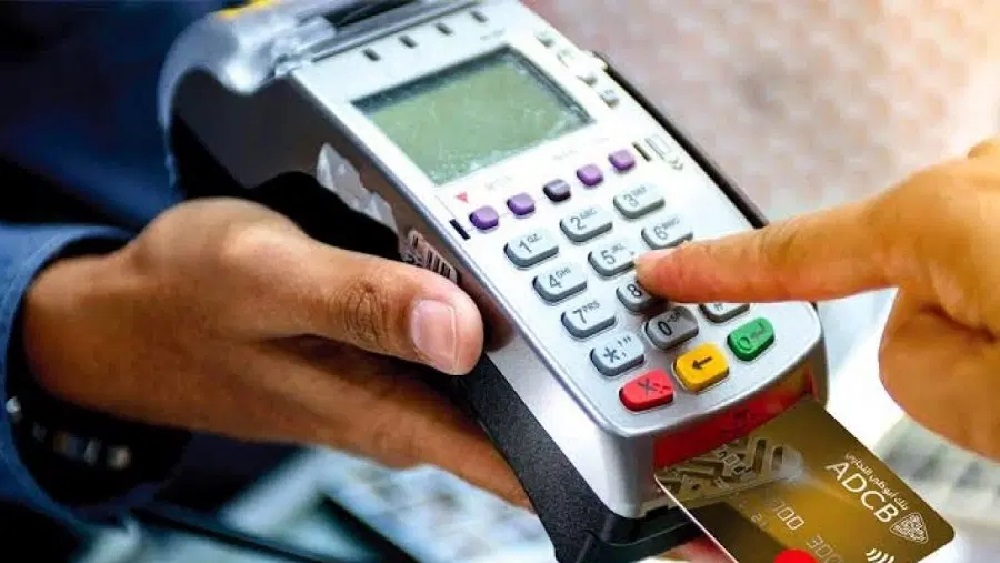
The Central Bank of Nigeria (CBN) has directed that all Point of Sale (PoS) terminals in the country be geo-tagged within 60 days as part of measures to curb fraud and strengthen oversight of digital payments.

“This initiative is designed to ensure that all PoS terminals are traceable and that transactions are secure.

Terminals operating outside their registered location will be flagged, and non-compliant devices will be deactivated,” the CBN said in a statement dated August 26, 2025.

The directive requires all existing and newly deployed PoS devices to have native geolocation features and double-frequency GPS receivers for accurate tracking. Terminals failing to comply with the October 20, 2025, deadline will no longer be allowed to operate.

Advertisement

The bank explained that the move will help eliminate “ghost” or cloned terminals and enable real-time monitoring of transactions.

Each PoS device must capture and transmit its location at the start of every transaction, with activity beyond a 10-meter radius of the registered merchant address automatically flagged.

Licensed operators, including major banks and fintech companies like Moniepoint, OPay, and PalmPay, are expected to register each terminal with a payment aggregator and provide precise merchant coordinates.

The CBN said the measure is part of a broader plan to modernise Nigeria’s payment system, improve consumer protection, and ensure that digital financial transactions are secure and fully traceable.

Advertisement
Continue Reading
Advertisement
Click to comment

Warning: Undefined variable $user_ID in /home/naijuinz/public_html/wp-content/themes/zox-news/comments.php on line 49

You must be logged in to post a comment Login

Leave a Reply

Economy

CBN Reforms Drive FX Inflows To $112b, Investors’ Confidence Rises

Published

on

By

ADVERTISEMENT
Zoom Ad
ADVERTISEMENT
Zoom Ad

The Central Bank of Nigeria (CBN’s) decision to clear over $7bn unsettled FX backlogs raised investors’ confidence in the economy, supporting dollar inflows and foreign reserves accretion. Nearly three years after the backlog clearance, FX inflows into the economy rose significantly hitting $112bn in 2025.

Market analysts said rising autonomous inflows, including diaspora remittances, foreign portfolio investment, non-oil export proceeds shows positive effect of the reforms in attracting foreign capital to the domestic economy.

The rising investors’ confidence in the economy started with a systematic planning and commitment to due process through policies initiated by a combination of Central Bank of Nigeria (CBN) and fiscal authorities.

The CBN’s decision to clear over $7bn unsettled FX backlogs raised investors’ confidence in the economy, supporting dollar inflows and foreign reserves accretion, CBN Governor, Olayemi Cardoso said.

Advertisement

The CBN boss had explained that although he had no idea where the fund for the backlog clearance would come from, when he assumed office, but he believed it was the right thing to do, and gave investors his word.

He said: “Credibility is at the heart of any central bank. If you don’t have credibility, people do not trust you and they do not invest in your economy. When I took office, I made a promise we would pay the backlog, the verifiable backlog of monies that were owed by Nigeria to third parties.”

“And it was, at the time, estimated at over $7bn. And to be honest with you, I had no idea how I was going to do it, but I just felt it was not something to be negotiated”.
Cardoso explained that Nigeria needed to ensure that its integrity is maintained.

He said the apex bank started with a forensic audit to understand the issues better and based on the recommendations, the backlog of foreign exchange transactions was paid, which was a huge sacrifice.

Advertisement

He explained that “as a going concern, the CBN knows that if it expected people to continue to trust and invest in our economy, you’ve got to keep your promises”.

Some of these moves, including reforms in the exchange rate are key factors that continues to attract global investors into the economy.
Expectedly, forex inflows into the domestic economy closed 2025 at $112bn, a new report from Financial Markets Dealers Association (FMDA) has shown.

The forex inflows were dominated by autonomous sources — private capital flows outside the Central Bank of Nigeria (CBN’s) direct control — accounting for 64.94 per cent of total FX inflows during the year.

The report, which also showed that the Central Bank of Nigeria’s own FX sales rose by 126.37 per cent within the coverage period, hitting $8.94bn from $3.95bn recorded in the previous year.

Advertisement

Autonomous inflows surged to $72.91bn in 2025, up from $59.29bn in 2024 and $41.80bn in 2023, reflecting a near-doubling of private-sector dollar flows in two years.

The FMDA data reveals a market in which rising autonomous inflows are progressively displacing CBN-supplied liquidity as the primary driver of FX availability, even as the apex bank continues to play a stabilising role.

Total FX utilisation reached $47.17bn in 2025, driven by a dramatic surge in invisible-related transactions and sustained industrial-sector demand. The data reveal a significant compositional shift in how Nigeria consumes its foreign exchange.

Invisible-related FX utilisation surged to $27.27bn in 2025 from $11.10bn in 2024, with financial services alone accounting for $21.22bn.

Advertisement

Also, total import-related FX demand rose more moderately, from $15.54bn in 2024 to $19.90bn in 2025 while the industrial sector remained the largest merchandise-related source of demand at $8.43bn, up from $7.96bn in 2024.
“Oil-sector FX demand nearly doubled, from $2.26bn in 2024 to $4.98bn in 2025. Business services demand leapt from $702.38m to $3.48bn, while educational services demand fell sharply from $396.40m in 2023 to just $55.16m in 2025,” the report said.

The data indicates that invisible transactions — services, financial flows, and cross-border payments — have now eclipsed merchandise imports as the dominant driver of FX demand in Nigeria.

In the foreign exchange market, the country faced a backlog of over $7bn in unfulfilled commitments and a fragmented FX regime characterized by multiple forex rates, which had encouraged arbitrage opportunities.

This regime stifled much needed foreign investment, and led to the depletion of our external reserves which fell to $33.22bn in December 2023. It must also be understood that the cost of the FX subsidy regime is estimated to far exceed that of fuel subsidies.

Advertisement

The apex bank has also undertaken critical reforms to unify Nigeria’s exchange rate, eliminating distortions and restoring transparency. This unification has enabled it to clear the outstanding foreign exchange obligations, giving businesses—ranging from manufacturers to airlines—the confidence to plan and invest in the future.

To further enhance the functionality of the foreign exchange market, the CBN introduced an electronic FX matching system, which has proven effective in other markets.

With these developments came positive Fitch Ratings on Nigeria economy, signaling positive fallout from the reforms.

The global rating agency said that from exchange rate unification to reduce arbitrage in the markets, introduction of electronic FX matching platform and a new FX code to enhance transparency and efficiency in the market as well as deployment of monetary policy tightening to keep inflation on check, the Central Bank of Nigeria (CBN) has demonstrated commitment to achieving sustainable economy growth and exchange rate stability.

Advertisement

Already, the Fitch rating moved Nigeria’s long-term foreign-currency issuer default rating (IDR) from negative to stable, meaning that the country stands a better chance of attracting foreign investment, borrow money on international markets at better interest rates, and boost investor confidence.

Fitch also applauded government’s commitment to policy reforms implemented since its move to orthodox economic policies in June 2023, including exchange rate liberalisation, monetary policy tightening, and steps to end deficit monetisation as well as fuel subsidies removal.

“These have improved policy coherence and credibility and reduced economic distortions and near-term risks to macroeconomic stability, enhancing resilience in the context of persistent domestic challenges and heightened external risks,” the agency stated.
The S&P Global Ratings, also revised its outlook on Nigeria to “positive” from “stable” on Friday, backing the country’s ongoing economic reforms, and also affirmed the country’s rating at “B-/B”.

“The monetary, economic, and fiscal reforms being implemented by Nigerian authorities will yield positive benefits over the medium term,” S&P said.
Moody’s also upgraded Nigeria’s rating by one notch to “B3” from “Caa1”, citing notable improvements in the country’s external and fiscal positions, while Fitch last month kept its “B” rating and “stable” outlook.

Advertisement

The rating agencies continue to cite FX reforms instituted by Central Bank of Nigeria (CBN) as crucial in the current macroeconomic stability and push to tame inflation.

President, Association of Bureaux De Change Operators of Nigeria, Dr. Aminu Gwadabe, applauded the rating upgrade.

He said the FX reforms have really supported the stability in exchange rate, and is helping the economy to achieve desired growth.

Other analysts described the S&P rating as ‘a significant step forward in restoring investor confidence and economic stability.”

Advertisement

According to them, the development means an improvement in Nigeria’s creditworthiness, which could open up new opportunities for the country across several sectors.

Dr. Muda Yusuf, Convener of the Centre for the Promotion of Private Enterprise (CPPE), said the data pointed unambiguously to the impact of reform.
“The autonomous inflows are driven by the reform. Remittances from the diaspora, inflows from foreign portfolio investors, non-oil export proceeds — all manner of things outside the traditional sources of our forex. This reflects the fact that the reform has positioned the economy to attract those inflows,” he said.

On the rebound in CBN FX sales, Yusuf was careful to place the development in proper context.
“It is not necessarily because the CBN has significantly increased its intervention. A lot of inflows are coming in. Those are not CBN funds. In fact, there was a time the CBN was even buying forex on the market because of the liquidity. The bigger factor is the supply side — the fact that autonomous inflows have increased significantly,” he said.

The erstwhile Director General of the Lagos Chamber of Commerce and Industry (LCCI) also addressed the surge in invisible-related demand, noting that greater caution was needed before drawing conclusions.

Advertisement

“Invisible covers a lot of things. When you are paying foreign debt, it is a financial services transaction. When airlines come to Nigeria, when shipping companies operate here, when expatriates come into oil and gas and tech — all of these services have to be paid for in foreign currency. There is a lot of international transaction going on now because of the confidence the reform has restored. That is what I think is behind that increase,” he explained.

Mr. Charles Fakrogha, CEO of ECL Asset Management, said the recovery in both FX sales and autonomous inflows was consistent with what the capital market was also signaling.

“The kind of activity we are seeing from the FX market shows there are a lot of activities in terms of imports and exports. Most of these companies import raw materials, some export finished products — all of this will account for the increase we are seeing,” he said.

However, Fakrogha expressed concern about the dominance of financial services in FX utilisation.

Advertisement

“Financial services — you have seen a lot of activities. We have seen so many financial institutions springing up. And yet the real sector is not being carried along. When it is tough for financial services to give out loans and recover them, what happens? They go to the treasury bills market — safe investment. And the real sector suffers. These are the structural imbalances in the economy that we are seeing,” he noted.

On the role of exchange rate unification in driving inflows, Fakrogha was emphatic. “That is the fundamental of it. The unification has closed the gap for unnecessary speculation. The CBN has done quite a lot in terms of maintaining stability. If not for that unification, the dollar-naira rate would have gone beyond what we are seeing,” he said.

Mr. Aruna Kebira, CEO of Globalview Capital, argued that improved regulation and recapitalisation of financial institutions had been equally pivotal in attracting capital inflows.

“There is no direct investor that would not like to do business with a well-capitalised stockbroking firm. The regulation is so strong. All the banks are recapitalised, insurance companies are in the process of recapitalisation, and PFAs are also being recapitalised. Things have actually opened up,” he said.

Advertisement

“Do you know that Nigerians in diaspora now have serious confidence in the Nigerian stock market? The movement from 58,000 to 250,000 points — it is not magic. Money is coming in. It is for investment,” said Kebira.

According to him, there is a growing confidence of diaspora investors as a structural source of autonomous inflows, stressing that several of them have already set aside funds for investing in upcoming Dangote Refinery’s Initial Public Offer (IPO).

Recall that on assuming office in October 2023, Cardoso had prioritised reforms to rebuild Nigeria’s economic buffers and strengthen resilience.

CBN’s policies, including the currency reforms, led to investment inflows from abroad, and reduced interventions in the domestic forex market.

Advertisement
Continue Reading

Economy

Why I Sold My Mansions In UK, US – Dangote

Published

on

By

ADVERTISEMENT
Zoom Ad
ADVERTISEMENT
Zoom Ad

Africa’s richest man and President of the Dangote Group, Aliko Dangote, has revealed why he sold off his luxury properties in the United States and the United Kingdom, saying the decision was driven by his determination to remain focused on building industries.

Dangote made the revelation during a television interview where he spoke extensively about discipline, sacrifice, commitment, and the mindset that shaped his rise as one of the world’s leading industrialists.

According to him, owning expensive properties abroad became a distraction at a critical point in his business journey, especially when he decided to shift fully into industrialisation.

“When I decided to go into industry, you know what I did, I sold all my properties in the US. I had two houses in the US, big mansions, and I had a house in the UK. I wanted to really sit in Nigeria and concentrate,” Dangote said.

Advertisement

The billionaire businessman explained that luxury assets outside the country often come with emotional and financial attachments capable of taking attention away from bigger goals.

“Sometimes when you own a house, a holiday home anywhere, you have to create time to go and use that property,” he stated.

Dangote noted that he deliberately embraced a simpler lifestyle in order to focus his energy on creating long-term industrial visions that would transform Nigeria and Africa.

“So now, my life is very simple, wherever I go, I use hotels. When I leave, nobody will call me for any form of maintenance,” he added.

Advertisement

The industrialist stressed that his commitment to business expansion and nation-building required total concentration and sacrifice, insisting that creating industries is not compatible with a life driven by luxury and distractions.

“I’m committed to what I do. I need time to create visions for what I do,” Dangote declared.

Continue Reading

Economy

CBN records $1bn daily forex market turnover

Published

on

By

ADVERTISEMENT
Zoom Ad
ADVERTISEMENT
Zoom Ad

Governor of the Central Bank of Nigeria, Mr. Olayemi Cardoso, has disclosed that Nigeria’s foreign exchange market has recorded daily transactions of up to $1 billion on several occasions in recent months, describing the development as a major improvement in market liquidity and investor confidence.

Cardoso spoke during the official launch of the 4th Edition of the Central Bank’s Foreign Exchange Manual in Abuja, where he said reforms introduced by the apex bank have helped transform the foreign exchange market from a heavily intervention-driven system into a more transparent and active market.

According to him, average daily turnover in the market has risen significantly since the beginning of the current administration.

He explained that when the administration came into office, the foreign exchange market recorded average daily turnover of about $100 million.

Advertisement

However, he said the figure has now increased to between $400 million and $600 million daily, with the market already achieving the $1 billion mark on several trading days.

“When this administration took over, the average turnover per day was about $100 million. Now it has gone to an average of between $400 million and $600 million per day,” Cardoso said.

He added that the long-term target is to consistently achieve daily turnover of about $1 billion in the foreign exchange market.

According to the CBN governor, the improvement reflects growing confidence among market participants and increasing liquidity in the system.

Advertisement

Cardoso explained that Nigeria’s foreign exchange market has become more dynamic because participants now feel more confident entering and exiting the market without unnecessary restrictions.

He said the market has moved away from the previous situation where traders and investors depended mainly on periodic interventions from the Central Bank.

“We’ve gone from a situation where it was more or less a one-way market where the Central Bank came in, intervened and went away, and everybody waited for the next intervention,” he stated.

According to him, the market is now more transparent and active, encouraging greater participation from banks, investors and other operators.

Advertisement

Cardoso noted that deeper liquidity in the foreign exchange market would strengthen the economy and improve market stability over time.

He also stressed that foreign reserves should primarily serve as reserves rather than being constantly used to defend or fund the market.

The CBN governor explained that the revised Foreign Exchange Manual was introduced to improve clarity, consistency and efficiency in the management of the market.

He said the new manual was developed after extensive consultations with banks and other stakeholders to ensure that industry concerns and operational challenges were properly addressed.

Advertisement

According to him, the revised guidelines reflect international best practices and are designed to strengthen transparency and credibility in the foreign exchange market.

Cardoso urged banks, exporters, importers, government agencies and private sector operators to comply fully with the provisions of the new manual.

He stated that maintaining stability and credibility in the foreign exchange market requires collective responsibility and cooperation among all stakeholders.

The governor also disclosed that the revised manual would take effect from June 1, 2026, and would be distributed free of charge to authorised dealers to encourage compliance and proper implementation.

Advertisement

He warned market participants against any form of misconduct or abuse of the foreign exchange system, stressing that the apex bank would strengthen monitoring mechanisms to ensure fairness, accountability and consistency across the market.

Cardoso expressed confidence that the reforms being implemented by the CBN would continue to deepen the foreign exchange market, improve liquidity and support long-term economic stability in the country.

Earlier in his address, Deputy Governor, Economic Policy Directorate of the Central Bank of Nigeria, Dr. Muhammad Sani Abdullahi spoke on some of the major policy changes introduced in the revised manual.

Abdullahi said the CBN has harmonised the disbursement structure for Personal Travel Allowance and Business Travel Allowance with the revised Bureau De Change guidelines. Under the new arrangement, he said 75 per cent of PTA and BTA transactions would be processed electronically while only 25 per cent could be paid in cash.

Advertisement

He also disclosed that the allowable advance payment for imports has been increased from 15 per cent to 30 per cent.

Other major changes include free processing of Form NXP, new provisions for service exports, documentation requirements for technology companies’ remittances, and the introduction of guidelines for PAPSS transactions aimed at supporting regional payments and intra-African trade.

Abdullahi further said the revised manual allows payments for services and fees in foreign currency where receipts are earned in foreign currency. He added that the CBN has introduced Non-Resident Investment Accounts and Non-Resident Ordinary Accounts as part of efforts to improve market operations.

The deputy governor also disclosed that the revised manual now permits payment of tuition fees for undergraduate and postgraduate studies up to a maximum of $25,000 per semester.

Advertisement

He explained that holders of export proceeds and ordinary domiciliary accounts would now enjoy easier access to their funds, including transfers between banks for eligible transactions. According to him, foreign companies operating in Nigeria’s extractive sector would now be allowed full repatriation of export proceeds.

Abdullahi also said the mandatory requirement for Form A in certain transactions involving ordinary domiciliary accounts has been removed, although banks would still be expected to verify the legitimacy of such transactions.

He added that the revised framework now includes provisions aimed at stopping the front-loading of foreign exchange purchases. According to him, the reforms collectively seek to modernise Nigeria’s foreign exchange system, support legitimate business activities, improve efficiency and deepen confidence in the market.

Advertisement
Continue Reading

Trending

Copyright © 2024 Naija Blitz News