
News
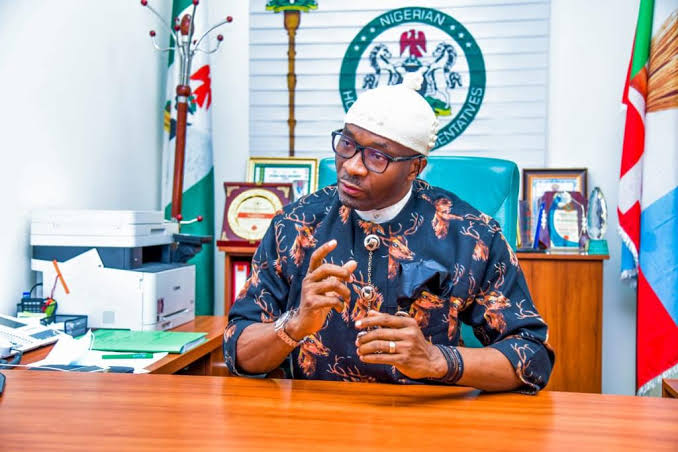
Kalu Backs State Police, Rally Support for Women Representation

- /home/naijuinz/public_html/wp-content/plugins/mvp-social-buttons/mvp-social-buttons.php on line 27
https://naijablitznews.com/wp-content/uploads/2024/05/Benjamin-Kalu.jpg&description=Kalu Backs State Police, Rally Support for Women Representation', 'pinterestShare', 'width=750,height=350'); return false;" title="Pin This Post">
- Share
- Tweet /home/naijuinz/public_html/wp-content/plugins/mvp-social-buttons/mvp-social-buttons.php on line 72
https://naijablitznews.com/wp-content/uploads/2024/05/Benjamin-Kalu.jpg&description=Kalu Backs State Police, Rally Support for Women Representation', 'pinterestShare', 'width=750,height=350'); return false;" title="Pin This Post">


…say security architecture must evolve, hail Tinubu’s economic reforms
By Gloria Ikibah
Deputy Speaker of the House of Representatives, Rt. Hon. Benjamin Kalu, has said Nigeria can no longer delay the establishment of state police if it hopes to effectively confront its growing security challenges.
Speaking with journalists in Abuja after returning from Geneva, where he represented Nigeria at the 55th Parliamentary Conference on the World Trade Organization/Inter-Parliamentary Union (WTO-IPU) Public Forum, Kalu argued that the current centralised policing structure was outdated and out of step with global best practice.
“The only way forward is to unbundle the present system. State policing is not an option we can continue to push aside — it is a necessity for a faster, more efficient security response,” he said.
While in the United States, Kalu was hosted by Nigerian students at Harvard Kennedy School, where he also highlighted the benefits of President Bola Tinubu’s ongoing economic reforms. He urged patience and support for the administration, insisting the reforms were already laying the foundation for long-term stability and growth.
The Deputy Speaker further rallied backing for the Reserved Seats Bill, which seeks to guarantee greater representation for women in governance. He described the bill as a decisive step towards tackling gender imbalance in politics and opening the door for more inclusive leadership.
He said: “On the State Police bill that is before the parliament, we are thinking about the response time of policing in Nigeria which at the moment is below the global standard. The only way we can achieve this is if we unbundle it from the way it is centralized like what other countries are doing: Municipal police, State Police. And just the constitution is clear on what is on the concurrent and exclusive lists.
“Certain subject matters will now be handled by the State Police and Federal Police respectively if we set it up and break it down the way Nigerians want it and that’s why we are calling for the national public hearing on Monday. Let’s have this conversation on issues like this to know whether you want it or not, or should it be tailored in one way or the other. There may be fears of hijacking it but we cannot because of that deny the majority of Nigerians the security of lives and property that we promised them as a government.
“So, we should be looking at the bigger picture. Everyone in Nigeria may not be a politician but everyone needs security of lives and property. So, we are saying which one should we go for? The greater good or the fear of the minor threat? . I think we should go for the greater good so that the good in the majority will suppress the threat in the minority.”
Kalu said Nigerians demonstrated rare patriotism and resilience by standing with President Bola Tinubu in the wake of the fuel subsidy removal and other bold economic reforms, stressing that the difficult decisions were necessary to put the country on the path of sustainable growth.
He said the Nigerians in diaspora showed keen interest in the government’s reforms and in issues of representation.
“The engagement was to have an appraisal of what we are doing, bring them up to speed with what the government is doing in regards to reforms. How far the reforms have fared and where we are headed. You and I know that Nigeria needed this reform. There’s no two ways about it.
“We needed a leader with courage, a leader with boldness to be able to take the steps the President has taken. Some of us who are in the same administration with him, though we’re in the other arm of government, we are standing fully with him on this reform. Removing subsidy launched us into an era of seeing things the way they are, feeling the pain, and then adjusting so that we can enjoy better later on.
“And many may have hought we were going into recession and the rest of them. But we weathered the storm, and I want to thank Nigerians. As Nigerians, we are very resilient. And we were able to stand with him. Today, the dynamics have changed.”
The Deputy Speaker also commended the State governments for helping to diversify the economy, saying it will increase job creation and boost the economic well-being of the citizens.
He urged Nigerians to stay engaged, patient, and supportive of the reforms, while also participating actively in shaping policies such as the state police bill.
“Just imagine 36 States engaging in productive engagements, outings, whether it’s in agriculture, in production, and also rest of them, it will create more jobs, increase our wealth. And I think that is the intention of these reforms. I was happy when I saw the president saying in August that their target for revenue has been achieved for the year. It’s a step towards the right direction. It may not be so cozy, but it’s leading us where it’s supposed to lead us. And we needed a President with balls, a President with courage to do this. And we thank him for having the courage and Nigerians for supporting him to get this done the way it has been done.
“We are looking forward to the benefits of these reforms, going forward.
“This is the time for everybody’s hands to be on deck. We cannot afford to be distracted. It is time to move Nigeria forward,” he said.
The Deputy Speaker also highlighted his role in shaping global discussions on digital trade during the Geneva Conference.
He revealed that Nigeria was among the eight countries represented on the WTO/IPU steering committee, which examined how to make digital trade an engine of inclusive growth.
Kalu argued that for the African Continental Free Trade Agreement (AfCFTA) to succeed, digital trade must be embedded as a central pillar.
“Digital trade is taking the day across the world at the moment, increasing economic growth by about 25 percent,” he said. “We must fit into this space, both globally and as a continent.
“Our argument was that there should be a legislative tracking tool that would enable countries to measure how far they have gone with implementing laws on digital trade and compare progress. Sub-regional and continental bodies like ECOWAS, the Pan-African Parliament, and the IPU should take this up,” he explained.
He further disclosed that Nigeria and other African delegations pressed for Afrocentric issues to feature prominently at the forthcoming WTO Ministerial Conference (MC14) scheduled for Yaoundé in March 2026.
“As we talk about multilateralism, Africans and their problems must be on the table, not outside the room,” he stressed.
Kalu also pushed for the passage of a bill reserving seats for women in Parliament, stressing that the exclusion of women from politics was holding back Nigeria’s democratic and economic progress.
“You cannot talk about advancing democracy when you’re leaving 50 percent of the population outside the room. It makes policies one-sided,” he said.
He noted that issues such as child rights, women’s rights, and humanitarian concerns often carry more depth when driven by women lawmakers.
“This is not compensation for women. It is an economic necessity. McKinsey and the World Bank have shown that countries with more women in decision-making grow faster. A country standing on one leg, relying on one gender, will lag economically,” he said.
Kalu explained that he and 12 other lawmakers had sponsored the bill and that advocacy efforts had begun early in this Assembly, with members increasingly supportive.
On the clamouring for diaspora voting, the Deputy Speaker reiterated his long-standing support but cautioned that Nigeria must first strengthen its local electoral system.
“Rome was not built in a day. It will happen, but we must first put our house in order. If Nigerians say during constitutional amendment hearings that they want it, we will look at the possibility,” he explained.
Kalu also shed light on his intervention in the crisis involving local contractors, particularly in the Federal Capital Territory, who threatened strike action over unpaid fees.
He said the approach of “legislative diplomacy” helped to calm tensions and secure commitments from government agencies.
“Though we are three arms of government, we are one government. The objective of the President is our objective too. We will not allow the executive to fail and then stand aside. That is not how to drive an emerging democracy,” he said.
He recalled that the meetings with the Ministers of Finance and Budget, Wale Edun, the Accountant General of the federation, Shamsudeen Ogunjimi and other stakeholders at the instance of the Speaker Abbas Tajudeen, penultimate week led to significant progress as payments have been made.
“We took the contractors off the streets. They kept their word not to return to protest, and government has kept its word by paying. We will review the situation again on the 21st to ensure progress continues,” Kalu said.
On the FCT-specific waste management issue, Kalu promised to personally engage the Minister of the FCT to avert any strike. “The FCT has no House of Assembly. We are their Assembly. We will not allow services to collapse,” he said.
Kalu emphasized that while he remains engaged globally, having been invited by Harvard and MIT for future discussions, his priority will always be Nigeria.
“My WTO program was still on, but duty called, and Nigeria comes first before the globe,” he stated.
News
2027 election: We’ll all battle to the finishing point, I won’t just surrender -Tinubu tells Atiku, others

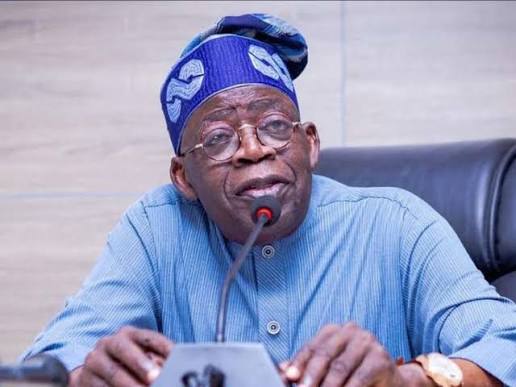
President Bola Tinubu has said 2027 presidential election is going to be a battle he is ready to fight till the end.
He warned opposition figures, including former Vice President Atiku Abubakar, that they must defeat him through the ballot box if they hope to unseat him.
The President made the remarks on Tuesday while receiving members of the Catholic Bishops Conference of Nigeria at the Presidential Villa in Abuja.
Speaking during the meeting, Tinubu said he was prepared for a fair democratic contest and insisted that politics is a competitive process where every contestant has an equal opportunity.
“Those who would take it from me will try. They will try. All is fair in politics, and there is equal opportunity. I won’t offer them a red carpet. I won’t offer them the leash to tie me at home. No, we will wrestle each other to the finishing point. That’s the truth.
That is fair in politics,” the President said. Tinubu also rejected allegations that the Independent National Electoral Commission (INEC) is biased, maintaining that the electoral body has remained impartial.
According to him, political opponents questioning the commission’s neutrality are merely expressing fears over their own political prospects.Politics “INEC is neutral. It has never, ever intimidated anybody. If political opponents are crying wolf, then they are afraid of their own shadows and the uncertainty in the company they keep,” he stated.
The President used the meeting to defend the economic reforms introduced by his administration, saying they were beginning to produce positive results despite the initial hardship experienced by Nigerians.
He cited the uninterrupted academic calendar in public universities as one of the administration’s notable achievements, pointing out that the absence of strikes by the Academic Staff Union of Universities (ASUU) had brought relief to students and their families. “None of your children in university today—and I would say they are all your children because you are Reverend Fathers—can say a four-year course is not four years.
ASUU is not on strike. They are not bringing agony to your homes. Is that not an answer to our prayers? To me, that’s an answer,” Tinubu said. The President acknowledged that his administration inherited significant economic challenges from the government of former President Muhammadu Buhari but insisted that the country had now achieved stability and was on the path to economic recovery. “This government has stabilized, and there is prosperity on the horizon. The quality of life is improving,” he said. “I inherited it. I didn’t run away. I asked for this job. I’m in it.”
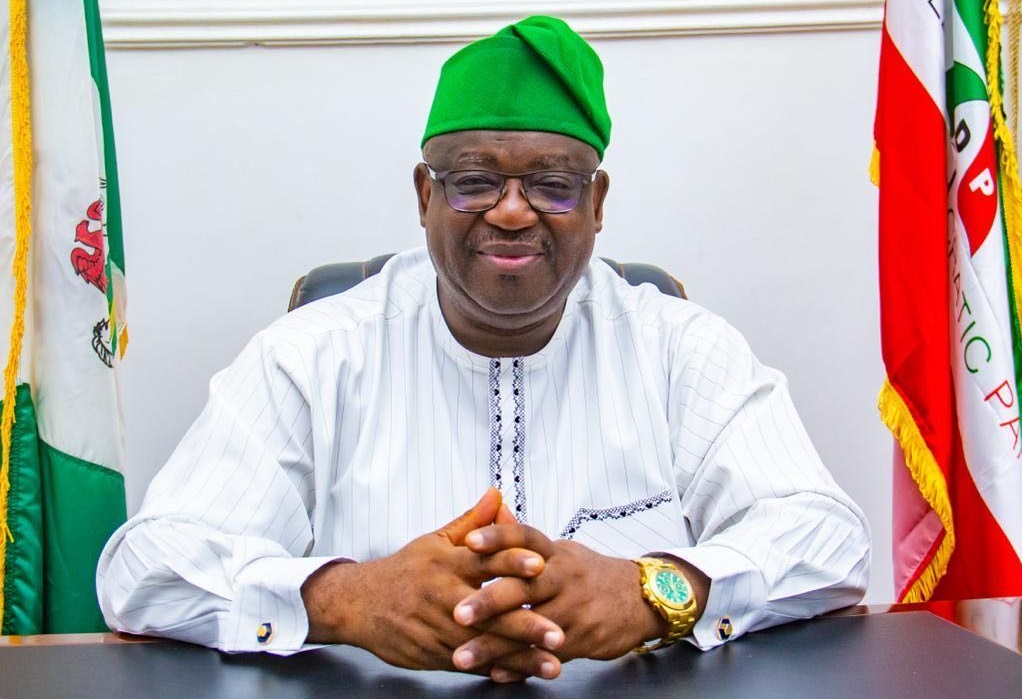
The Plateau State Government has defended Governor Caleb Manasseh Mutfwang over the controversy surrounding his recent remarks during an engagement with leaders of the Igbo community, insisting that his comments have been misrepresented and taken out of context.
In a statement issued on Wednesday by the Director of Press and Public Affairs to the Governor, Dr. Gyang Bere, the government said Mutfwang’s remarks were made in the spirit of reconciliation, appreciation and national unity, contrary to interpretations suggesting otherwise.
The clarification follows mixed reactions to comments made by the governor during a courtesy visit by leaders of the Igbo community to the Government House in Jos, with critics alleging that he apologised over the role of Plateau indigenes during the Nigerian Civil War.
Responding to the criticism, the government said the governor neither sought to diminish the experiences of any ethnic group nor distort the historical realities of the civil war.
It maintained that Mutfwang’s remarks were intended to acknowledge the resilience, enterprise and contributions of the Igbo community to the economic and social development of Plateau State while encouraging peaceful coexistence among Nigerians.
“The scars of that period remain part of our national history and deserve to be remembered with empathy, honesty and sensitivity,” the statement said, adding that the lessons of the civil war should strengthen national unity rather than reopen old wounds.
The government also highlighted Plateau’s long history of accommodating people from different parts of the country, describing the state as one of Nigeria’s foremost examples of peaceful coexistence.
According to the statement, successive administrations, beginning with Joseph Dechi Gomwalk and later Solomon Lar, laid the foundation for an inclusive society in which the Igbo community has thrived and contributed significantly to commerce, education, healthcare and industry.
The statement further aligned the state’s inclusive tradition with former Head of State Yakubu Gowon’s post-war “No Victor, No Vanquished” policy and the programme of Reconciliation, Rehabilitation and Reconstruction, describing the approach as a globally recognised model for post-conflict healing.
The government said Governor Mutfwang remained committed to preserving that legacy through policies that promote dialogue, reconciliation and peaceful coexistence.
It urged Nigerians to disregard what it described as distorted interpretations of the governor’s remarks, warning that such narratives could inflame ethnic divisions and distract from the broader message of unity and national cohesion.
Reaffirming the administration’s position, the government said Mutfwang believes every Nigerian, regardless of ethnicity, religion or place of origin, deserves dignity, equal opportunity and a sense of belonging, adding that those principles will continue to guide his leadership of Plateau State.
Yes this Mabushi bus terminal in Abuja has kick started for passengers to use.
Watch below:

2027 election: We’ll all battle to the finishing point, I won’t just surrender -Tinubu tells Atiku, others

Civil War Row: Plateau Govt Insists Mutfwang Spoke in Spirit of Reconciliation Engagement

Ai beckons to everyone, everywhere



-

 News19 hours ago
Just in: Dangote gives ₦18.7 trn of his ₦56.2trn wealth to help the needy
-

 Metro10 hours ago
Navy Arrests Vessel With 650 Metric Tonnes Of Stolen Crude
-

 Metro10 hours ago
Gunmen Kill Serving Army Colonel In Abuja, Injure Wife, Two Others
-
 Politics10 hours ago
Osun 2026: Accord Is Like Keke Napep Facing Trailer – APC Mocks Adeleke
-
 News24 hours ago
After 12years abandonment: Tinubu begins work on Nnamdi Azikiwe road linking GEJ road in FCT(Video)
-

 Sports10 hours ago
Super Falcons Receive Rewards For Historic WAFCON 2024 Triumph
-

 Sports10 hours ago
WAFCON 2026: NSC Announces $5,000-per-goal Incentive For Super Falcons
-

 News20 hours ago
Panic over mass arrest of Onitsha market leaders as Intersociety raises alarm, petitions IGP