The Federal Government has again rejected what it described as “false and baseless” allegations by United States Senator Ted Cruz, who accused Nigerian authorities of orchestrating a genocide against Christians and allowing the destruction of thousands of churches.


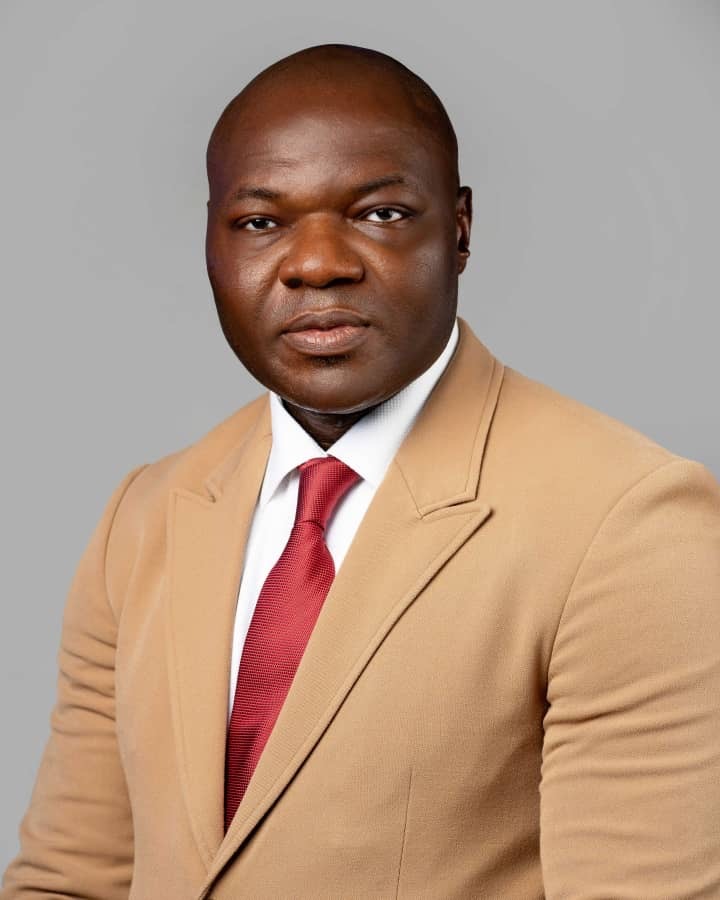
But in a statement on Wednesday by its President, Archbishop Daniel Okoh, the Nigerian Christian Association “affirms, without hesitation, that many Christian communities in parts of Nigeria, especially in the North, have suffered severe attacks, loss of life, and the destruction of places of worship.”
“Nigeria’s healing will not come from denial or blame, but from courage: the courage to face our collective failures, to grieve together, and to rebuild trust within our communities,” CAN stated. 
Cruz, in an interview with Fox News Digital, alleged that more than 52,000 Christians have been killed in Nigeria since 2009, and over 20,000 churches and Christian schools have been destroyed.
He also announced the introduction of the Nigeria Religious Freedom Accountability Act in the US Senate, a bill seeking sanctions on Nigerian officials he claims are complicit in religious persecution.
But reacting to the claims on Wednesday, the Minister of Information and National Orientation, Mohammed Idris, dismissed the senator’s assertions as “misleading, exaggerated, and not reflective of reality.”
“The Nigerian government rejects that. This is certainly not true,” Idris said in a statement issued through his media aide. “It’s false to claim that over 52,000 Christians have been killed or that 20,000 churches have been burned. Where did he get those numbers from? It’s absolutely absurd and unsupported by any credible evidence.”
Cruz, who chairs the Senate Subcommittee on Africa and Global Health Policy, had claimed that the alleged killings were “the result of decisions made by specific people, in specific places, at specific times,” vowing that the United States “knows who those individuals are” and will “hold them accountable.”
But Idris firmly rejected the notion that Nigerian authorities are complicit in any religiously motivated violence.
“No Nigerian officials will willingly or deliberately side with violent extremists to target any religion. That is absolutely false,” he said.
Reaffirming Nigeria’s commitment to religious freedom, Idris emphasised the country’s long-standing diversity and coexistence.
“Nigeria is a multi-faith country. We have Christians, Muslims, and even citizens who subscribe to neither. Nigeria is a very tolerant nation, and the government remains committed to protecting the rights of all,” he stated.
While acknowledging that violent extremism remains a national security challenge, Idris insisted that such violence has affected both Christians and Muslims.
“It’s unfortunate that extremists have killed people of both faiths in areas where they operate. But it is wrong and misleading to claim there’s a deliberate plan to exterminate Christians. That is simply not true and very unfortunate,” he said.
He assured Nigerians and the international community that security agencies continue to combat terrorism and banditry in all its forms, without bias or discrimination.
But CAN, its statement, titled, “Christian Genocide” – CAN Clarifies Position, maintained that truly killings are facing persecution, saying, “These realities are painful reminders of the urgent need for government and security agencies to act decisively to protect every citizen, regardless of region.”
The CAN President said, “Over the years, CAN and the wider Christian community have worked tirelessly to draw attention, both nationally and internationally, to the persecution of Christians in Nigeria. The association has established mechanisms for recording incidents of religiously motivated killings, engaged with international partners, written to the International Criminal Court in The Hague, and hosted global Christian organisations such as the World Evangelical Alliance and the Lausanne Movement. These sustained efforts demonstrate CAN’s consistent advocacy for justice, peace, and the protection of Christian communities under threat.”
The Christian body said its “concern remains that these cries for justice and protection are too often met with delay or denial.”
“We, therefore, renew our call on government and security agencies to take urgent, transparent, and equitable action to end the killings, safeguard vulnerable Christian communities from displacement, and ensure that perpetrators face the full weight of the law. The pain of Christian families torn apart by violence must never be treated as mere statistics.
“CAN acknowledges the efforts of government and security agencies in responding to the nation’s security challenges, but urges that these efforts be redoubled towards equitable protection for all. It is equally imperative that perpetrators of violence are brought swiftly and transparently to justice. We also appeal to all Christian leaders to continue to speak and act with wisdom, unity, and faith, knowing that peace is too fragile to be taken for granted.”
CAN said, “Nigeria’s healing will not come from denial or blame, but from courage: the courage to face our collective failures, to grieve together, and to rebuild trust within our communities. Only then can our nation rise from its wounds and embrace a future of genuine peace.”
However, the House of Representatives, at its plenary on Wednesday, aligned with the Federal Government in condemning a proposed United States Senate legislation which designates Nigeria as a “Country of Particular Concern” — a move that could trigger sanctions on Nigerian officials under Executive Order 13818 (Global Magnitsky Act) and related authorities.
The Nigeria Religious Freedom Accountability Act of 2025 (S.2747), introduced in the U.S. Senate on September 9, seeks to compel the U.S. Secretary of State to list Nigeria as a “Country of Particular Concern” (CPC) and to sanction officials accused of complicity in religious persecution.
Presnting a motion of urgent national importance, the Deputy Speaker, Benjamin Kalu, and other co-sponsors noted that the U.S. Commission on International Religious Freedom had, in recent annual reports, recommended Nigeria for CPC designation, citing alleged violations and failures to protect citizens from non-state actor abuses.
Kalu, speaking on the motion, argued that Nigeria’s Constitution “guarantees freedom of thought, conscience, and religion and bars the adoption of any state religion.”
He added that successive governments, security agencies, and faith leaders “continue to take measures to protect all worshippers and prosecute offenders,” as reflected in U.S. Department of State country reports.
“The House observes that insecurity in Nigeria is complex and multi-causal — driven by insurgency, criminal banditry, farmer-herder conflicts, separatist violence, and communal disputes — affecting citizens of all faiths,” Kalu said. “International reports attribute a significant share of fatalities to terrorist groups and criminal gangs rather than state policy or any single religious dynamic.”
The lawmakers warned that “external legislative actions based on incomplete or decontextualised assessments risk undermining Nigeria’s sovereignty, misrepresenting facts, straining strategic relations, and unintentionally emboldening violent actors.”
Mindful of Nigeria’s long-standing partnership with the U.S. on counter-terrorism, human rights, and interfaith dialogue, the House “condemned the negative characterisation” of the country and rejected what it called an attempt to “profile Nigeria unfairly.”
Majority Leader Prof. Julius Ihonvbere described the move as part of a misinformation campaign “bent on demarketing Nigeria,” while Katsina lawmaker Sada Soli urged the Federal Government to “state strongly its disappointment at the deliberate attempt to dent the nation’s image.”
Edo lawmaker Billy Osawaru added that Nigeria must urgently strengthen its diplomatic presence, noting that “till now, Nigeria does not have an Ambassador to the United States,” and stressing that the country “cannot afford to fail the African continent.”
The House mandated its Committees on Foreign Affairs, National Security and Intelligence, Interior, Information, National Orientation and Values, Police Affairs, Civil Society, and Human Rights to, within 21 days, coordinate a formal diplomatic demarche to the sponsors of the U.S. bill and relevant congressional committees, transmitting empirical data and Nigeria’s official position.
It also urged the Committees to engage the U.S. Mission in Nigeria and interested legislators to propose a Nigeria–U.S. joint fact-finding dialogue.
In addition, the House called for the establishment of a mechanism on freedom of religion or belief — with participation from faith leaders and independent experts — and to invite the U.S. Commission on International Religious Freedom (USCIRF) to a briefing session to examine sources, methodology, and possible remedies.
The resolutions are to be transmitted to the Presidency, the Ministry of Foreign Affairs, heads of security agencies, the leadership of the U.S. Congress (Senate Foreign Relations and House Foreign Affairs Committees), the U.S. Department of State, USCIRF, the African Union, and ECOWAS Commissions.