

Connect with us

News

Dauda Lawal: Between Leadership Award and Zamfara Reality

Published

on

ADVERTISEMENT
Zoom Ad
ADVERTISEMENT
Zoom Ad

By Silas Ajogwu

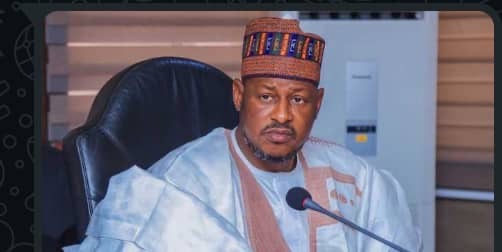
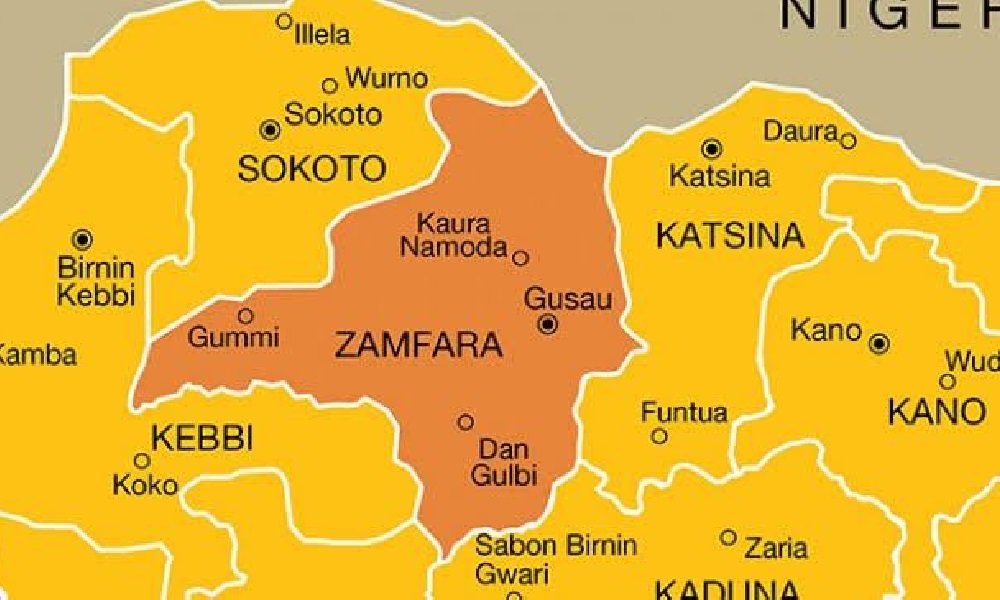
There are moments when public honours become mirrors that doesn’t reflect virtue but to magnify dissonance. Governor Dauda Lawal’s recent acclamation as “Governor of the Year” by Leadership newspapers should, in a sane political economy, invite sober celebration only if the facts on the ground corroborate the plaudits. But in Zamfara, where villages are sacked, whole communities flee in fear, educational system keep declining in the wake of violence, and mass abductions have become grim headlines, the award reads less like recognition than a rhetorical conjuring trick. The editorial board that printed the accolade owes Nigerians an apology for easily being misled: how did the red ink miss the echoes of wailings and the river of bloods that flow through Zamfara today?

Let us begin with the unassailable facts. Over the past months, and indeed years, Zamfara has been one of the epicentres of Nigeria’s northwestern security catastrophe. Evidently, reports from reputable international media and rights groups have documented catastrophic violence like brutal mass killings in mining towns, the abduction of scores of villagers in single operations, and the sacking of hundreds of communities that have produced waves of internally displaced persons. Amnesty International and Reuters, among others, have catalogued attacks that leave behind corpses, razed homes, and scarred families. These are not the figments of partisan reportage; they are verifiable tragedies with names, dates, and grieving families.

If an award is to have any moral weight, it must answer this simple ledger: have lives been preserved under your watch, or have they been squandered? Has the governor provided a credible roadmap toward safety, or has he delivered platitudes and photo-opportunities while bandits seize towns and terrorize children? The empirical answer, as chronicled by independent observers is damning. Recent attacks in Zamfara have included mass abductions. One reported incident alone saw over 100 people taken, and repeated massacres in villages where citizens were slaughtered as they laboured. An outbreak of cholera in Bukkuyum and the deaths recorded there are not incidental; they are symptomatic of collapsed access to health, water, and security which are the very public goods that should mark competent stewardship of a state. Unfortunately, the massive federal allocation are only seen in the frivolous spending and luxurious purchase made by the governor and his cabinets, but not reflective in the lives of Zamfarans.

Advertisement

And yet, on glossy pages and curated websites, a different narrative is being sold: that a governor whose tenure coincides with such human carnage deserves a laurel. This is not merely a question of taste; it is an ethical indictment of how awards are dispensed and of what our public culture has become. When honour is decoupled from measurable public welfare and instead telescoped into ceremony, we impoverish language itself. Words like “leadership” and “transformational” warp into euphemisms for impunity. If an editorial board is prepared to bless a record marred by abandoned communities, the public is entitled to ask whether the accolade Is commensurate with performance or contaminated by other influences. Indeed, social scepticism is not cynicism; it is a civic alarm that sounds when lived reality diverges dramatically from celebratory headlines.

It Is tempting and rhetorically effective to leap to causation: Yes! awards are being bought; editorial independence is for sale; governors are laundering reputations with chequebooks. But responsible criticism requires discipline. In the absence of a smoking gun that proves pay-for-play in this specific case, the argument must rest on demonstrable incongruity and pattern. Across Nigeria, there have been recurring controversies where awards and honours were criticized for being influenced by patronage, and commentators have warned that some prizes have become transactional. What we can say with confidence is this: where public life is ravaged by banditry and humanitarian collapse, the optics of bestowing “Governor of the Year” warrants interrogation, not because the act of awarding is per se illegitimate, but because the moral calculus of governance demands that survival and dignity must come before plaudits.

The human cost of misgovernance is not an abstraction. Mothers in Zamfara and cradle children who have lost fathers to kidnappers; entire marketplaces lie empty because people fear to travel; mothers with infants cannot reach clinics because roads are controlled by armed men on motorcycles. These daily indignities corrode social trust and exact stealthy, intergenerational harm. When an editorial desk fails to look these mothers in the face and instead crowns their governor, the message sent is corrosive: that rhetoric can substitute for remedy, and that spectacle can displace sorrow. The moral outrage that follows is neither theatrical nor petty; it is a legitimate expression of popular grief and righteous indignation of personal experience.

However, it is important to consider the broader data of how human-rights organizations and investigative outlets have documented thousands killed, villages burnt down, and how hundreds of thousands were displaced across Zamfara State. These can only be a result of structural failures; failures of intelligence, of community protection, of preventive policing, and of governance allocation. If a governor’s tenure coincides with such systemic collapse, editorial boards should, at minimum, scrutinize if the state apparatus has been deployed, how it has been deployed to protect citizens. Obviously, Dauda Lawal’s administration has not strengthened local security architecture, ensured functioning clinics and safe water points, and has not exercised fiscal courage to fund durable counter-insurgency measures.

Advertisement

When the governor and his apologists insist on celebrating awards, they must be asked to explain, with documents and demonstrable outcomes, why the lives of their citizens were not the primary metric considered. What specific policies, funded projects, or security innovations justify a Governor of the Year title? Are there transparent records showing reductions in incidents, successful rescue operations, improved infrastructure, rehabilitated health centres, or secure corridors that allow commerce to resume? Or is the award a prophylactic meant to sanitize a political brand while the rot continues underneath? The difference between governance and marketing is precisely this: the former is accountable to the ledger of life; the latter is answerable only to visibility.

We must also confront the rhetorical posture that seeks to delegitimise popular critique by branding it as mere “political attacks.” When mothers cries for their missing children, when communities cannot till fields for fear of ambush, when clinics close because health workers cannot commute, the critiques that arise are not partisan truculence; they are the anguished responses of citizens demanding protection. To dismiss these legitimate cries as envy or opposition theatre is to perpetrate a moral inversion: those who ask for security are branded as troublemakers while those who preside over their vulnerability are lauded. If the editorial pages are to retain moral authority, they must resist becoming instruments for image laundering.

What, then, should be the civic response? First, Newspapers must demand transparency before publication. Newspapers that confer high honours must publish their criteria, and the evidentiary basis for their choices. If “Governor of the Year” is to mean anything beyond a headline, it must be backed by transparent metrics: measurable improvements in healthcare access, documented reductions in violence, convincingly audited security spending, and demonstrable community rehabilitation. Second, insist on investigative curiosity: it is important for civil society and independent media to probe the governance ledger, which are budgets, procurement processes, and security strategies. Third, let the people of Zamfara judge for themselves: community hearings, testimony from survivors, and on-the-ground reportage should be the sources that shape public memory, not paid-for adverts or celebratory galas.

Finally, there is a moral plea. Awards are supposed to confer encouragement on those who have alleviated suffering, not camouflage those who have presided over it. If Governors wish to be celebrated, let them first clear a simple threshold: make their states safer, make clinics work, make schools open, restore markets, and stop the nightly toll of abductions and killings. Let them invite independent monitors to verify progress. Let their citizens sleep without fear. Only then will a “Governor of the Year” title be more than a headline: it will be a justly earned tribute.

Advertisement

To the editorial board that printed the accolade, and to every Nigerian watching: do not let ceremony smother scrutiny. To the shameless governor who accepted it: Honor must be tethered to the dignity of life. In Zamfara today, that dignity is endangered; mothers weep while trumpets sound. If honour is to mean anything at all, let it begin by answering the children’s cries and the empty chairs at family tables. Let the paychecks of Civil servants bring smiles to their faces. Until then, a paper’s gold foil Is a poor balm for the blood and the silence.

Ajogwu is a security expert writing from Kaduna.

Continue Reading
Advertisement

News

Sad! Venezuela Quake Death Toll More Than Doubles To 589, Over 50,000 Still Missing

Published

on

ADVERTISEMENT
Zoom Ad
ADVERTISEMENT
Zoom Ad

More than 50,000 people were missing Friday after twin earthquakes in Venezuela, the United Nations’ aid chief told AFP as international rescue teams and sniffer dogs arrived to join a desperate search for survivors.

Interim president Delcy Rodriguez said the death toll was now at 589, a number that is likely to “rise significantly,” according to UN aid chief Tom Fletcher.

“We’ve got over 50,000 people missing, over 500 people dead, so a massive job to go through the rubble,” he told AFP.

Rescuers used heavy machinery, but also their bare hands, in a race to claw out people caught under rubble in the worst-hit earthquake zone, north of the capital Caracas.

Advertisement

At one of the flattened buildings, AFP saw workers using sledgehammers to break the debris and calling for “absolute silence” to detect cries from survivors.

Oil-rich Venezuela is facing its worst natural disaster in more than a century after more than a decade of economic collapse hollowed out hospitals and public services, driving millions to leave the country.

The country is still in a fragile transition six months after the United States ousted leader Nicolas Maduro.

Rescue efforts have been slow with desperate calls for more heavy machinery as families stand by helpless to pull out loved ones they could hear alive in the rubble.

Advertisement

“It is a lot of rock, and with bare hands it is impossible,” said Amparo del Giudice, scrabbling through rubble in search of her son.

Two earthquakes, measured at magnitudes 7.2 and 7.5, hit northern Venezuela within less than a minute of each other on Wednesday night, sending hundreds of buildings tumbling.

Elsewhere in La Guaira, three people could be heard in the rubble of a collapsed building.

“They’re still alive… There’s nothing more we can do,” said one resident, Antonio Bermudez. “We don’t have any tools. We have no way to help.”

Advertisement

A doctor at the Domingo Luciani Hospital in the city, speaking on condition of anonymity, said children were arriving in ambulances alone after being pulled out of the rubble.
“Some children provide their names, while others arrive with identification tape on their arms,” he said.

Help Arrives

A man searches through the rubble of a collapsed building as he tries to recover belongings following an earthquake in Catia La Mar, La Guaira state, about 30 km northwest of Caracas, on June 25, 2026.

National Assembly President Jorge Rodriguez said Thursday that more than 200 people were confirmed trapped alive.

Advertisement

The UN humanitarian agency OCHA said search and rescue teams from at least 17 countries were being mobilized to help find survivors.
Spanish, Salvadoran, Swiss, Colombian, and Mexican rescue teams were already on the ground.

A senior US military official landed in Caracas to oversee Washington’s relief efforts.

The United States said it was deploying two warships, transport planes and helicopters and mobilizing $150 million in aid. Washington has also suspended economic sanctions on Venezuela that could have hindered rescue operations for four months.

“Even before the earthquakes, millions of people across Venezuela were facing food insecurity, collapsing health services, protection risks, and limited access to basic services,” the UN and other aid agencies said in a statement Friday.

Advertisement

“We have a whole-of-government response. It’ll be big, it’ll be fast, and it’ll be effective,” said US Secretary of State Marco Rubio.

Washington is closely involved in oil-rich Venezuela after US forces ousted and arrested president Nicolas Maduro in January.

China, India, Brazil and even war-battered Iran offered help, while Pope Leo XIV has sent an initial 100,000 euros in aid to the country.

UN chief Antonio Guterres said he was “deeply saddened” by the disaster as the global body vowed to assist Venezuela.

Advertisement

The strongest quake to hit Venezuela in 126 years will require “massive collective efforts,” UN aid chief Tom Fletcher said in a statement.
Threatening to complicate relief efforts, the international airport is in La Guaira and has been closed after suffering serious damage.
Two Brazilians, two Chinese, an Italian and a Portuguese citizen were among the dead, authorities in those countries said.

Tremors felt in Colombia, Brazil

Venezuela’s northern coast sits on a boundary between the Caribbean and South American tectonic plates, but has not experienced a significant quake since 1997, when 73 people died. Another quake in 1967 killed 236 people.

Wednesday’s 7.5-magnitude earthquake was the most powerful since October 29, 1900, when a 7.7-magnitude tremor struck offshore.

Advertisement

The quake was felt in neighboring Colombia, where residents in Bogota evacuated buildings as a precaution.
Tremors were also reported in several cities in northern Brazil, according to the country’s seismic monitoring network.

Scenes of panic and destruction also played out in the Venezuelan capital Caracas, where many spent the night sleeping on the streets or in their cars.

Rita Gomez, 60, travelled to the capital after seeing on social media that the building her daughter lives in had collapsed and that she was not answering her phone.
She told AFP that heavy machinery had arrived and there was “a lot of cooperation from the neighbors. We are trusting in God that they will find her alive.”

Advertisement
Continue Reading

News

Insurgency: FG set to engage fresh 28,000 soldiers, establishes new training depot

Published

on

ADVERTISEMENT
Zoom Ad
ADVERTISEMENT
Zoom Ad

The Nigerian Army has unveiled plans to recruit and train an additional 28,000 soldiers as part of efforts to strengthen its manpower and intensify operations against insecurity across the country.

The Chief of Army Staff, Lt. Gen. Waidi Shaibu, disclosed this on Friday during a press briefing in Abuja ahead of the 2026 Nigerian Army Day Celebration (NADCEL).

Represented by the Chief of Policy and Plans (Army), Maj. Gen. Bamidele Alabi, the army chief said the recruitment expansion followed the establishment of a new training depot in Amasiri Edda, bringing the number of recruit training institutions in the Army to three.

“Manpower is as important as the equipment required to fight insecurity. To this end, we have expanded our recruitment scope by establishing another training depot at Amasiri Edda, making it the third institution to train able-bodied civilians for the Nigerian Army, thereby enhancing our manpower,” he said.

Advertisement

“With this action, the Nigerian Army is expected to recruit and train an additional 28,000 troops to help stem the tide of insecurity across the country.”

Shaibu also revealed that the Army had established additional brigades and units while reviewing its force structure to address deployment gaps and improve responses to emerging security threats.

“Accordingly, the Nigerian Army has established additional brigades and units to boost our operations while continuously reviewing our force structure to cover observed gaps in our deployments and address emerging security challenges across the country,” he said.

The COAS said the Army had continued to strengthen its operational capability through the acquisition of modern platforms, combat enablers and strategic partnerships.

Advertisement

He added that the service had also prioritised personnel welfare by institutionalising measures to recognise gallantry and undertaking extensive infrastructure development across formations nationwide.

Reflecting on his seven months in office, Shaibu said the Army had made significant progress in operational effectiveness, infrastructure, manpower development, professionalism and civil-military relations.

According to him, his command philosophy is focused on transforming the Nigerian Army into “a more professional, adaptable, combat-ready and resilient force capable of decisively discharging its constitutional responsibilities within a joint and multi-agency environment.”

He noted that the vision is driven by a “Soldier-First” culture that prioritises the welfare of personnel and their families as a key factor in achieving operational success.

Advertisement

“We are also improving our deployment strategies and employing modern technology as a force multiplier in our efforts to quickly degrade all forms of criminality across the country,” he added.

The Army chief maintained that troops remained actively engaged in operations nationwide, saying their efforts had significantly weakened Boko Haram/ISWAP terrorists, bandits, kidnappers, separatist groups and other criminal elements threatening national security.

He assured Nigerians that the Army would continue to carry out its constitutional responsibilities in line with the rules of engagement while respecting human rights.

Shaibu also announced that activities for the 2026 Nigerian Army Day Celebration had commenced under the theme, “Protecting the Nation and Serving the People: A Way Forward for the Nigerian Army.”

Advertisement

He urged Nigerians to continue supporting the military and other security agencies in tackling insecurity.

“I urge all Nigerians to continue to support the Nigerian Army.

“This Army belongs to you; it is your Army. Let us all demonstrate patriotism and commitment to the ideals of peace and unity for national development,” he said.

Highlighting activities lined up for the celebration, the Army chief said Juma’at prayers would be held across all Army formations and units on Friday, June 26, while interdenominational church services would take place on Sunday, June 28.

Advertisement

He added that public speaking engagements in secondary schools nationwide would be held on July 3 to educate students on the role of the Nigerian Army.

On July 4, Port Harcourt will host the NADCEL Lecture, the Chief of Army Staff Literary Competition award ceremony, an interaction with media executives and the Nigerian Army Officers’ Wives Association charity outreach.

The programme will continue on July 5 with a medical outreach offering free healthcare services to residents of selected communities in Port Harcourt and the commissioning of several Civil-Military Cooperation projects.

The week-long celebration will culminate on July 6 with a grand finale featuring a ceremonial parade, presentation of the Chief of Army Staff Commendation Awards, military equipment displays and a research and development exhibition.

Advertisement

Shaibu said the event would also coincide with the African Land Forces Forum 2026, themed “Securing Africa: Advanced Defense, United Efforts.”

According to him, the forum will bring together African army chiefs, senior military officers, policymakers, defence industry stakeholders and security experts to promote regional cooperation, strategic dialogue and the exchange of ideas on defence and security across the continent.

Continue Reading

News

2027: Former President Obasanjo Visits Kwankwaso in Kano(Photos)

Published

on

ADVERTISEMENT
Zoom Ad
ADVERTISEMENT
Zoom Ad

Ex-President Olusegun Obasanjo paid a courtesy visit to the Nigeria Democratic Congress (NDC) Vice-Presidential candidate, Senator Rabiu Musa Kwankwaso, at his residence in Kano, on Thursday.

‎Obasanjo was received by Kwankwaso and the NDC governorship candidate in the state, Comrade Aminu Abdulsalam Gwarzo.

‎Kwankwaso’s media aide, Saifullahi Hassan, confirmed the visit in a statement, describing it as an opportunity for “warm exchanges” between the leaders.

‎He, however, did not give further details on what the two politicians discussed during the meeting.

‎Kwankwaso served as Minister of Defence during Obasanjo’s second tenure between 2003 and 2007, and has since then maintained a good relationship with him.

NDC Presidential Candidate, Peter Obi, is also a loyalist of the former President.

Obasanjo backed Obi in the 2023 elections and there are reports that he mid-wifed the Obi-Kwankwaso alliance for the 2027 elections.

Continue Reading

Trending

Copyright © 2024 Naija Blitz News