Connect with us

News

Just in: Egbetokun Orders Pull Out Of Police Officers Attached To Presidential Escort

Published

on

ADVERTISEMENT
Zoom Ad
ADVERTISEMENT
Zoom Ad

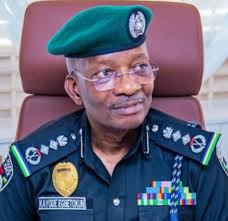
The Inspector-General of Police has approved the immediate withdrawal of officers attached to the No. 24 Police Mobile Force Presidential Escort at the State House in Abuja.


He ordered them to return to their various state commands across the country.

The directive was contained in a police signal issued on December 16, 2025, by the Department of Finance and Administration (Welfare) at the Force Headquarters in Abuja.

The signal instructed senior police officers and formations to carry out the redeployment without delay.

Advertisement

The message was sent to the Deputy Inspector-General of Police in charge of Operations, Assistant Inspectors-General supervising the Police Mobile Force and zonal commands, as well as Commissioners of Police nationwide.

It confirmed that the officers affected were those assigned to close protection duties at the Presidential Villa.

Under the new posting arrangement, officers were moved back to their home states and other commands.

The signal was copied to the Chief Personal Security Officer to the President, the Commander of No. 24 Police Mobile Force in Abuja, and police commands in several state capitals and major cities across the country.

Advertisement

The redeployment follows an earlier directive by President Bola Tinubu in November, which ordered the withdrawal of police officers from VIP escort and guard duties.

Thirteen officers were redeployed to Adamawa. They include Inspectors Baba Ibrahim, Emmanuel Buba, Idris Yahaya, Musa Ado, Bullo Ngoba, Felix John, Ibrahim Yusuf, Sanusi Jibrin, Musa Ibrahim, Bello Ali, Jibril Kabiru, Musbahu Nuhu, Gambo Aliyu, Hamisu Iliyasu, Mamuda Mamuda, Aminu Sani, Saifullahi Haruna, Sergeant Mujitapha Lawal, and Corporal Ibrahim Yusuf.

Eighteen officers were redeployed to Kebbi. They are Inspectors Abala Yahaya, Joshua Bako, Jamilu Garba, Abdullahi Jibrin, Usman Sule, Magaji Bitrus, Faruku Garba, Iliyasu Danladi, Alkasim Usman, Yahaya Suleiman, Saifuddeen Magaji, James Gana, Moses Ezekiel, Shehu Yunusa, Rabiu Muhammad, Abdulmumini Umar, Abubakar Magaji, and Umar Lawal.

Fourteen officers were posted to Kaduna. They include Inspectors Abubakar Bawale, Shehu Umar, Nura Isyaku, Abdullahi Sani, Aliyu Adamu, Abdullahi Ibrahim, Usman Garba, Bashir Yakubu, Mohammed Babangari, Saidu Bello, Rabi Shaibu, Basiru Rabe, Irimiya Maigamo, and Idris Mohammed.

Advertisement

Seven officers were posted to Anambra: Inspectors Sani Usman, Adenitire Blessing, Lawrence Anthony, Adams Christopher, Kaura Amos, Apata Olusola, and Ibrahim Samaila.

Two officers, Inspectors Terver Apuu and Imoh Udontuen, were redeployed to Akwa Ibom.

Twelve officers were moved to Bauchi. They include Inspectors Maren Solomon, Elisha Anthony, Bitrus Benham, Allu Ezekiel, Aliyu Tella, Friday John, David Elisha, Amos Agaba, Hassan Mohammed, Mustapha Haladu, Bashir Suleiman, and Abubakar Yusuf.

Nine officers were redeployed to Benue. They include Inspectors Saidu Inusa, Nuhu Hassan, Wathlanafia Ijantuku, Apollos Peter, Emmanuel Ejeikwu, Salaudeen Isiaka, Iliya Yunusa, Umar Usman, and Saadu Muazu.

Advertisement

Eight officers were posted to Borno. They are Inspectors Isa Maskunan, Yakubu Aminu, Amos Pyiki, Samuel Benjamin, Mustapha Mohammed, Basafeme Titusayi, and Mudassir Garba.

Four officers, Inspectors James Comfort, Ojeite Sunday, Halluru Mohammed, and Alex Mathew, were redeployed to Bayelsa.

Inspector Maurice Ekpenyong was redeployed to Cross River.

Officers posted to Ebonyi include Inspectors Abang Odey, Isang Eni, Adalikwu Richard, Awal Jega, Igbode Francis, Anthony Kanung, Mohammed Isah, Ahmed Angala, and Ishaku Musa.

Advertisement

Ten officers were posted to Ekiti. They are Inspectors Sadare Adekunle, Akinrotimi Moses, Nehemiah Ladan, Ambali Monsur, Oyedare Yemi, Afolayan Oluwole, Akinmeji Ademola, George Banji, Toriola John, and Agbo Yahaya.

Nine officers were redeployed to Enugu. They include Inspectors Amu Benedict, Emmanuel Ameh, Danjuma Ntyem, Rachael Onyia, Peter Philip, Sunday Akagwu, Godwin Lebel, Audu Andrew, and Demian Christopher.

Twenty-two officers were redeployed to the Federal Capital Territory. They include Inspectors James Peter, Adamu Abdullahi, Musa Isah, Felix Likita, Elisha Duniya, Salisu Hassan, Ayuba Anas, Nura Usman, Haruna Mohammed, Kamal Suleiman, Dauda Ubali, Nura Salisu, Ichapi Gabriel, Haruna Musa, Garba Haruna, Simon Omale, Elias Lajji, Shuaibu Adamu, Danlami Abdullahi, Sunday Mamza, and Zumunta Simon.

Twelve officers were posted to Gombe. They are Inspectors Salisu Suleiman, Usman Sule, Musa Jeji, Mohammed Umar, Abdulkadir Isah, Auwalu Mohammed, Samaila Hassan, Mohammed Adadu, Chadi Thlama, Ahmed Ephraim, Safiyanu Abdullahi, and Bello Hashimu.

Advertisement

Other redeployments include Imo (eight officers), Jigawa (16), Kogi (16), Kano (16), Katsina (21), Kwara (16), Nasarawa (15), Niger (20), Ondo (six), Osun (six), Plateau (19), Sokoto (18), Taraba (19), and Yobe (15).

Meanwhile, Zone 1, Kano, has two officers redeployed; Zone 3, Yola, has one officer; while Zone 7, Abuja, has six officers affected.
Continue Reading
Advertisement

News

Just in: FRSC Starts 2026 Nationwide Recruitment

Published

on

ADVERTISEMENT
Zoom Ad
ADVERTISEMENT
Zoom Ad

The Federal Road Safety Corps (FRSC) has officially commenced its 2026 nationwide recruitment exercise, beckoning on qualified Nigerians to apply for various positions across its Officer, Marshal Inspectorate and Road Marshal Assistant cadres.

According to the Corps, the online application portal opened on Friday, July 3, 2026, and will remain accessible for four weeks. The recruitment exercise is completely free, with the agency warning applicants not to pay any individual or organization claiming to facilitate employment.

Interested applicants are required to submit their applications through the official FRSC recruitment portal at HERE

Available Cadres
The recruitment covers three major categories:

Advertisement

Officer Cadre – Open to holders of B.Sc., BA, HND and other relevant professional qualifications.

Marshal Inspectorate Cadre – Available for candidates with qualifications such as ND, NCE and other approved credentials.
Road Marshal Assistant Cadre – Includes opportunities for eligible SSCE holders, artisans and drivers, depending on the position.
Required Documents
Applicants are advised to prepare the following before beginning their application:

National Identification Number (NIN)
Educational certificates
Birth certificate or age declaration
Recent passport photograph
NYSC discharge, exemption or exclusion certificate (where applicable)
The FRSC also advises applicants to use their personal email address and phone number during registration and to ensure all information provided is accurate. Shortlisted candidates will be required to present printed copies of their completed application forms during the screening process.

The Corps urged interested Nigerians seeking a career in the Federal Government to apply early in order to avoid heavy traffic on the recruitment portal before the application window closes.

Advertisement
Continue Reading

News

Finally, US Confirms Withdrawal Of Troops From Nigeria

Published

on

ADVERTISEMENT
Zoom Ad
ADVERTISEMENT
Zoom Ad

The United States has withdrawn the majority of its military personnel deployed to Nigeria for a joint counterterrorism mission in the Lake Chad Basin, while maintaining intelligence sharing and other security cooperation with Nigerian authorities.

Commander of US Air Forces in Africa, General Dagvin R.M. Anderson, announced the development during a virtual press briefing on the outcome of the African Chiefs of Defence Conference 2026.

He said the partnership between Washington and Abuja remained active, particularly in intelligence operations targeting the Islamic State (ISIS/Daesh).

According to Anderson, the specific mission that required the deployment of US troops has been completed, prompting the withdrawal of most personnel.

Advertisement

However, he noted that the United States would continue providing intelligence assistance at the request of the Nigerian government.

“And so that operation in the Lake Chad Basin of Nigeria not only helped the countries in that immediate region; it also helps countries globally as that disrupts the ISIS network,” Anderson said.

“And so — and then we have withdrawn much of our forces that were just there for that operation, but are continuing the partnership that Nigeria has asked for to help continue with the intelligence sharing and the understanding that’s necessary to be able to prosecute these difficult tasks,” he added.

The US Air Force commander described Nigeria as a key regional partner with a capable military, saying the collaboration between both nations had produced notable gains in the fight against ISIS.

Advertisement

He credited intelligence cooperation between the two countries for enabling an operation that eliminated the second-highest-ranking figure in the global ISIS network.

“I think there partnership that we’ve shown recently with Nigeria, where Nigeria’s a very capable and large country — it’s got a strong economy; it’s got a large, educated population; it’s got a very capable military.

“But there are things that we have learned in the counterterrorist fight over several years that we were able to assist and integrate with them to help them with their intelligence and help with the intelligence sharing that eventually led to a cooperative effort to where we were able to bring some unique capabilities that the U.S. brings and be able to prosecute together the number two leader within the ISIS or Daesh organization who is responsible for much of their global operations, their global media, and their recruiting”, he said.

Anderson said the operation underscored the effectiveness of intelligence collaboration over prolonged foreign troop deployments.

Advertisement

“So I think as we go forward, that is an example of how we’re looking at engaging with partners to help them be more effective by only bringing unique U.S. capabilities that allow the partner to be effective in these fights,” he said.

He also called for deeper intelligence cooperation among African countries to tackle terrorism, drug trafficking and other cross-border crimes.

The US commander cited a recent multinational operation that intercepted a record 31-ton shipment of cocaine originating from South America and passing through the West African coastline, saying effective intelligence sharing made the seizure possible.

“I was able to coordinate through our interagency in the United States, through AFRICOM, and then notify some of the partners. And eventually it was a Spanish ship that interdicted the ship that had 31 tons of cocaine on it, and it turns out is the largest interdiction of drugs at sea that we’ve ever seen,” Anderson said.

Advertisement

He added that sustained collaboration among African governments, international allies and private-sector stakeholders would be vital to confronting security challenges while fostering economic growth and attracting investment across the continent.

The United States deployed about 200 military personnel to Nigeria in February 2026 to assist with intelligence, surveillance and counterterrorism operations in the Lake Chad Basin as both countries expanded cooperation against ISIS and other extremist groups operating in the region.

The deployment came after US President Donald Trump redesignated Nigeria as a Country of Particular Concern and pledged increased American support for counterterrorism efforts.

On December 25, 2025, US forces carried out air strikes on two terrorist camps in the Bauni Forest, located in Tangaza Local Government Area of Sokoto State.

Advertisement

The security partnership reached a major milestone in May 2026 when a joint US-Nigerian operation killed Abu-Bilal Al-Minuki, the second-in-command of ISIS, during a raid on his hideout in Borno State.

Continue Reading

News

Ogoni family demands justice for son arrested at age 14, jailed 18 years without trial

Published

on

ADVERTISEMENT
Zoom Ad
ADVERTISEMENT
Zoom Ad

An Ogoni family in Rivers State has instituted legal proceedings against the Federal Government, the Rivers State Government and the Federal Ministry of Interior over the alleged unlawful detention of their son, Gospel Kinanee, who spent 18 years in prison without trial after he was reportedly arrested as a 14-year-old boy.

The lawsuit follows Gospel’s recent release from custody after nearly two decades behind bars, a period during which he was allegedly denied his constitutional right to a fair hearing and access to legal representation.

Speaking during an interview with Arise News, Gospel’s elder brother, Paul Kinanee, narrated the family’s painful ordeal, describing the years of uncertainty as one marked by relentless searches, emotional trauma and devastating loss.News

According to him, Gospel disappeared one night in 2007, prompting family members to launch an extensive search across Rivers State. They visited several police stations, detention centres and correctional facilities in a desperate attempt to locate him, but every effort proved unsuccessful.

Advertisement

Paul disclosed that the family even searched the Port Harcourt Maximum Security Custodial Centre, where Gospel was unknowingly being held, but officials reportedly informed them that no inmate bearing his name was in custody.

He said the prolonged uncertainty over Gospel’s whereabouts had a profound emotional impact on the family, adding that both their mother and father died without ever knowing what had happened to their son.

The family’s search came to an unexpected end when a lawyer conducting a routine visit to the prison noticed an inmate whose appearance matched descriptions of the missing teenager. Suspecting he could be the long-lost Gospel, the lawyer later returned to the facility with Paul Kinanee, who immediately recognised his younger brother.

By the time of the reunion, Gospel was 32 years old, having spent more than half of his life in detention.

Advertisement

According to his family, the years of incarceration without trial, combined with prolonged isolation and harsh prison conditions, have left him with serious psychological and mental health challenges, making his rehabilitation a major concern.

Reports indicate that throughout his detention, Gospel was never formally tried before a court of law and was allegedly denied access to legal counsel, raising significant concerns over due process and the protection of fundamental human rights within Nigeria’s criminal justice system.Demographics

His freedom eventually came during a jail delivery exercise conducted by the Chief Judge of Rivers State, Justice Simeon Amadi, who reviewed the cases of inmates awaiting trial. Gospel was among 21 inmates ordered to be released during the exercise after it was discovered that they had been unlawfully or excessively detained.

The Kinanee family is now seeking substantial financial compensation and judicial accountability, arguing that the prolonged detention robbed Gospel of his childhood, education, opportunities and good health.

Advertisement

They contend that the actions and alleged negligence of the relevant authorities caused irreversible damage to both Gospel and the entire family, which endured years of anguish while desperately searching for him.

The case has sparked renewed public concern over prolonged detention without trial in Nigeria and has intensified calls for comprehensive reforms aimed at preventing similar miscarriages of justice within the country’s criminal justice and correctional systems.

Continue Reading

Trending

Copyright © 2024 Naija Blitz News