News
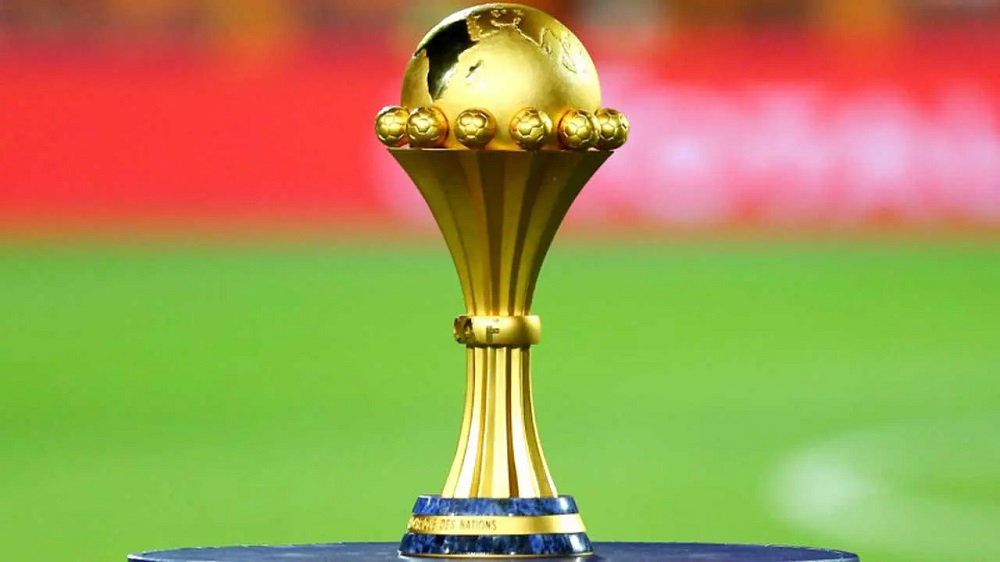
FULL LIST: AFCON bronze medal winners since 1957
The Africa Cup of Nations third-place playoff has, over the decades, served as a defining moment for teams seeking to end their campaigns on a positive note. While the final determines champions, the bronze medal match often reflects resilience, recovery, and tactical maturity after the disappointment of missing out on the title clash.
Since the inaugural edition in 1957, several nations have written their names into the AFCON bronze medal history, with Nigeria emerging as the most consistent performers in this category.
Below is a detailed, chronological account of every AFCON bronze medal winner, including how, where, and when each medal was secured.

2025: Nigeria
Nigeria claimed third place at the 2025 Africa Cup of Nations in Morocco after winning the bronze medal match, rounding off a strong tournament campaign beating Egypt 4-2 on penalties.
2023: South Africa
South Africa secured the bronze medal at the 2023 AFCON in Côte d’Ivoire after defeating DR Congo via penalties in the third-place playoff, marking their return to the podium since 2000.
2021: Cameroon
At the 2021 AFCON hosted by Cameroon, the Indomitable Lions came from behind to defeat Burkina Faso in the third-place match, finishing the tournament strongly in front of home fans.
2019: Nigeria
Nigeria won the bronze medal at the 2019 AFCON in Egypt after edging Tunisia in the playoff, a match decided by a solitary goal that underlined the Super Eagles’ defensive organisation.
2017: Burkina Faso
Burkina Faso claimed third place at the 2017 tournament in Gabon, defeating Ghana on penalties after a dramatic playoff that ended level in regulation time.
2015: DR Congo
DR Congo secured the bronze medal at the 2015 AFCON in Equatorial Guinea after beating hosts Equatorial Guinea in the third-place match.
2013: Mali
Mali finished third at the 2013 AFCON in South Africa, recording a convincing victory over Ghana to earn their first-ever bronze medal.
2012: Mali
Mali repeated the achievement at the 2012 tournament in Gabon and Equatorial Guinea, once again defeating Ghana in the third-place playoff.
2010: Nigeria
Nigeria claimed bronze at the 2010 AFCON hosted by Angola after defeating Algeria, ending the tournament on a positive note.
2008: Ghana
Ghana secured third place at the 2008 AFCON on home soil, defeating Côte d’Ivoire in the playoff match.
2006: Nigeria
At the 2006 AFCON in Egypt, Nigeria defeated Senegal in the third-place match to finish on the podium.
2004: Nigeria
Nigeria claimed bronze at the 2004 tournament in Tunisia after overcoming Mali via penalties following a goalless draw.
2002: Nigeria
Nigeria secured third place at the 2002 AFCON hosted by Mali, beating the hosts in the bronze medal match.
2000: South Africa
South Africa finished third at the 2000 AFCON co-hosted by Ghana and Nigeria, defeating Algeria in the playoff.
1998: DR Congo
DR Congo earned bronze at the 1998 AFCON in Burkina Faso after defeating the hosts in the third-place match.
1996: Zambia
Zambia secured third place at the historic 1996 AFCON in South Africa, defeating Ghana in the playoff.
1994: Côte d’Ivoire
Côte d’Ivoire claimed bronze at the 1994 AFCON in Tunisia after defeating Mali.
1992: Nigeria
Nigeria finished third at the 1992 tournament in Senegal, beating Cameroon in the bronze medal match.
1990: Zambia
Zambia secured bronze at the 1990 AFCON in Algeria, defeating Senegal in the third-place playoff.
1988: Algeria
Algeria claimed third place at the 1988 AFCON in Morocco after beating the hosts in the playoff.
1986: Côte d’Ivoire
Côte d’Ivoire finished third at the 1986 AFCON hosted by Egypt, defeating Morocco.
1984: Algeria
Algeria secured another bronze medal at the 1984 tournament in Côte d’Ivoire after defeating Nigeria.
1982: Zambia
Zambia claimed third place at the 1982 AFCON in Libya, defeating Algeria in the playoff.
1980: Morocco
Morocco finished third at the 1980 AFCON hosted by Nigeria after beating Egypt.
1978: Nigeria
Nigeria claimed bronze at the 1978 AFCON in Ghana, defeating hosts Ghana in the third-place match.
1976: Nigeria
At the 1976 AFCON in Ethiopia, Nigeria finished third in the final group standings, as the tournament used a round-robin format rather than a playoff.
1974: Egypt
Egypt secured third place at the 1974 AFCON hosted on home soil after finishing behind Zaire and Zambia in the final group.
1972: Cameroon
Cameroon claimed bronze at the 1972 AFCON which they hosted, finishing third in the final group stage.
1970: Egypt
Egypt finished third at the 1970 AFCON in Sudan after placing behind Sudan and Ghana in the final standings.
1968: Côte d’Ivoire
Côte d’Ivoire secured bronze at the 1968 AFCON in Ethiopia by finishing third in the final rankings.
1965: Côte d’Ivoire
The Ivorians repeated the feat at the 1965 AFCON in Tunisia, again finishing third overall.
1963: Egypt
Egypt claimed third place at the 1963 tournament hosted by Ghana, ending the competition behind Ghana and Sudan.
1962: Tunisia
Tunisia secured bronze at the 1962 AFCON which they hosted, finishing third in the group standings.
1959: Ethiopia
Ethiopia finished third at the 1959 AFCON hosted by Egypt, behind the hosts and Sudan.
1957: Sudan
Sudan became the first-ever AFCON bronze medal winners at the inaugural tournament in 1957, hosted in Sudan.
Across generations, the AFCON bronze medal has symbolised resilience and consistency, rewarding teams that respond positively after semifinal disappointment. As the tournament continues to grow in stature, these third-place finishes remain an important part of Africa’s football legacy.
News
Primate Ayodele, set to commission Mosque on Saturday
The Leader of INRI Evangelical Spiritual Church, Primate Elijah Ayodele, has concluded plans to commission a mosque, which he single-handedly built, on Saturday, February 14, 2026.
The commissioning will also commemorate his 21-day annual thanksgiving programme, which began in January and will end on Sunday, February 15, 2026.
The mosque building, which the prophet announced plans for last year, is the first of its kind, as there has never been a prominent Christian leader reported to have built a mosque before now.
According to Primate Ayodele, his decision to build the mosque is not because he wants to change his religion, but rather a representation of a direction given to him by God many years ago.
He explained that his church has been home to Muslim faithful, and at different times, he has been invited to preach at Muslim gatherings. Therefore, building a mosque was not difficult, especially after receiving divine direction regarding it.
“My decision to build a mosque is not because I want to become a Muslim, but a direct representation of what God told me to do. I have Muslims attending my church, I attend Muslim programmes to preach when I am called upon, and I have several Muslim friends, so following the God-given instruction was not too hard for me.”
Primate Ayodele also noted that building a mosque as a Christian cleric sends a message of religious tolerance across the globe and further showcases his love for humanity, regardless of differences.
“Beyond being a divine instruction, this is a message of religious tolerance across the globe. If we can resolve the issue of religion in the world, it would definitely be a better place for all of us. I love everyone, regardless of their religion or tribe, and building a mosque further showcases that. God created everyone equally; we should not celebrate things that further divide us.”
Speaking on the operations of the mosque, Primate Ayodele explained that he would be handing it over to the Islamic community without any form of interference in its administration.
“By God’s grace, the mosque will be named after the late mother of President Tinubu, and we will be handing over its operations to the Islamic community without any interference.”
It is worth noting that Primate Ayodele has both privately and publicly supported other churches, especially financially. He has donated funds for church buildings, empowered individuals who are not members of his church, and raised funds for churches other than his own.
News
Scary: CRS records 1,459 cases in five years
Cross River State recorded 1,459 cancer cases between 2018 and 2022, with women accounting for over two-thirds of the total, data from the Calabar Cancer Registry have shown.
Director of the Registry, Prof. Ima-Obong Ekanem, disclosed this at a two-day capacity workshop for Cancer Registrars held at the University of Calabar Teaching Hospital, UCTH.
The training was organised by the National Institute for Cancer Research and Treatment, NICRAT, in collaboration with Linkwell Dynamic Concept.
Of the total cases, 984 (67.4 per cent) were females and 475 (32.6 per cent) males, giving a male-to-female ratio of 1:2. An average of 292 cases was recorded annually — a 51 per cent rise compared to 2009–2013.
Ekanem, also Chief Consultant Pathologist at UCTH, said the report covered only three of the state’s 18 local government areas and excluded benign tumours, in line with global standards.
Among men, prostate cancer led with 149 cases (33.4 per cent), followed by lymphoma, colorectal, breast, mouth and pharynx, larynx, lung, bladder, leukaemia and thyroid cancers.
For women, breast cancer topped the chart with 397 cases (40.3 per cent), followed by cervical cancer with 170 (17.3 per cent). Ovarian, uterine, colorectal and lymphoma cases were also recorded.
In children, 90 cases were documented, with retinoblastoma and lymphoma the most frequent.
Ekanem said over one-third of cancers are preventable through reduced exposure to risk factors and vaccination against Hepatitis B and Human Papilloma Virus, which are linked to liver and cervical cancers.
She urged healthy diets, regular exercise, avoidance of tobacco and excessive alcohol, and reduced sugar and salt intake. She also cautioned against harmful practices such as skin bleaching.
Men above 40, she advised, should undergo annual prostate checks, while women should carry out monthly breast self-examinations and periodic Pap smear and HPV DNA tests.
She noted that screening services remain unaffordable for many, stressing the need for a stronger health system to guarantee access to diagnosis and treatment.
Ekanem cited funding and logistics gaps as major challenges facing the registry and called for support.
NICRAT Director-General, Prof. Usman Malami Aliyu, represented by Bashir Mustapha, said accurate cancer data are vital for planning, budgeting and effective control programmes nationwide.
News
FG Suspends Sachet Alcohol Ban, Tells NAFDAC to Stand Down
The Federal Government has again reaffirmed the suspension of all enforcement actions relating to the proposed ban on sachet alcohol and 200ml PET bottle alcoholic products, warning the National Agency for Food and Drug Administration and Control (NAFDAC) to desist forthwith from further sealing of factories and warehouses.
This renewed directive follows a joint intervention by the Office of the Secretary to the Government of the Federation (OSGF) and the Office of the National Security Adviser (NSA), both of which have raised serious concerns over the security implications of continued enforcement actions in the absence of a fully implemented National Alcohol Policy.
According to OSGF and NSA, the National Alcohol Policy has now been signed by the Federal Ministry of Health in line with the directive of President Bola Ahmed Tinubu. However, they stressed that until the policy is fully implemented and further policy direction is issued by the Office of the SGF, NAFDAC must refrain from all enforcement measures, including factory shutdowns, warehouse sealing, and public emphasis on the sachet alcohol ban.
The SGF and NSA jointly warned that the continued sealing of warehouses and de facto banning of sachet alcohol products, without a harmonised policy framework, is already creating economic disruptions and poses a growing security threat, particularly given the impact on employment, supply chains, and informal distribution networks across the country.
This position reinforces an earlier directive issued by the Office of the Secretary to the Government of the Federation in December 2025, which formally suspended all actions relating to the proposed ban pending consultations and a final government decision.
In a statement issued by the Special Adviser on Public Affairs to the SGF, Terrence Kuanum, the OSGF disclosed that it had received an official correspondence from the House of Representatives Committee on Food and Drugs Administration and Control, dated November 13, 2025. The letter, referenced NASS/10/HR/CT.53/77 and signed by the committee’s Deputy Chairman, Hon. Uchenna Harris Okonkwo, raised concerns over NAFDAC’s proposed enforcement actions and drew attention to existing resolutions of the National Assembly on the matter.
The OSGF explained that, in line with its statutory role as Chairman of the Cabinet Secretariat, it is currently reviewing all legislative resolutions, public health considerations, economic implications, and national interest factors surrounding the issue.
“Accordingly, all actions, decisions, or enforcement measures relating to the ongoing ban on sachet alcohol are to be suspended pending the final consultations and implementation of the National Alcohol Policy and the issuance of a final directive,” the statement emphasized.
The Office further clarified that any enforcement action carried out by NAFDAC or any other agency without due clearance and resolution from the Office of the Secretary to the Government of the Federation is invalid and should be disregarded by the public until an official position is formally communicated.
With the latest intervention by the Office of the National Security Adviser, the Federal Government has now elevated the matter beyond regulatory concerns, stressing that premature enforcement without coordinated policy implementation could destabilize communities, worsen unemployment, and trigger avoidable security challenges.
The SGF and NSA reiterated that the warning stands, and that NAFDAC is expected to cease forthwith from further enforcement actions or public emphasis on the sachet alcohol ban until the National Alcohol Policy is fully operationalized and further directives are issued by the appropriate authorities.
The Federal Government assured Nigerians and industry stakeholders that a final, balanced, and lawful decision would be communicated in due course, following comprehensive consultations and inter-agency coordination in the overall interest of public health, economic stability, and national security.
-
News21 hours agoSenate rescinds earlier decision, amends Electoral Act to accommodate electronic transmission of results with conditions
-
News9 hours agoAtiku, Makinde Hold Closed-Door Meeting With IBB
-
Metro9 hours agoOwo Massacre: Amotekun Officer Identifies 2nd Defendant As Gunman
-
News20 hours agoFinally, Senate Rescinds Decision on Electoral Act Amendment Bill
-
News9 hours agoNRS targets ₦40.7trn revenue in 2026
-
News21 hours agoVideo/Photos: Wike confirms Tinubu’s intervention in Rivers crisis, fervently hope it’ll be the last
-
News23 hours agoMarwa mourns fallen officer as NDLEA nabs 6 suspects in bloody Bonny Island raid (Photos)
-
News9 hours agoNASS joint committee turns down proposed Nigerian Air Force budget, demands review