

Connect with us

News

Health Minister Says 2025 Capital Budget Was Not Utilise, As It Received Only N36m of N218bn

Published

on

ADVERTISEMENT
Zoom Ad
ADVERTISEMENT
Zoom Ad

By Gloria Ikibah

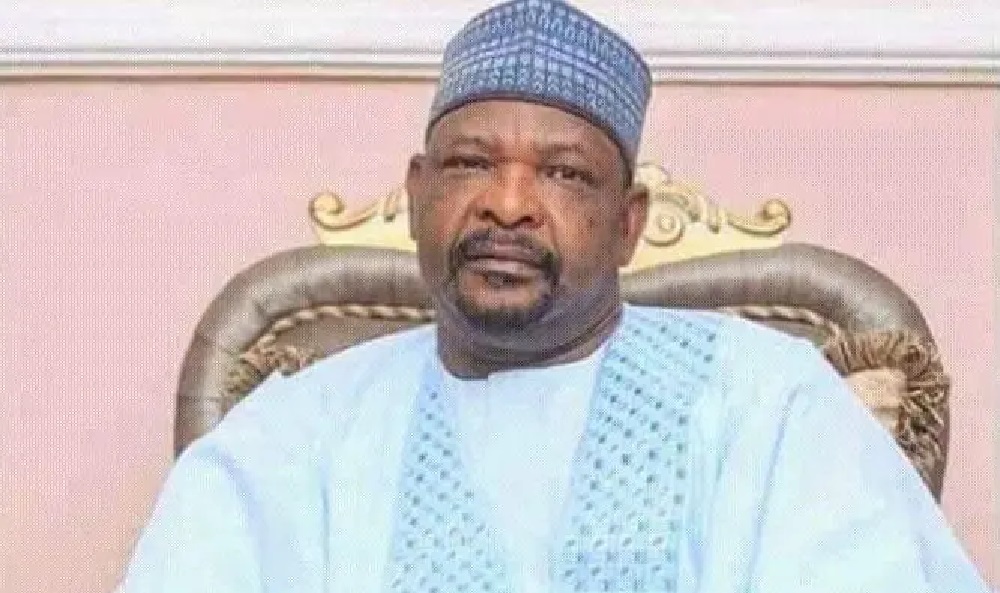
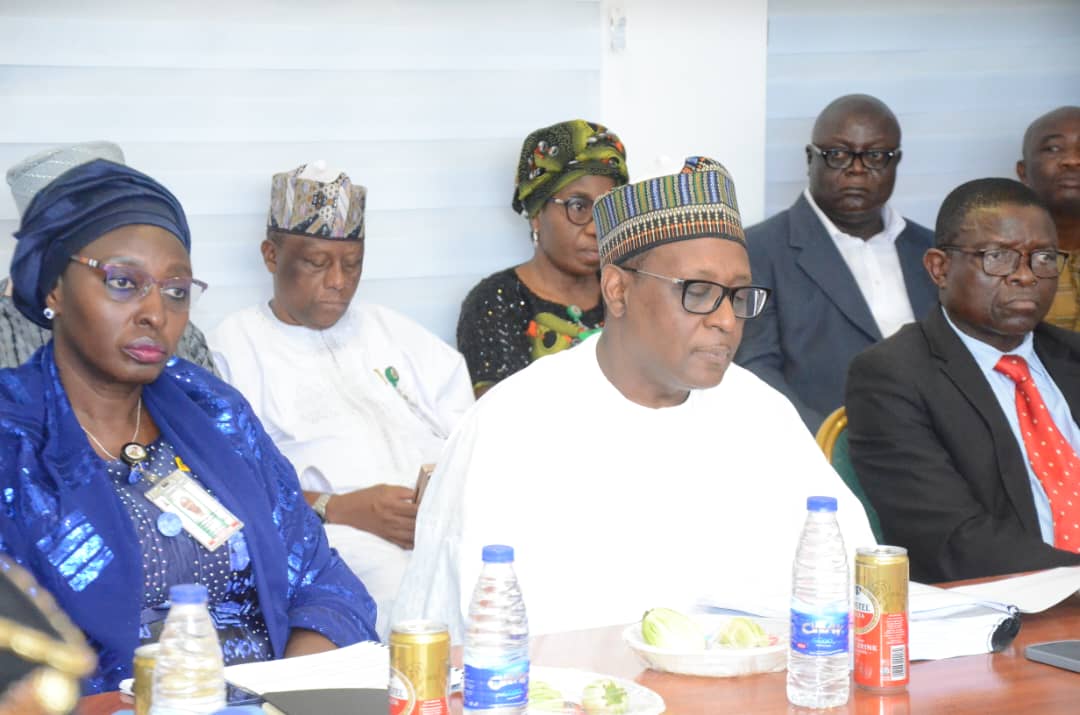
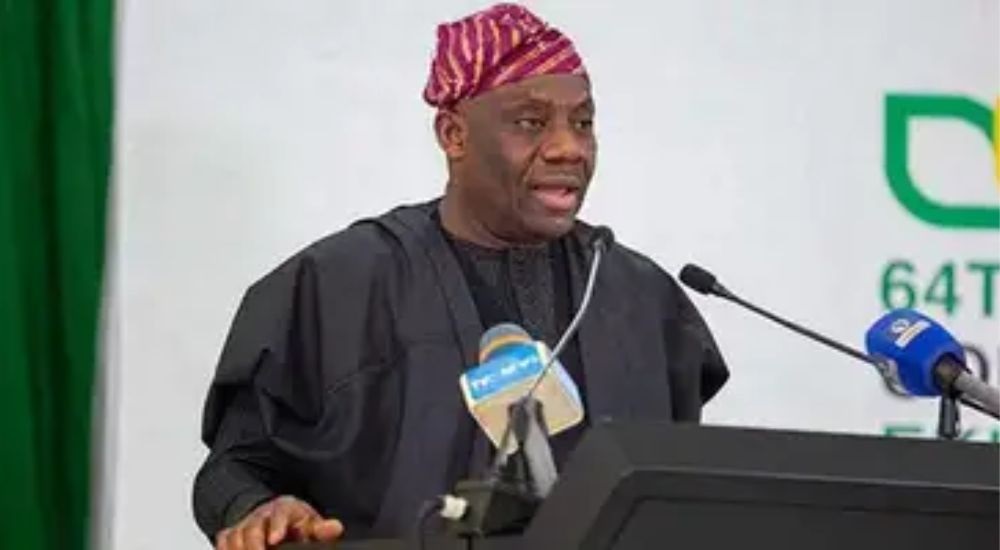
The Minister of Health, Prof. Mohammed Ali Pate, has said that the Ministry was not able to make use of its 2025 capital budget, as it received only ₦36 million only of the ₦218 billion appropriated for the year.

The Minister stated this during the 2026 budget defence session with the House of Representatives Committee on Healthcare Services. According to him, while entire personnel budget of the ministry was released and fully expended, but it was not the same with the capital component due to the bottom-up cash planning system operated by the Office of the Accountant-General of the Federation.

He further disclosed that the Ministry was unable to have access to some counterpart funds as a result of delays in the release of Nigeria’s counterpart contributions, he further noted that implementation of the 2025 capital budget was consequently stalled by unforeseen circumstances.

Advertisement

Prof. Pate said that the nation’s health sector was guided by Vision 20:2020, Medium-Term National Development Plan (NDP) 2021–2025, and National Strategic Health Development Plan (NSHDP) II.

He said the overarching goal of the Nigerian Constitution and the National Health Act (NHAct) is to guarantee the right to health for all Nigerians, noting that the 2016 National Health Policy provides the implementation framework for translating the provisions of the National Health Act and the Sustainable Development Goals into improved health outcomes and wellbeing for citizens.

“The principles of Universal Health Coverage are central to the National Health Policy objective of strengthening Nigeria’s health system—particularly the Primary Health Care subsystem—to deliver quality, effective, efficient, equitable, accessible, affordable, acceptable and comprehensive health services to all Nigerians,” he said.
Prof. Pate also revealed that the policies and strategies supporting the 2026 budget are derived from the 2026–2028 Medium-Term Expenditure Framework and Fiscal Strategy Paper (MTEF/FSP), which outlines the Federal Government’s development priorities.

Advertisement

He explained that the Ministry’s 2026 proposed budget was prepared using the Government Integrated Financial Management Information System (GIFMIS), in line with the National Development Plan 2021–2025, which emphasises justification and allocation of resources to projects and programmes based on actual needs. He added that the proposal aligns with the policy thrust and execution priorities of the Federal Government, as well as the ministerial deliverables of the administration of President Bola Ahmed Tinubu.

The Minister noted that the 2026 budget proposal is anchored on the 2016 National Health Policy and guided by the Federal Ministry of Health’s Strategic Blueprint Initiatives, which serve as key policy instruments for achieving ministerial deliverables and advancing the global agenda of Universal Health Coverage.

He added that the National Health Policy 2016, themed “Promoting the Health of Nigerians to Accelerate Socio-economic Development,” provides the foundation for the National Strategic Health Development Plan II and supports accelerated implementation of the National Health Act, 2014.

In his remarks, the Chairman of the House Committee on Healthcare Services, Rep. Amos Gwamna Magaji, directed the Minister to furnish the Committee with all relevant documents relating to donor funds received by the Ministry and details of how such funds were utilised.
Advertisement
Continue Reading
Advertisement

News

Watch moment FCT minister Wike lead security operatives criminals hideout in Kukwaba

Published

on

ADVERTISEMENT
Zoom Ad
ADVERTISEMENT
Zoom Ad

FCT Minister, Nyesom Wike on Friday, led security personnel to a criminal hideout in a shanty located in Kukwaba District, near the City Gate, Abuja, immediately after a security meeting, directing that the settlement be demolished to improve security in the nation’s capital.

Wike said criminals often retreated to the community after carrying out attacks, insisting he would not allow such a hideout to continue to exist in Abuja.

WATCH

Advertisement
Continue Reading

News

Sad: Gunmen kill Miyetti Allah chairman two sons

Published

on

ADVERTISEMENT
Zoom Ad
ADVERTISEMENT
Zoom Ad

Two sons of the South-East Zonal Chairman of the Miyetti Allah Cattle Breeders Association of Nigeria (MACBAN), Alhaji Haruna Sale, have been killed after gunmen attacked a cattle settlement in Oheoyya Community, Ezeagu Local Government Area of Enugu State.

The attackers also reportedly slaughtered about 40 cattle belonging to members of the association during the incident.

The attack was said to have happened at about 5:00 p.m. on Saturday, July 25, 2026, when armed men invaded the settlement and opened fire on the residents.

The victims were identified as Ahmadu and Umaru, who were both sons of the MACBAN zonal chairman.

Advertisement

In a statement issued by the association’s National Deputy Director-General, Gidado Siddiki, MACBAN said the attackers carried out the assault before killing dozens of cattle kept at the settlement.

The group described the incident as a painful attack on citizens involved in lawful livestock business.

The association said security personnel later found the bodies of the two victims in a nearby forest.

Their remains were recovered and handed over to their families, who buried them according to Islamic rites.

Advertisement

MACBAN thanked the Enugu State Government and security agencies for responding after the attack and assisting in recovering the bodies.

However, it called for a full investigation into the incident and urged authorities to arrest and prosecute those responsible.

The association also stated that its members across the South-East are engaged in legal cattle breeding, rearing and trading activities and deserve the same protection as every other Nigerian.

It appealed to residents of Enugu State to continue supporting peaceful relations between herders and host communities, saying cooperation remains necessary for peace and economic activities.

Advertisement

MACBAN also restated its commitment to obeying the law and working with governments, host communities and security agencies to promote peace, improve security and strengthen unity across the country.

Continue Reading

News

Doctors Perform First Successful Manhood Transplant on 43-Year-Old Man

Published

on

ADVERTISEMENT
Zoom Ad
ADVERTISEMENT
Zoom Ad

A team of doctors in Vietnam has successfully performed the country’s first penis transplant, marking a major milestone in reconstructive and transplant surgery.

The recipient, a 43-year-old man, underwent the groundbreaking procedure at Hanoi’s Viet Duc Friendship Hospital after losing most of his penis during a partial penectomy performed four years ago.

According to the medical team, the patient was selected for the transplant after undergoing extensive medical, psychological, immunological and ethical assessments, which confirmed he was a suitable candidate for the rare procedure.

A penectomy is the partial or complete surgical removal of the penis, commonly performed to treat penile cancer or, in some cases, as part of gender-affirming surgery.

Advertisement

Associate Professor Dr. Nguyen Quang, Director of the hospital’s Andrology Centre, explained that the complex operation involved reconstructing the penis while reconnecting delicate blood vessels and nerves using advanced microsurgical techniques.

“In this transplant procedure, we reconstructed the anatomical structures of the penis, including the urethra, corpus spongiosum and corpora cavernosa, while simultaneously performing microsurgical anastomosis of minute arteries, veins and nerves,” he said.
He noted that combining reconstructive and microsurgical techniques required exceptional precision to ensure the transplanted organ remained viable and functional.

Doctors said the patient is recovering well, with no early complications recorded. The transplanted organ is healing as expected, and the patient is responding positively to anti-rejection medication.

Before the transplant, the patient had been able to urinate normally following his earlier surgery. However, only a very small portion of his penis remained, leaving him with significant psychological distress that negatively affected his quality of life and mental wellbeing.

Advertisement

Medical experts cautioned that it will take time to determine whether sensation, erectile function and long-term urinary function are fully restored. The patient will also continue to undergo close monitoring for any signs of organ rejection.

Hospital Director Dr. Duong Duc Hung described the procedure as Vietnam’s first penile transplant using an organ donated by a brain-dead patient.

He said the surgical team spent months preparing for the operation, studying international medical experience and coordinating specialists from multiple disciplines before carrying out the complex transplant.

According to international medical literature, only five successful penile transplants had been reported worldwide before the Vietnamese operation, making the procedure one of the rarest and most advanced reconstructive transplant surgeries ever performed.

Advertisement
Continue Reading

Trending

Copyright © 2024 Naija Blitz News