News
State police: IG sets up panel to propose framework
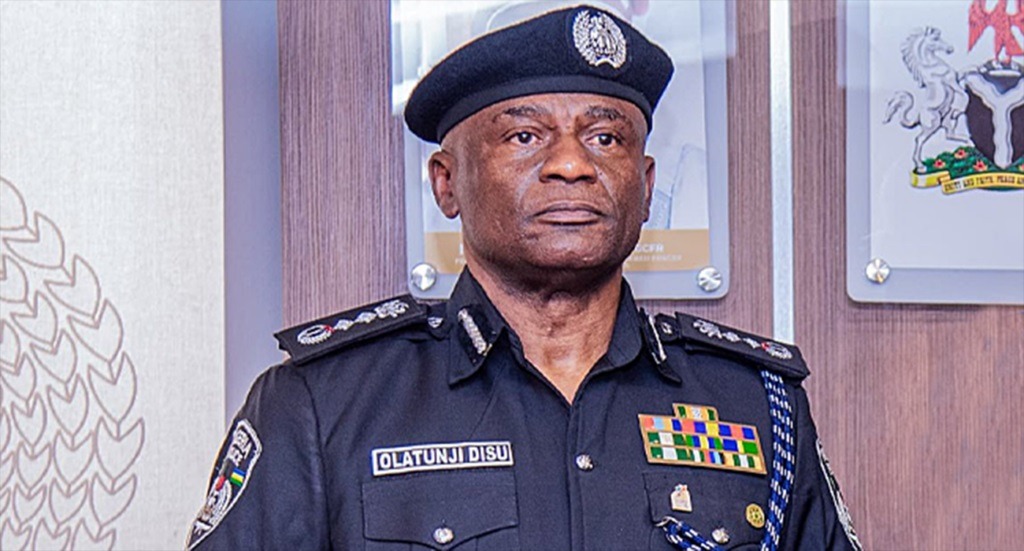
Newly sworn-in Inspector-General of Police, Tunji Disu, on Wednesday inaugurated a committee on the establishment of state police.

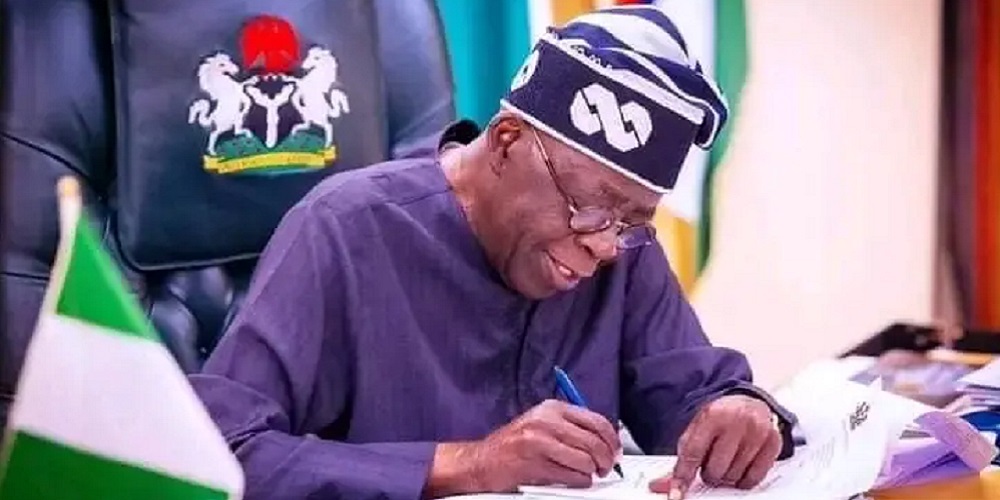
As part of ongoing discussions on policing reforms, President Bola Tinubu, had, last Wednesday, during the breaking of fast with senators at the Presidential Villa, Abuja, urged the leadership of the 10th Senate to initiate constitutional amendments to provide for the establishment of state police.
The President said decentralised policing would strengthen security at the grassroots and improve rapid response to threats within states, noting that the current centralised structure required constitutional review to accommodate the proposed reform.

Speaking during the inauguration, Disu said the committee’s task was to examine the concept of state policing as part of efforts to strengthen Nigeria’s internal security architecture and improve community-based policing.
He said the committee would review existing policing models within and outside Nigeria, assess community security needs, propose an operational framework for state police structures, and address issues of recruitment, training, standards, funding, accountability and oversight.
“Among other responsibilities, the committee is expected to review existing policing models within and outside Nigeria, assess community security needs and emerging risks across the country, propose an operational framework for the establishment and coordination of State Police structures, address issues relating to recruitment, training, standards, and resource allocation and develop robust accountability and oversight mechanisms to ensure professionalism and public trust,” he said.
Disu said state police formation could provide localised policing services focused on community safety, conflict prevention, neighbourhood patrols, and early response to emerging threats.
“This collaborative arrangement will encourage specialisation, strengthen professionalism, and ultimately deliver more effective security outcomes for our citizens,” he added.
The steering committee is chaired by Prof. Olu Ogunsakin, Director-General of the National Institute for Police Studies, Abuja, with CP Bode Ojajuni as secretary.
Other members are DCP Okebechi Agora, DCP Suleyman Gulma, ACP Ikechukwu Okafor, CSP Tolulope Ipinmisho and CP Emmanuel Ojukwu (retd.).
Also speaking shortly after his swearing-in as the substantive Inspector-General of Police, Disu disclosed that he had constituted a committee to develop the Nigeria Police Force’s position on the proposed establishment of state police.
He said, “The committee was set up early this morning to look into the issue of State Police from the angle of the Nigeria Police.
“We don’t want it to seem as if others are taking decisions, and we, the most important people concerned, did not do anything. We want to ensure that the best thing is done,” the IG stated.
He emphasised that the police was not opposed to state police, describing it as a partnership rather than a threat to the Force.
“State police has come to stay, and the police should be able to do their own part in making it succeed. The police are not afraid. Our jobs are not being taken. It’s just an issue of partnership,” Disu said.
Disu sworn-in
Disu took the oath of office at 2:53pm on Wednesday following the reading of his citation by the State House Director of Information and Public Relations, Mr. Abiodun Oladunjoye.
The ceremony was witnessed by Vice President Kashim Shettima, cabinet members, and other dignitaries.
Also in attendance were the Secretary to the Government of the Federation, Senator George Akume; National Security Adviser, Nuhu Ribadu; Chief of Staff, Femi Gbajabiamila; Minister of Police Affairs, Senator Ibrahim Gaidam; FCT minister, Nyesom Wike; and Head of Service, Mrs. Esther Walson-Jack.
Disu’s confirmation comes barely a week after President Tinubu appointed him acting IGP following the resignation of Kayode Egbetokun on February 23, 2026.
Ex-officers back committee
A retired Assistant Inspector-General of Police, Ali Amodu, described the Inspector-General of Police’s decision to set up a special committee on state policing as “a right step in the right direction.”
Speaking on the development, Amodu said the committee would provide professional input and advise the Presidency on the proposed decentralisation of the Nigeria Police Force.
“The decision or the thought of the IG in setting up a special committee is a right step in the right direction. The committee will actually provide the thinking, and then they will give advice to the Presidency because it is the police that they want to decentralise. It is good that the authority will want to hear from them,” he said.
He noted that he had canvassed the idea of decentralising the police as far back as 1981 after returning from detective training in the United Kingdom.
Amodu said, “As far back as 1981, I was a young superintendent. I came back from the UK and I actually made a suggestion to the police authority then that they should think of decentralising the police force because I saw the pattern in the UK.
“I said we can moderate our own and make adjustments. I was a very young officer, but the old hands were very angry with me to have said this. I remember my commissioner of police then said, ‘Young man, we sent you to the UK for detective training, and you are coming back thinking they should form a modality on how to decentralise the force.’”
Amodu added that the idea was now gaining traction globally. “The thing is coming to light. Light is shining on that area. It’s happening in many parts of the world,” he said.
According to him, policing differs from military operations because it requires close interaction with local communities.
“The police are not like the army or any arm of the Armed Forces. You work with the people, and people want to appreciate their own person. It is at that time they will be comfortable to even pass information which is needed for policing all over the world,” he said.
He also referenced ongoing legislative discussions on constitutional amendments, noting that the current constitution provides for a single police force.
“Just a few days ago, I heard the Senate President say that before the end of the year they will look into how the Constitution and see if it can be amended because the present Constitution says Nigeria has one police force. So, if we want to decentralise, they must amend that section of the constitution. I think they are working on it. Let’s see how it is going to work out,” he added.
On his part, a former Commissioner of Police, Lawrence Alobi, also backed the constitution of the committee, describing it as a professional and proactive move.
“It’s the right thing to have done because the police affair is all about policing, and police can come and handle police issues effectively,” Alobi said.
He stated that the committee should clearly define the structure and supervisory framework for state police formations.
“The committee should advise on the structure and how the state police would be supervised. Maybe they should be under the AIG in zones or the DIGs would have supervisory roles over them,” he said.
Alobi stressed the need to address jurisdictional issues in advance to avoid operational conflicts.
“If the structure is not determined now proactively and it is established, I don’t know the case, but if a case is committed in a state and the suspect is in another state, and the police from one state go there to get the suspect, how will the police in that state treat them when they come? This is something that needs to be determined. It should already be established and practiced,” he said.
He added, “I think the system is running in the right direction and doing the right thing.”
Middle East crisis
Meanwhile, Disu disclosed that the Nigeria Police Force wass closely monitoring Islamic groups with allegiance to Middle Eastern countries following the escalating US-Israel-Iran conflict, warning that developments in the Middle East could trigger repercussions in Nigeria.
“Everywhere in the world, we are aware that is what we call intelligence policing. Our ears are to the ground. We know we have groups of people, different kinds of Islamic sects in Nigeria. We have those who pay allegiance to this eastern part of the world as well,” Disu stated.
He added, “So we know if anything happens in the eastern part of the world, the repercussion will come to us.
“So, we are putting all necessary actions. You can see policemen on patrol, and most importantly, we are talking to them to ensure that they do not take law and order into their hands.”
The IGP’s statement comes amid heightened tensions in the Middle East following US and Israeli airstrikes on Iranian targets over the weekend and Iran’s retaliatory missile attacks on Israeli and American military installations.
Nigeria is home to significant Islamic groups with ideological and sometimes organisational ties to Middle Eastern countries, particularly Iran and Saudi Arabia.
The Islamic Movement in Nigeria, led by Sheikh Ibrahim El-Zakzaky, is known for its pro-Iranian stance and Shia Islamic orientation, while several Sunni groups maintain connections with Saudi Arabia and other Gulf states.
News
Aliko Dangote named among TIME 100 most influential people for 2026
Renowned African industrialist and philanthropist, Aliko Dangote, has been named among TIME Magazine’s 100 Most Influential People in the World for 2026, reaffirming his standing as one of the most successful and iconic business leaders of his generation.
Dangote joins global influential figures from multiple sectors, including political leaders such as U.S. President Donald Trump, Chinese President Xi Jinping, Israeli Prime Minister Benjamin Netanyahu, Canadian Prime Minister Mark Carney, revered Pope Leo XIV, current head of Catholic Church as well as business and technology leaders including Google CEO Sundar Pichai and YouTube CEO Neal Mohan.
The annual TIME100 list, published on April 15, 2026, recognises global figures whose leadership, ideas, and actions are shaping the future across business, politics, culture, and society. Dangote’s inclusion places him alongside prominent international figures drawn from diverse spheres of global influence.
This marks Dangote’s second appearance on the prestigious TIME100 list, following his first recognition in 2014, when he was honoured for his exceptional impact on business and philanthropy. His return to the list more than a decade later underscores the consistency and scale of his influence on the global stage.
Dangote, who is being recognized for his African industrial drive is the only Nigerian on the list and featured in the titan and innovators category. Other prominent honorees named alongside Dangote in the titan category are Reid Wiseman, Commander of the Artemis II mission to the moon; Sundar Pichai, CEO of Google and Alphabet and Neal Mohan, CEO of YouTube.
Also featuring prominently under the titan category are Michael and Susan Dell, the high-profile American tech billionaires and philanthropists best known as the founders of the Michael & Susan Dell Foundation, a global non-profit that focuses on improving the lives of children living in urban poverty. Included here also is the American designer and billionaire, Ralph Lauren, best known for founding the global lifestyle empire Ralph Lauren Corporation.
Recognized in the Pioneer category are individuals with breakthroughs in Science and Social Advocacy such Kiran Musunuru and Rebecca Ahrens-Nicklas, both of whom were cited for medical breakthroughs in genetic therapy as well as Aaron Williams, recognized for advancements in heart transplant readiness.
Influential figures recognized in global entertainment and culture include Ranbir Kapoor, prominent Indian actor; Dakota Johnson, recognized as an actress and cultural icon and Kate Hudson, included for her cultural influence.
As Founder and President of Dangote Group—Africa’s largest indigenous industrial conglomerate—Dangote has played a central role in advancing industrialisation across the continent. Under his leadership, the Group has made landmark investments spanning cement manufacturing, sugar and food processing, agriculture, infrastructure, and lately energy, significantly reducing Africa’s reliance on imports while creating millions of direct and indirect jobs.
In its citation, TIME Magazine highlighted Dangote’s vision of building African industries with local resources for global competitiveness, noting his recent investments in large scale energy and manufacturing infrastructure as emblematic of his long term commitment to Africa’s economic transformation.
Beyond business, Dangote is widely acclaimed for his philanthropic leadership through the Aliko Dangote Foundation (ADF), one of Africa’s largest private philanthropic organisations. The Foundation supports critical initiatives across healthcare, nutrition, education, disaster relief, and economic empowerment, contributing to improved outcomes for vulnerable communities across the continent.
The 2026 TIME100 recognition further reflects a broader global acknowledgement of African leadership, innovation, and enterprise, with Dangote standing as a symbol of the continent’s growing influence in shaping global economic and development narratives.
This latest honour consolidates Aliko Dangote’s legacy as a visionary industrialist and philanthropist, whose work continues to drive sustainable development, inclusive growth, and long term value creation—both within Africa and beyond.
Under his leadership, Dangote Group recently launched Vision 2030, with which Dangote Industries aims to transform from a regional $30 billion conglomerate into a $100 billion global powerhouse by 2030.
This strategy focuses on industrial self-sufficiency for Africa, moving the group from “regional dominance to global relevance”.
Dangote said the roadmap to vision 2030 is divided into phases to “supercharge” the group’s expansion; with phase one spanning 2025-2028 focused on scaling existing businesses—cement, fertilizer, and energy—and optimizing assets for international competitiveness.
The Phase two running from 2028-2030 is for the deployment of new businesses and ventures into global markets to drive the final leap to the $100 billion revenue target. The Dangote Group plans to venture into steel manufacturing, power, and deep-sea ports to tackle industrial bottlenecks across Africa.
This recognition by Time Magazine underscores the growing global acknowledgment of African leadership and innovation, and highlights Aliko Dangote’s enduring influence as a visionary leader committed to sustainable development and inclusive growth.
The 2026 list underscores the expanding global visibility of African leadership and Dangote’s continued influence as a leading industrialist and philanthropist.
News
Malami, son face new terrorism-linked firearms charges
Former Attorney-General of the Federation and Minister of Justice, Abubakar Malami (SAN), and his son, Abdulaziz Malami, on Wednesday pleaded not guilty to a five-count amended charge bordering on alleged illegal possession of firearms, filed against them by the Federal Government.
The Department of State Services had, on February 3, 2026, arraigned the defendants on a five-count charge bordering on alleged terrorism financing, aiding terrorism, and illegal possession of firearms.
Malami was also accused of failing to prosecute suspected terrorism financiers while in office, in addition to alleged unlawful possession of a Sturm Magnum 17-0101 firearm and ammunition.
They had earlier pleaded not guilty to the charges and were granted bail by the court.
However, at the resumed hearing on Tuesday, prosecution counsel, Akinlolu Kehinde (SAN), informed the court of an amended charge dated April 14, 2026, which he said had been served on the defendants.
Kehinde urged the court to substitute the earlier charge dated February 2, 2026, with the amended one to enable the defendants to take a fresh plea.
Responding, defence counsel, Shaibu Arua (SAN), confirmed receipt of the amended charge.
Consequently, the trial judge, Justice Joyce Abdulmalik, struck out the earlier charge and discharged the defendants in respect of it.
The court thereafter ordered that the amended five-count charge be read to the defendants.
In the amended charge, the defendants were accused of preparing to engage in acts of terrorism by allegedly possessing firearms without a licence, including a Sturm Magnum 17-0101 firearm, 16 Redstar AAA 5’20 live cartridges, and 27 expended cartridges.
The offences are said to be contrary to provisions of the Terrorism (Prevention and Prohibition) Act, 2022, and the Firearms Act, Cap F28, Laws of the Federation of Nigeria, 2004.
After the charge was read, the defendants pleaded not guilty to all counts.
Following the plea, Kehinde urged the court to fix a date for trial.
However, the defence counsel prayed the court to allow the defendants to continue on the bail earlier granted to them.
The prosecution did not oppose the application.
In her ruling, Justice Abdulmalik granted the request and fixed May 26 and June 16, 2026, for trial.
The amended charges read: “That you, Abubakar Malami, Adult, Male, and Abdulaziz Abubakar Malami, Adult, Male, sometime in December, 2025, at Geeze Phase II Area, Birnin Kebbi LGA, Kebbi State, within the jurisdiction of this Honourable Court, did engage in preparation to commit acts of terrorism by having in your possession and without license, a Sturm Magnum 17 – 0101 firearm, Sixteen (16) Redstar AAA 5’20 live rounds of Cartridges and Twenty-Seven (27) expended Redstar and thereby committed an offence contrary to and punishable under Section 29 of the Terrorism (Prevention and Prohibition) Act, 2022.
“That you, Abubakar Malami, Adult, Male, and Abdulaziz Abubakar Malami, Adult, Male, sometime in December, 2025, at Geeze Phase II Area, Birnin Kebbi LGA, Kebbi State, within the jurisdiction of this Honourable Court did conspire amongst yourselves in preparation to commit acts of terrorism by having in your possession and without a license a Sturm Magnum 17 – 0101 firearm, Sixteen (16) Redstar AAA 5’20 live rounds of Cartridges and Twenty-Seven (27) expended Redstar, contrary to Section 26 (1) of the Terrorism (Prevention and Prohibition Act) 2022 and punishable under Section 26 (3) (a) and (b) of the Terrorism (Prevention and Prohibition Act) 2022.
“That you, Abubakar Malami, Adult, Male, and Abdulaziz Abubakar Malami, Adult, Male, sometime in December, 2025, at Geeze Phase II Area, Birnin Kebbi LGA, Kebbi State within the jurisdiction of this Honourable Court, without a license, did have in your possession a Sturm Magnum 17 – 0101 firearm and thereby committed an offence contrary to Section 3 of the Firearms Act, CAP F28, Laws of the Federation of Nigeria, 2004 and punishable under Section 27 (1) (a) (i) of the Firearms Act, CAP F28, Laws of the Federation of Nigeria, 2004.
“That you, Abubakar Malami, Adult, Male, and Abdulaziz Abubakar Malami, Adult, Male, sometime in December, 2025, at Geeze Phase II Area, Birnin Kebbi LGA, Kebbi State within the jurisdiction of this Honourable Court, without a license, did have in your possession Sixteen (16) Redstar AAA 5’20 live rounds of Cartridges and thereby committed an offence contrary to Section 8 (1) (b) (ii) of the Firearms Act, CAP F28, Laws of the Federation of Nigeria, 2004 and punishable under Section 27 (1) (a) (i) of the Firearms Act, CAP F28, Laws of the Federation of Nigeria, 2004.
“That you, Abubakar Malami, Adult, Male, and Abdulaziz Abubakar Malami, Adult, Male, sometime in December, 2025, at Geeze Phase II Area, Birnin Kebbi LGA, Kebbi State within the jurisdiction of this Honourable Court, without a license, did have in your possession Twenty-Seven (27) expended Redstar AAA 5’20 live rounds of cartridges and thereby committed an offence contrary to Section 8 (1) (b) (ii) of the Firearms Act, CAP F28, Laws of the Federation of Nigeria, 2004 and punishable under Section 27 (1) (a) (i) of the Firearms Act, CAP F28, Laws of the Federation of Nigeria, 2004.”
News
Court bars FCCPC from enforcing digital lending regulations
The Federal High Court in Lagos has restrained the Federal Competition and Consumer Protection Commission (FCCPC) from enforcing parts of its newly issued Digital, Electronic, Online and Non-Traditional Consumer Lending Regulations, 2025, pending the determination of a substantive application before the court.
Justice Ambrose Lewis-Allagoa granted the interim injunction following an ex-parte motion filed by the Wireless Application Service Providers Association of Nigeria (WASPA Nigeria), which is challenging the legality and implementation of the regulations.
The association had approached the court on April 14, 2026, seeking urgent judicial intervention to stop the enforcement of key provisions of the regulatory framework, popularly referred to as the “Deon Consumer Lending Regulations.”
In a ruling delivered after hearing submissions from counsel to the applicant, Kemi Pinheiro (SAN), alongside Bolu Agbaje Akadri and Muyiwa Odubela, the court held that the applicant had made a case warranting interim protection pending further hearing.
WASPA Nigeria, in its application, argued that the FCCPC’s regulations would adversely affect its members, who operate within Nigeria’s digital and online consumer lending ecosystem.
The group sought to prevent the commission from implementing, enforcing, or taking any steps under the disputed regulations until the court determines the framework’s legality.
Specifically, the association urged the court to restrain the FCCPC from enforcing various provisions of the regulations, including paragraphs 3, 7, 10, 12, 13, 14, 15, 16, 24, 27, 29, and 32. It also asked the court to stop the commission from imposing sanctions, penalties, or fines on its members, as well as from issuing directives that could affect their operations.
After considering the motion ex-parte and supporting affidavit sworn by Ayo Stuffman, a Nigerian citizen residing in Lagos, Justice Lewis-Allagoa held that an interim order of injunction was justified in the circumstances.
The court accordingly restrained the FCCPC from enforcing or giving effect to the contested provisions of the regulations, pending the hearing and determination of the motion on notice for interlocutory injunction.
The judge also barred the commission from taking any steps that would interfere with or prevent WASPA members from continuing to provide services or products regulated under the framework.
The FCCPC was restrained from imposing any sanctions or penalties on the association’s members arising from alleged non-compliance with the regulations.
The court prohibited the commission from issuing any further orders or directives relating to the implementation or enforcement of the disputed regulatory framework.
The matter has been adjourned to April 27, 2026, for the hearing of the substantive application.
The order marks a significant temporary setback for the FCCPC, which recently introduced the regulations as part of efforts to strengthen oversight of Nigeria’s rapidly expanding digital lending and fintech ecosystem.
The framework was designed to address consumer protection concerns, data privacy issues, and unregulated lending practices in the sector.
Stakeholders in the digital services and lending space have continued to raise concerns about the scope and potential impact of the regulations on innovation, compliance costs, and operational freedom.
The court is expected to consider arguments on whether the restraining order should be extended or lifted pending full determination of the suit.
-
News24 hours agoIran slams US blockade as ‘grave violation of sovereignty’
-
News21 hours agoEdun Urges Developing Countries to Adopt Measures to Cushion Global Shocks
-
News24 hours agoEl-Rufai distances self from comments on political aspirations attributed to associate
-
News18 hours agoJune Deadline Non-Negotiable, Wike Warns Contractors as FCT Targets Tinubu’s Anniversary For Projects Commissioning(Photos)
-
Opinion6 hours agoWhy PDP Should Pick Dr Olotu Akpodiete as Candidate for Ughelli North, South and Udu Federal Constituency
-
News17 hours agoInsecurity: Nine feared killed in Benue attack
-
News17 hours agoFinally, NAF releases list of successful candidates
-
Foreign6 hours agoSecond Tragedy in Two Days: Student Gunman Kills Four at Middle School