

Connect with us

News

ECOWAS Lawmaker Urges Real Action on Education Reform, Warns Youth Job Crisis Can Worsen

Published

on

ADVERTISEMENT
Zoom Ad
ADVERTISEMENT
Zoom Ad

By Gloria Ikibah

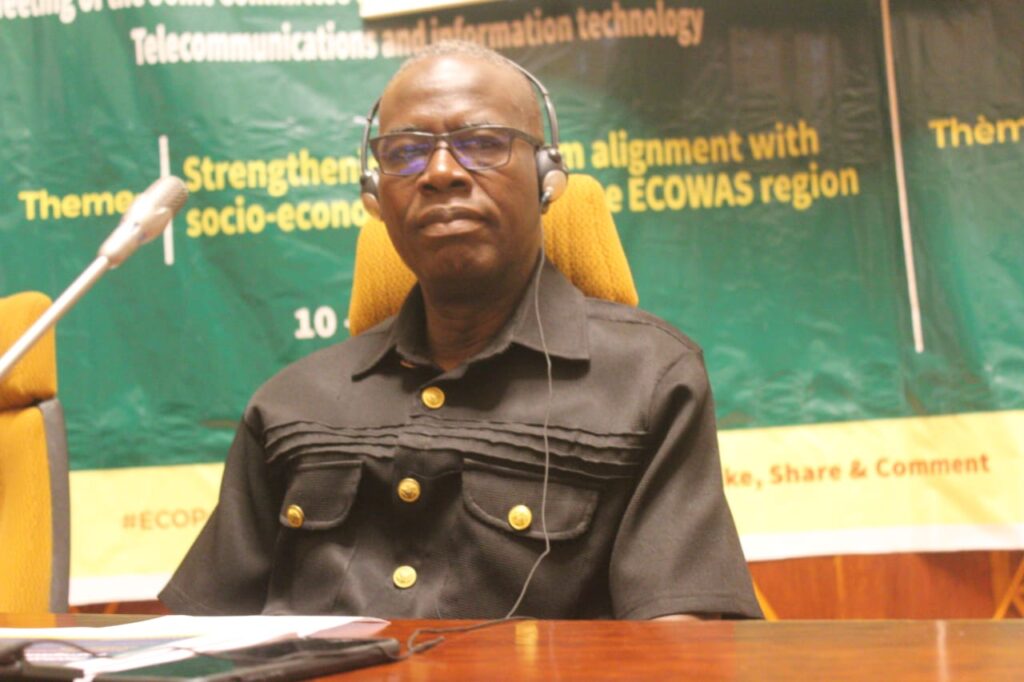
A member of the ECOWAS Parliament from Liberia has called on West African leaders to move beyond discussions and implement practical reforms in the region’s education sector, warning that failure to equip young people with relevant skills could deepen unemployment and drive more migration.

Samuel Reagen Enders made the call on the sidelines of a parliamentary meeting in Lome, Togo, where lawmakers from across the sub-region gathered for deliberations on education and development.

The meeting, which brought together the Joint Committees on Education, Science and Culture, Health, and Telecommunications and Information Technology, focused on aligning educational curricula with the socio-economic realities of the region.

Advertisement

Enders cautioned that without genuine commitment from governments, discussions about reform could remain mere rhetoric.

“I hope we would not pay lip service to this,” Enders said, stressing the need for leaders to base decisions on clear evidence.

“We need to look at the data, look at the facts, and look at the importance of education in strengthening our Community.”

The Liberian lawmaker, who previously served on an education committee in his country, pointed to the region’s rapidly growing youth population as a major reason for urgent reforms.

Advertisement

“We have a huge number of young people in this sub-region. “We need to be mindful that our people need to be educated—and not just academically. We are talking about practical skills and opportunities that will allow them to be trained, support their families, and provide for themselves,” he said.

He warned that the gap between what students are taught and what employers require is already pushing many young people to seek opportunities outside the region.

“A lot of our population is leaving the sub-region because there are no jobs. They are not equipped; they are not ready for the job market at hand,” Enders explained.

“If we can align our education with our economy—knowing what is available, what jobs are needed, and what we need to transform our society—we can get our young people working”, he noted.

Advertisement

Enders stressed that developing practical skills would help strengthen local industries, build human capacity and reduce dependence on foreign expertise.

“It is very important if we want to keep our young people, strengthen and develop our society, and if we want to be independent and not depend on others for everything that is needed to bring our countries up,” he said.

He also emphasised that education reform cannot be tackled by individual countries acting alone, urging West African governments to adopt a coordinated regional strategy.

“We cannot work in isolation. We should be able to coordinate.

Advertisement

“We have to look at the job market, look at the needs in our various communities and member states. We should be able to do an assessment of what is available and what skills are needed,” Enders said.

Using the example of Liberia’s mining sector, he questioned whether local manpower is being adequately prepared for specialised roles in key industries.

“In Liberia, we know we heavily depend on mining. Do we have trained personnel for the equipment being used on the mines? When they break down, who is going to fix it?” he questioned.

He also recalled a recent conversation with a Nigerian professional working in the gas industry who raised similar concerns about the shortage of skilled workers.

Advertisement

“He said the problem is they do not have people who are ready [to work]. We need to assess and identify the jobs needed in our economy.

“We can collaborate by looking at the sub-region as one unit. If you think Liberia is better without Ghana, then we are making a big mistake.

“If I think I cannot make it without Ghana, then we begin to collaborate. If we notice that our development depends on one another, then we start working together. If we are going to have new discoveries and technology, we need to work together,” Enders said.
Advertisement
Continue Reading
Advertisement

News

Finally, US-Iran deal announced with end to military warefare

Published

on

ADVERTISEMENT
Zoom Ad
ADVERTISEMENT
Zoom Ad


The United States and Iran agreed on a peace deal and an “immediate and permanent” end to military operations on all fronts, including Lebanon, mediator Pakistan said, in the strongest sign yet that more than three months of war in the Middle East is drawing to a close.

Pakistani Prime Minister Shehbaz Sharif posted on X that a peace deal “has been REACHED” and an official signing ceremony will be held on June 19 in Switzerland.

“The Deal with the Islamic Republic of Iran is now complete,” US President Donald Trump swiftly confirmed with his own statement on Sunday, as he marked his 80th birthday.

Advertisement

“I hereby fully authorise the toll-free opening of the Strait of Hormuz and, simultaneously herewith, authorise the immediate removal of the United States Naval blockade. Ships of the World, start your engines. Let the oil flow!”

There was no immediate confirmation from Iran, which just hours earlier had vowed to retaliate against a strike by Israel against Iranian ally Hezbollah in the suburbs of Beirut, which threatened to push back an agreement.

It had declined on Sunday to offer a clear timeline for reaching a peace deal.

But later in the day, Pakistan’s Sharif made the announcement that a deal had been struck, thanking the US and Iran “for finding a diplomatic solution to the conflict.”

Advertisement

Both sides have declared the immediate and permanent termination of military operations on all fronts, including in Lebanon,” Sharif wrote, adding thanks to leaders of Qatar, Saudi Arabia, and Turkey for their support in the mediation effort.

It was a rollercoaster Sunday, with Trump in the morning angrily blaming Israel for delaying its signing with the airstrike on Beirut, which he said had delayed the agreement.

The last time Israel hit the Beirut suburbs, it sparked one of the strongest jolts yet to a ceasefire that has largely held since April, with Iran firing off a retaliatory missile barrage and Israel responding with strikes.

Tehran has long demanded that any agreement to halt the war must include the parallel conflict in Lebanon, where Israel has been pursuing a campaign against Iran-backed Hezbollah.

Advertisement

The war began in late February, with US-Israeli strikes on Iran, which retaliated with attacks on Israel and US allies in the region, and by virtually blocking ship traffic in the Strait of Hormuz, a vital route for global oil and natural gas supplies. The US retaliated to that by blockading ship traffic to Iranian ports.

Continue Reading

News

Price of petrol expected to drop to N900 per litre as US-Iran opens way for Strait of Hormuz

Published

on

ADVERTISEMENT
Zoom Ad
ADVERTISEMENT
Zoom Ad


Prices of oil fell sharply in Asian trading on Monday after the United States and Iran announced an agreement that would allow the reopening of the Strait of Hormuz, ending more than 100 days of disruption to one of the world’s most important energy shipping routes.

At the time of reporting, Brent crude was down by nearly 4 percent at $83.67 per barrel, while U.S. benchmark West Texas Intermediate (WTI) declined to $80.76 per barrel.

The latest drop extends a downward trend that has emerged in recent weeks amid growing speculation that a diplomatic breakthrough was imminent despite continued military escalations.

Advertisement

As a result, the petrol price is seen falling below N1000 per litre after many weeks of inflated prices at filling stations across Nigeria.

Analysts say the price will likely settle between N850 and N915 when the Strait finally re-opens and ships begin ferrying fuel supplies, easing pressure on the domestic market while helping to stabilise costs.

The breakthrough was announced on Sunday night when President Trump stated on social media that negotiations with Iran had been concluded.

He said oil would once again move through the Strait of Hormuz once the agreement is formally signed on Friday.

Advertisement

Iran also signaled its approval of the arrangement.

Deputy Foreign Minister Kazem Gharibabadi confirmed that both sides had finalised the text of a memorandum of understanding, adding that a formal signing ceremony is scheduled to take place in Switzerland later this week.

The agreement was further validated by Pakistan and Qatar, which served as the principal mediators throughout the negotiations.

Although the full terms have not been officially released, Iran’s semi-official Mehr News Agency, citing a source close to the country’s negotiating team, reported that the deal includes an end to the conflict in Lebanon, the suspension of sanctions on Iranian oil exports, the release of $24 billion in frozen Iranian assets, and assurances that Iran will not pursue nuclear weapons.

Advertisement

According to the report, sanctions relief and the release of frozen funds will occur during a ceasefire period. Mehr also indicated that Iran could gain access to $12 billion before broader negotiations commence.

For energy markets, one of the most significant provisions is the resumption of Iranian crude exports during the proposed 60-day ceasefire while talks on nuclear issues continue.

The diplomatic progress nearly unravelled shortly before the announcement after Israel launched an air strike in southern Beirut. Trump criticised the operation, saying it “should not have happened,” and subsequently urged all parties to de-escalate.

He also called for an immediate halt to Israeli attacks across Lebanon.

Advertisement

Despite optimism surrounding the agreement, market participants remain cautious. Traders are expected to closely monitor the removal of mines from the Strait of Hormuz, the formal signing of the accord, and the restoration of normal shipping activity before fully embracing expectations of supply normalisation.

After more than three months of conflict, investors are increasingly pricing in the prospect of peace and a gradual return to stability in global oil markets. However, questions remain over the durability of the agreement and how quickly normal trade flows can be restored.

Continue Reading

News

2025 Capital Budget Gets New Lease of Life as Reps Push Deadline to September

Published

on

ADVERTISEMENT
Zoom Ad
ADVERTISEMENT
Zoom Ad

By Gloria Ikibah

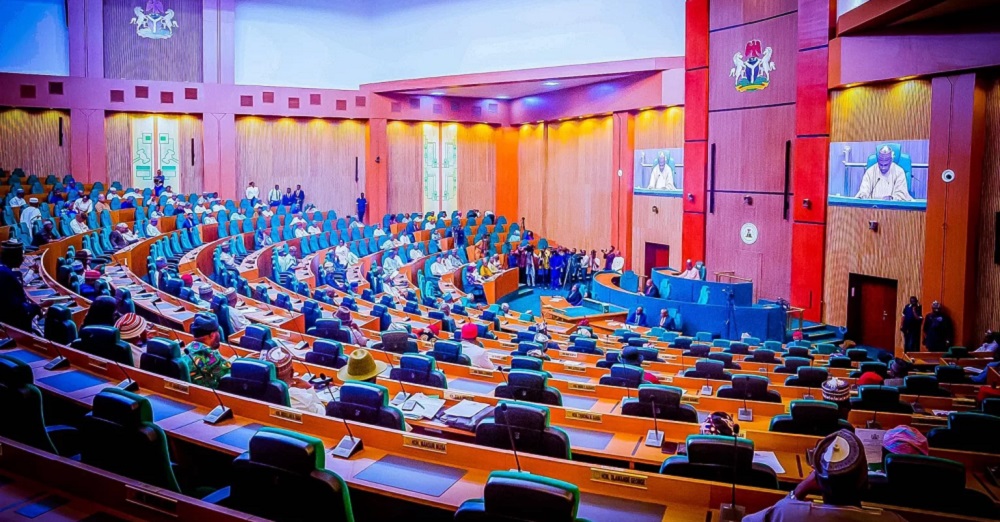
The House of Representatives has approved a three-month extension of the implementation period for the capital component of the 2025 Appropriation Act, shifting the deadline from June 30 to September 30, 2026.

The decision was taken during an emergency sitting held on Monday, as lawmakers moved swiftly to ensure the continued execution of capital projects captured in the national budget.

The legislation, which seeks to amend the Appropriation (Repeal and Enactment) Act, 2025, was designed to provide additional time for Ministries, Departments and Agencies to complete ongoing projects and fully utilise funds earmarked for capital expenditure.

Advertisement

In an unusually rapid legislative process, the bill passed through its first, second and third readings during the same plenary session after members suspended the relevant provisions of the House Standing Orders to facilitate its consideration.

Leading debate on the general principle of the bill, House Leader, Rep. Julius Ihonvbere, said the extension was necessary as several capital projects captured in the 2025 budget had not been fully implemented.

He emphasised that the amendment was not intended to alter any provision of the budget but merely to extend its lifespan by three months to allow ongoing projects to be completed.

He said: “It is very straightforward. Because some aspects of the capital appropriation will not be fully implemented, if we do not extend the life of this particular law, it will have a very grave impact on the growth and development of the national economy.

Advertisement

“The purpose essentially is to extend the lifespan. We are not touching any part of the law. It is simply extending the lifespan from June 30, 2026 to September 30, 2026. I urge my colleagues to approve this so that we can continue with the work of developing and growing our economy and country”.

Presiding over the session, Speaker of the House, Rep. Abbas Tajudeen, acknowledged that the records provided by the Chairman House Committee on Appropriations and other relevant agencies revealed that implementation of the capital budget was yet to be completed.

“As you are aware, the 2025 budget was extended to June 30. From the records we received from the Chairman, Appropriations, and other relevant quarters, it is yet to be fully implemented. It is therefore in the best interest of this country and the National Assembly for us to extend the budget to September 30 to enable the Federal Government fulfil its obligations under the 2025 budget,” the Speaker said.

Following the adoption of the bill at second reading, the House dissolved into the Committee of Supply where it had the clause by clause consideration of the bill, and approved the three clauses, explanatory memorandum and long title of the bill.

Advertisement

The committee subsequently reported back to plenary, where lawmakers adopted its recommendations and suspended House rules to allow the bill to be read a third time and passed the same day.

The accelerated passage reflects growing concern over the pace of implementation of key infrastructure and development projects, many of which require additional time to reach completion.

With the approval, government agencies now have until the end of September to execute projects funded under the capital component of the 2025 budget, a move expected to prevent disruptions to ongoing works and improve budget performance.

The extension is also aimed at ensuring that resources already allocated for development projects are effectively utilised before the capital budget expires.

Advertisement

With the passage of the amendment, federal ministries, departments and agencies now have an additional three months to implement capital projects and utilize funds appropriated under the 2025 budget.

Meanwhile, the House also announced changes in the leadership of some standing committees.

The appointments are as follows:
• Rep. Ali Madaki – Chairman House Committee on Special Duties
• Rep. Ali Isa J.C. –  Chairman House Committee on Shipping Services,
• Rep. Pascal Agbodike – Chairman House Committee on Small and Medium Enterprises Development Agency of Nigeria (SMEDAN),
• Rep. Kelechi Nwogu –  Chairman House Committee on Hydrological Services

The Speaker urged the newly appointed committee chairmen to assume their responsibilities immediately and bring their legislative experience to bear in advancing the work of the House.

Advertisement
Continue Reading

Trending

Copyright © 2024 Naija Blitz News