Opinion
Uncertainties over debts and the future of NigComSat 1R
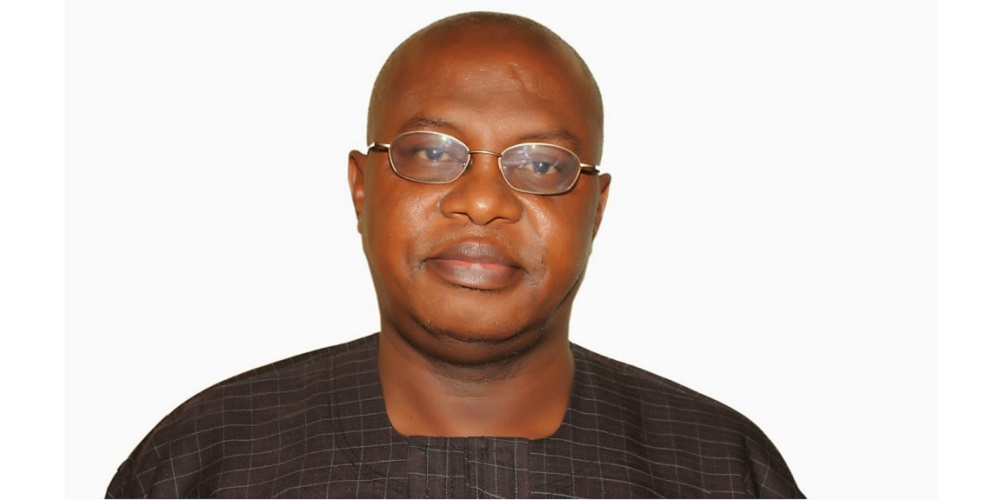
By Sonny Aragba-Akpore

Nigeria’s only communications satellite, NigComSat 1R,is troubled and appears to be in a wheelchair, practically struggling for survival. Its troubles began on February 14, 2014, immediately after the removal of its pioneer Chief Executive, Timasaniyu Ahmed Rufai, in alleged questionable circumstances. His removal was ordered by the then Communications Minister, Mrs Omobola Johnson, who later appointed a team to carry out a forensic examination of the company’s books since the launch of NigComSat 1R on December 19, 2011. Johnson named Ms Abimbola Alale as Ahmed-Rufai’s replacement. Before her appointment, Alale was Executive Director (Marketing).
But not much came out of the forensic examination to date, except that the company appears to have seen better days and is swimming against the tide. With a bucket of troubles and an incorrigible wage bill, which is believed to be unsustainable, the Nigerian satellite is now being managed from Kashi, China, contrary to global standards, where communications satellites are usually managed locally by their operators from domestic ground stations. Strangely, the Nigerian satellite has not been a commercial success since its launch. Low patronage, very little confidence by local customers and a lack of investment by its owners, the government, may have accounted for this. But the Chinese who built it say NigComSat 1R has immense capacity for broadcasting and telecommunication services, with special potential for broadband connectivity, but local patronage is very poor.
“There is no problem with the market,” because countries like Bolivia, with TKSat-1, the country’s first communications satellite, built at an estimated cost of around $300 million, similar to NIGCOMSAT-1R, generate between $10 million and $20 million yearly. By 2020, it had earned more than $80 million over its first four years, averaging roughly $20 million yearly.
In South Africa, the South African National Space Agency (SANSA) and local partners such as CubeSpace, Simera Sense, and Astrofica generate revenue from satellite-based Earth-observation data, hardware components, and downstream applications. In 2023, these companies were part of Africa’s broader commercial space sector, which included 327 firms collectively earning US$309 million. So, what is the problem with the Nigerian satellite that has not recorded any commercial success since its launch 15 years ago? Despite denials by officials of NigComSat 1R that it was not indebted to its partners, China Great Wall Industry Corporation (CGWIC), there is growing uncertainty that the satellite is swimming in troubled waters. Reports have it that managers of the satellite, Nigerian Communications Satellite Limited, are busy defending an $11.4 million debt owed to CGWIC for services rendered in hosting the satellite in the Kashi ground station in Xichang, China, since the ground station of NigComsat was damaged in 2019. Although NigComSat Limited denied this debt, CGWIC insists there is indeed a debt, even when no official statement says whether or not a debt was outstanding. Media reports say the debt is real.
Following the damage of the ground station in Abuja in 2019, the Kashi station in China became the main controlling station instead of playing the backup role it was initially designed forCGWIC built and launched the Satellite in Kashi on December 19, 2011 and has been working closely with its Nigerian partner, NigComsat Limited to maintain the satellite from the Karshi ground station to save the satellite from premature collapse. This help came at a cost as the NigComSat Limited entered into a management contract with CGWIC for the primary control of the satellite from Kashi in China. According to the terms of the contract, the Nigerian company was expected to pay CGWIC about $1.6m yearly for maintenance.
But as of December 2025, the Nigerian company allegedly failed to remit any payment and thus accumulated a debt of $11.4m. Several strategies adopted to recover the debt have failed to yield any meaningful results, including a letter of demand for payment and a threat to abort hosting the satellite if the debt was not paid. In a letter signed by the Director, Marketing, Africa at CGWIC, Liu Lan, the Chinese company asked the management of NigComSat Limited to inform its customers of the development because it wouldn’t guarantee the performance of the satellite should it fail to pay up the debt in 30 days.
The letter reads, “As of December 31, 2025, the total net outstanding debt owed by NIGCOMSAT to CGWIC stood at USD11,442,335.89. This figure accounts for deductions for services NIGCOMSAT has been provided by us, yet the balance remains substantially unresolved.” “Regrettably, despite our continuous provision of essential Telemetry, Tracking, and Command (TT&C) services from Kashi China, no payments have been received from NIGCOMSAT Ltd. since 2019. “For the past seven years, CGWIC has deliberately delayed standard debt collection actions out of goodwill and a desire to ensure the continuity of Nigeria’s satellite operations.
“Furthermore, despite negotiations in 2023 and early 2025, in which CGWIC agreed in principle to reduce the debt, NIGCOMSAT has repeatedly failed to meet the agreed-upon conditions to make partial payments.” Therefore, CGWIC is hereby issuing a final thirty (30) day ultimatum. NIGCOMSAT is required to either make the payment of USD11,442,335.89 orprovide a formal, legally binding guarantee of payment within thirty (30) days of the date of this letter.
“If full payment or an acceptable guarantee is not provided within this 30-day window, CGWIC will suspend service on the active transponders of the NIGCOMSAT 1R”. But officials of Nigcomsat Limited denied any debt to CGWIC or any friction in that regard. These debts have been hanging since 2019 when Nigeria’s ground control infrastructure located in Obasanjo Space Centre, Lugbe, Abuja, malfunctioned due to lightning. In satellite operations, control is maintained through Telemetry, Tracking, and Command (TT&C) systems that monitor the spacecraft’s health, determine its position in orbit, and send commands to adjust its orientation and orbital slot.
If the TT&C link is lost, a geostationary satellite can quickly drift out of its designated position due to gravitational and solar forces. When that happens, services such as broadcasting, internet connectivity, and military communications can be disrupted. Nigeria’s primary TT&C facility was located at the ground station in Lugbe, Abuja. CGWIC said the facility was severely damaged by lightning in 2019. “Lightning destroyed the Abuja ground station,” Liu said. “After that, they could not control the satellite, so the control was transferred to our station in Kashgar.”
The Kashgar Ground Station, also known as the Kashi Ground Station, is located in Xinchang, China. “We have controlled the satellite from 2019 until today,” Liu was quoted as explaining that the arrangement was originally allowed under a 2014 technical support agreement that established China’s ground station as a backup control facility.
But once the Abuja system stopped functioning, CGWIC became the primary maintenance provider.
Under the 2014 agreement, Nigeria was required to pay CGWIC for both backup services and full operational control, according to Liu. Although NIGCOMSAT declined to confirm the agreement, it admitted it had a support contract in place with the vendor but gave no details.
CGWIC officials were quoted as saying that the Primary control service alone costs more than $1 million yearly, while additional charges apply for backup operations and other technical services like equipment repair and purchase. The officials said that since 2019, the company has received no payment. “For over seven years, the unpaid fees accumulated into the $11.4 million debt now at the centre of the dispute. Despite the growing arrears, CGWIC continued providing services to avoid jeopardising the satellite. But how long this continues remains unclear, especially as the satellite gets to its terminal date.
NIGCOMSAT plans to launch two satellites in the next four years. They have named them as Nigcomsat 2A and 2B according to the Chief Executive, Jane Egerton-Idehen.
“For 2A and 2B, we have started the process. We have closed the tender and are now back into the financing and implementation stage. 2A is built to come up in 2028, and 2B for 2029.
“When they are up and running, they are expected to provide security within the borders and neighbouring countries. They will support the security agencies because data collection and intelligence in real time is important. Satellites like communication satellites allow that, irrespective of where they are,” she said.
NIGCOMSAT has been embroiled in controversy since Nigeria’s quest into space.
When it first launched into space in 2007, with NigComsat 1 and the failure that occurred just after 18 months in space, in 2008, and the replacement satellite christened Nigcomsat 1R in December 2011, Nigerians have cast doubts on the satellite. Although it has survived nearly 15 years since its return, so much mistrust has followed the company. Poor infrastructure management, fuelled by low investment and apathy in marketing the services have left the place in a near comatose. It is, however, not clear whether the company will survive when this satellite’s lifespan elapses, since there is no backup.
And the debt overhang has further diminished the status of the future of the wobbling venture. But while dismissing the story as fake news, Head, Corporate Communications at NigComsat Limited, Stephen Kwande, said:
“It is unclear where this misleading information is coming from. “We have been in touch with our business partners, the executives and representatives of CGWIC in Nigeria, and they have made it clear they are not the ones giving out such information.” According to him, the Chinese firm also expressed concern about the spread of what it described as inaccurate reports regarding the partnership. “Our relationship with our business partners, CGWIC, is not in any crisis as reported, and we continue to remain strong in our business relationship and partnership. adding that both parties recently held discussions to reaffirm their collaboration. Despite the denials, the situation of the satellite looks precarious, as any threat to the fragile existence of the satellite spells discomfort for its few patrons.
With a lifespan of 15 years since launch on December 19, 2011, by December 2026 it would elapse, and there is no backup. This makes things more complicated. So, what happens to customers using its links is a big dilemma. Denials of Nigcomsat officials appear to be tongue in cheek, as information available further shows the debt exists and remains unpaid. In a February 28, 2026, email to Jane Egerton-Idehen, the managing director of NIGCOMSAT, CGWIC noted that the outstanding debt had reached $11,442,335.89 as of December 31, 2025. “I wrote about the outstanding payment in December 2025 and did not get any feedback from NIGCOMSAT,” stated Liu Lan, CGWIC’s Head, Africa Operations, who has worked on the project since its inception. The debt, the email noted, rose from technical control services that CGWIC continues to provide for years without payment. The denial of Nigcomsat is a clear manifest contradiction, especially when the Chief Executive is being quoted as saying she would not want to throw figures in the open space, a veiled admission of the debts.
Opinion
TINUBU’S DANGEROUS OVERREACH: A STARK WARNING AGAINST INTIMIDATING THE LEGISLATURE, JUDICIARY, AND THE NIGERIAN PEOPLE
By Zakari Mohammed
The resolutions emerging from the Ibadan summit are not routine political statements; they are a direct warning signal about the trajectory of governance under the APC and the administration of Bola Ahmed Tinubu.
What is increasingly evident is a pattern of shrinking democratic space, the weaponization of institutions, and a subtle but dangerous drift toward political uniformity.
No ruling party, regardless of its electoral strength, possesses the constitutional or moral authority to convert victory at the polls into a de facto one-party state. Democracy thrives on competition, dissent, and institutional neutrality; once these are undermined, the entire system begins to weaken.
In this context, the Ibadan Declaration stands out as a necessary and timely intervention a right step in the right direction and a force that must be recognized for what it truly represents: the opposition taking its destiny firmly into its own hands.
It reflects a conscious decision to move beyond fragmentation toward coordinated political action, signaling that the era of disjointed resistance is giving way to structured engagement.
For the APC and its supporters, this is not something to dismiss or trivialize; it is something that must command serious attention and, indeed, concern not because it threatens instability, but because it demonstrates that alternative political forces are organizing with clarity of purpose and a shared resolve to challenge the status quo.
There is a growing concern about incursions into the independence of both the legislature and the judiciary institutions that are meant to serve as guardrails against executive excess.
Any attempt, direct or indirect, to pressure or influence these arms of government strikes at the very foundation of constitutional democracy.
When the legislature is cowed or the judiciary is perceived as compromised, the balance of power collapses, leaving citizens exposed to unchecked authority.
Such a path is not strength; it is a dangerous overreach that history has repeatedly shown to end badly for nations that travel it.
There is a recurring temptation in governance to believe that tightening control guarantees stability.
In reality, the use of an iron fist whether through harassment of opposition figures, manipulation of electoral processes, or intimidation of dissenting voices creates only an illusion of order. Beneath that surface, discontent accumulates. Suppression does not eliminate opposition; it hardens it, broadens its appeal, and deepens public sympathy. When citizens begin to perceive elections as predetermined or institutions as compromised, the legitimacy of governance itself is called into question.
At that point, democracy is no longer strengthened by elections; it is endangered by them.
The Nigerian people themselves must not be treated as subjects to be managed, but as citizens to be respected. Any attempt to silence, intimidate, or sideline the populace whether through policy, rhetoric, or force risks igniting a backlash that no government can fully control. A nation as politically conscious and diverse as Nigeria cannot be subdued indefinitely. When people begin to feel excluded, ignored, and suppressed, the reaction is not passive acceptance but mounting resistance.
It must be clearly understood that state power is not personal or partisan property. Nigeria’s institutions exist to serve the republic, not the interests of any single party. When those institutions are bent to partisan purposes, the damage extends far beyond one administration it weakens public trust in governance itself.
The long-term cost of such erosion is far greater than any short-term political advantage that might be gained through coercion or control.
The path before the ruling party is therefore stark and consequential. It can choose to act as a custodian of democratic principles allowing credible competition and preserving institutional integrity or it can continue down a path that prioritizes dominance over legitimacy.
The latter carries profound risks. Democracy does not collapse suddenly; it is gradually suffocated through a series of decisions that chip away at its foundations. If that process continues unchecked, Nigeria risks reaching a tipping point where institutions lose credibility, elections lose meaning, and governance loses the consent of the governed.
History is unforgiving in its judgment of those who preside over the erosion of democratic systems. The choices made in this moment will not only shape immediate political outcomes but will define how this era is remembered.
A nation of over 200 million people cannot be governed sustainably through pressure, intimidation, or exclusion. The preservation of democracy requires restraint, fairness, and a commitment to principles that transcend party interests. Anything less risks consequences that extend beyond politics into the very stability and future of the nation.
Zakari Mohammed
Spokesman, 7th Assembly
Ibadan, Oyo State
25/04/2026
Opinion
A Nation Under Siege:The Urgent Task of Securing Nigeria
By Duff Ejok
Nigeria today stands at a dangerous crossroads. Insurgency continues to claim the lives of brave military officers and soldiers, across the northern region. In many parts of the country, kidnapping for ransom has evolved into a bourgeoning criminal enterprise, spreading fear among citizens and eroding confidence in the state’s ability to protect lives and property.
These developments are not isolated incidents. They are symptoms of deeper structural and institutional challenges that demand urgent, decisive and sustained action.
The repeated loss of military personnel in our efforts to counter terrorism raises disturbing questions and distrusts. How do insurgents muster the courage and capacity to ambush, capture and kill trained soldiers with alarming frequency? Why does it appear that, in some cases, the enemy seems to operate with greater agility and intelligence than the very forces tasked with neutralising them? These are not questions of blame but of responsibility. They are questions that must provoke introspection within both military leadership and political authorities.
Also concerning is the paradox within the current counter insurgency framework. While soldiers risk their lives to apprehend insurgents, reports persist that some of these individuals later regain their freedom under controversial rehabilitation initiatives. Even more troubling are allegations that certain “repentant” insurgents are being absorbed into the military structure. This raises serious ethical, operational and morale concerns. For the average soldier on the frontlines, such policies can feel like a betrayal, undermining trust, weakening cohesion, and blurring the line between ally and adversary.
At the heart of this crisis lies a fundamental issue being morale. A poorly motivated force cannot effectively prosecute a complex and evolving insurgency. Nigerian soldiers are among the most resilient and courageous in the world, but courage alone cannot substitute for adequate welfare, proper equipment and institutional support. Reports of poor pay, delayed allowances, inadequate housing and insufficient medical care paint a grim picture. When those who defend the nation feel neglected, the consequences are predictable. They include diminished morale, reduced combat effectiveness and ultimately, strategic vulnerability.
The implications of continued neglect are dire. A weakened military risks creating a vacuum that insurgents and criminal networks will fervently exploit. The spectre of a nation without a strong standing army is not just hypothetical; it is a looming threat if current trends persist.
So, what must be done?
First, the government must prioritise the welfare of military personnel as a matter of national security. Competitive salaries, timely payment of allowances, improved housing and comprehensive healthcare are not luxuries but necessities. A soldier who is confident that his or her family is secure will fight with greater determination and focus. Beyond this, there must be deliberate policies for special promotions for personnel serving at the frontlines. Those who bear the greatest risk deserve accelerated career progression as recognition of their sacrifice and commitment.
Second, there must be a comprehensive review of the rules of engagement, intelligence coordination and operational strategies. The war against insurgency cannot be won through conventional tactics alone. It requires superior intelligence, modern technology and adaptive strategies that anticipate and outmanoeuvre the enemy.
Third, the policy on handling captured insurgents must be revisited. While rehabilitation and reintegration may have their place, they must not come at the expense of justice, accountability or military morale. Clear guidelines, transparency and strict oversight are essential to ensure that such programmes do not inadvertently embolden insurgents or demoralise troops.
Fourth, the government must introduce targeted incentives to boost morale. These should include hazard pay, life insurance packages, educational scholarships for children of personnel and structured reward systems for gallantry. In addition, there must be robust internal oversight mechanisms to ensure that funds and resources allocated for the prosecution of the insurgency are properly deployed. Too often, resources approved at the top fail to reach the soldiers who need them most. Leakages, diversion of funds and bureaucratic inefficiencies must be decisively addressed. Accountability should not be optional; it must be enforced at all levels of command.
Fifth, special attention must be given to the families of fallen heroes. Widows and children of deceased personnel often face immense hardship. A nation that fails to care for those left behind sends a dangerous message to those still in uniform. Structured support systems, ranging from prompt financial compensation to long-term educational and psychological support, must be institutionalised and efficiently administered.
Sixth, government pronouncements on welfare must move beyond mere rhetoric. Too often, policies are announced with fanfare but remain largely symbolic, existing only “for the optics” rather than producing real impact. This gap between policy and implementation fuels frustration within the ranks and deepens public scepticism. What is required is not more promises, but measurable outcomes that directly improve the lives of soldiers and officers and their families.
Finally, the rising tide of kidnapping for ransom demands a far more aggressive, intelligence-driven response. It is unacceptable that criminal elements can abduct citizens, circulate images and videos of their victims in distress and still operate with impunity. This not only emboldens perpetrators but also humiliates the state. Government possesses the capability, through intelligence gathering, digital tracking and coordinated security operations, to identify, track and dismantle these networks. What is needed is the will to act swiftly and decisively. Every successful rescue and prosecution restores public confidence; every failure reinforces fear.
Nigeria’s security challenges are complex, but they are not insurmountable. What is required is political will, strategic clarity and a genuine commitment to the men and women who stand between the nation and chaos. The time for incremental adjustments has passed. What is needed now is bold, systemic reform.
A nation that honours its soldiers, invests in their welfare and equips them adequately does more than strengthen its military, it secures its future. Nigeria must rise to this moment, not only to defeat insurgency and criminality but to restore confidence in the very idea of the Nigerian state.
The cost of inaction is simply too high.
Opinion
AI governance ,compliance and ethics
By Sonny Aragba-Akpore

The future of technology is getting more interesting as the adoption of Artificial Intelligence (AI) and internet of things (IoT) takes centre stage.
But while the fast adoption creates excitement for scientists and those who desire to deploy technology for everyday use and everything,there are manifest fears of possible abuse of AI if strategies are not put in place to guide both promoters and users.
Questions of ethics and compliance are being raised and these have created worries for everyone.
And to douse these fears and create a semblance of comfort for all,AI governance is becoming necessary to stem a potential unwholesome practice.
“AI governance encompasses the frameworks, policies and practices that promote the responsible, ethical and safe development and use of AI systems. It establishes the guardrails that enable innovation while protecting stakeholders from potential harm” analysts agree.
Responsible AI governance considers among others:Ethical standards which define AI governance policies to promote human-centric and trustworthy AI and ensure a high level of protection of health, safety and fundamental human rights.
On regulations and policies,Boards consider compliance with applicable legal frameworks that govern AI usage where they operate, or intend to operate, such as the European Union (EU) AI Act.
The governance treats Accountability and oversight to ensure Organizations assign responsibility for AI decisions to ensure human oversight and prevent misuse and abuse.
Chief technology officers, risk officers, chief legal officers and their boards must develop a governance approach that protects data, prevents unauthorized access to ensure that AI systems don’t become a cybersecurity threat.
As AI governance fast emerges as one of the most pressing strategic challenges facing boards and everyday living today,its governance remains a major concern.
In the Q4 2025 Business Risk Index conducted by Diligent Institute and Corporate Board Member, “60% of legal, compliance and audit leaders now cite technology as their top risk concern — well ahead of economic factors (33%) and tariffs (23%). Yet despite this urgency, only 29% of organizations have comprehensive AI governance plans in place.”
Although there’s currently no wide-scale governing body to write and enforce these rules, many technology companies have adopted their own version of AI ethics or an AI code of conduct.
AI ethics are the set of guiding principles that stakeholders (from engineers to government officials) use to ensure artificial intelligence technology is developed and used responsibly. This means taking a safe, secure, humane, and environmentally friendly approach to AI.
A strong AI code of ethics can include avoiding bias, ensuring privacy of users and their data, and mitigating environmental risks. Codes of ethics in companies and government-led regulatory frameworks are two main ways that AI ethics can be implemented.
By covering global and national ethical AI issues, and laying the policy groundwork for ethical AI in companies, both approaches help regulate AI technology.
The future will see large parts of our lives influenced by Artificial Intelligence (AI) technology. Machines can execute repetitive tasks with complete precision, and with recent advances in AI, machines are gaining the ability to learn, improve and make calculated decisions in ways that will enable them to perform tasks previously thought to rely on human experience, creativity, and ingenuity.
“AI innovation will be central to the achievement of the United Nations’ Sustainable Development Goals (SDGs) by capitalizing on the unprecedented quantities of data now being generated on sentiment behavior, human health, commerce, communications, migration and more” according to the International Telecommunications Union (ITU) documents.
ITU said it will provide a neutral platform for government, industry and academia to build a common understanding of the capabilities of emerging AI technologies and consequent needs for technical standardization and policy guidance.
“Countries must put in conscious efforts to mitigate the dangers of deployment if they want to achieve positive results.” ITU said.
AI governance is calculated to Prevent bias whereby AI models can inherit biases from training data, leading to unfair hiring, lending, policing and healthcare outcomes.
The report states that Governance proactively identifies and mitigates these biases.
Aside that,AI governance Prioritizes accountability when AI makes decisions, and holds someone responsible.
Governance holds humans accountable for AI-driven actions, preventing harm from automated decision-making.
Price WaterhouseCooper (PwC),s Head of AI Public Policy and Ethics,Maria Axente was quoted as saying that “We need to be thinking, ‘What AI do we have in the house, who owns it and who’s ultimately accountable?’”
AI governance should Protect privacy and security where AI relies on vast amounts of data, a particular risk for healthcare and financial organizations handling sensitive information.
Governance establishes guidelines for data protection, encryption and ethical use of personal information.
Governance Prepares for AI’s
environmental, social and governance (ESG)
impact.
“Generative AI has a significant environmental impact, requiring massive amounts of electricity and water for every query. It also reshapes job markets and corporate operations.”Governance helps create policies that balance AI’s opportunities with its ESG risks and by Promoting transparency and trust,Many AI systems are considered “black boxes” with little insight into their decision-making.
Governance encourages transparency and helps users trust and interpret AI outcomes.
Governance Balances innovation and risk as AI holds immense potential for progress in healthcare, finance and education, governance weighs innovation alongside possible ethical considerations and public harm.
As the future of AI becomes a way of life,global telecommunications regulators,the International Telecommunications Union (ITU) says Geneva ,Switzerland is fast becoming the global headquarters for AI.
From July 7 through 10,2026 the world will converge to deliberate and conclude talks on AI governance.
It will host the seventh edition of “AI for good summit” as governments,institutions crystallize strategies for the future of AI across industries,homes ,governments and the work place.
“AI for Good will be held back-to-back with the Global Dialogue on AI Governance, convened by the United Nations General Assembly and facilitated by UN Secretary-General António Guterres at Palexpo from July 6 to 7, where the Global Dialogue is supported by a joint secretariat that include the Executive Office of the Secretary General, ITU, the United Nations Educational, Scientific and Cultural Organization (UNESCO) and the United Nations Office for Digital and Emerging Technologies (ODET), with ITU and UNESCO leading the coordination.
“As artificial intelligence moves from strategy to real-world deployment, countries need the skills, solutions, and international standards for AI to work for everyone,” according to ITU Secretary-General Doreen Bogdan-Martin.
“Through AI for Good, ITU helps turn AI breakthroughs into practical ways to improve lives. We are also pleased to work with our partners on the inaugural UN Global Dialogue on AI Governance where Member States and stakeholders will exchange perspectives on the policies shaping AI’s future.”
The AI for Good Global Summit to be hosted by ITU – the United Nations agency for digital technologies – with over 50 UN partners and co-convened by Switzerland is seen as the Summit flagship platform for showcasing and helping scale up AI applications in areas from healthcare and education to food security, disaster risk reduction and misinformation, particularly in developing countries.
World-class keynotes, global technology premieres and an expo floor filled with innovators, UN partners and national pavilions will present local AI solutions and strategies from around the world, including special exhibits featuring home-grown innovations from Switzerland.
“We are delighted to once again co-convene with ITU the AI for Good Global Summit in Geneva, a central location for discussing and showcasing advances in artificial intelligence,” said Albert Rösti, Swiss Federal Councillor and Head of the Federal Department of the Environment, Transport, Energy and Communication.
The summit will Unite leaders to scale AI impact.
Over 11,000 participants from 169 countries attended 2025 AI for Good Global Summit and World Summit on the Information Society (WSIS) events.
Participation included ministers from 100 countries, more than half representing developing countries.
The 2026 edition aims to further strengthen AI for Good as a globally representative platform for dialogue, collaboration, and action on AI and how to best harness the innovative power of technology.
While many tech companies grow the artificial intelligence in their various corners of the world,the International Telecommunications Union (ITU) ,the global technology regulator,is rearing to unify the technology in such ways as to create standards for open platform.
In a few months,tech gurus will converge on Geneva,the ITU headquarters in Switzerland to strategize on the way forward for Artificial Intelligence for Good.“The goal of AI for Good is to identify practical applications of AI to accelerate progress towards the Sustainable Development Goals(SDGs) and connect AI innovators with public and private-sector decision-makers to help scale up AI solutions globally.”according to the ITU.
In 2017 ,the landmark AI for Good Global Summit marked the beginning of a global dialogue on the potential of AI to act as a force for good. The action-oriented 2018 and 2019 summits gave rise to numerous AI for Good projects including several standardisation initiatives of the ITU
-
News17 hours agoCourt bars INEC from recognising ADC congresses conducted by Mark-led C’ttee
-
News17 hours agoUnbelievable: Police say officer who publicly executed handcuffed Delta man was under “spiritual attack”
-
News13 hours agoReps back digital overhaul of election petition procedures
-
News11 hours agoBREAKING: Supreme Court fixes date for verdict on ADC, PDP leadership tussles
-
News18 hours agoTinubu Allocates Abuja Lands to Ambassadors Designate as Wike Charges Diplomats to Project Nigeria’s Image(Photos)
-
News17 hours agoPolice nab suspects over alleged removal of 19-yr-old girl’s womb
-
News12 hours agoSenate confirms Yuguda as CBN deputy governor
-
Economy11 hours agoSee Black Market Dollar To Naira Exchange Rate Today 29th April 2026