Sports
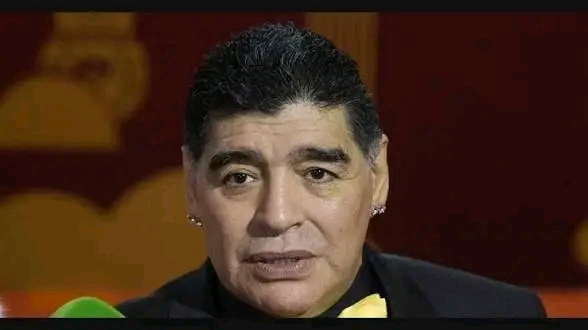
Trial on cause of Maradona’s death: Psychologist testifies he had bipolar disorder
- /home/naijuinz/public_html/wp-content/plugins/mvp-social-buttons/mvp-social-buttons.php on line 27
https://naijablitznews.com/wp-content/uploads/2026/05/IMG_6114.jpeg&description=Trial on cause of Maradona’s death: Psychologist testifies he had bipolar disorder', 'pinterestShare', 'width=750,height=350'); return false;" title="Pin This Post">
- Share
- Tweet /home/naijuinz/public_html/wp-content/plugins/mvp-social-buttons/mvp-social-buttons.php on line 72
https://naijablitznews.com/wp-content/uploads/2026/05/IMG_6114.jpeg&description=Trial on cause of Maradona’s death: Psychologist testifies he had bipolar disorder', 'pinterestShare', 'width=750,height=350'); return false;" title="Pin This Post">
The trial over the death of Argentine football legend Diego Maradona took a dramatic turn on Thursday as a psychologist testified that the late icon suffered from bipolar disorder and narcissistic traits, while also requiring strict abstinence from alcohol.

Carlos Diaz one of seven medical professionals facing charges of manslaughter with reckless intent, told a court in Buenos Aires that Maradona’s psychological condition significantly influenced his treatment plan. Diaz, 34, is accused of prescribing inappropriate medication as part of the care provided to the former footballer in the weeks leading up to his death.
According to local media reports, Diaz said Maradona’s condition demanded a zero-alcohol approach, stressing that even minimal consumption could have severe consequences. He recounted his first meeting with the football legend on October 26, 2020—less than a month before his death—describing a scene where Maradona was drinking wine at home.

Diaz told the court he believed Maradona had expressed a willingness to improve his lifestyle and that his treatment strategy was built around sobriety. He also cited toxicology findings, which reportedly indicated that the football icon had not used drugs for 23 days prior to his death.
Maradona, widely regarded as one of the greatest footballers in history, enjoyed a storied career with clubs such as Boca Juniors, Barcelona and Napoli, and famously led Argentina to victory at the 1986 FIFA World Cup. He died on November 25, 2020, at the age of 60, shortly after undergoing surgery for a subdural haematoma.
The ongoing trial is examining whether members of his medical and care team bear criminal responsibility for his death. Among those who also testified was neurosurgeon Leopoldo Luque, who defended the decision to treat Maradona at home, stating that the arrangement was never intended to function as an intensive care unit.
As proceedings continue, the case remains a focal point of public attention in Argentina, raising broader questions about medical accountability and the care provided to high-profile patients.
Sports
2026 World Cup of confusion: Protesters barricade road to stadium
A protest blocked an avenue leading to Mexico City’s Azteca Stadium for hours on Tuesday, just days before the 2026 World Cup kicks off at the venue.
As football fans flood into tournament, co-hosted by the United States and Canada, Mexico is grappling with chaotic teacher protests in its capital.
Thousands took part in Tuesday’s protest, which was led by a breakaway group of the CNTE teachers union following a week of demonstrations that President Claudia Sheinbaum has called a “provocation.”
“As if to say, ‘Look at how bad the situation is in Mexico,’” she told a press conference.
A police blockade prevented the demonstrators from reaching the Azteca Stadium, which will host the World Cup opening match on Thursday.
With thousands of officers deployed and concrete barriers set up around the venue, protesters rallied on the street for around three hours before dispersing.
Mexico City’s security chief, Pablo Vazquez, said in a statement that the movement had been peaceful.
Sheinbaum said earlier that the opening match was “guaranteed,” though the left-leaning leader again ruled out using police to repress the demonstrations.
Her government has favored dialogue with the protesting teachers, but to no avail.
“We’re going to continue our struggle,” said protester Austreberto Flores.
The CNTE teachers’ union has been on strike since last week to demand a salary raise and the reversal of a pension law — which the government considers unfeasible.
The teachers have also set up camp near the World Cup fan zone in Mexico City’s Zocalo Square.
On June 1, police dispersed protesters in the area with rubber bullets and teargas.
“They want to make it seem like there is mass social turmoil in Mexico, and that’s not true,” Sheinbaum has said of the protests.
Teachers and students from Ayotzinapa school march to the Ciudad de México Stadium in Mexico City on June 9, 2026.
The teachers have called for demonstrations on Thursday that will also include families of so-called “disappeared” people, who are alleged to have been killed or kidnapped by Mexican authorities or criminal gangs.
The 2026 edition of the world’s biggest football extravaganza is the most logistically complex ever staged.
Teachers and students from Ayotzinapa school march to the Ciudad de México Stadium in Mexico City on June 9, 2026.
A vast global TV audience is set to tune in to the opening ceremony and match pitting Mexico against South Africa.
Mexico is still rushing to complete renovations at subway stations and at its main airport ahead of the tournament.
AFP
Sports
48 hours to World Cup opening ceremony, protesters block road to Mexican stadium
Thousands of demonstrators blocked an avenue leading to Mexico City’s Azteca Stadium on Tuesday, just days before the 2026 World Cup kicks off at the venue.
As football fans flood into tournament co-hosts the United States, Canada and Mexico, the Central American country is grappling with chaotic teacher protests in its capital.
Thousands of teachers blocked an avenue leading to the Azteca Stadium in Mexico City, 48 hours before the opening ceremony of the 2026 World Cup at that venue.
Tuesday’s protest, led by a breakaway group of the CNTE teachers union, follows a week of demonstrations that President Claudia Sheinbaum has called a “provocation.”
“As if to say, ‘Look at how bad the situation is in Mexico,’” she told a press conference.
The Azteca stadium will host the World Cup’s first game – pitting Mexico against South Africa – on Thursday, with a vast global TV audience set to tune in for the opening ceremony and the match.
Authorities have deployed thousands of officers and set up concrete barriers surrounding the venue to block protests.
“We intend to reach the stadium,” demonstrator Angel Villalobos told AFP on Tuesday. “The government has given some responses, but they don’t help, they don’t satisfy.”
Sheinbaum said earlier that the opening match was “guaranteed,” though the left-leaning leader again ruled out using police to repress the demonstrations.
Her government has favored dialogue with the protesting teachers, but to no avail.
“We’re going to continue our struggle,” said Austreberto Flores, another protester looking to block Azteca Stadium.
The CNTE teachers union has been on strike since last week to demand a salary raise and the reversal of a pension law — which the government considers unfeasible.
The teachers have also set up camp near the World Cup fan zone in Mexico City’s Zocalo square.
On June 1, police dispersed protesters in the area with rubber bullets and teargas.
“They want to make it seem like there is mass social turmoil in Mexico, and that’s not true,” Sheinbaum has said of the protests.
The teachers have called for demonstrations on Thursday that will also include families of so-called “disappeared” people, who are alleged to have been killed or kidnapped by Mexican authorities or criminal gangs.
The 2026 edition of the world’s biggest football extravaganza is the most logistically complex ever staged.
Mexico is still rushing to complete renovations at subway stations and at its main airport ahead of the tournament.
AFP
Sports
Ronaldo, Modric Lead List of Over-40 Stars Set for 2026 FIFA World Cup
Age will be more than just a number at the 2026 FIFA World Cup, as several football icons aged 40 and above prepare to grace the sport’s biggest stage once again.
The tournament, scheduled to take place across the United States, Canada and Mexico from June 11 to July 19, will feature a remarkable group of veteran players whose careers have defied expectations and whose influence continues to shape their national teams.
Leading the list is Portugal captain Christiano Ronaldo, who at 41 is on course to make history by becoming the first footballer to feature in six FIFA World Cup tournaments. The legendary forward remains a key figure for Portugal and will be looking to add another chapter to his illustrious international career.
Scotland goalkeeper Craig Gordon is expected to be the oldest player at the competition. At 43 years and 162 days, the veteran shot-stopper continues to demonstrate remarkable longevity, earning another opportunity to represent his country on football’s biggest stage.
Croatia’s midfield maestro, Luka Modric will also be among the tournament’s senior statesmen. Now 40, the former Ballon d’Or winner remains one of Croatia’s most influential players and will be aiming to inspire his country to another memorable World Cup campaign.
Germany will once again rely on the experience of goalkeeper Manuel Neuer. At 40 years old, the former World Cup winner continues to be a commanding presence between the posts and is expected to play a crucial role for the German national team.
Discover more
Sports
Education
Bosnia and Herzegovina’s veteran striker, Edin Dzeko is also set for the global showpiece. The 40-year-old forward remains one of his country’s most dependable attacking options and is expected to lead the line once again.
Host nation Mexico could see another World Cup appearance from legendary goalkeeper Guillermo Ochoa. At 40, Ochoa is poised to become one of the few players in football history to participate in six World Cup tournaments, further cementing his place among the game’s enduring greats.
Completing the list is Cape Verde goalkeeper Vozinha, who is expected to be part of his country’s squad as the island nation prepares for what could be a historic first appearance at the FIFA World Cup.
The presence of these veteran stars highlights the growing longevity of modern footballers, many of whom continue to perform at the highest level well into their forties. Their experience, leadership and quality are expected to play vital roles as their respective nations chase success at the biggest football tournament in the world.
As the countdown to kick-off continues, fans will not only be watching the sport’s emerging talents but also celebrating a generation of players whose careers have stood the test of time.
-
News11 hours agoNECO to recruit 22,000 supervisors, cautions applicants against fake recruitment portals
-
News11 hours agoOtti woos investors to Abia medical city, industrial park, others
-
News22 hours agoTinubu Commissions OSEX Main Carriageway, Vows End To Era Of Abandoned Projects(Photos)
-
News11 hours agoUmahi gives Abuja-Lokoja highway contractors 72 hours to mobilise
-
News21 hours agoINEC Parleys With Parties, Defends Decision To Appeal Court Ruling On Primary Deadlines
-
News10 hours agoSenate Calls For Total Ban On Importation Of Textile Materials
-
Sports11 hours ago48 hours to World Cup opening ceremony, protesters block road to Mexican stadium
-
News11 hours agoTinubu launches Ebola response task force, approves N10bn emergency fund